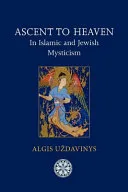
Ascent to Heaven in Islamic and Jewish Mysticism
 83
83

Ascent to Heaven in Islamic and Jewish Mysticism
Algis Uždavinys approaches the concept of spiritual ascent with a scholar's precision and a mystic's reverence. The strength of "Ascent to Heaven" lies in its ambitious scope, drawing clear lines between disparate traditions from ancient Egypt to Islamic mysticism. Uždavinys avoids simplistic equivalences, instead highlighting the shared phenomenology of transcendence. A particular strength is the detailed analysis of theurgic practices within Neoplatonism and Hermeticism as precursors or parallels to later ascent narratives. However, the sheer density of comparative material occasionally risks overwhelming the reader, requiring careful attention to follow the intricate arguments. The discussion of the Hekhalot literature, for instance, vividly illustrates the dangers and ecstasies of heavenly journeys. The book ultimately succeeds in presenting a compelling argument for the universality of the anagogic impulse across religious history.
📝 Description
83
Algis Uždavinys's 2011 book examines the concept of spiritual ascent across ancient and medieval mystical traditions.
This scholarly study unpacks the concept of 'ascent to heaven' within ancient and medieval mystical traditions. Uždavinys traces this spiritual ascension from Egyptian Pyramid Texts, through Second Temple Judaism and early Christian apocalyptic literature, to the theurgic practices of Platonic and Hermetic philosophy. The analysis extends to Islamic mysticism, focusing on the spiritual path to Mecca.
Scholars of comparative religion, historians of esotericism, and students of mystical theology will find this work valuable. Readers interested in the phenomenology of religious experience, especially ecstatic or visionary journeys across cultures, will also benefit. The book offers rigorous academic inquiry into the common threads of spiritual longing and ascent.
First published in 2011, Uždavinys's work engages with scholarship on comparative mysticism. It recognizes the interconnectedness of religious traditions, moving beyond purely confessional interpretations. The book draws parallels between historically distinct texts and practices that reveal shared cosmological frameworks and soteriological goals, acknowledging the intellectual currents of late antiquity and the medieval period.
This book situates itself within the study of comparative esotericism, specifically focusing on the 'anagoge' or upward spiritual journey. It connects disparate mystical traditions, including Egyptian, Jewish, Christian, Platonic, Hermetic, and Islamic, by examining their shared cosmological frameworks and soteriological aims. The work acknowledges the cross-pollination of ideas in late antiquity and the medieval period, highlighting how different cultures conceived of the soul's movement towards the divine.
💡 Why Read This Book?
• Understand the 'anagoge' concept as explored through specific references to the Egyptian Pyramid Texts, gaining insight into one of humanity's earliest recorded spiritual journeys. • Grasp the theurgic function within Platonic and Hermetic literature, discerning how ancient philosophers envisioned divine interaction and spiritual elevation. • Explore the parallel mystical paths within Islamic revelation, particularly the ascent toward Mecca, to compare with Jewish and Christian visionary traditions.
⭐ Reader Reviews
Honest opinions from readers who have explored this book.
❓ Frequently Asked Questions
What specific periods of Jewish mysticism does 'Ascent to Heaven' cover?
The book extensively examines Second Temple Judaism, a crucial period for the development of apocalyptic literature and early mystical thought concerning celestial journeys.
Does the book discuss the Kabbalah?
Yes, it explores various stages and concepts within Kabbalistic thought as part of the broader spectrum of Jewish mysticism and its relation to spiritual ascent.
What is the significance of Mecca in the Islamic mysticism discussed?
Mecca is presented as a focal point of spiritual aspiration and attainment within Islamic mysticism, representing a sacred destination in the ascent narrative.
Are there practical applications of the concepts discussed?
While primarily an academic work, understanding these historical mystical practices can inform contemporary contemplative and meditative approaches to spiritual growth.
What is the primary focus of the comparative analysis in the book?
The core focus is the comparative analysis of the 'ascent to heaven' motif across diverse religious and philosophical traditions, highlighting shared structures and symbolism.
Who is Algis Uždavinys?
Algis Uždavinys was a Lithuanian philosopher and scholar known for his work in comparative religion, esotericism, and ancient philosophy, with a particular interest in Neoplatonism and Hermeticism.
🔮 Key Themes & Symbolism
The Anagogic Journey
The work centers on the concept of 'anagoge,' the spiritual ascent or journey towards the divine. Uždavinys meticulously traces this theme from ancient Egyptian funerary texts, through the visionary experiences described in Jewish apocalyptic literature and early Christian writings, to the contemplative practices found in Islamic mysticism. It highlights how different traditions conceptualize the movement of the soul from the material to the spiritual realm, often involving purification, ecstatic states, and direct apprehension of the divine.
Comparative Mystical Structures
A core objective is to reveal the structural similarities in mystical ascent across disparate religious traditions. By juxtaposing the Pyramid Texts, Second Temple Jewish mysticism, Platonic theurgy, Hermetic cosmology, and Sufi experiences, Uždavinys demonstrates a recurring pattern in how mystics envision and enact their journey. This comparative approach emphasizes shared symbolic language and phenomenological experiences, suggesting underlying universal principles in the human quest for transcendence.
Theurgic and Visionary Practices
The book studies the practical and visionary aspects of spiritual ascent. It examines theurgic rituals within Neoplatonism and Hermeticism, where divine forces are invoked to aid the soul's upward path. Similarly, it explores the ecstatic visions reported in Jewish Hekhalot literature and Islamic Sufism, detailing the symbolic imagery and psychological states associated with encountering celestial beings and divine realities.
Symbolism of Ascent
Central to the concept of ascent is a rich symbolic vocabulary. Uždavinys analyzes recurring symbols such as ladders, mountains, celestial palaces, and divine light, which represent stages or obstacles in the spiritual journey. These symbols function not merely as metaphors but as potent tools within mystical practice, guiding the practitioner's consciousness toward higher realities and facilitating the transformative process.
💬 Memorable Quotes
Direct passages from the work, attributed to the author.
“The 'ascent to heaven' signifies the soul's movement towards the divine.”
— This expresses the fundamental theme: the spiritual journey is directional, aiming for union or proximity with the ultimate divine reality across various traditions.
“Hermetic literature presents a framework for understanding the soul's ascent through cosmic spheres.”
— This highlights the specific contribution of Hermeticism to the concept, detailing a structured, cosmological map for the soul's journey post-mortem or during ecstatic states.
“Islamic mysticism often depicts the journey towards Mecca as a spiritual culmination.”
— This points to the sacred geography within Islamic spirituality, where a physical destination becomes a potent symbol and locus for profound spiritual attainment and divine encounter.
“The Pyramid Texts already contained notions of the king's ascent to the divine realm.”
— This situates the concept of spiritual ascent at the very dawn of recorded religious thought, demonstrating its ancient origins and enduring presence in human spiritual aspirations.
“Second Temple Judaism developed complex ideas about celestial journeys and divine throne visions.”
— This emphasizes the rich development of visionary and ascent traditions within Judaism during a key historical period, laying groundwork for later mystical expressions.
🌙 Esoteric Significance
Tradition
This work is firmly rooted in the comparative study of esoteric traditions, drawing heavily from Hermeticism, Neoplatonism, Kabbalah, and Islamic mysticism (Sufism). It fits within the lineage of scholars who seek to uncover universal patterns in mystical experience and cosmology, moving beyond the strict confines of individual religious dogmas. Uždavinys's approach emphasizes the shared philosophical underpinnings and visionary practices that connect these diverse streams of esoteric thought.
Symbolism
Key symbols explored include the celestial ladder, representing stages of ascent; the divine throne, a vision often sought by mystics; and the concept of light, signifying divine presence and illumination. In Hermeticism, these symbols are tied to cosmological maps of the universe, while in Kabbalah, they relate to the structure of the Sephirot. In Islamic mysticism, the journey towards Mecca can symbolize the soul's ultimate orientation towards the Divine.
Modern Relevance
Contemporary practitioners of Western Esotericism, particularly those involved in Hermetic orders or Kabbalistic studies, find value in Uždavinys's detailed historical and comparative analysis. His work informs modern discussions on consciousness, altered states, and the phenomenology of religious experience, resonating with thinkers exploring the intersection of psychology, philosophy, and mysticism. It provides a scholarly foundation for understanding the enduring human impulse towards transcendence.
👥 Who Should Read This Book
• Scholars of comparative religion and intellectual history seeking rigorous analysis of spiritual ascent motifs across cultures. • Students of Hermeticism and Neoplatonism interested in the theurgic practices and cosmological frameworks described. • Researchers of Jewish and Islamic mysticism looking for comparative insights into visionary experiences and the concept of anagoge.
📜 Historical Context
Published in 2011, Algis Uždavinys's "Ascent to Heaven" emerges in an academic landscape increasingly open to comparative religion and esoteric studies. It engages with scholarship that followed the rise of interest in Gnosticism and Hermeticism, particularly after the Nag Hammadi discoveries. The work implicitly dialogues with scholars like Gershom Scholem, who pioneered the academic study of Kabbalah, and Henry Corbin, known for his work on Islamic mysticism and visionary imagination. Uždavinys positions his research within the framework of intellectual history, examining how concepts of spiritual ascent evolved from late antiquity through the medieval period. While not explicitly detailing a specific reception event, the book's comparative methodology itself represents a contemporary approach that moves beyond the confessional boundaries often imposed by earlier religious scholarship.
📔 Journal Prompts
The concept of 'anagoge' as presented in the Pyramid Texts.
Theurgic practices within Platonic and Hermetic literature.
Symbolic representations of celestial journeys in Second Temple Judaism.
The significance of the ascent to Mecca in Islamic mysticism.
Comparing the structure of ascent narratives across the traditions discussed.
🗂️ Glossary
Anagoge
The spiritual or intellectual ascent of the soul towards divine realities; a journey of transcendence.
Theurgy
A system of ritual practices aimed at invoking divine powers or facilitating union with the divine, particularly associated with Neoplatonism.
Pyramid Texts
Ancient Egyptian religious texts, primarily funerary spells inscribed in pyramids, detailing the deceased ruler's journey to the afterlife and divine status.
Second Temple Judaism
The period of Jewish history from the rebuilding of the Second Temple (c. 516 BCE) to its destruction by the Romans (70 CE), a time of diverse religious movements and early mystical developments.
Hermeticism
A philosophical and religious tradition based primarily upon writings attributed to Hermes Trismegistus, emphasizing cosmology, theurgy, and the ascent of the soul.
Kabbalah
The esoteric system of Jewish mysticism concerned with the hidden nature of God and the universe, often involving symbolic interpretation and meditative practices.
Sufism
The mystical dimension of Islam, focused on direct experience of God through practices like meditation, chanting, and asceticism.