74
74

Dialogues on the Supersensual Life



Jacob Boehme's 'Dialogues on the Supersensual Life' remains an indispensable cornerstone for anyone seeking to penetrate the superficial layers of existence. Boehme, the humble cobbler who became a titan of Christian mysticism, masterfully employs dialogue to demystify the divine architecture of creation. The exchanges between master and disciple offer profound insights into the genesis of all things, the nature of the divine will, and the arduous yet essential journey toward spiritual liberation. His exploration of God’s manifestation, the interplay of light and darkness, and the possibility of direct experiential knowledge of the divine is both challenging and deeply rewarding. This work is particularly potent for those who find traditional doctrines insufficient, offering a direct, experiential approach to the supersensual. A must-read for serious students of the Western esoteric tradition.
📝 Description
Step into the luminous ether with Jacob Boehme's 'Dialogues on the Supersensual Life,' a profound exploration of the soul's ascent beyond the veil of the material. Through intimate conversations between a seasoned spiritual guide and an earnest seeker, Boehme unfurls the intricate tapestry of existence, revealing the hidden pathways to divine communion. This seminal work invites readers to confront the primal forces of creation, the enigmatic nature of God, and the ultimate purpose woven into the fabric of human consciousness. It is a journey into the heart of the mystical, where the ordinary dissolves and the extraordinary becomes palpable. Boehme’s prose, imbued with the raw power of direct spiritual experience, illuminates the dark mysteries of suffering and evil, offering a transformative perspective on their role in the soul's evolution. Designed for the dedicated spiritual aspirant and the scholar of esoteric wisdom, this book is a beacon, guiding the reader towards an awakened perception, a life lived in conscious dialogue with the divine essence that permeates all things. Prepare to have your understanding of reality fundamentally reshaped, unveiling the 'supersensual' realm as not merely a concept, but an attainable state of being.
✍️ Author
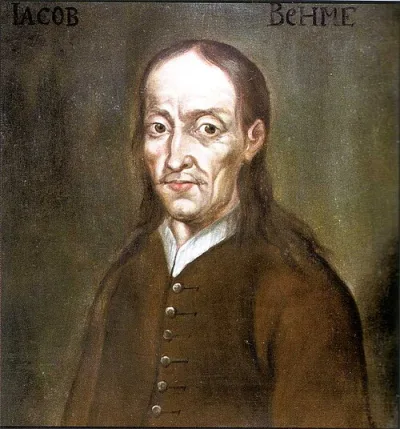
Jacob Boehme
Jakob Böhme (; German: [ˈbøːmə]; 24 April 1575 – 17 November 1624) was a German philosopher, Christian mystic, and Lutheran Protestant theologian. He was considered an original thinker by many of his contemporaries within the Lutheran tradition, and his fir…
💡 Why Read This Book?
Delve into the heart of 17th-century German mysticism and unlock profound truths about the divine and human existence. 'Dialogues on the Supersensual Life' offers a direct, experiential path to spiritual enlightenment, challenging conventional thought and inviting a deeper connection with the unseen realms. Ideal for seekers of hidden wisdom, practitioners of contemplative prayer, and scholars of esoteric philosophy.
⭐ Reader Reviews
Honest opinions from readers who have explored this book.
❓ Frequently Asked Questions
What is the 'supersensual life' that Boehme discusses?
The 'supersensual life' refers to a state of conscious awareness and direct experience of the divine, transcending the limitations of the physical senses and the material world. It is a state of being in communion with God.
Who were the intended audience for this work?
Boehme's writings, including these dialogues, were intended for those with a sincere desire for spiritual understanding and a willingness to engage with profound theological and metaphysical concepts beyond conventional religious dogma.
What is the role of suffering and evil in Boehme's philosophy?
Boehme viewed suffering and evil not as inherent flaws of creation, but as necessary forces within the divine process of manifestation, essential for the revelation of God's love and light through contrast and struggle.
Is this book suitable for beginners in mysticism?
While challenging, the dialogue format makes it more accessible than some of Boehme's more complex treatises. Beginners with a strong spiritual inclination and patience can find significant value, though it may require dedicated study.
How does Boehme's work connect to Christian theology?
Boehme's work is deeply rooted in Christian theology, but he offers a highly individual and mystical interpretation, seeking to reconcile the apparent contradictions within scripture and doctrine through his unique understanding of divine processes.
🔮 Key Themes & Symbolism
The Divine Genesis and Manifestation
Boehme meticulously dissects the 'Ungrund' – the abyss of the divine potential – and its emergence into manifest existence through a process of divine will, desire, and dialectical tension. He explores how God, in His infinite love, chooses to reveal Himself through a creation that encompasses both light and darkness, spirit and matter. This theme delves into the intricate workings of divine nature, the birth of qualities, and the fundamental principles that govern the cosmos, offering a radical reinterpretation of creation theology for the discerning reader.
The Path to Spiritual Awakening
Central to the 'Dialogues' is the arduous yet transformative journey of the human soul toward direct communion with the divine. Boehme outlines the necessity of inner purification, the overcoming of egoic limitations, and the cultivation of a receptive spirit. This path involves grappling with one's inner darkness, understanding the ego's entanglement with the material world, and actively seeking the 'inner light' that guides one towards spiritual discernment and ultimate liberation. It is a call to conscious participation in one's own spiritual evolution.
The Nature of Suffering and Evil
Boehme presents a profound theological perspective on the existence of suffering and evil, not as random occurrences or divine punishment, but as integral components of the divine drama. He argues that these forces arise from the primal 'contrariety' within God’s own nature, necessary for the revelation of His attributes, particularly His love and mercy. Understanding this dialectical interplay is crucial for comprehending the human condition and finding spiritual meaning amidst life's challenges.
💬 Memorable Quotes
“When the soul turns itself to God, God turns himself to the soul.”
— This succinctly captures Boehme's emphasis on divine reciprocity. It highlights that spiritual seeking is met by divine grace, implying a dynamic, responsive relationship between the seeker and the divine.
“For in the abyss of the Godhead, there is no difference, but all is one.”
— This speaks to the ultimate unity and undifferentiated nature of the divine essence before manifestation, emphasizing the mystical concept of God as pure, singular Being.
“The whole world is a living tree, and God is the root and fruit.”
— A powerful metaphor illustrating the immanence of God in all creation, portraying the universe as a unified, organic entity with the divine as its source and ultimate expression.
“When man finds the inward light, he finds God.”
— This underscores the mystical belief that the divine spark resides within each individual, and its recognition is the key to direct spiritual experience and union with God.
“The greatest wisdom is to know oneself.”
— A timeless aphorism emphasizing the introspective journey as paramount, suggesting that self-knowledge is the foundational step towards understanding the divine and one's place within it.
🌙 Esoteric Significance
Tradition
Boehme stands as a monumental figure within the Western esoteric tradition, particularly in Christian mysticism and Hermeticism. His unique system, often referred to as Theosophy, sought to synthesize biblical teachings with alchemical principles and Gnostic ideas, offering a radical, often challenging, reinterpretation of Christian doctrine. He provided a language for the ineffable, exploring the divine attributes and the mechanics of creation through a symbolic lens that deeply influenced later esoteric movements, including Rosicrucianism and Swedenborgianism.
Symbolism
The 'Dialogues' are rich with potent symbolism, drawing from biblical narratives, alchemical processes, and natural phenomena. Key symbols include the 'Ungrund' (the primal abyss), fire and light (representing divine will and spirit), darkness (representing the potential for manifestation), and the 'birth pangs' of creation. Boehme uses these symbols to illustrate complex metaphysical concepts, such as the dualistic yet unified nature of God, the process of spiritual regeneration, and the interconnectedness of all things within the divine order.
Modern Relevance
In an age often characterized by materialism and spiritual searching, Boehme's insights into the nature of consciousness, the hidden workings of the universe, and the possibility of direct divine experience remain profoundly relevant. His emphasis on inner transformation, the symbolic language of existence, and the inherent divinity within humanity offers a timeless guide for those seeking meaning beyond the superficial. His work continues to inspire spiritual practitioners, philosophers, and artists grappling with fundamental questions of existence and the pursuit of ultimate truth.
👥 Who Should Read This Book
This seminal work is a treasure for the discerning spiritual seeker, the dedicated practitioner of contemplative arts, and the scholar of esoteric philosophy. Beginners with a fervent desire for deep spiritual understanding will find the dialogue format an accessible entry point into Boehme's profound cosmology. Experienced mystics and theologians will appreciate the depth and originality of his insights, offering new perspectives on perennial questions. Those interested in the history of Western esotericism, Hermeticism, and Christian mysticism will find 'Dialogues on the Supersensual Life' an essential text for understanding Boehme's foundational influence.
📜 Historical Context
Written in the tumultuous early 17th century, Jacob Boehme's 'Dialogues on the Supersensual Life' emerged from a period of intense religious and philosophical upheaval in Europe. The Reformation had fractured religious unity, leading to widespread theological debate and fervent spiritual seeking. Boehme, a self-taught mystic and craftsman, operated outside established academic and clerical circles, drawing his insights from direct visionary experiences and a deep contemplation of scripture. His work resonated with individuals disillusioned by dogmatic rigidity, offering a more experiential and psychologically nuanced approach to spirituality. This era was also marked by burgeoning interest in alchemy, Hermeticism, and Neoplatonism, all of which subtly influenced the symbolic language and cosmological frameworks found in Boehme's writings, positioning him as a pivotal figure bridging medieval mysticism and the nascent esoteric traditions of the modern era.
📔 Journal Prompts
Reflect on a time you felt a connection to something beyond the physical. What senses were engaged, and what was revealed?
How does the concept of 'contrariety' (light/darkness, good/evil) play out in your own inner life?
Consider the idea that God turns to the soul when the soul turns to God. What does this reciprocity mean for your spiritual practice?
Boehme speaks of an 'inward light.' Where have you experienced glimmers of this light, and how can you cultivate it?
If the entire world is a living tree, what is your role as a branch or leaf in this cosmic organism?
🗂️ Glossary
Ungrund
The ultimate, undifferentiated abyss of the Godhead, preceding all manifestation and form. It is the potentiality from which all existence arises, often described as a silent, potent mystery.
Contrariety
The inherent principle of duality and opposition within the divine nature, essential for the manifestation of qualities and the revelation of God's attributes through dialectical tension.
Supersensual
Pertaining to a realm or state of being that transcends the limitations of the physical senses, accessed through direct spiritual perception and intuition. It is the realm of divine essence and reality.
Will (in Boehme's sense)
Not merely human volition, but the primal, active divine force or desire that drives creation and manifestation, a fundamental aspect of God's being.
Materia Prima
The primary substance or raw material from which all physical reality is formed, understood by Boehme in both a spiritual and physical sense as a manifestation of divine qualities.