Obras completas

 77
77

Obras completas
Teresa of Ávila's collected works present a formidable, yet rewarding, challenge. The sheer volume and depth of her spiritual autobiography and didactic writings can be daunting, but the clarity and directness of her prose are remarkable. Her description of the seven dwellings within the "Interior Castle" remains a masterclass in articulating the ascent of the soul, moving from initial self-awareness to profound divine union. A limitation, inherent in a comprehensive collection, is the lack of extensive scholarly annotation for the uninitiated, requiring readers to bring a degree of theological or historical background. However, the unvarnished presentation of her mystical experiences, particularly her unflinching honesty about the trials and consolations of prayer, offers unparalleled insight into the lived reality of spiritual pursuit.
📝 Description
77
Teresa of Avila's complete writings offer a direct encounter with 16th-century Spanish mysticism.
This volume gathers the entire written output of Teresa of Ávila, a significant figure in 16th-century Spanish mysticism. It presents her spiritual writings, theological thoughts, and practical advice for a life of contemplation without secondary interpretation. These texts form a core part of Christian contemplative traditions and are made accessible here for readers to engage directly with her ideas.
Teresa of Ávila wrote during the Counter-Reformation, a time of religious and political change in Spain. Her work arose as she sought to reform the Carmelite Order and as the Catholic Church worked to reinforce its doctrines. She used existing theological ideas but also developed an individual, experiential path to the divine. The Spanish Inquisition examined her writings, showing the sensitive nature of mystical discussion in the 1500s. She worked with John of the Cross on reforming the Carmelite Order.
Teresa of Ávila's writings belong to the Christian mystical tradition, specifically within the Catholic contemplative path. Her work focuses on the direct, experiential knowledge of God, a core element in esoteric Christianity. She describes inner spiritual progress and the soul's ascent toward divine union. This tradition emphasizes personal encounter with the divine over solely intellectual understanding, distinguishing it from more scholastic theological approaches. Her writings provide a practical guide to this inner life, influencing generations of contemplatives.
💡 Why Read This Book?
• Understand the "Interior Castle" metaphor, a foundational concept in Christian mysticism, and its seven dwellings, as Teresa outlines them in her seminal work. • Explore Teresa's distinct approach to prayer, characterized by "nothing else than a close friendship with Him whom we know loves us," offering practical guidance for cultivating divine connection. • Gain insight into the Counter-Reformation context of 16th-century Spain and the challenges faced by mystics like Teresa, including scrutiny from the Inquisition.
⭐ Reader Reviews
Honest opinions from readers who have explored this book.
❓ Frequently Asked Questions
What is the "Interior Castle" as described by Teresa of Ávila?
The "Interior Castle" is Teresa of Ávila's central metaphor for the soul, depicting it as a castle with seven "mansions" or dwellings. Each dwelling represents a progressive stage in the soul's journey toward spiritual perfection and union with God through prayer and self-knowledge.
When did Teresa of Ávila live and write?
Teresa of Ávila lived from 1515 to 1582. Her most significant works, including "The Interior Castle" and "The Way of Perfection," were written in the latter half of her life, primarily during the 1560s and 1570s, a period of intense religious reform.
What was the historical context for Teresa of Ávila's writings?
Teresa wrote during the Spanish Counter-Reformation, a period of intense Catholic renewal and scrutiny of religious life. Her efforts to reform the Carmelite Order and her mystical experiences were viewed with suspicion by some, leading to scrutiny by the Inquisition.
How does Teresa define prayer in her works?
Teresa of Ávila defines prayer as "nothing else than a close friendship with Him whom we know loves us." This emphasizes prayer as a relational act based on love and trust, rather than a mere recitation of words or a rigid set of rules.
What is the significance of "The Way of Perfection"?
"The Way of Perfection" offers practical guidance for nuns on living a devout life and progressing in prayer. It details methods for mental prayer, emphasizes humility and detachment, and reflects Teresa's experience in founding and leading convents.
Are Teresa of Ávila's writings considered esoteric?
While deeply rooted in Catholic tradition, Teresa's exploration of interior mystical experience, direct union with the divine, and her systematic charting of the soul's journey have made her work a subject of study within broader esoteric and contemplative traditions.
🔮 Key Themes & Symbolism
The Interior Castle
This central metaphor, presented in "The Interior Castle," describes the soul as a magnificent castle inhabited by God. It comprises seven "mansions" or rooms, each representing a stage in the soul's spiritual progression. Moving inward through these mansions signifies deepening prayer, self-knowledge, and increasing union with the divine. Teresa meticulously details the challenges, graces, and practices associated with each stage, from the initial dwelling of self-awareness to the seventh, where the soul experiences direct union with God.
Prayer as Friendship
Teresa radically redefines prayer not as a duty or a complex ritual, but as "nothing else than a close friendship with Him whom we know loves us." This concept underscores the relational aspect of prayer, emphasizing trust, intimacy, and personal connection with God. She distinguishes between different forms of prayer, from vocal prayer to meditation and contemplation, always returning to the core idea of developing a loving relationship that fosters spiritual growth and resilience.
Spiritual Humility and Self-Knowledge
A recurring and vital theme is the necessity of humility and profound self-knowledge as the bedrock of the spiritual life. Teresa argues that understanding one's own limitations, faults, and dependence on God is crucial for advancement. She contrasts true humility, which arises from recognizing God's greatness and one's own nothingness, with false humility that can lead to despair. This self-awareness is the necessary starting point for the soul's journey inward.
The Carmelite Reform
While not solely a theological treatise, the practical context of Teresa's reform of the Carmelite Order permeates her writings, particularly "The Way of Perfection." She provides guidance for her nuns on communal living, poverty, chastity, and the practice of prayer within a reformed conventual life. Her efforts aimed to return the order to its original contemplative ideals, emphasizing solitude, silence, and direct devotion, which were often at odds with prevailing religious norms of the 16th century.
💬 Memorable Quotes
Direct passages from the work, attributed to the author.
“Prayer is nothing else than a close friendship with Him whom we know loves us.”
— This statement captures Teresa's relational approach to prayer, explaining it as an intimate dialogue rather than a performance. It highlights God's active love as the foundation upon which the spiritual life is built.
“Let nothing disturb you, let nothing frighten you, all things pass, God never changes.”
— This offers a powerful mantra for inner stability amidst external turmoil. It grounds the practitioner in divine immutability, suggesting that true peace comes from focusing on the eternal rather than the transient nature of worldly affairs.
“I do not want to think about God as I imagine Him, but as He is.”
— This reflects a desire for direct experience and an apprehension of divine reality beyond human conceptualization. It speaks to the core of mystical aspiration: to know God as He truly is, unmediated by personal or cultural projections.
“The soul that is on this path, however weary, will reach the end.”
— This is an encouragement for those undertaking the difficult spiritual journey. It emphasizes perseverance, assuring the seeker that the divine path, though arduous, ultimately leads to its intended destination with God's grace.
“We must not be content with the "Our Father" recited with the lips alone.”
— This highlights Teresa's emphasis on interiority in prayer. She stresses the need for the mind and heart to be engaged, not merely the tongue, advocating for a prayer that is felt and understood, not just spoken.
🌙 Esoteric Significance
Tradition
Teresa of Ávila is a central figure within Christian mysticism, particularly the Spanish school of mystics. While her work is firmly rooted in Catholic theology, its emphasis on direct, experiential union with the divine, the systematic charting of the soul's interior journey, and the transformation of consciousness has led to its study and adoption by broader esoteric traditions seeking contemplative practices and mystical insights.
Symbolism
The "Interior Castle" itself is a potent symbol, representing the soul as a complex, multi-layered reality containing divine presence. Water imagery, such as fountains and streams, frequently appears, symbolizing divine grace, the outpouring of God's love, and the soul's thirst for Him. Light and darkness are also employed to denote spiritual states – the illumination of divine presence versus the obscurity of sin or spiritual dryness.
Modern Relevance
Contemporary thinkers and practitioners in fields ranging from Christian contemplative prayer to Jungian psychology (interpreting her stages as individuation) and even secular mindfulness draw inspiration from Teresa's systematic approach to inner development. Her emphasis on self-knowledge, detachment, and cultivating a deep inner life continues to inform spiritual directors, therapists, and individuals seeking profound personal growth and meaning.
👥 Who Should Read This Book
• Students of Western Esotericism and Christian Mysticism: Those seeking to understand the historical development and core texts of contemplative traditions will find Teresa's direct experience invaluable. • Individuals engaged in Spiritual Practice: Readers looking for profound guidance on prayer, self-discipline, and the journey toward inner peace will benefit from her practical advice. • Scholars of Religious History and Theology: Researchers studying the Counter-Reformation, monasticism, or the evolution of spiritual thought will find primary source material of immense significance.
📜 Historical Context
Teresa of Ávila penned her spiritual masterpieces during the fervent years of the Counter-Reformation in 16th-century Spain. This era was marked by the Catholic Church's vigorous response to the Protestant Reformation, seeking to reaffirm doctrine and revitalize religious practice. Teresa's work, deeply orthodox yet profoundly experiential, emerged within this climate. Her efforts to reform the Carmelite Order, aiming for a return to stricter contemplative ideals, often placed her at odds with ecclesiastical authorities and drew the attention of the Spanish Inquisition, which monitored religious expression closely. Her writings offered a powerful, personal articulation of Catholic mysticism that complemented, and sometimes challenged, the more scholastic theological trends of the time. Contemporaries like John of the Cross shared her reformist zeal, though their paths and expressions of mysticism differed. The Council of Trent (1545-1563) was also a significant backdrop, shaping the broader religious landscape.
📔 Journal Prompts
The "Interior Castle" and its seven dwellings, as a map of the soul's journey.
The concept of prayer as "close friendship" with the divine.
Moments of spiritual "dryness" or perceived divine absence in your practice.
The practice of humility in relation to self-knowledge.
The balance between active reform and inner contemplative life.
🗂️ Glossary
Interior Castle
Teresa of Ávila's metaphor for the soul, depicted as a castle with seven mansions representing stages of spiritual growth toward union with God.
Mansions
The rooms or dwellings within the "Interior Castle," each signifying a distinct phase in the soul's journey of prayer and spiritual advancement.
A significant work by Teresa of Ávila offering practical guidance for nuns on achieving spiritual perfection through prayer, humility, and detachment.
Contemplative Prayer
A form of prayer characterized by deep reflection, silent communion, and direct experience of God's presence, as distinct from vocal prayer.
Self-Knowledge
The essential understanding of one's own nature, limitations, and dependence on God, considered by Teresa as a crucial foundation for spiritual progress.
Humility
A virtue that involves recognizing one's own insignificance in the face of God's greatness, essential for spiritual growth and avoiding pride.
Union with God
The ultimate goal of the mystical path, described by Teresa as a state of profound, loving communion and spiritual oneness with the Divine.
🔮 Readers Also Liked
Browse all →





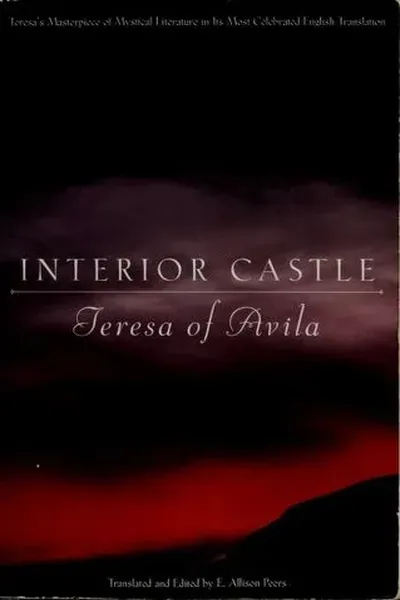
More by Teresa of Avila
All books →
![Camino de perfección [por] Santa Teresa de Jesús](/img/thumb/camino-de-perfecci-n-por-santa-teresa-de-jes-s-teresa-of-avila.webp)



More Free Mysticism & Contemplation Books
View all →