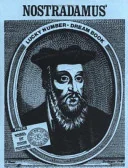
Nostradamus' Lucky Number Dream Book
 75
75

Nostradamus' Lucky Number Dream Book
The "Lucky Number Dream Book" offers a peculiar glimpse into the commercialization of historical occult figures. While its direct connection to Nostradamus himself is tenuous at best, likely a marketing strategy capitalizing on his name, the book functions as a straightforward, if unsophisticated, dream dictionary. Its strength lies in its simplicity and the clear, unadorned presentation of dream symbols and their associated numbers. However, this very simplicity is also its limitation. The interpretations are often superficial, lacking the depth one might find in more serious works of oneiromancy or psychological dream analysis. For instance, the entry for "death" simply assigns a number without exploring the rich symbolic potential of mortality in dreams. Ultimately, it serves as a quaint artifact of popular esotericism rather than a profound tool for self-discovery.
📝 Description
75
Nostradamus' Lucky Number Dream Book, published around 2000, links dream imagery to numbers for fortune-telling.
This book presents a system for interpreting dreams through numerological associations. It assigns specific numbers to dream imagery, allowing users to find a corresponding 'lucky number' for divination or fortune-telling. The work compiles dream symbols, ranging from concrete objects like 'a house' to abstract feelings like 'joy,' each linked to a numerical value. It functions as a lexicon where entries unlock numerical predictions. The underlying idea is that dream elements carry coded messages tied to numerical vibrations.
This volume appeals to individuals interested in folk divination, esoteric numerology, and the legacy of Nostradamus. It suits those seeking a direct method to connect dream content with numerical outcomes. Readers who enjoy historical occult curiosities and practical fortune-telling systems will find this book of interest. While Nostradamus is known for his prophecies, this 'Dream Book' represents a later commercial product.
While Michel de Nostredame is primarily known for his 1555 prophecies, this 'Dream Book' is a much later compilation, emerging as a commercial product in 2000. It follows a long tradition of dream interpretation manuals dating back to the medieval period. These texts often combined biblical symbolism, classical mythology, and folk beliefs to assign meanings to dreams. The book's method of correlating dream elements with numbers is a specific application within this broader history of divinatory practices.
💡 Why Read This Book?
• Gain a direct method for numerological dream interpretation, learning how specific dream imagery like "a dog" is linked to numbers, as detailed in the book's lexicon. • Understand the commercial evolution of Nostradamus's legacy, seeing how his name is applied to diverse esoteric practices beyond prophecy, as evidenced by this 2000 publication. • Explore a simplified form of oneiromancy, discovering how common dream symbols are codified into numerical "lucky numbers" for divination, a practice echoing historical dream manuals.
⭐ Reader Reviews
Honest opinions from readers who have explored this book.
❓ Frequently Asked Questions
What is the primary purpose of Nostradamus' Lucky Number Dream Book?
Its primary purpose is to provide users with a system for interpreting dreams by assigning specific "lucky numbers" to various dream symbols and scenarios, intended for divination or fortune-telling.
Is this book based on Nostradamus' original writings?
The book is attributed to Nostradamus but was first published in 2000, long after his death in 1566. It likely compiles traditional dream interpretations under his name rather than being a direct manuscript.
How does the book link dreams to numbers?
It functions as a lexicon where specific dream images, actions, or emotions are listed alongside corresponding numerical values, facilitating a direct interpretation.
What kind of dreams are covered in this book?
The book covers a wide range of common dream experiences, from concrete objects like "a bridge" to more abstract feelings such as "fear" or events like "a journey."
Can this book be used for lottery predictions?
Yes, the book is often marketed as a tool for finding "lucky numbers" derived from dreams, making it suitable for those interested in using dream interpretations for lottery or gambling.
Does the book offer deep psychological analysis of dreams?
No, the book focuses on a more simplistic, direct numerological association for divination rather than in-depth psychological interpretation in the vein of Freud or Jung.
🔮 Key Themes & Symbolism
Dream Symbol Numerology
The core of the book lies in its systematic assignment of numerical values to a vast array of dream symbols. Unlike psychological dream analysis, this approach bypasses subjective interpretation to offer a direct, often divinatory, meaning. For instance, a dream about "water" might yield a specific number, intended to be used for predicting future events or selecting lottery numbers. This direct correlation reflects a belief in universal numerical patterns underlying subconscious imagery.
The Nostradamus Legacy
This work capitalizes on the enduring fame of Michel de Nostredame, the 16th-century astrologer and seer. While Nostradamus is primarily known for his cryptic quatrains, this 'Dream Book' extends his influence into the field of popular oneiromancy and folk divination. It represents a modern commercial product leveraging a historical figure's mystique to offer practical, albeit simplified, esoteric tools to a broad audience.
Folk Divination Systems
The book functions as a modern iteration of historical folk divination practices. For centuries, individuals have sought meaning and guidance from dreams, often through codified systems like dream dictionaries. This work fits within that tradition, offering a readily accessible method for those seeking to glean omens or fortunate numbers from their nightly visions, similar to earlier texts on oneiromancy.
Correspondence and Omens
Central to the book's premise is the concept of correspondence – the idea that elements of the dream world are linked to specific numbers, which in turn hold divinatory significance. Each entry acts as an omen, transforming abstract dream content into concrete numerical data. This system implies a hidden order within the universe, accessible through the interpretation of subconscious symbolism.
💬 Memorable Quotes
Direct passages from the work, attributed to the author.
“Fear in a dream corresponds to the number Y.”
— This highlights how the book extends its numerological system beyond concrete objects to encompass emotional states experienced during sleep, offering numerical interpretations for feelings.
“Seeing a bridge in your dream may indicate the number Z.”
— This interpretation shows the book's approach to symbols of transition or connection, translating them into numerical guidance for the dreamer.
“Joy experienced during a dream translates to numerical value A.”
— This demonstrates the book's comprehensive approach, assigning numbers not only to potentially negative or neutral symbols but also to positive emotional experiences.
💡 Key Ideas
Editorial paraphrase of the work's core concepts — not direct quotes.
A dream of a dog is associated with the number X.
This paraphrased concept illustrates the book's core mechanic: a direct mapping of a common dream symbol (a dog) to a specific numerical value, intended for divinatory use.
A dream involving travel signifies number B.
This paraphrased concept shows how the book interprets dreams of movement and exploration, linking them to a specific numerical outcome for the user.
🌙 Esoteric Significance
Tradition
This work aligns loosely with the tradition of folk magic and popular divination, drawing inspiration from the mystique of figures like Nostradamus. It departs significantly from established esoteric lineages such as Hermeticism or Kabbalah, which offer complex symbolic systems and rigorous intellectual frameworks. Instead, it provides a simplified, accessible lexicon for dream interpretation, focusing on direct numerical correspondences rather than intricate symbolic matrices or spiritual development.
Symbolism
The primary symbolism lies in the numbers themselves, treated as carriers of fate or fortune. Dream objects are reduced to their numerical essence. For example, common symbols like 'a house' or 'a serpent' are stripped of their many-sided meanings found in richer traditions and are assigned a singular numerical value intended for direct application in games of chance or simple prognostication.
Modern Relevance
Contemporary relevance lies in its accessibility and its role in the popularization of esoteric concepts. While lacking academic rigor, it appeals to a modern audience seeking quick, tangible connections between the subconscious and perceived luck. It reflects a broader trend of simplified esoteric practices found in online horoscopes and casual divination apps, making ancient ideas of dream interpretation available in a highly digestible format.
👥 Who Should Read This Book
• Casual enthusiasts of dream interpretation seeking a straightforward numerological system without deep theoretical study. • Individuals interested in the popular legacy of Nostradamus and how his name is applied to various esoteric products. • Readers who enjoy folk magic and simple divination tools, looking for a quick method to derive "lucky numbers" from their dreams.
📜 Historical Context
The "Nostradamus' Lucky Number Dream Book," first published in 2000, emerges centuries after the prophetic quatrains of Michel de Nostredame, which appeared in 1555. This modern compilation leverages Nostradamus's name recognition to tap into a market for popular esotericism and folk divination. Its structure, a dream dictionary assigning numbers to symbols, carries the long tradition of oneiromancy manuals dating back to antiquity, such as Artemidorus's *Oneirocritica* (circa 2nd century CE). While Nostradamus himself was a physician and astrologer deeply embedded in Renaissance intellectual currents, this particular work represents a commercial adaptation rather than a direct extension of his known scholarly pursuits. It appeared in an era where interest in divination and personal esoteric systems was resurging, often divorced from their original religious or philosophical contexts, differentiating it from the more scholarly or religiously-motivated dream interpretation prevalent in earlier centuries.
📔 Journal Prompts
Reflect on the concept of 'a dog' appearing in your dreams and its associated number.
Consider the numerical value assigned to the emotion of 'fear' in your own dream experiences.
Analyze how the book translates the symbol of 'a bridge' into a specific numerical outcome.
Explore the numerical correspondence for 'joy' as presented in the dream lexicon.
Ponder the numerical significance of dreams involving 'travel' according to this system.
🗂️ Glossary
Oneiromancy
The practice of divination by dreams. It involves interpreting dreams to gain insight into the future, understand the present, or receive guidance.
Numerology
The study of the mystical or divine relationship between numbers and events or physical objects. It assigns meaning and influence to numbers.
Dream Lexicon
A dictionary or catalog of dream symbols and their meanings. This book functions as a specific type of lexicon linking dream imagery to numbers.
Quatrain
A stanza of four lines, especially one having a rhyme scheme. Nostradamus is famous for his prophecies written in quatrains.
Divination
The practice of seeking knowledge of the future or the unknown by supernatural means. This book uses dream interpretation for divination.
Folk Magic
Magical practices and beliefs transmitted through informal channels, often orally, within a community or culture. This book falls into this category.
Correspondence
In esoteric traditions, the principle that there are relationships and connections between different levels of reality (e.g., macrocosm and microcosm, physical and spiritual).
This book appears in 1 collection
🔮 Readers Also Liked
Browse all →









From the “Nostradamus” Collection
View all →


More Free Occult Philosophy Books
View all →