'Farewell, Nikola'
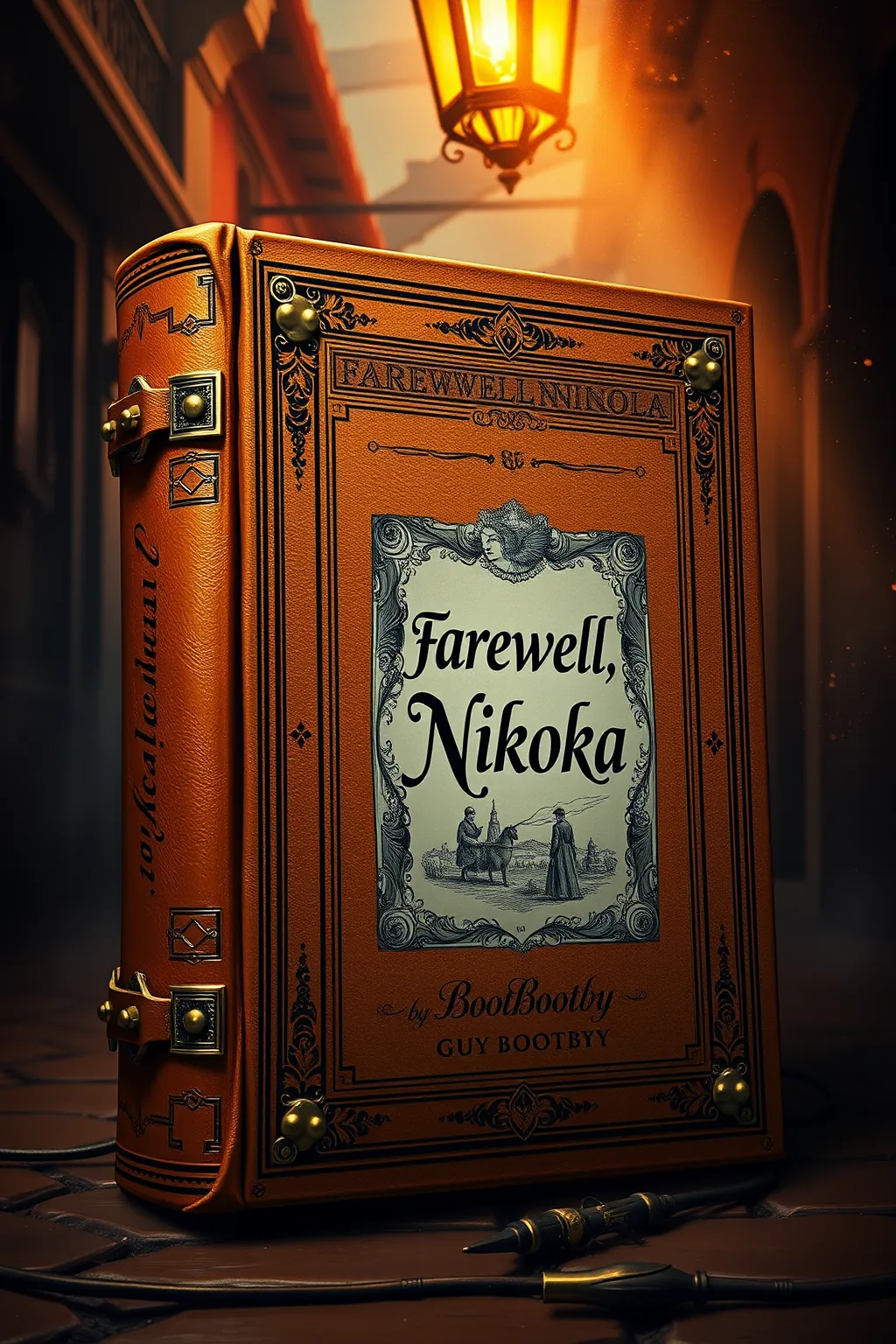
 68
68

'Farewell, Nikola'



In 'Farewell, Nikola,' Guy Boothby weaves a tapestry of mystery and esoteric wisdom that continues to resonate with modern esoteric seekers. The novel's richly detailed setting in Venice serves as a perfect backdrop for the exploration of occult themes, making it a timeless classic in the genre of paranormal fiction. Boothby's prose is both evocative and thought-provoking, inviting readers to question the boundaries between the natural and supernatural worlds. For contemporary readers, 'Farewell, Nikola' offers valuable insights into the enduring fascination with the occult and the human quest for spiritual enlightenment. Its exploration of ancient mysteries and hidden knowledge makes it an essential read for anyone interested in the esoteric traditions.
📝 Description
68
Guy Boothby's 'Farewell, Nikola' (1896) traces a descent into Venetian occultism.
The novel follows a man drawn into a secretive society in Venice. This group possesses hidden knowledge and practices that blur the lines between the natural and supernatural. The protagonist becomes entangled in their rituals and philosophies, which challenge conventional understandings of reality. Boothby’s writing style creates an atmosphere of suspense and mystery, immersing the reader in the city's shadowy underbelly. The narrative questions the limits of human perception and the existence of forces beyond everyday experience.
As the story progresses, the characters grapple with ancient secrets and esoteric doctrines. The book examines the allure of forbidden knowledge and its potential consequences. It presents a world where hidden orders exert influence and reality itself is malleable. The narrative builds towards a dramatic confrontation with these mysterious elements, leaving the reader to ponder the nature of truth and illusion.
'Farewell, Nikola' emerged during a period of intense public fascination with spiritualism and occultism in late Victorian England. Books of this era often explored secret societies, arcane rituals, and the perceived existence of hidden dimensions or forces. Boothby tapped into this cultural current, weaving elements of the supernatural and forbidden lore into a gothic narrative framework. The novel reflects a broader literary trend that sought to probe the mysteries of the universe and the human psyche, often through tales of secret knowledge and encounters with the uncanny.
✍️ Author
Boothby, Guy
Guy Newell Boothby (13 October 1867 – 26 February 1905) was a prolific Australian novelist and writer, noted for sensational fiction in variety magazines around the end of the nineteenth century. He lived mainly in England.
💡 Why Read This Book?
Reading 'Farewell, Nikola' today provides a unique opportunity to delve into the rich tapestry of occult philosophy and paranormal fiction. The book offers a profound exploration of spiritual awakening and the hidden forces of nature, making it a valuable resource for esoteric seekers. By immersing yourself in Boothby's narrative, you gain a deeper understanding of the mysteries that have captivated humanity for centuries, enhancing your spiritual journey and broadening your perspective on the supernatural.
⭐ Reader Reviews
Honest opinions from readers who have explored this book.
❓ Frequently Asked Questions
Is 'Farewell, Nikola' a good introduction to occult philosophy?
Yes, 'Farewell, Nikola' provides a compelling introduction to occult philosophy, blending esoteric themes with a captivating narrative set in Venice.
What makes this book unique compared to other occult fiction?
The book's unique setting in Venice and its deep exploration of ancient mysteries set it apart from other occult fiction, offering a rich and immersive reading experience.
Is this book suitable for modern readers?
Absolutely, 'Farewell, Nikola' remains relevant and engaging for modern readers, providing valuable insights into the enduring fascination with the occult and spiritual enlightenment.
🔮 Key Themes & Symbolism
Hidden Knowledge
The book looks at the exploration of hidden knowledge and the mysteries that lie beneath the surface of reality. Through its narrative, it reveals the profound secrets that have been guarded by ancient traditions and occult societies. The story's setting in Venice, a city steeped in history and mystery, enhances the theme of hidden wisdom, making it a wide range for the curious mind.
Symbolism
Symbolism is a central theme in 'Farewell, Nikola,' with Boothby masterfully tying intricate symbols and their meanings into the story. The symbols serve as keys to unlock deeper layers of understanding, inviting readers to decipher the hidden messages and uncover the esoteric truths that lie within. This rich use of symbolism makes the book a treasure for those interested in the mystical arts.
Philosophical Inquiry
The narrative is steeped in philosophical inquiries that challenge the reader's perceptions of reality and the supernatural. Boothby's exploration of philosophical themes adds depth to the story, making it a thought-provoking journey for those who seek to understand the deeper mysteries of existence. The book's philosophical significance lies in its ability to stimulate the mind and inspire spiritual growth.
💬 Memorable Quotes
Direct passages from the work, attributed to the author.
“In the shadows of the old world, truth often hides in plain sight.”
— It highlights the esoteric wisdom that can be found in unexpected places, inviting readers to look deeper.
“Symbols are the language of the occult, speaking to those who listen.”
— It underscores the importance of symbolism in occult philosophy and the hidden messages they convey.
💡 Key Ideas
Editorial paraphrase of the work's core concepts — not direct quotes.
The city of Venice holds secrets that defy the boundaries of time.
This line underscores the timeless mystery and hidden knowledge embedded within Venice's ancient streets.
The veil between reality and the supernatural is thin in this city.
This quote emphasizes the blurring of lines between the natural and supernatural realms, a central theme in the book.
The quest for hidden knowledge is a journey into the self.
This line emphasizes the personal and spiritual growth that comes from exploring the mysteries of the occult.
🌙 Esoteric Significance
Tradition
'Farewell, Nikola' belongs to the Hermetic tradition of occult philosophy, which emphasizes the pursuit of hidden knowledge and the exploration of the mystical underpinnings of reality. This tradition draws on ancient wisdom and esoteric teachings to reveal the deeper truths of existence. Boothby's work is a proof of the enduring appeal of Hermetic principles and their relevance in modern times.
Symbolism
Key symbols in the book include the labyrinthine streets of Venice, which represent the complex and hidden nature of reality, and the figure of Nikola Tesla, who embodies the fusion of science and the supernatural. These symbols serve as gateways to deeper understanding, inviting readers to explore the mysteries that lie beyond the surface of everyday experience.
Modern Relevance
The book's exploration of hidden knowledge and symbolism remains relevant today, inspiring modern practitioners of the occult and seekers of spiritual enlightenment. Its themes of philosophical inquiry and the pursuit of truth resonate with those who seek to understand the deeper mysteries of existence and the human experience. The book's enduring appeal lies in its ability to stimulate the mind and inspire spiritual growth.
👥 Who Should Read This Book
Beginners in occult studies will find 'Farewell, Nikola' an accessible yet profound introduction to the mysteries of the esoteric world. Scholars of occult philosophy will appreciate the detailed symbolism and philosophical depth, making it a valuable addition to their studies. Spiritual seekers will be drawn to the book's exploration of hidden knowledge and the pursuit of truth, finding inspiration and guidance on their journey. Practitioners of mystical arts will benefit from the book's insights into symbolism and the occult, enriching their practice and deepening their understanding.
📜 Historical Context
Written in an era when the boundaries between science and the supernatural were blurred, 'Farewell, Nikola' captures the spirit of the late 19th and early 20th centuries. This period saw a surge in interest in occultism, spiritualism, and the exploration of hidden knowledge. Boothby's novel reflects the fascination with the mysterious and the paranormal, drawing on the long history of Venice as a backdrop for his narrative. The book's influence can be seen in later works of occult fiction, inspiring a new generation of writers to explore the mysteries of the human experience and the supernatural.
📔 Journal Prompts
How do the symbols in 'Farewell, Nikola' resonate with your own spiritual journey?
In what ways does the exploration of hidden knowledge in the book challenge your perceptions of reality?
How does the setting of Venice enhance the themes of mystery and the supernatural?
What philosophical questions does the book raise, and how do they relate to your own beliefs?
How does the narrative of 'Farewell, Nikola' inspire you to seek deeper understanding and truth?
🗂️ Glossary
Hermetic Tradition
A philosophical and spiritual tradition that emphasizes the pursuit of hidden knowledge and the exploration of the mystical underpinnings of reality.
Occultism
The study of hidden or mysterious knowledge, often involving esoteric and supernatural elements.
Symbolism
The use of symbols to represent abstract ideas or concepts, often in a mystical or esoteric context.
Paranormal
Phenomena that are beyond the range of normal experience or scientific explanation, often involving the supernatural.
Esoteric
Knowledge or ideas that are intended for or likely to be understood by only a small number of people with a specialized knowledge or interest.
This book appears in 5 collections
🔮 Readers Also Liked
Browse all →




From the “Transcendental Meditation” Collection
View all →






More Free Occult Philosophy Books
View all →