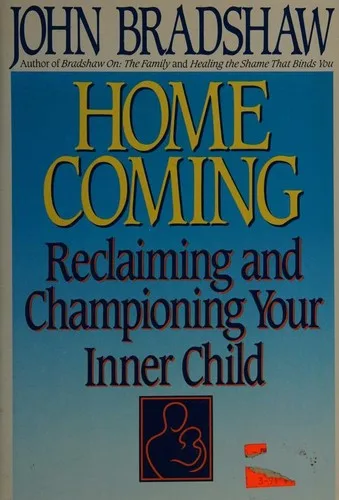
Homecoming
 72
72

Homecoming
Bradshaw's Homecoming remains a foundational text for understanding the pervasive influence of childhood on adult behavior, particularly concerning addiction and shame. His articulation of the "Inner Child" concept is both powerful and accessible, offering a framework that has guided countless individuals toward self-awareness. The book's strength lies in its directness and its ability to validate the often-unacknowledged pain of early experiences. However, the work is not without its limitations. At times, the therapeutic framework can feel somewhat prescriptive, and readers seeking nuanced explorations of societal influences on addiction might find it overly focused on individual developmental history. A particularly resonant passage is the detailed description of "toxic shame," which Bradshaw vividly illustrates as a corrosive force that undermines self-worth, a concept that continues to be central in many therapeutic modalities today. Homecoming offers a vital, albeit sometimes intense, path toward understanding oneself.
📝 Description
72
John Bradshaw's 1990 book Homecoming connects addictive behaviors to unresolved childhood trauma.
Published in 1990, John Bradshaw's Homecoming examines how addictive and compulsive behaviors often originate in unintegrated childhood emotional experiences. The book introduces the concept of the "Inner Child" to explain how these early experiences continue to shape adult psychology and actions. Bradshaw argues that many adult difficulties, including addiction, codependency, and perfectionism, are maladaptive coping mechanisms stemming from unresolved childhood trauma and unmet emotional needs.
This work is particularly useful for individuals struggling with addiction, codependency, shame, and low self-esteem. It also speaks to those who feel disconnected from their true selves or engage in self-destructive patterns. Therapists, counselors, and students of psychology will find the book valuable for its insights into the developmental roots of psychological distress and the practical application of the Inner Child concept in therapy.
Homecoming appeared during a time of growing recognition for the impact of childhood on adult life. Bradshaw's approach, centered on the "Inner Child," offered a clear way to understand these connections, building on earlier work by figures like Alice Miller and Arthur Janov. The book encouraged a wider discussion about family dynamics, trauma, and the healing power of addressing past wounds, fitting into a psychotherapeutic movement that favored experiential and psychodynamic methods.
Homecoming emerged from a psychotherapeutic tradition that sought to integrate psychological healing with a spiritual understanding of the self. While not strictly esoteric in the vein of ancient mysticism, it tapped into a growing cultural interest in the 'wounded healer' archetype and the idea that personal transformation involves confronting and integrating past psychological "shadows." The "Inner Child" concept, in this context, becomes a vessel for understanding deeply buried emotional material that, once acknowledged and healed, can lead to a more authentic and integrated sense of being.
💡 Why Read This Book?
• Gain a concrete understanding of the "Inner Child" concept, learning how unhealed childhood experiences manifest as adult compulsions and how to begin acknowledging this "lost child" self, as detailed in Bradshaw's 1990 publication. • Discover the specific dynamics of "toxic shame," a core theme explored through Bradshaw's analysis of childhood criticism and neglect, and understand its pervasive impact on self-esteem and behavior. • Learn to identify the characteristics of a "functional adult" versus a "dysfunctional adult" as presented in the text, providing a clear framework for self-assessment and personal growth beyond childhood patterns.
⭐ Reader Reviews
Honest opinions from readers who have explored this book.
❓ Frequently Asked Questions
What is the central concept of John Bradshaw's "Homecoming"?
The central concept is the "Inner Child," representing the unintegrated emotional experiences and unmet needs from childhood that continue to influence adult behavior, leading to issues like addiction and shame.
When was "Homecoming" by John Bradshaw first published?
"Homecoming" by John Bradshaw was first published in 1990, making it a significant work in the popular psychology literature of that era.
How does "Homecoming" explain addictive behaviors?
The book explains addictive behaviors as maladaptive coping mechanisms stemming from unresolved childhood trauma and "toxic shame," suggesting that individuals are seeking to numb or fulfill unmet needs from their past.
What is "toxic shame" according to John Bradshaw?
Toxic shame, as defined by Bradshaw, is a deep-seated feeling of worthlessness and defectiveness often internalized during childhood due to criticism, neglect, or abuse, which continues to impact adult self-perception.
Is "Homecoming" still relevant today?
Yes, "Homecoming" remains relevant as its core concepts, such as the Inner Child and toxic shame, are foundational to many contemporary therapeutic approaches for addiction, codependency, and trauma.
Who is the "functional adult" in Bradshaw's "Homecoming"?
The "functional adult" is an individual who has acknowledged and integrated their childhood experiences, particularly their "Inner Child," allowing them to live authentically and free from compulsive behaviors driven by past unmet needs.
🔮 Key Themes & Symbolism
The Inner Child
Bradshaw's "Inner Child" is an important concept, representing the emotional residue of our earliest years. This construct embodies the unmet needs, hurts, and joys that remain unconsciously active in adulthood. The work posits that many adult psychological struggles, including addiction, codependency, and perfectionism, are direct manifestations of an unacknowledged or wounded Inner Child. Healing involves recognizing, validating, and nurturing this inner aspect of the self, essentially bringing the child within home to a place of safety and love.
Toxic Shame
A pervasive theme is "toxic shame," distinct from healthy guilt. Bradshaw describes it as an internalized sense of being fundamentally flawed or worthless, often originating from critical or abusive childhood environments. This shame erodes self-esteem and can drive compulsive behaviors as individuals attempt to escape or compensate for their perceived defects. The book details how this "toxic" form of shame operates, its origins in family systems, and its detrimental effects on adult functioning, emphasizing that it is learned and therefore can be unlearned.
Addiction and Compulsive Behavior
Homecoming frames addiction and compulsive behaviors not as moral failings but as sophisticated, albeit destructive, attempts to self-medicate or fulfill the needs of the Inner Child. Whether it's substance abuse, overeating, workaholism, or codependency, Bradshaw argues these are strategies developed to cope with underlying pain and shame. The book explores the cycle of addiction, suggesting that true recovery lies in addressing the root causes within childhood experiences rather than merely managing symptoms.
Functional vs. Dysfunctional Adulthood
Bradshaw distinguishes between "functional" and "dysfunctional" adulthood based on the integration of one's past, particularly the Inner Child. A functional adult has successfully grieved and healed from childhood wounds, leading to emotional maturity, authentic self-expression, and healthy relationships. Conversely, a dysfunctional adult remains driven by unresolved childhood issues, exhibiting maladaptive behaviors, shame, and a persistent sense of emptiness. This dichotomy provides a framework for assessing personal progress in the healing journey.
💬 Memorable Quotes
Direct passages from the work, attributed to the author.
“The "Inner Child" is the part of us that carries the pain, the joy, the love, and the fear of our childhood.”
— This statement expresses the core idea that our formative years leave an indelible mark, and the emotional field of childhood continues to actively shape our present experience, influencing our reactions and behaviors.
“Toxic shame is the invisible cage that keeps us from living authentically.”
— This highlights the debilitating nature of toxic shame, portraying it as a self-imposed but externally-influenced prison that prevents individuals from expressing their true selves and living a fulfilling life.
“We are all searching for a "homecoming" – a return to our authentic selves.”
— This suggests that the ultimate human quest is a return to one's true essence, a journey of healing and integration that leads back to the core of who we are, free from the distortions of unresolved past experiences.
“Addiction is a spiritual disease of the "dysfunctional adult."”
— This interpretation frames addiction not merely as a physical or psychological issue, but as a profound spiritual crisis stemming from a disconnection with the authentic self, characteristic of those who have not healed their childhood wounds.
“To heal, we must grieve what we lost as children.”
— This emphasizes the necessity of acknowledging and mourning the emotional losses and unmet needs from childhood as a fundamental step in the process of psychological healing and achieving a "functional" adult state.
🌙 Esoteric Significance
Tradition
While not strictly an esoteric text in the vein of Hermeticism or Gnosticism, Bradshaw's "Homecoming" aligns with certain archetypal and psychological currents found within Western esoteric traditions. It echoes Gnostic themes of a fallen or wounded self seeking return to wholeness and Neoplatonic ideas of the soul's journey. The emphasis on reclaiming a lost or repressed "child self" can be seen as a modern psychological interpretation of alchemical processes of individuation or the Hermetic principle of "As Above, So Below," where the microcosm (the individual psyche) reflects universal patterns of fragmentation and reintegration.
Symbolism
The "Inner Child" itself functions as a potent symbol for the unintegrated, wounded aspect of the soul, a common motif in spiritual psychology. The "homecoming" signifies a return to the true self or divine spark, a journey of soul retrieval that is a recurring theme in shamanic traditions and many mystical paths. The concept of "toxic shame" can be interpreted as the shadow aspect, the unacknowledged darkness that prevents the light of the authentic self from shining, a concept explored across various esoteric philosophies.
Modern Relevance
Bradshaw's "Homecoming" continues to influence contemporary therapeutic modalities and spiritual growth movements. Therapists specializing in trauma, addiction, and attachment disorders frequently employ the "Inner Child" framework. It appeals to modern somatic experiencing practitioners and those exploring mindfulness and self-compassion, as both aim to connect with and heal fragmented aspects of the self. The book's ideas are foundational for many contemporary self-help authors and coaches who guide individuals on journeys of personal transformation and "re-parenting" their inner selves.
👥 Who Should Read This Book
• Individuals struggling with addiction or compulsive behaviors seeking to understand the psychological roots of their patterns, particularly those drawn to psychodynamic or self-help approaches. • Those experiencing persistent feelings of shame, low self-esteem, or a sense of not being "good enough," who are looking for a framework to explore these issues originating from childhood. • Therapists, counselors, and students of psychology interested in the "Inner Child" concept and its application in treating trauma, codependency, and developmental wounds.
📜 Historical Context
Published in 1990, John Bradshaw's "Homecoming" arrived at an important moment in popular psychology, a period marked by a growing societal consciousness regarding the impact of childhood trauma. The work tapped into and significantly amplified a burgeoning interest in concepts like the "Inner Child," building on earlier influential figures such as Alice Miller, whose "Drama of the Gifted Child" (1979) also explored the effects of parental dynamics on development. Bradshaw's accessible approach, however, made these ideas widely available, contributing to a cultural shift that increasingly recognized the roots of adult issues in early life experiences. This era also saw the rise of twelve-step programs and self-help literature, creating fertile ground for Bradshaw's message. While celebrated by many, his work, like others in this vein, sometimes faced criticism from more traditional psychoanalytic circles for its perceived simplification of complex psychological phenomena, though its impact on public understanding of shame and addiction was undeniable.
📔 Journal Prompts
Reflect on the earliest memories of your "Inner Child" and the messages it received.
Identify instances where "toxic shame" might be influencing your current decisions or self-perception.
Describe a "homecoming" moment where you felt truly connected to your authentic self.
How do the concepts of the "functional adult" and "dysfunctional adult" apply to your own life experiences?
Explore a personal coping mechanism and trace its potential origins back to unmet childhood needs.
🗂️ Glossary
Inner Child
The part of the adult psyche that retains the emotional experiences, memories, and unmet needs of childhood. It represents the unintegrated aspects of our early development that continue to influence present behavior.
Toxic Shame
A pervasive feeling of worthlessness and defectiveness, often internalized from childhood experiences of criticism, neglect, or abuse. It is a sense of being fundamentally flawed, distinct from healthy guilt over specific actions.
Functional Adult
An individual who has integrated their childhood experiences, acknowledged their "Inner Child," and lives with emotional maturity, authenticity, and healthy self-esteem, free from compulsive behaviors driven by past trauma.
Dysfunctional Adult
An individual whose adult life is significantly influenced by unhealed childhood wounds, "toxic shame," and unmet needs, often leading to maladaptive coping mechanisms, addiction, or codependency.
Codependency
A pattern of behavior in which a person's sense of self-worth is derived from helping others, often to the detriment of their own needs. It is frequently linked to unresolved childhood issues and a fear of abandonment.
Grieving
In the context of "Homecoming," this refers to the process of acknowledging and mourning the emotional losses, unmet needs, and painful experiences of childhood as a crucial step toward healing.
Re-parenting
The therapeutic process of consciously providing oneself with the nurturing, validation, and emotional support that may have been lacking during childhood, effectively becoming one's own "good parent."
🔮 Readers Also Liked
Browse all →








More by Bradshaw, John
All books →
More Free Occult Philosophy Books
View all →