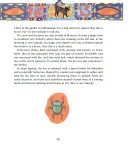
Keys to Perception

 83
83

Keys to Perception
Dominguez Jr.'s "Keys to Perception" distinguishes itself by approaching the esoteric not as a set of doctrines to be accepted, but as a field of experiential investigation. His examination of "perceptual fields" is particularly compelling, offering a nuanced way to consider how our internal states actively shape our external world. The strength lies in its intellectual rigor, providing a philosophical scaffolding for concepts often left vague in popular occultism. A limitation, however, is that the dense conceptual density might prove challenging for readers entirely new to philosophical inquiry or advanced esoteric theory. The discussion surrounding the "three worlds model" illustrates this; while insightful, it requires careful consideration to fully grasp its implications for practical work.
This is a text for the serious student of consciousness.
📝 Description
83
Ivo Dominguez Jr.'s 2017 book, Keys to Perception, examines how consciousness shapes our experience of the world.
Keys to Perception, published in 2017, offers a philosophical examination of consciousness and its role in constructing our reality. The book proposes a framework for understanding how subjective experience is formed and how it can be deliberately altered. It moves beyond simple dualistic thinking, suggesting a more unified perspective on the mind and the external world. This work is not a guide to developing psychic abilities, but rather a thoughtful investigation into the fundamental processes of awareness itself.
The text is particularly useful for those interested in the philosophical foundations of esoteric traditions, individuals wanting to sharpen their grasp of perception, and practitioners of various meditative practices. Readers who value clear thinking applied to mystical subjects will find it a beneficial resource. It is aimed at those who question standard views of reality and are ready to engage with challenging concepts concerning the self and the cosmos.
Emerging in the early 21st century, a period of renewed interest in consciousness studies, Dominguez Jr.'s work connects with a long tradition of esoteric thought. This lineage seeks to understand the mechanics of consciousness within occult frameworks, bridging inner experience and outer manifestation. The book engages with thinkers like Aleister Crowley and Dion Fortune, who also explored these themes, but Dominguez Jr. provides a distinct, contemporary perspective.
💡 Why Read This Book?
• Gain a structured understanding of "perceptual fields," a concept that reframes how your consciousness interacts with and shapes your reality, moving beyond passive observation to active co-creation. • Explore the "three worlds model" as detailed in the book, providing a conceptual map for navigating different dimensions of experience and awareness. • Understand the philosophical underpinnings of consciousness as presented by Dominguez Jr., offering a distinct perspective compared to earlier esoteric thinkers from the early 20th century.
⭐ Reader Reviews
Honest opinions from readers who have explored this book.
❓ Frequently Asked Questions
What is the primary focus of Ivo Dominguez Jr.'s 'Keys to Perception'?
The book primarily focuses on the philosophical and practical aspects of consciousness, exploring how perception actively shapes our experienced reality. It delves into concepts like perceptual fields and the three worlds model, offering a structured approach to understanding awareness.
When was 'Keys to Perception' first published?
'Keys to Perception' by Ivo Dominguez Jr. was first published in 2017, positioning it within contemporary discussions on consciousness and esoteric philosophy.
Does 'Keys to Perception' offer practical exercises?
While not a manual of simple techniques, the book provides a conceptual framework that informs practical work. Understanding concepts like "perceptual fields" can lead to more intentional shaping of experience.
Who would benefit most from reading 'Keys to Perception'?
Individuals interested in the philosophy of consciousness, practitioners of contemplative or esoteric disciplines seeking deeper theoretical grounding, and scholars of Western Esotericism would find this book especially beneficial.
How does 'Keys to Perception' relate to earlier esoteric thought?
It engages with and builds upon established esoteric concepts, offering a modern, systematic articulation. It can be seen as a contemporary contribution to the lineage of thinkers who explored consciousness, similar to figures from the early 20th century but with a unique perspective.
What is the 'three worlds model' mentioned in the book?
The 'three worlds model' is a conceptual framework presented by Dominguez Jr. to map different levels or dimensions of consciousness and experience, aiding in the understanding of how we interact with reality.
🔮 Key Themes & Symbolism
The Nature of Perceptual Fields
Dominguez Jr. posits that reality is not merely observed but actively constructed through what he terms "perceptual fields." These are not static external environments but dynamic arenas where consciousness and the external world interpenetrate. The work explores how our beliefs, intentions, and internal states act as filters and generators within these fields, influencing what we perceive and, consequently, what we experience. This challenges the notion of an objective reality entirely separate from the observer, suggesting a continuous feedback loop between the inner landscape and the outer manifestation.
The Three Worlds Model
A central conceptual tool presented in Keys to Perception is the "three worlds model." This framework offers a structured way to understand different strata of existence and awareness, often correlated with the physical, subtle, and causal or divine realms. Dominguez Jr. uses this model to analyze how consciousness operates at various levels and how interactions across these worlds shape our understanding and experience. It provides a map for practitioners to orient themselves and to recognize the interconnectedness of these distinct yet unified dimensions.
Consciousness as an Active Force
The book emphasizes the agency of consciousness, moving away from a passive reception model. It argues that consciousness is not merely a product of the brain but an active force that participates in the creation of reality. This perspective has significant implications for personal empowerment and spiritual development, suggesting that by understanding and refining our perceptual mechanisms, we can exert a more conscious influence over our lives and the world around us. The work encourages a disciplined approach to awareness.
Integration of Subjective and Objective
A key theme is the dissolution of rigid boundaries between the subjective and the objective. Dominguez Jr. argues for an integrated view where the internal world of the observer and the external world of phenomena are inextricably linked. This perspective draws from various esoteric traditions that posit a unified cosmos where mind and matter are different expressions of a single underlying reality. The book seeks to provide a coherent philosophical basis for this integration, applicable to both personal practice and broader understanding.
💬 Memorable Quotes
Direct passages from the work, attributed to the author.
“Perception is not a passive reception of external data; it is an active process of co-creation.”
— This statement captures the book's core thesis: that we are not mere spectators of reality but active participants in its formation through our conscious awareness and interpretive frameworks.
“The 'three worlds model' provides a conceptual map for understanding the multi-layered nature of existence.”
— This highlights the utility of Dominguez Jr.'s structured approach, offering a framework to analyze and differentiate various levels of consciousness and experience often discussed in esoteric traditions.
“Our beliefs and intentions shape the very 'perceptual fields' through which we engage with the world.”
— This interpretation underscores the dynamic relationship between our internal states (beliefs, intentions) and the external reality we experience, suggesting these internal factors are not just passive influences but active shapers.
“The external world is a reflection and interaction of our internal state.”
— This concise statement reflects the interconnectedness of the inner and outer realms, a recurring theme in esoteric philosophy that Dominguez Jr. elaborates upon with his concept of perceptual fields.
💡 Key Ideas
Editorial paraphrase of the work's core concepts — not direct quotes.
Understanding the mechanics of awareness is key to intentional living.
This paraphrase suggests that the book's exploration of consciousness is not purely theoretical but offers practical implications for individuals seeking greater control and purpose in their lives.
🌙 Esoteric Significance
Tradition
This work aligns with the Western Esoteric tradition, particularly drawing from Hermetic and Gnostic influences that emphasize the power of gnosis (knowledge) and the inner transformative potential of the individual. It builds upon a lineage that views consciousness as fundamental to reality, rather than a mere byproduct of material processes. Dominguez Jr. offers a modern synthesis, refining concepts of perception and reality construction that resonate with the perennial philosophy's emphasis on unified consciousness.
Symbolism
While not heavily reliant on overt symbolic imagery, the book's conceptual framework functions symbolically. The "three worlds model" acts as a symbolic map of consciousness, representing distinct but interconnected planes of existence. The concept of "perceptual fields" can be seen as a symbolic representation of the dynamic, responsive nature of reality, where the observer and observed are not separate entities but participants in a continuous symbolic exchange.
Modern Relevance
Contemporary thinkers and practitioners in fields like consciousness studies, neuro-philosophy, and modern occultism find value in Dominguez Jr.'s systematic approach. His work informs practices focused on intentional living, mindfulness, and reality-hacking, providing a philosophical grounding for those seeking to consciously influence their experience. Schools of modern magick and Western Esotericism often cite his work for its clarity in articulating complex metaphysical concepts relevant to current spiritual and philosophical discourse.
👥 Who Should Read This Book
• Students of Western Esotericism seeking a rigorous philosophical framework to understand consciousness and its role in reality construction. • Practitioners of contemplative disciplines (meditation, ritual work) looking to deepen their theoretical understanding of perception and subjective experience. • Philosophers and researchers interested in non-materialist perspectives on consciousness and the mind-body problem from an esoteric viewpoint.
📜 Historical Context
Published in 2017, "Keys to Perception" arrived during a period of renewed interest in consciousness studies, often bridging the gap between contemporary psychology, philosophy of mind, and ancient esoteric traditions. The early 21st century saw a proliferation of texts attempting to synthesize these disparate fields. Dominguez Jr.'s work stands in dialogue with, rather than as a direct continuation of, the foundational occult revival figures of the late 19th and early 20th centuries, such as Aleister Crowley and Dion Fortune, who also explored the mechanics of consciousness within occult frameworks. However, "Keys to Perception" offers a distinctively modern, systematic articulation, often engaging more directly with philosophical concepts than its predecessors. While not directly engaging with a specific competing school of thought in a confrontational manner, it implicitly challenges purely materialistic or reductionist views of consciousness prevalent in mainstream academia, offering a more integrated, experiential model rooted in esoteric principles.
📔 Journal Prompts
The nature of your personal "perceptual fields" and their influence on daily experiences.
Mapping your own experiences onto the "three worlds model" presented in the text.
Reflecting on moments where your internal state demonstrably altered your perception of external events.
Analyzing how your core beliefs might be actively shaping your encountered reality.
Exploring the concept of consciousness as an active, co-creative force in your life.
🗂️ Glossary
Perceptual Fields
A concept denoting the dynamic interplay between consciousness and the external environment, suggesting that reality is actively constructed and experienced through these fields rather than passively observed.
Three Worlds Model
A conceptual framework presented by Dominguez Jr. to map different dimensions or levels of consciousness and existence, aiding in the analysis of experience and awareness.
Gnosis
In esoteric traditions, gnosis refers to direct, intuitive knowledge or spiritual insight, often considered a primary means of liberation or enlightenment, contrasting with purely intellectual understanding.
Hermeticism
A philosophical and religious tradition based on the purported teachings of Hermes Trismegistus, emphasizing principles like "As Above, So Below" and the interconnectedness of all things through divine intellect.
Subjective Experience
The personal, internal experience of consciousness, including thoughts, feelings, sensations, and perceptions, which is unique to the individual experiencing it.
Objective Reality
The concept of a reality that exists independently of individual consciousness or perception, often considered to be the domain of empirical science.
Co-creation
The idea that reality is not solely determined by external forces but is jointly produced through the interaction of individual consciousness and the broader universal forces or structures.
🔮 Readers Also Liked
Browse all →







More Free Occult Philosophy Books
View all →