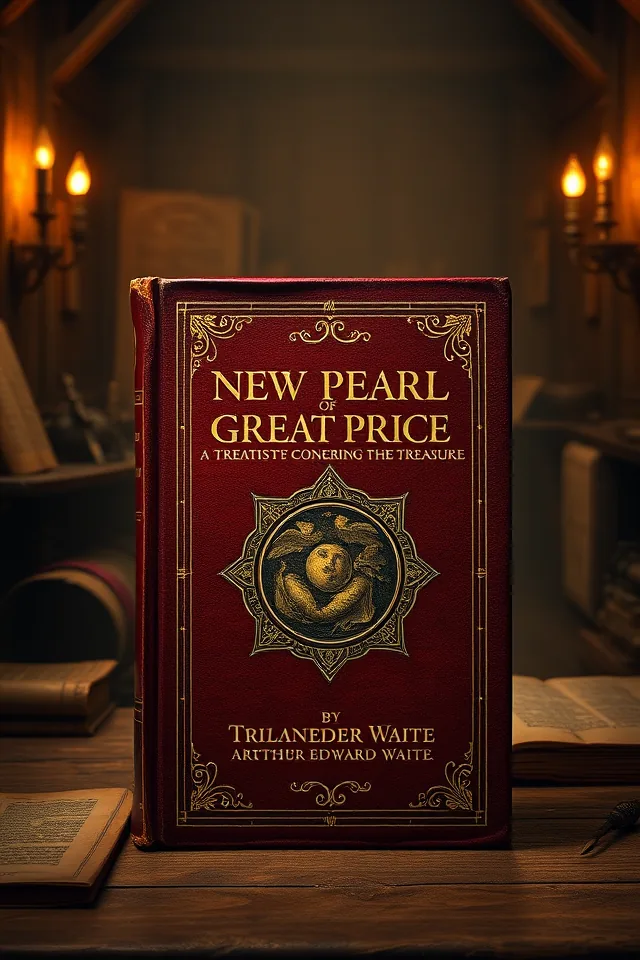
New Pearl of Great Price. a Treatise Concerning the Treasure and Most Precious Stone of the Philosophers. or the Method and Procedure of This Divine Art; with Observations Drawn from the Works of Arnoldus, Raymondus, Rhasis, Albertus, and Michael Sco
 61
61

New Pearl of Great Price. a Treatise Concerning the Treasure and Most Precious Stone of the Philosophers. or the Method and Procedure of This Divine Art; with Observations Drawn from the Works of Arnoldus, Raymondus, Rhasis, Albertus, and Michael Sco


Review by Balthazar Finch (Senior Critic, Occult Philosophy) — 'New Pearl of Great Price' by Arthur Edward Waite is a masterful exploration of alchemical lore. Waite's ability to synthesize the teachings of renowned alchemists into a coherent and accessible narrative is truly remarkable. The book is a treasure trove of esoteric insights, making it an essential read for anyone interested in the occult and mystical arts. Waite's prose is both evocative and scholarly, providing a deep dive into the philosophical and symbolic underpinnings of alchemy. This work is particularly valuable for practitioners seeking to understand the divine art's methods and procedures. It is a must-have for any serious student of the esoteric traditions.
📝 Description
61
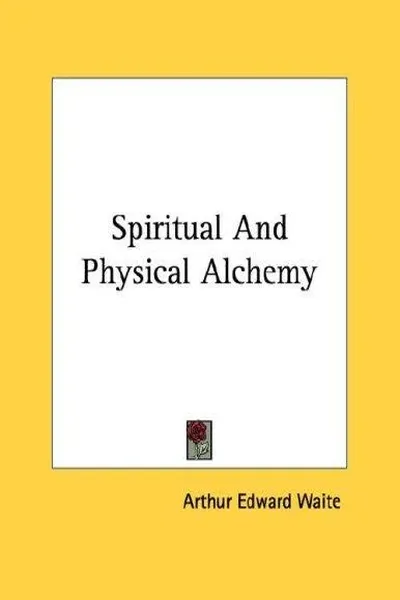
Arthur Edward Waite published 'New Pearl of Great Price' in 1894, analyzing alchemical texts attributed to Arnold of Villanova.
Arthur Edward Waite's 1894 text, 'New Pearl of Great Price', examines the history and practice of alchemy. Waite compiles and comments upon writings attributed to figures like Arnoldus, Raymondus Lullus, Rhasis, Albertus Magnus, and Michael Scot. He focuses on the alchemical concepts of transformation and the legendary philosopher's stone.
The book presents alchemy not just as a chemical process but as a philosophical and spiritual discipline. Waite draws connections between alchemical symbolism and broader esoteric traditions. He aims to clarify the methods and theories behind this ancient art, drawing on the specific textual sources he analyzes.
This work sits within the broader late 19th-century revival of interest in Western esotericism. Waite, a significant figure in occult studies, sought to analyze and often reinterpret historical esoteric traditions. 'New Pearl of Great Price' contributes to this by examining alchemical literature, a practice often associated with Hermeticism and Kabbalistic thought. Waite's approach typically involves textual scholarship and an interpretation of symbols as having spiritual significance.
💡 Why Read This Book?
Read 'New Pearl of Great Price' to gain a deeper understanding of alchemy and its mystical significance. This book is ideal for seekers of hidden knowledge, scholars of esoteric studies, and practitioners of the divine art. Waite's comprehensive approach to alchemical symbolism and methodology offers a unique perspective on transformation and enlightenment.
⭐ Reader Reviews
Honest opinions from readers who have explored this book.
❓ Frequently Asked Questions
What is the primary focus of 'New Pearl of Great Price'?
The primary focus is the philosopher's stone and the methods of alchemy, drawing from the works of legendary alchemists.
Who is the intended audience for this book?
The intended audience includes seekers of spiritual truth, scholars of esoteric studies, and practitioners of alchemy.
What makes this book unique?
The book's uniqueness lies in its synthesis of insights from renowned alchemists and its deep exploration of alchemical symbolism.
How does Waite approach the subject of alchemy?
Waite approaches alchemy through a blend of scholarly research and mystical contemplation, providing both historical context and philosophical depth.
Is this book suitable for beginners?
While it is accessible, prior knowledge of alchemy and esoteric studies would enhance the reader's understanding and appreciation.
🔮 Key Themes & Symbolism
The Philosopher's Stone
The philosopher's stone is the central symbol of alchemy, representing the ultimate goal of transformation and enlightenment. Waite looks at its mystical significance, exploring how it embodies the union of opposites and the attainment of spiritual perfection.
Alchemical Symbolism
Alchemy is rich in symbolism, and Waite's work is no exception. He unpacks the deeper meanings behind alchemical symbols, revealing their esoteric significance and how they guide the practitioner on their journey towards enlightenment.
Methodology of Alchemy
Waite provides a detailed exploration of the methods and procedures of alchemy, drawing from the works of legendary alchemists. This includes the preparation of materials, the processes of transformation, and the philosophical underpinnings of each step.
💬 Memorable Quotes
Direct passages from the work, attributed to the author.
“Alchemy is the art of transforming the base into the noble.”
— This highlights the transformative power of alchemy, both on a physical and spiritual level.
“Symbolism is the language of the divine.”
— This underscores the esoteric significance of alchemical symbols and their role in spiritual enlightenment.
💡 Key Ideas
Editorial paraphrase of the work's core concepts — not direct quotes.
The philosopher's stone is the key to unlocking the mysteries of the universe.
This quote underscores the central importance of the philosopher's stone in alchemy.
The journey of alchemy is a journey of the soul.
This quote emphasizes the spiritual dimension of alchemical practice.
The methods of alchemy are as ancient as they are profound.
This quote highlights the timeless and deep wisdom embedded in alchemical practices.
🌙 Esoteric Significance
Tradition
This book belongs to the Hermetic tradition, which emphasizes the pursuit of spiritual enlightenment through the study of ancient wisdom and mystical practices. Hermeticism is rooted in the teachings of Hermes Trismegistus and encompasses a wide range of esoteric disciplines, including alchemy.
Symbolism
Key symbols in this book include the philosopher's stone, the union of opposites, and the transformative processes of alchemy. These symbols represent the journey towards spiritual perfection and the attainment of divine knowledge.
Modern Relevance
This work remains relevant today for modern practitioners of alchemy and Hermeticism. It provides a deep understanding of alchemical symbolism and methodology, which are still studied and practiced in esoteric circles. Contemporary scholars and seekers continue to draw inspiration from Waite's insights.
👥 Who Should Read This Book
Beginners in the field of alchemy will benefit from the foundational knowledge and clear explanations provided. Scholars of esoteric studies will appreciate the depth of research and the synthesis of historical alchemical texts. Spiritual seekers will find inspiration in the mystical and transformative themes. Practitioners of alchemy will gain practical insights into methods and procedures. Overall, anyone interested in the occult, mysticism, and the hidden knowledge of ancient traditions will find value in this work.
📜 Historical Context
Arthur Edward Waite's 'New Pearl of Great Price' was written during a time of renewed interest in esoteric and occult studies. The late 19th and early 20th centuries saw a resurgence in the study of alchemy, Hermeticism, and other mystical traditions. Waite's work is a evidence of this revival, drawing from the works of legendary alchemists and providing a comprehensive exploration of the divine art. The book's influence can be seen in the ongoing fascination with alchemy and its symbolism in modern esoteric and spiritual practices.
📔 Journal Prompts
Reflect on the symbolism of the philosopher's stone in your own spiritual journey.
Consider how the union of opposites manifests in your life and practices.
Explore the transformative power of alchemical processes in a modern context.
Write about the historical significance of alchemy in the context of esoteric traditions.
Contemplate the role of symbolism in your understanding of divine knowledge.
🗂️ Glossary
Philosopher's Stone
The ultimate goal of alchemy, representing spiritual perfection and the attainment of divine knowledge.
Hermeticism
An esoteric tradition rooted in the teachings of Hermes Trismegistus, emphasizing spiritual enlightenment through ancient wisdom.
Alchemical Symbolism
The use of symbols in alchemy to represent mystical and spiritual concepts, guiding the practitioner towards enlightenment.
Divine Art
The mystical and transformative practices of alchemy, aimed at achieving spiritual and material perfection.
Union of Opposites
A central principle in alchemy, representing the harmonization of contrasting elements to achieve balance and wholeness.
This book appears in 3 collections
🔮 Readers Also Liked
Browse all →







More by Arthur Edward Waite
All books →
From the “Hermeticism” Collection
View all →





![The alchemy of happiness, tr. from the Turk. [abridgement] by H.A. Homes](/img/thumb/the-alchemy-of-happiness-tr-from-the-turk-abridgement-by-h-a-homes-ab-mid-mu-ammad-b-mu-ammad-ghazz-l.webp)


More Free Alchemy & Hermeticism Books
View all →![Easie Introduction to the Philosophers Magical Gold : To Which Is Added, Zor[o]asters Cave](/img/thumb/easie-introduction-to-the-philosophers-magical-gold-to-which-is-added-zor-o-asters-cave-thor-george.webp)