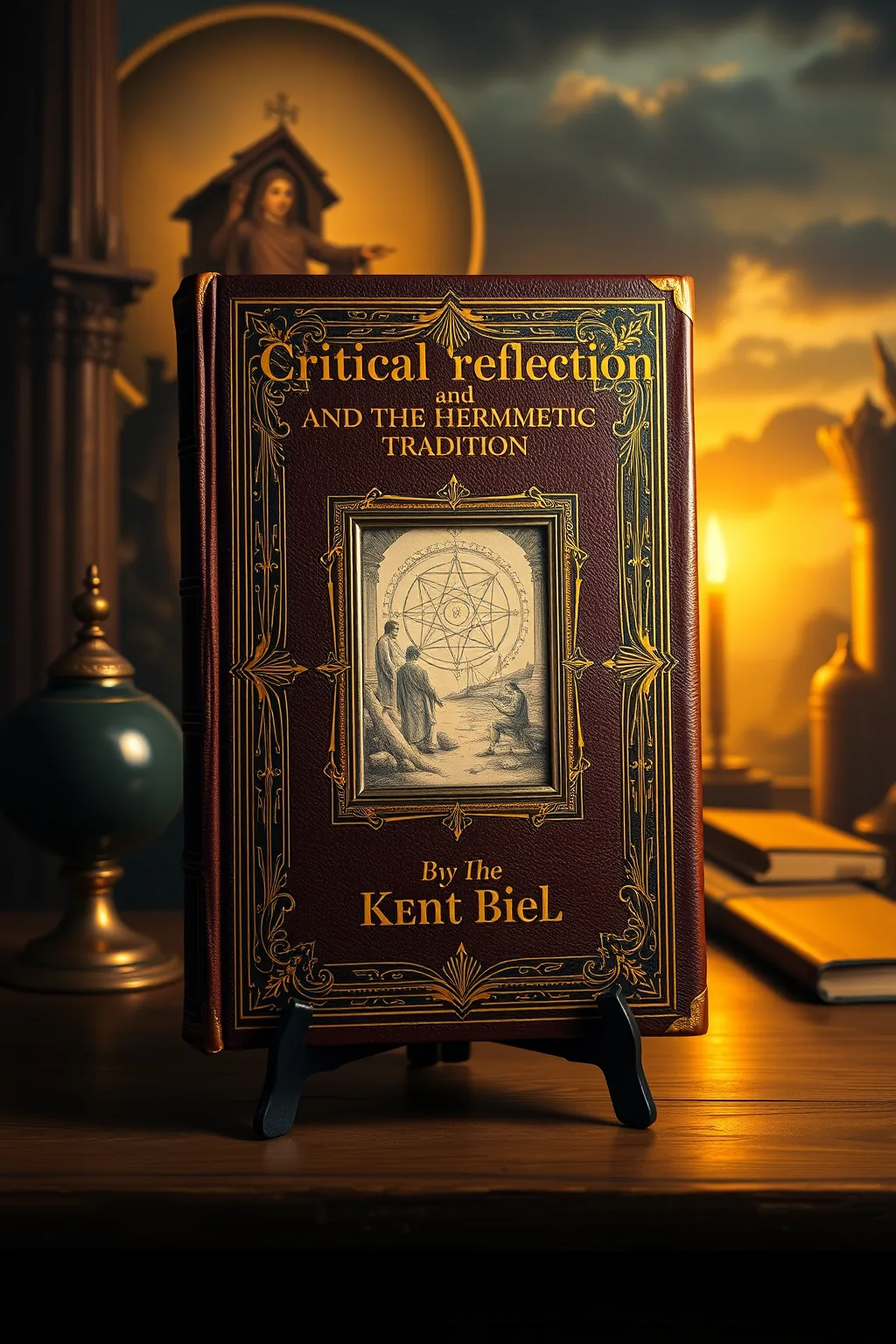
Critical reflection and the hermetic tradition
 81
81

Critical reflection and the hermetic tradition
Kent Biel’s 1984 examination, *Critical Reflection and the Hermetic Tradition*, offers a welcome counterpoint to purely devotional or sensationalist accounts of Hermeticism. It asserts that a robust tradition of critical self-examination has always been present, often overlooked in favor of mystical pronouncements. Biel effectively highlights the intellectual architecture supporting esoteric practice, demonstrating how rigorous analysis has been integral to the tradition’s longevity. A notable strength is the detailed exploration of how medieval scholars, such as those influenced by the rediscovery of classical texts, grappled with Hermetic doctrines. However, the book occasionally suffers from a density that can make its arguments challenging to follow for those not already steeped in the relevant philosophical and historical discourse. The discussion around the *asclepius* as a point of critical engagement, while illuminating, could benefit from further elaboration for a broader audience. Ultimately, Biel provides a vital, albeit demanding, perspective on the intellectual dynamism within Hermeticism.
📝 Description
81
Published in 1984, Critical Reflection and the Hermetic Tradition examines self-assessment within Hermeticism.
Kent Biel's book analyzes how practitioners in the Hermetic lineage have historically employed critical self-assessment and intellectual rigor. It moves past surface-level interpretations to discuss the internal dialogues and changing methods that have defined this esoteric current from its beginning. The work is for serious students of Western Esotericism, especially those focused on Hermeticism. It suits scholars, researchers, and practitioners wanting a deeper grasp of Hermetic thought's intellectual foundations and historical evolution, avoiding introductory material. Biel's study contextualizes Hermeticism within wider intellectual histories, distinguishing it from simple occultism and emphasizing its philosophical aspects. The book traces this lineage back to Hermes Trismegistus and the Renaissance revival.
This book situates Hermeticism within the broader currents of Western Esotericism, specifically addressing its philosophical and intellectual dimensions. It emerges from a scholarly context that sought to integrate esoteric traditions into academic study, moving beyond purely occultist frameworks. By focusing on the internal practices of critical reflection, Biel highlights a lineage of intellectual rigor within Hermeticism that connects ancient roots to Renaissance revivals and beyond. The work acknowledges figures like Frances Yates and Antoine Faivre in its historical placement.
💡 Why Read This Book?
• Understand the inherent critical analysis within Hermeticism, not just its mystical pronouncements, by examining Biel's detailed account of intellectual debates since the Renaissance. • Gain a nuanced perspective on esoteric traditions by learning how the 1984 publication contextualized Hermeticism against contemporary philosophical movements. • Discover specific hermeneutic techniques used within the tradition by studying Biel's analysis of how practitioners interpreted texts like the Corpus Hermeticum.
⭐ Reader Reviews
Honest opinions from readers who have explored this book.
❓ Frequently Asked Questions
What is the historical period covered by 'Critical Reflection and the Hermetic Tradition'?
The book primarily examines the Hermetic tradition from its roots, with a significant focus on its revival during the Renaissance and its subsequent development through the modern era, particularly as it was understood in 1984.
Does the book discuss specific Hermetic texts?
Yes, the work explores foundational texts such as the Corpus Hermeticum and the Asclepius, analyzing how critical reflection was applied to their interpretation and dissemination.
Who was Kent Biel and what was his background?
Kent Biel was an author and scholar focused on esoteric traditions. His work, first published in 1984, aimed to provide a rigorous academic study of Hermeticism, distinguishing it from less critical occult literature.
What is the primary argument of the book regarding Hermeticism?
The central argument is that Hermeticism has a long-standing tradition of critical reflection and intellectual inquiry, challenging the notion that it is solely a system of unexamined mystical beliefs.
How does this book differ from other works on Hermeticism published around 1984?
Unlike more general or purely mystical introductions, this 1984 publication emphasizes the philosophical and critical dimensions, engaging with scholarly debates of the era and placing Hermeticism within broader intellectual currents.
What specific esoteric lineage does the book focus on?
The book concentrates specifically on the Western Hermetic tradition, tracing its intellectual evolution and the internal dialogues that shaped its practice and philosophy.
🔮 Key Themes & Symbolism
The Dialectic of Tradition and Critique
This theme explores the inherent tension within the Hermetic tradition between preserving ancient wisdom and subjecting it to contemporary critical analysis. Biel argues that this dialectic has been crucial for Hermeticism’s survival and evolution, preventing stagnation. The work examines how practitioners, from Renaissance scholars to early 20th-century thinkers, navigated this by interpreting foundational texts like the Corpus Hermeticum not as static dogma but as living sources for intellectual debate and personal gnosis.
Hermeticism as a Philosophical Discipline
Challenging the common perception of Hermeticism as purely mystical or occult, this theme positions it as a rigorous philosophical discipline. Biel highlights the structured methodologies and intellectual frameworks employed by adherents, demonstrating a lineage of thought that values reason and critical inquiry alongside spiritual experience. The book illustrates how this philosophical grounding allowed Hermeticism to engage with and influence broader intellectual movements throughout history.
The Role of Interpretation in Esotericism
This theme focuses on the hermeneutic process central to esoteric traditions. It details how the interpretation of symbols, allegories, and cryptic texts within Hermeticism is not arbitrary but governed by specific principles of reflection and critical engagement. Biel discusses how this interpretive discipline fosters personal development and ensures the tradition’s adaptability, allowing core teachings to remain relevant across different historical epochs and intellectual contexts.
Internal Evolution of Hermetic Thought
The book traces the internal evolution of Hermetic thought, moving beyond external influences to examine how the tradition has reformed and reinterpreted itself from within. It underscores that Hermeticism is not a monolithic entity but a dynamic, evolving system. Biel’s analysis, stemming from the context of its 1984 publication, explores how different schools and eras within Hermeticism engaged in critical self-assessment to maintain their intellectual vitality.
💬 Memorable Quotes
Direct passages from the work, attributed to the author.
“The tradition's persistence owes less to immutable doctrine than to its capacity for internal critique.”
— This interpretation suggests that the enduring nature of Hermeticism is not due to rigid, unchanging beliefs, but rather to its inherent ability to question, re-evaluate, and adapt its own principles and interpretations over time.
“Understanding the Asclepius required more than textual familiarity; it demanded a hermeneutic discipline.”
— This highlights that engaging deeply with Hermetic texts, such as the Asclepius, necessitates a sophisticated approach to interpretation, moving beyond simple reading to a disciplined process of critical analysis and understanding.
“Renaissance humanism provided fertile ground for Hermetic texts, but also tools for their critical examination.”
— This suggests that while the Renaissance era saw a surge in interest and study of Hermetic works, the intellectual climate also fostered critical scholarship that questioned and analyzed these texts, shaping their reception.
“The path to gnosis often runs parallel to rigorous intellectual dissection.”
— This concept proposes that the attainment of spiritual knowledge or enlightenment (gnosis) within the Hermetic framework is frequently achieved through, or alongside, intense intellectual analysis and critical examination of concepts and texts.
“Exoteric pronouncements often mask a deeper, critically examined esoteric core.”
— This suggests that the outward-facing teachings of Hermeticism may serve as a veil for more profound, inwardly developed ideas that have undergone significant critical scrutiny and refinement by practitioners.
🌙 Esoteric Significance
Tradition
This work is firmly situated within the study of the Western Hermetic tradition, a lineage that posits its origins with the legendary Hermes Trismegistus. It departs from purely historical or devotional accounts by emphasizing the internal philosophical and critical dimensions that have characterized its practice and textual interpretation across centuries, from the Renaissance revival to modern esoteric movements.
Symbolism
The book often engages with symbols like the Caduceus, representing balance, duality, and the flow of cosmic energy, and the Ouroboros, symbolizing cyclicality, self-creation, and the unity of all things. These are not merely decorative but represent complex philosophical concepts that require critical reflection for true understanding within the Hermetic framework.
Modern Relevance
Contemporary thinkers and practitioners in fields such as comparative esotericism, integral philosophy, and certain branches of depth psychology draw upon the understanding of critical self-reflection within Hermeticism. The book's emphasis on intellectual rigor provides a model for those seeking to integrate esoteric knowledge with modern critical thought, fostering a more sophisticated approach to spiritual inquiry today.
👥 Who Should Read This Book
• Students of Western Esotericism seeking to understand the intellectual underpinnings of Hermeticism, moving beyond introductory material. • Comparative religion scholars interested in the philosophical evolution of esoteric traditions and their internal critical dialogues. • Practitioners of Hermetic arts who wish to deepen their theoretical understanding and engage with the tradition's historical capacity for self-examination.
📜 Historical Context
Published in 1984, Kent Biel's *Critical Reflection and the Hermetic Tradition* emerged during a period of burgeoning academic interest in Western Esotericism, influenced by scholars like Frances Yates whose work on Renaissance Neoplatonism and Hermeticism had already reshaped the field. This era saw a concerted effort to move beyond sensationalist accounts of magic and occultism, seeking to understand these traditions as legitimate intellectual and philosophical currents. Biel's work contributed to this by focusing on the internal intellectual rigor of Hermeticism, differentiating it from contemporary movements that might have been more focused on immediate psychic phenomena or devotional practices. The book engaged with a scholarly discourse that was increasingly examining the historical roots of Hermeticism, tracing its lineage back to classical antiquity and its complex reception during the Renaissance, a period marked by figures like Marsilio Ficino who were deeply involved with Hermetic texts. This context allowed for a more nuanced understanding of how Hermetic ideas interacted with prevailing philosophical and religious thought.
📔 Journal Prompts
The concept of 'hermeneutic discipline' within the Hermetic tradition.
The tension between preserving ancient wisdom and critical re-evaluation.
How the *Asclepius* was used as a text for critical engagement.
The philosophical framework underpinning Hermetic practice.
Distinguishing exoteric pronouncements from esoteric examination.
🗂️ Glossary
Corpus Hermeticum
A collection of ancient Greek philosophical and religious writings attributed to Hermes Trismegistus, forming a foundational text for the Hermetic tradition. Its interpretation has been a subject of critical study for centuries.
Hermeticism
An esoteric tradition based on writings attributed to Hermes Trismegistus, emphasizing spiritual wisdom, the interconnectedness of the cosmos, and the potential for human transformation through knowledge (gnosis).
Gnosis
Spiritual knowledge or insight, particularly as understood in esoteric traditions, that leads to salvation or enlightenment. In Hermeticism, it is often attained through intellectual inquiry and mystical experience.
Renaissance Revival
The period, primarily in the 15th and 16th centuries, when ancient Hermetic texts, notably the Corpus Hermeticum, were rediscovered and widely studied, significantly influencing Renaissance philosophy, art, and magic.
Hermeneutic Discipline
A systematic and critical approach to interpreting texts, symbols, and doctrines. Within Hermeticism, it refers to the rigorous methods used to understand its own foundational writings and concepts.
Exoteric vs. Esoteric
Exoteric knowledge is public and accessible, while esoteric knowledge is private, intended for initiates, and often requires specific understanding or training to grasp its deeper meaning.
Asclepius
A dialogue attributed to Hermes Trismegistus, forming part of the Hermetic corpus. It discusses cosmology, theology, and the nature of humanity, and has been a significant text for critical analysis within the tradition.
🔮 Readers Also Liked
Browse all →









More by Kent Biel
All books →
More Free Alchemy & Hermeticism Books
View all →