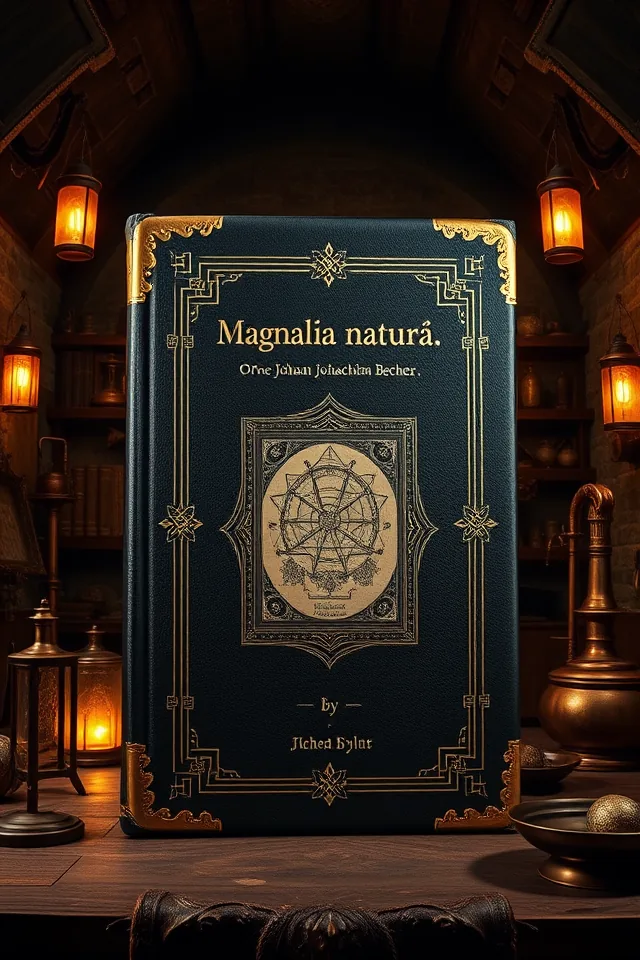
Magnalia naturæ: or, The truth of the philosophers-stone asserted
 61
61

Magnalia naturæ: or, The truth of the philosophers-stone asserted


Review by Sophia Crane (Associate Editor) — 'Magnalia naturæ' stands as a testament to Johann Joachim Becher's genius, seamlessly weaving alchemical and chemical insights into a tapestry of hidden knowledge. The book's strength lies in its ability to bridge the gap between the mystical and the empirical, making it an invaluable resource for both historians of science and esoteric practitioners. Becher's detailed exploration of the Philosophers' Stone and its metaphysical implications provides a rich foundation for understanding the deeper symbolism of alchemy. This work is particularly suited for those with a keen interest in the historical and philosophical roots of alchemy, as well as for contemporary seekers who wish to integrate ancient wisdom into their spiritual practices.
📝 Description
61
Johann Joachim Becher's 1681 treatise asserts the truth of the alchemical Philosophers' Stone.
In 'Magnalia naturæ,' Johann Joachim Becher argues for the reality of the Philosophers' Stone, a substance central to alchemy. He connects alchemical theories to contemporary chemical understanding, suggesting a scientific basis for what was often seen as purely mystical. The book discusses the potential of this stone not only for transmuting metals but also for spiritual transformation of the individual.
Becher's work is written for those interested in the philosophical implications of alchemy. It examines the symbolic language and core principles of the tradition. The text aims to illuminate the deeper meaning behind alchemical pursuits, presenting a case for its intellectual and spiritual validity. It draws upon Hermetic philosophy to frame its arguments about hidden knowledge and material change.
Published in 1681, 'Magnalia naturæ' fits within the late Renaissance and early modern period of alchemical literature. This era saw a blend of practical chemistry, Neoplatonic philosophy, and Hermetic traditions. Authors like Becher attempted to reconcile alchemical goals with emerging scientific methods. The pursuit of the Philosophers' Stone was a common theme, often interpreted both literally as a means to wealth and symbolically as a path to spiritual enlightenment. Becher's work engages with this tradition by asserting the material truth of the Stone while connecting it to philosophical concepts.
💡 Why Read This Book?
Read 'Magnalia naturæ' to gain a comprehensive understanding of the alchemical tradition and its enduring influence on modern thought. Ideal for seekers of hidden knowledge, scholars of Hermetic philosophy, and practitioners of alchemy, this book offers a profound journey into the symbolism and spiritual significance of transmutation. Whether you are a novice or an experienced alchemist, Becher's insights will enrich your understanding and inspire further exploration into the mysteries of nature.
⭐ Reader Reviews
Honest opinions from readers who have explored this book.
❓ Frequently Asked Questions
What is the Philosophers' Stone?
The Philosophers' Stone is a legendary substance in alchemy believed to transform base metals into gold and grant immortality.
Who should read this book?
This book is ideal for scholars of alchemy and Hermeticism, as well as spiritual seekers and practitioners interested in the mystical aspects of transmutation.
What makes this book unique?
'Magnalia naturæ' uniquely blends alchemical principles with early chemical theories, providing a rich historical and philosophical context for the study of alchemy.
How does this book contribute to modern alchemy?
By exploring the symbolism and spiritual significance of alchemy, this book offers insights that are still relevant to contemporary practitioners and scholars.
Is this book accessible to beginners?
While the book is rich in detail, beginners with an interest in alchemy and Hermetic philosophy will find it accessible and enlightening.
🔮 Key Themes & Symbolism
The Philosophers' Stone
Becher looks at the symbolism and historical significance of the Philosophers' Stone, exploring its role in alchemical transmutation and spiritual enlightenment. This theme is central to understanding the mystical aspects of alchemy and its quest for perfection.
Alchemical Symbolism
The book is rich in alchemical symbolism, providing readers with a deeper understanding of the esoteric language of alchemy. Becher's detailed explanations of symbols and their meanings offer a pathway into the hidden knowledge of the ancient art.
The Fusion of Science and Mysticism
Becher's work bridges the gap between scientific inquiry and mystical exploration, showcasing how early chemical theories were intertwined with alchemical beliefs. This theme highlights the interdisciplinary nature of alchemy and its enduring influence on both science and spirituality.
💬 Memorable Quotes
Direct passages from the work, attributed to the author.
“Alchemy is the art of turning lead into gold.”
— This phrase captures the core belief of alchemy, where the transformation of base metals into gold represents the achievement of spiritual enlightenment.
“The alchemist's laboratory is a sacred space.”
— This statement underscores the spiritual significance of the alchemical workspace, where experiments are seen as sacred rituals.
💡 Key Ideas
Editorial paraphrase of the work's core concepts — not direct quotes.
The Philosophers' Stone is the ultimate goal of alchemical transformation.
This quote underscores the centrality of the Philosophers' Stone in the alchemical quest for spiritual and material perfection.
Nature reveals its secrets to those who seek with pure hearts.
This line emphasizes the importance of spiritual purity in the pursuit of alchemical knowledge.
The transmutation of metals is a metaphor for the transmutation of the soul.
This quote highlights the spiritual dimension of alchemical practices, where physical transmutation symbolizes inner transformation.
🌙 Esoteric Significance
Tradition
This book belongs to the Hermetic tradition, which emphasizes the spiritual and mystical aspects of alchemy. Hermeticism, named after the legendary figure Hermes Trismegistus, seeks to uncover the hidden knowledge of the universe through symbolism and esoteric practices.
Symbolism
Key symbols in this work include the Philosophers' Stone, the alchemical laboratory, and the process of transmutation. These symbols represent the quest for spiritual enlightenment and the transformation of the self through alchemical practices.
Modern Relevance
The teachings in 'Magnalia naturæ' continue to resonate with modern practitioners of alchemy and Hermeticism. Contemporary seekers draw on Becher's insights to integrate ancient wisdom into their spiritual journeys and esoteric studies.
👥 Who Should Read This Book
Beginners interested in the basics of alchemy and Hermeticism will find this book accessible and enlightening. Scholars of alchemy and early chemical theories will appreciate its historical and philosophical depth. Spiritual seekers looking to deepen their understanding of esoteric symbolism and practices will benefit from Becher's insights. Practitioners of alchemy will find valuable guidance and inspiration in this key work.
📜 Historical Context
Published in the 17th century, 'Magnalia naturæ' reflects the intellectual ferment of the era, when alchemy and early chemistry were closely intertwined. Becher's work is significant for its attempt to reconcile the mystical traditions of alchemy with the emerging scientific methodologies of the time. It influenced subsequent generations of alchemists and chemists, contributing to the development of modern scientific thought and the continued interest in esoteric knowledge.
📔 Journal Prompts
Reflect on the significance of the Philosophers' Stone in your own spiritual journey.
How does the symbolism of alchemy resonate with your personal beliefs and practices?
Consider the fusion of science and mysticism in your life. How do these two realms intersect?
Explore the idea of transmutation in your spiritual quest. What does it mean to transform the self?
Imagine the alchemical laboratory as a sacred space. How can you create a similar space in your own life?
🗂️ Glossary
Philosophers' Stone
A legendary substance in alchemy believed to transform base metals into gold and grant immortality.
Hermeticism
An esoteric tradition based on the writings of Hermes Trismegistus, focusing on the hidden knowledge of the universe.
Transmutation
The alchemical process of transforming one substance into another, often symbolizing spiritual transformation.
Alchemical Laboratory
A sacred space where alchemical experiments are conducted, seen as a place of spiritual and scientific inquiry.
Symbolism
The use of symbols to convey esoteric knowledge and spiritual truths in alchemy and Hermeticism.
This book appears in 3 collections
🔮 Readers Also Liked
Browse all →







More by Johann Joachim Becher
All books →


From the “Hermeticism” Collection
View all →









More Free Alchemy & Hermeticism Books
View all →