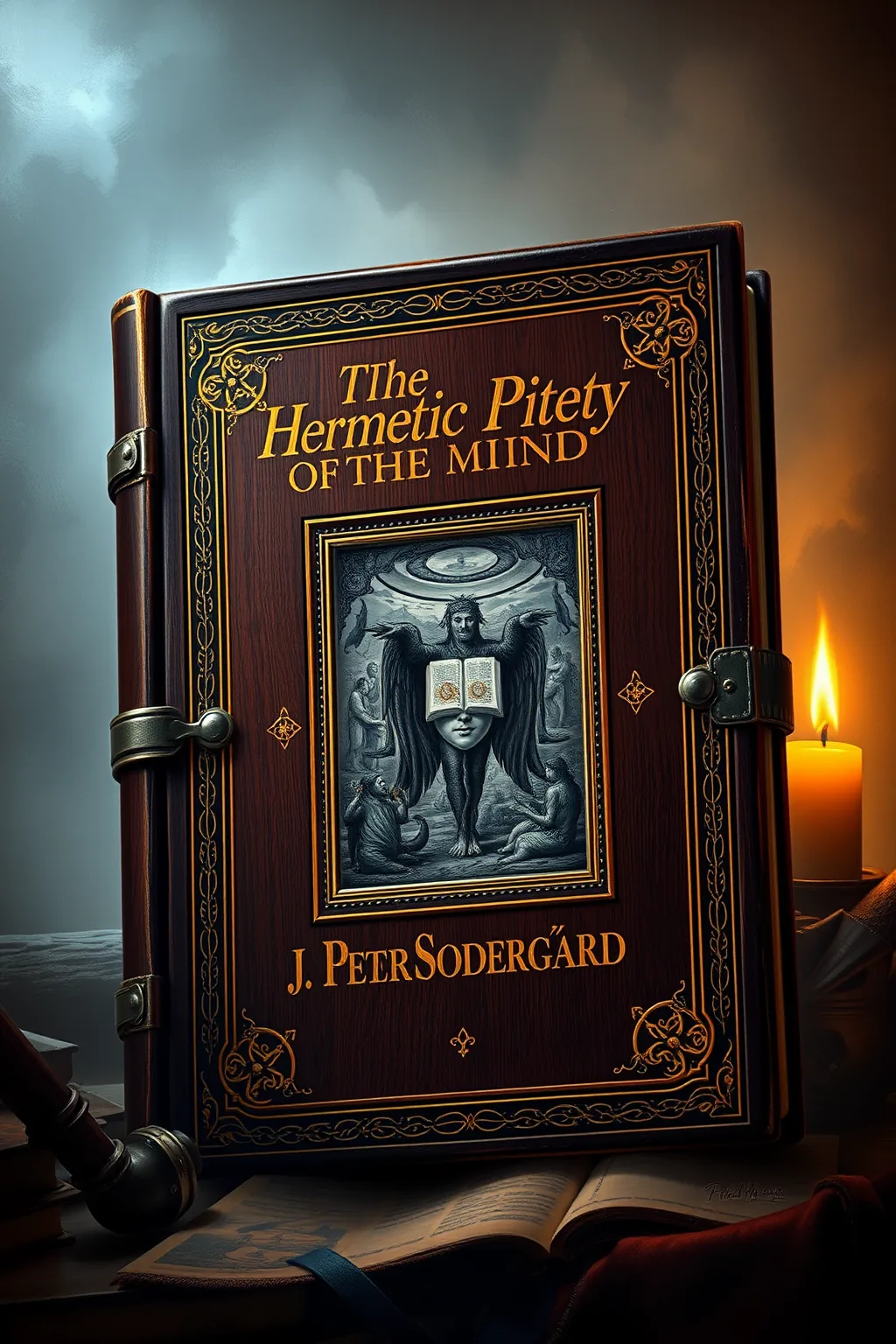
The hermetic piety of the mind
 61
61

The hermetic piety of the mind



Review by Aurelia Blackwood (Occult Philosophy Critic) — J. Peter Södergård's 'The Hermetic Piety of the Mind' is a masterful exploration of the esoteric dimensions of the human psyche. The author's deep understanding of hermetic principles and symbolism shines through every page, making this book a treasure trove for those interested in occult philosophy. Södergård's insights into the philosophy of mind are both profound and accessible, offering readers a unique perspective on the nature of consciousness. This work is particularly suited for scholars and practitioners of esoteric traditions, as well as anyone seeking a deeper understanding of the mystical aspects of the mind.
📝 Description
61
J. Peter Södergård's 'The Hermetic Piety of the Mind' examines the mind through a hermetic lens.
This book investigates the philosophy of mind from a hermetic perspective. Södergård connects mystical and occult traditions with contemporary philosophical thought, aiming to illuminate the inner workings of consciousness. The text uses hermetic symbolism and wisdom to create a contemplative atmosphere. It is intended for readers seeking a deeper connection between the self and the wider universe.
The work addresses the nature of the mind and its relationship with the divine. It challenges standard philosophical views by introducing hermetic concepts. The author's aim is to bridge the gap between ancient teachings and modern understanding, offering a distinct viewpoint on mental and spiritual realities. The book is for those who desire to go beyond conventional knowledge and explore the less understood aspects of existence.
The book situates itself within the hermetic tradition, a lineage of thought tracing back to the figure of Hermes Trismegistus. This tradition emphasizes gnosis, the pursuit of knowledge through direct experience and esoteric understanding. Hermeticism often explores the correspondence between the macrocosm (the universe) and the microcosm (the individual), viewing the mind as a key locus for this interplay. Södergård's work applies these principles to contemporary philosophical questions about the mind's nature and its spiritual dimensions.
💡 Why Read This Book?
Read 'The Hermetic Piety of the Mind' to gain a deeper understanding of the esoteric dimensions of the human psyche. This book is ideal for seekers of hidden knowledge, scholars of philosophy and mysticism, and practitioners of hermetic traditions. It offers a unique perspective on the nature of the mind and its connection to the divine, making it an invaluable resource for anyone interested in the occult and mystical arts.
⭐ Reader Reviews
Honest opinions from readers who have explored this book.
❓ Frequently Asked Questions
What is the primary focus of 'The Hermetic Piety of the Mind'?
The book primarily focuses on the philosophy of mind through a hermetic lens, exploring the mystical and occult dimensions of human consciousness.
Who is the intended audience for this book?
The intended audience includes seekers of hidden knowledge, scholars of philosophy and mysticism, and practitioners of esoteric traditions.
How does this book differ from other works on the philosophy of mind?
This book differs by integrating hermetic principles and symbolism, offering a unique and mystical perspective on the nature of the mind.
What are some of the key themes in 'The Hermetic Piety of the Mind'?
Key themes include the hermetic view of the mind, the symbolism of consciousness, and the connection between the mind and the divine.
Is this book suitable for beginners in esoteric studies?
While the book is accessible, it is best suited for those with some prior knowledge of esoteric traditions and hermetic principles.
🔮 Key Themes & Symbolism
Hermetic View of the Mind
The book presents a unique hermetic perspective on the philosophy of mind, examining the mystical and occult dimensions of human consciousness. It explores how ancient hermetic teachings can illuminate the inner workings of the mind and its connection to the divine.
Symbolism of Consciousness
Södergård employs detailed symbolism to uncover the hidden layers of the mind. This theme explores the esoteric meanings behind various symbols, providing readers with a deeper understanding of their own consciousness.
Connection to the Divine
The book explores the idea that the mind is not merely a biological entity but a divine vessel. This theme examines the spiritual dimensions of the mind and its role in connecting with higher areas of existence.
💬 Memorable Quotes
Direct passages from the work, attributed to the author.
“Symbolism is the language of the soul, speaking to us in whispers of the unknown.”
— Södergård highlights the importance of symbolism in uncovering the deeper layers of consciousness.
“The hermetic path is one of piety and reverence for the mysteries of the mind.”
— The author emphasizes the spiritual and mystical aspects of exploring the mind through hermetic principles.
💡 Key Ideas
Editorial paraphrase of the work's core concepts — not direct quotes.
The mind is a temple of the divine, where hidden truths await discovery.
This quote emphasizes the sacred nature of the mind and its potential for spiritual enlightenment.
To understand the mind is to understand the universe.
This quote underscores the interconnectedness of the mind and the cosmos, a central tenet of hermetic philosophy.
In the depths of the mind, we find the keys to unlocking the secrets of existence.
This quote suggests that the mind holds the answers to the deepest questions of life and the universe.
🌙 Esoteric Significance
Tradition
This book belongs to the Hermetic tradition, which emphasizes the unity of the mind, body, and spirit. Hermetic teachings often focus on the hidden knowledge and symbolism that reveal the deeper truths of existence.
Symbolism
Key symbols in the book include the Hermetic seal, the Ouroboros, and the Philosopher's Stone. These symbols represent the cyclical nature of life, the quest for spiritual enlightenment, and the alchemical transformation of the self.
Modern Relevance
This work remains relevant today as modern practitioners of Hermeticism and other esoteric traditions continue to draw on its insights. It offers a timeless perspective on the nature of the mind and its connection to the divine, making it an invaluable resource for seekers of hidden knowledge.
👥 Who Should Read This Book
Beginners in esoteric studies will find this book challenging but rewarding, as it provides a deep dive into hermetic principles. Scholars of philosophy and mysticism will appreciate the author's unique perspective on the philosophy of mind. Spiritual seekers will benefit from the book's exploration of the mystical dimensions of consciousness. Practitioners of hermetic traditions will find valuable insights and techniques for deepening their spiritual practice.
📜 Historical Context
Written in an era of renewed interest in esoteric traditions, 'The Hermetic Piety of the Mind' emerged as a clear source of wisdom amidst the intellectual and spiritual turmoil of the late 20th century. The book's publication coincided with a resurgence of interest in hermeticism and occult philosophy, providing readers with a fresh perspective on the nature of the mind. Its influence can be seen in the works of modern scholars and practitioners who continue to explore the mystical dimensions of human consciousness.
📔 Journal Prompts
How does the hermetic view of the mind differ from your current understanding of consciousness?
What symbols from the book resonate with you and why?
In what ways does the mind connect with the divine, according to the book?
How can you apply the principles of Hermeticism to your spiritual practice?
What hidden truths about the mind have you discovered through reading this book?
🗂️ Glossary
Hermeticism
A philosophical and spiritual tradition based on the writings of Hermes Trismegistus, emphasizing the unity of the mind, body, and spirit.
Ouroboros
A symbol of a serpent swallowing its own tail, representing the cyclical nature of life and the quest for spiritual enlightenment.
Philosopher's Stone
A legendary alchemical substance said to turn base metals into gold, symbolizing the transformation of the self.
Alchemy
An ancient practice combining elements of chemistry, mysticism, and spirituality, aimed at transforming and purifying the self.
Divine Mind
The concept that the mind is a vessel for divine consciousness, capable of connecting with higher areas of existence.
This book appears in 3 collections
🔮 Readers Also Liked
Browse all →









From the “Hermeticism” Collection
View all →







More Free Alchemy & Hermeticism Books
View all →