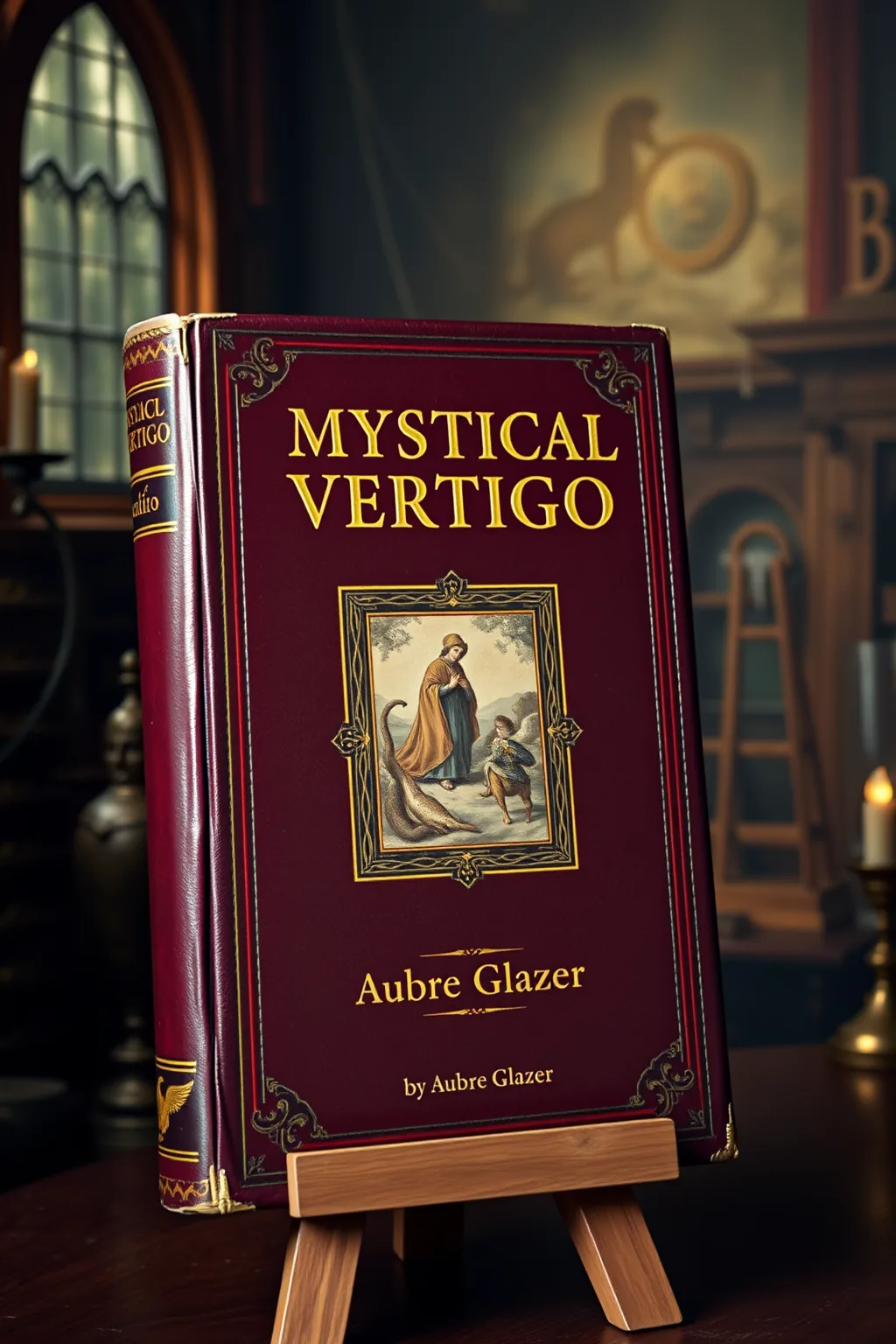
Mystical Vertigo
 62
62

Mystical Vertigo



Review by Balthazar Finch (Senior Critic, Occult Philosophy) — Aubrey Glazer’s 'Mystical Vertigo' is a breathtaking immersion into the luminous depths of Kabbalah, rendered with an artistry that transcends mere scholarship. Glazer’s prose dances with the very essence of Hebrew mystical poetry, illuminating complex concepts with startling clarity and profound emotional resonance. He masterfully bridges historical context with contemporary relevance, revealing the enduring power of these ancient teachings. This is not a passive read; it demands an engaged spirit, a willingness to confront the sublime and the paradoxical. Esoteric practitioners and academic minds alike will find themselves drawn into a profound dialogue with the divine, guided by Glazer’s expert hand through the vertiginous landscapes of mystical consciousness. An indispensable contribution to the literature of Jewish esoteric wisdom.
📝 Description
62
Aubrey Glazer's Mystical Vertigo (2009) examines Kabbalistic concepts through modern Hebrew poetry.
Aubrey Glazer's Mystical Vertigo examines Kabbalistic thought, drawing connections between Jewish mysticism and modern Hebrew poetry. The book looks at how ancient ideas about the divine and spiritual understanding appear in contemporary poetic expression. Glazer analyzes the symbolic language and imagery used to describe spiritual experiences, such as entering into the divine or the struggle to articulate the ineffable.
The work discusses the role of sacred language in these mystical traditions. It addresses the experience of contemplating the infinite, a concept Glazer links to a specific kind of spiritual disorientation. The book aims to show how this experience can lead to purification and a deeper understanding of spiritual knowledge. It is written for those interested in exploring the connections between mystical traditions and artistic expression.
This book fits within the study of Kabbalah, a tradition of Jewish mysticism dating back to the medieval period. Kabbalah deals with the nature of God, the creation of the universe, and the human soul's relationship to the divine. It often uses symbolic interpretations of biblical texts and complex meditative practices. Mystical Vertigo places these older traditions in dialogue with 20th and 21st-century Hebrew literary works, showing how enduring themes of spiritual seeking manifest in modern art.
💡 Why Read This Book?
Unravel the profound mysteries of Kabbalah through a unique fusion of scholarly depth and poetic beauty. 'Mystical Vertigo' offers seekers, scholars, and practitioners an accessible yet rigorous exploration of Jewish mysticism, revealing hidden symbolism and spiritual pathways. Discover the ecstatic potential of sacred language and the transformative power of confronting the infinite. Ideal for those yearning for a deeper connection to the divine and a richer understanding of esoteric traditions.
⭐ Reader Reviews
Honest opinions from readers who have explored this book.
❓ Frequently Asked Questions
What is Kabbalah?
Kabbalah is the esoteric tradition of Jewish mysticism, concerned with the study of the hidden nature of God and the universe. It explores concepts like the Sefirot, divine emanations, and the pathways to spiritual illumination, often expressed through symbolic language and sacred texts.
Who was Moses Cordovero?
Moses Cordovero was a prominent 16th-century Kabbalist, known for his seminal work 'Pardes Rimonim' (The Orchard of Pomegranates), which systematized Kabbalistic thought and greatly influenced later generations of mystics. His teachings emphasized the unity of God and the interconnectedness of all creation.
What are the Sefirot?
The Sefirot are the ten divine emanations or attributes of God in Kabbalistic cosmology, often depicted as a tree. They represent different aspects of the divine being and serve as a framework for understanding creation, divine influence, and the path to spiritual ascent.
How does Hebrew poetry relate to Kabbalah?
Hebrew poetry has historically been a vital vehicle for expressing Kabbalistic concepts. Its rich symbolism, wordplay, and numerical Gematria allow for layers of hidden meaning, serving as a conduit for esoteric insights and mystical experiences.
Is this book suitable for beginners?
Yes, 'Mystical Vertigo' is designed to be both intellectually stimulating for seasoned scholars and accessible for sincere beginners. Glazer’s clear prose and insightful interpretations guide new readers into the complex world of Kabbalah with grace and clarity.
🔮 Key Themes & Symbolism
The Vertigo of the Infinite
This theme explores the profound psychological and spiritual disorientation that arises when the human mind confronts the boundless nature of the Divine. It studies the ecstatic paradox of feeling both diminished and elevated by the encounter with the Absolute, a state of 'mystical vertigo' that shakes the foundations of ego-consciousness. The book examines how this dizzying awareness can be both terrifying and transformative, leading to a radical reorientation of one's perception of reality and one's place within the cosmic order. It is the plunge into the abyss of unknowing, paradoxically leading to a deeper knowing.
Sacred Language as Divine Blueprint
The book investigates the Kabbalistic understanding of Hebrew as a divinely encoded language, a blueprint for creation itself. It examines how letters, words, and numerical values (Gematria) are not merely communicative tools but are seen as fundamental building blocks of existence, holding within them the secrets of the universe. Glazer illuminates how the manipulation and contemplation of sacred Hebrew texts can unlock hidden spiritual dimensions, facilitate divine communion, and reveal the intricate divine order underlying all phenomena. This theme highlights the potent, active role of language in mystical practice.
The Ascent of the Soul Through Poetry
This theme focuses on the profound connection between modern Hebrew poetry and the ancient mystical traditions of Kabbalah. Glazer demonstrates how contemporary poets, consciously or unconsciously, channel the spirit of Kabbalistic inquiry, using lyrical forms to explore themes of divine longing, spiritual exile, and the search for ultimate truth. The book reveals how the aesthetic and emotional power of poetry can serve as a potent vehicle for spiritual ascent, guiding the reader through the labyrinthine pathways of the soul towards ecstatic union with the Divine. It is the heart's journey expressed through the soul's language.
💬 Memorable Quotes
Direct passages from the work, attributed to the author.
“Every Hebrew letter is a vessel of divine light.”
— This highlights the Kabbalistic belief in the sacred power of the Hebrew alphabet, viewing each letter as a conduit for divine energy and cosmic meaning.
“To know God is to surrender to the mystery.”
— This speaks to the paradoxical nature of gnosis within Kabbalah, where true understanding arises not from intellectual conquest but from humble acceptance of the unknowable divine.
“Poetry is the echo of the celestial spheres in the human heart.”
— This emphasizes the spiritual resonance of poetry, suggesting it acts as a bridge between the earthly realm and the divine cosmos, conveying heavenly truths through art.
“In the echo of silence, the divine voice is heard.”
— This points to the practice of contemplative silence in mysticism, where the cessation of external noise allows for the inner reception of divine guidance and revelation.
💡 Key Ideas
Editorial paraphrase of the work's core concepts — not direct quotes.
The soul, when touched by the Infinite, experiences a beautiful disorientation.
This quote expresses the core concept of 'mystical vertigo,' suggesting that profound spiritual experiences can lead to a sense of awe and bewilderment, a beautiful loss of ordinary orientation.
🌙 Esoteric Significance
Tradition
This work is deeply rooted in the Kabbalistic tradition, a complex and complex body of Jewish esoteric thought that seeks to understand the nature of God, creation, and the spiritual universe. It draws heavily on the Zohar, the foundational text of Kabbalah, and later interpretations by mystics like Moses Cordovero. The book explores concepts such as the Sefirot, divine emanations, the nature of the divine soul, and the pathways of spiritual ascent, offering a uniquely structured and poetically infused approach to these profound mysteries.
Symbolism
The book is rich with Kabbalistic symbolism, utilizing the Hebrew alphabet, numerical Gematria, and allegorical interpretations of biblical narratives as keys to unlocking hidden meanings. The Sefirot are presented not just as abstract concepts but as dynamic forces shaping reality. The imagery of the 'vertigo' itself becomes a potent symbol for the disorienting yet clear experience of confronting the divine. Glazer masterfully decodes these symbols, revealing their profound psychological and spiritual implications for the seeker.
Modern Relevance
Despite its ancient roots, the book argues for the profound relevance of Kabbalistic wisdom in the modern world. It suggests that the 'mystical vertigo' experienced through esoteric contemplation offers a powerful antidote to the alienation and superficiality of contemporary life. The exploration of sacred language and symbolic meaning provides tools for deeper introspection and a more profound connection to the transcendent. For those grappling with existential questions or seeking a richer spiritual life, 'Mystical Vertigo' offers timeless insights and a path toward greater self-understanding and cosmic awareness.
👥 Who Should Read This Book
This book is a treasure for a diverse audience. **Scholars of religious studies and Jewish history** will appreciate its rigorous scholarship and unique synthesis of textual analysis and poetic interpretation. **Seekers of spiritual wisdom** will find a profound and evocative guide into the heart of Jewish mysticism, offering pathways to deeper self-awareness and connection with the divine. **Practitioners of esoteric traditions** will discover new perspectives on Kabbalistic concepts and symbolic language, enriching their contemplative practices. **Readers with an interest in Hebrew poetry** will be captivated by its lyrical beauty and its ability to convey complex spiritual themes with grace and power, making it accessible yet deeply rewarding.
📜 Historical Context
Aubrey Glazer’s 'Mystical Vertigo' emerges from a rich lineage of Jewish mystical thought, particularly flourishing in the vibrant intellectual and spiritual milieu of Safed in the 16th century, a period marked by the works of figures like Moses Cordovero and Isaac Luria. This era saw a profound re-engagement with Kabbalistic texts, aiming to understand divine providence and the human role in cosmic redemption. The book's exploration of Hebrew poetry also situates itself within a long-standing tradition where language itself is considered a sacred, ontological force. By connecting these historical currents to contemporary interpretations, Glazer bridges centuries of esoteric discourse, demonstrating the enduring relevance of Kabbalistic ideas in understanding the human condition and the search for meaning in both historical and modern contexts. The work appeals to the ongoing dialogue between tradition and innovation in spiritual thought.
📔 Journal Prompts
Reflect on a moment in your life when you experienced a profound sense of awe or disorientation. How did this experience change your perspective?
Consider the power of language in your own life. How can words be used to reveal or conceal deeper truths?
Explore the concept of the 'divine spark' within yourself. How can you nurture and express this inner light?
Imagine the Sefirot as different facets of your own personality. Which Sefirah resonates most strongly with you today, and why?
Meditate on a familiar biblical story. What hidden mystical meanings might lie beneath the surface narrative?
🗂️ Glossary
Kabbalah
The esoteric tradition of Jewish mysticism, concerned with understanding the hidden nature of God and the universe, and the relationship between the divine and the created world. It employs symbolic language, numerology, and contemplative practices.
Sefirot
The ten divine emanations or attributes of God in Kabbalistic cosmology, often visualized as a Tree of Life, representing the process of creation and the channels through which divine energy flows.
Gematria
A system of Jewish numerology where Hebrew letters are assigned numerical values, used to interpret the mystical significance of words and phrases by finding connections between words with the same numerical sum.
Tzimtzum
A Kabbalistic concept referring to God's 'contraction' or withdrawal to create a void for the existence of the universe. It signifies God's self-limitation to allow for free will and separate existence.
Ein Sof
The Kabbalistic term for the Infinite or the boundless, indescribable aspect of God that exists beyond all comprehension or manifestation. It represents the ultimate, unknowable divine essence.
This book appears in 1 collection
🔮 Readers Also Liked
Browse all →









More by Aubrey Glazer
All books →


From the “Kabbalah” Collection
View all →








More Free Kabbalah & Jewish Mysticism Books
View all →