Kabbalah, poetry and criticism
 61
61

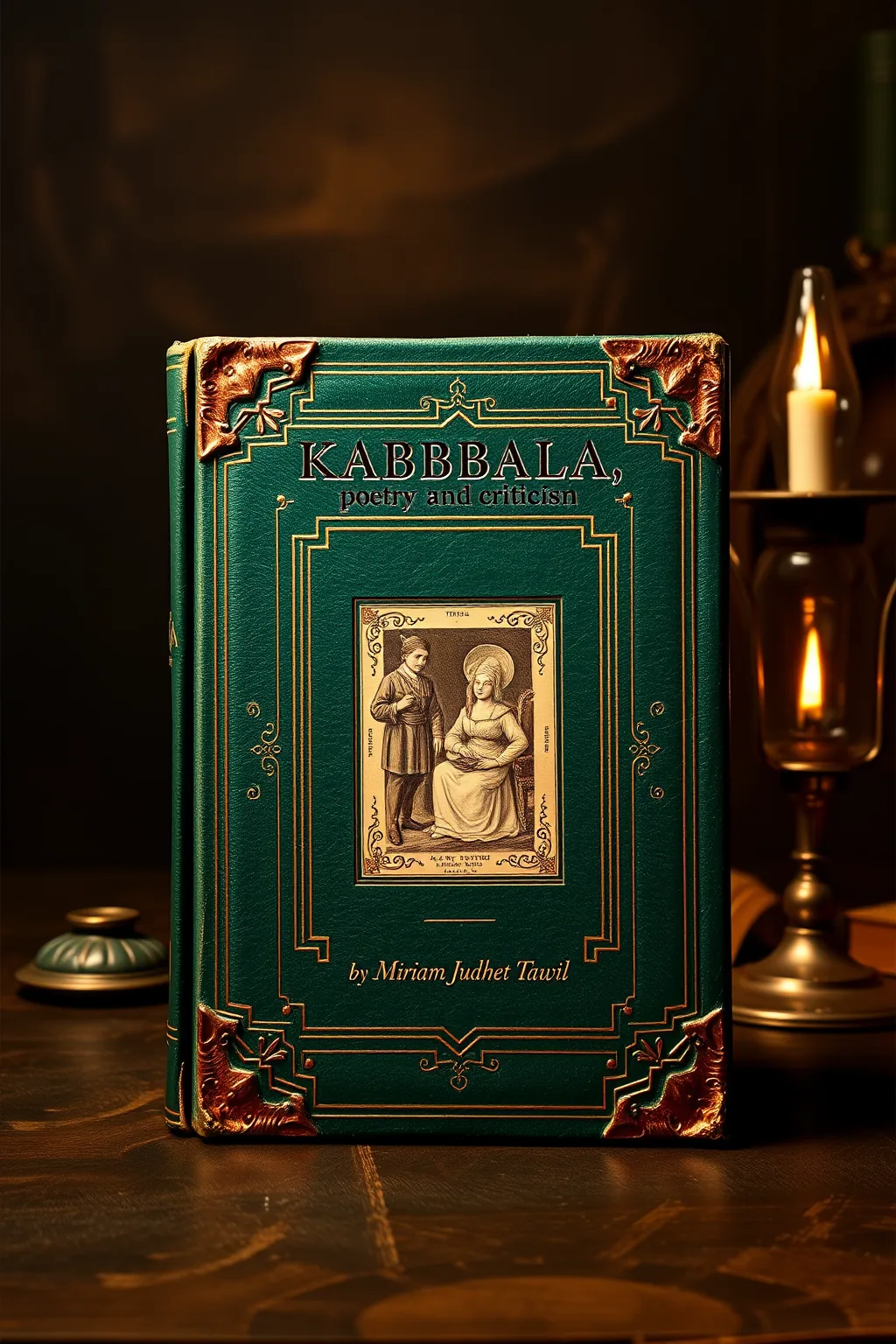
Kabbalah, poetry and criticism


Ophelia Vance, Mystical Literature Reviewer: Miriam Judith Tawil's "Kabbalah, Poetry and Criticism" is a masterful exploration that bridges the chasm between abstract mystical doctrines and the visceral language of poetry. Tawil possesses a rare gift for articulating the ineffable, rendering complex Kabbalistic ideas accessible and profoundly resonant. Her critical engagement with how poetry embodies and transmits esoteric knowledge is both insightful and illuminating. This work is an indispensable resource for anyone seeking to understand the spiritual dimensions of literature or the literary expressions of Jewish mysticism. Highly recommended for advanced students and seasoned practitioners alike.
📝 Description
61
Miriam Judith Tawil's 2018 book examines Kabbalah's relationship with poetry and critical thought.
This book explores how poetry transmits Kabbalistic ideas and symbolic language. Miriam Judith Tawil looks at the connection between Jewish mysticism and literary expression. She examines the philosophical ideas within Kabbalah, such as the Sefirot and the Ein Sof, through the lens of poetry and criticism.
The work encourages contemplation and intellectual discovery. It aims to engage readers with the spiritual aspects of written texts. Tawil shows how poetic language can convey complex esoteric concepts. The book is for those interested in mysticism, literature, and philosophical inquiry.
This work is situated within the study of Kabbalah, a tradition of Jewish mysticism. It examines how Kabbalistic concepts, which often involve complex symbolism and philosophical speculation about the divine, are expressed and understood through poetic forms. The book connects the textual and symbolic dimensions of Kabbalah with literary criticism, suggesting that poetry can serve as a unique medium for articulating and accessing esoteric spiritual ideas.
💡 Why Read This Book?
Embark on a transformative journey where the divine architecture of Kabbalah meets the soul-stirring power of poetry. This book is essential for those seeking to unlock the symbolic language of the universe, understand the philosophical depths of Jewish mysticism, and witness how profound truths are woven into the fabric of literary expression. Ideal for spiritual seekers, literary scholars, and practitioners of contemplative arts.
⭐ Reader Reviews
Honest opinions from readers who have explored this book.
❓ Frequently Asked Questions
What is Kabbalah?
Kabbalah is a complex system of Jewish mysticism that seeks to understand the nature of God and the universe through esoteric interpretations of scripture and tradition. It often involves intricate symbolism and meditative practices.
How does poetry relate to Kabbalah?
Poetry, in this context, acts as a powerful medium for expressing the ineffable, symbolic, and often paradoxical concepts found within Kabbalah. It can offer an intuitive and experiential understanding of mystical truths.
Is this book suitable for beginners?
While offering profound insights, the book assumes some familiarity with literary criticism and a general interest in mysticism. Beginners might benefit from foundational reading in Kabbalah first.
What is the critical aspect of the book?
The critical aspect involves analyzing how poets and literary works engage with, interpret, and even embody Kabbalistic ideas, exploring the interplay between text and tradition.
What kind of knowledge does this book offer?
It offers insights into hidden knowledge, symbolic interpretation, the spiritual dimensions of literature, and the philosophical underpinnings of a major esoteric tradition.
🔮 Key Themes & Symbolism
The Poetic Embodiment of Mystical Knowledge
This theme explores the profound synergy between poetic expression and the transmission of esoteric wisdom, particularly within the Kabbalistic tradition. It posits that poetry is not merely decorative but a vital conduit for conveying the ineffable, symbolic, and often paradoxical truths that lie at the heart of mystical experience. The book investigates how poets, consciously or unconsciously, tap into the archetypal language and symbolic structures inherent in Kabbalistic thought, rendering abstract spiritual concepts tangible and emotionally resonant. This section illuminates how verse can serve as a meditative tool, guiding readers towards a deeper, more intuitive understanding of divine emanations, the nature of reality, and the human soul's journey.
Symbolism and the Hermeneutics of the Sacred
At the core of this theme lies the exploration of symbolism as the fundamental language of both Kabbalah and poetry. The book examines the rich symbolic lexicon of Kabbalistic texts, such as the Sefirot, the Hebrew alphabet, and various divine names, and examines how these symbols are reinterpreted and re-contextualized within literary works. It investigates the hermeneutical challenges and opportunities presented by this symbolic interplay, revealing how poetic criticism can unlock deeper layers of meaning. The discussion highlights how symbols function not as mere representations but as active agents that shape consciousness and facilitate spiritual insight, bridging the gap between the mundane and the transcendent.
The Philosophical Underpinnings of Kabbalistic Literature
This theme dissects the profound philosophical currents that inform Kabbalistic thought and their resonance within literary creations. It examines core Kabbalistic doctrines, such as creation, divine immanence and transcendence, the nature of the soul, and the concept of Tikkun (rectification), and traces their manifestation in poetic and critical discourse. The book explores how literature can serve as a philosophical laboratory, allowing for the exploration and articulation of complex metaphysical ideas in a way that speaks to the human condition. It highlights how the critical analysis of poetry engaged with Kabbalah can illuminate both the enduring philosophical questions and the evolving spiritual field of human inquiry.
💬 Memorable Quotes
Direct passages from the work, attributed to the author.
“The letters of the Torah are keys to unlock hidden worlds.”
— This highlights the Kabbalistic belief that the Hebrew letters, when studied mystically, hold profound symbolic power capable of revealing esoteric dimensions of reality.
“In the silence between words, the deepest truths reside.”
— This points to the contemplative aspect of mysticism, where meaning and understanding are found not just in explicit pronouncements but in the unspoken, the intuitive, and the spaces of awareness.
“The Sefirot bloom like celestial flowers in the garden of the soul.”
— This evocative metaphor illustrates the ten divine emanations of Kabbalah as beautiful, unfolding spiritual forces within the human psyche, signifying growth and divine presence.
“Criticism is the art of listening to the traces of eternity.”
— This frames literary criticism not just as analysis but as a receptive practice of discerning timeless wisdom and profound resonance within artistic works.
💡 Key Ideas
Editorial paraphrase of the work's core concepts — not direct quotes.
Poetry is the whisper of the divine in the ear of the soul.
This quote suggests that poetry acts as a direct, intimate channel through which spiritual truths or divine messages are conveyed to the inner self, bypassing the intellect.
🌙 Esoteric Significance
Tradition
This book is deeply rooted in the Kabbalistic tradition, a mystical interpretive branch of Judaism that explores the divine nature, creation, and the relationship between God and the universe. It examines concepts like the Sefirot (divine emanations), the Ein Sof (the Infinite), and the structure of the cosmos as understood through esoteric Jewish texts, offering a bridge between intellectual comprehension and spiritual intuition.
Symbolism
The esoteric significance lies in its profound engagement with the strong symbolism of Kabbalah, including the Hebrew alphabet, gematria (numerical value of letters), and archetypal imagery found in texts like the Zohar. Tawil unpacks how these symbols are not mere representations but active keys to unlocking higher consciousness, revealing hidden correspondences between the physical and spiritual realms, and facilitating a deeper understanding of divine order.
Modern Relevance
In an era often characterized by fragmentation and a search for deeper meaning, this book offers a compelling case for the enduring relevance of Kabbalistic wisdom. It demonstrates how ancient mystical insights can provide a framework for understanding contemporary existential questions, ethical dilemmas, and the human yearning for transcendence. By connecting these profound ideas to the accessible and evocative medium of poetry, Tawil makes esoteric knowledge relatable and applicable to the modern seeker.
👥 Who Should Read This Book
This informative work is crafted for a diverse audience. For the **spiritual seeker**, it offers a pathway to understanding the profound depths of Jewish mysticism through a lens of artistic beauty. **Scholars of religion and literature** will find a rigorous and insightful analysis of the intersection between esoteric traditions and creative expression. **Practitioners of Kabbalah** will discover new avenues for contemplating its core tenets and symbolism. Even those new to the subject but curious about the confluence of spirituality, philosophy, and art will find themselves drawn into its evocative exploration of hidden knowledge.
📜 Historical Context
Miriam Judith Tawil's work emerges from a rich intellectual milieu where the study of Kabbalah experienced a resurgence of scholarly and popular interest. The late 20th and early 21st centuries witnessed a renewed engagement with esoteric traditions, often driven by a search for meaning beyond secularism and a growing appreciation for the philosophical depth of diverse spiritual paths. This period saw increased cross-pollination between academic disciplines, including literature, philosophy, and religious studies. Tawil's contribution is particularly significant in its sophisticated integration of literary criticism with the complex theological and mystical framework of Kabbalah, demonstrating how ancient wisdom can be both preserved and dynamically reinterpreted through contemporary artistic and intellectual lenses. Her work stands as a evidence of the enduring relevance of mystical thought in shaping our understanding of art, culture, and the human spirit.
📔 Journal Prompts
How does a specific poem discussed in the book evoke a Kabbalistic concept for you?
What does the symbolism of the Hebrew alphabet reveal about your own inner landscape?
Reflect on a moment in your life where you experienced a sense of divine immanence, similar to a Kabbalistic concept.
Consider a piece of art or music that feels deeply spiritual; how might it employ symbolic language akin to Kabbalah?
How can the concept of 'Tikkun' (rectification) be applied to your personal growth or interactions with the world?
🗂️ Glossary
Kabbalah
A system of Jewish mysticism that explores the divine nature, creation, and the relationship between God and the universe through esoteric interpretation and symbolism.
Sefirot
The ten divine emanations or attributes through which God manifests and interacts with the universe, forming a central concept in Kabbalistic cosmology.
Ein Sof
The Kabbalistic term for the 'Infinite' or 'Endless,' referring to God in His absolute, unknowable, and transcendent essence before any manifestation or creation.
Gematria
A method of Kabbalistic interpretation that assigns numerical values to Hebrew letters to uncover hidden meanings and connections between words and concepts.
Tikkun
A central Kabbalistic concept referring to the 'rectification' or 'repair' of the world and the spiritual realm, often achieved through righteous action and spiritual practice.
This book appears in 1 collection
🔮 Readers Also Liked
Browse all →




From the “Kabbalah” Collection
View all →



![Kabbalah Dictionary [Hebrew To English].pdf (PDFy mirror)](/img/thumb/kabbalah-dictionary-hebrew-to-english-pdf-pdfy-mirror.webp)


More Free Kabbalah & Jewish Mysticism Books
View all →