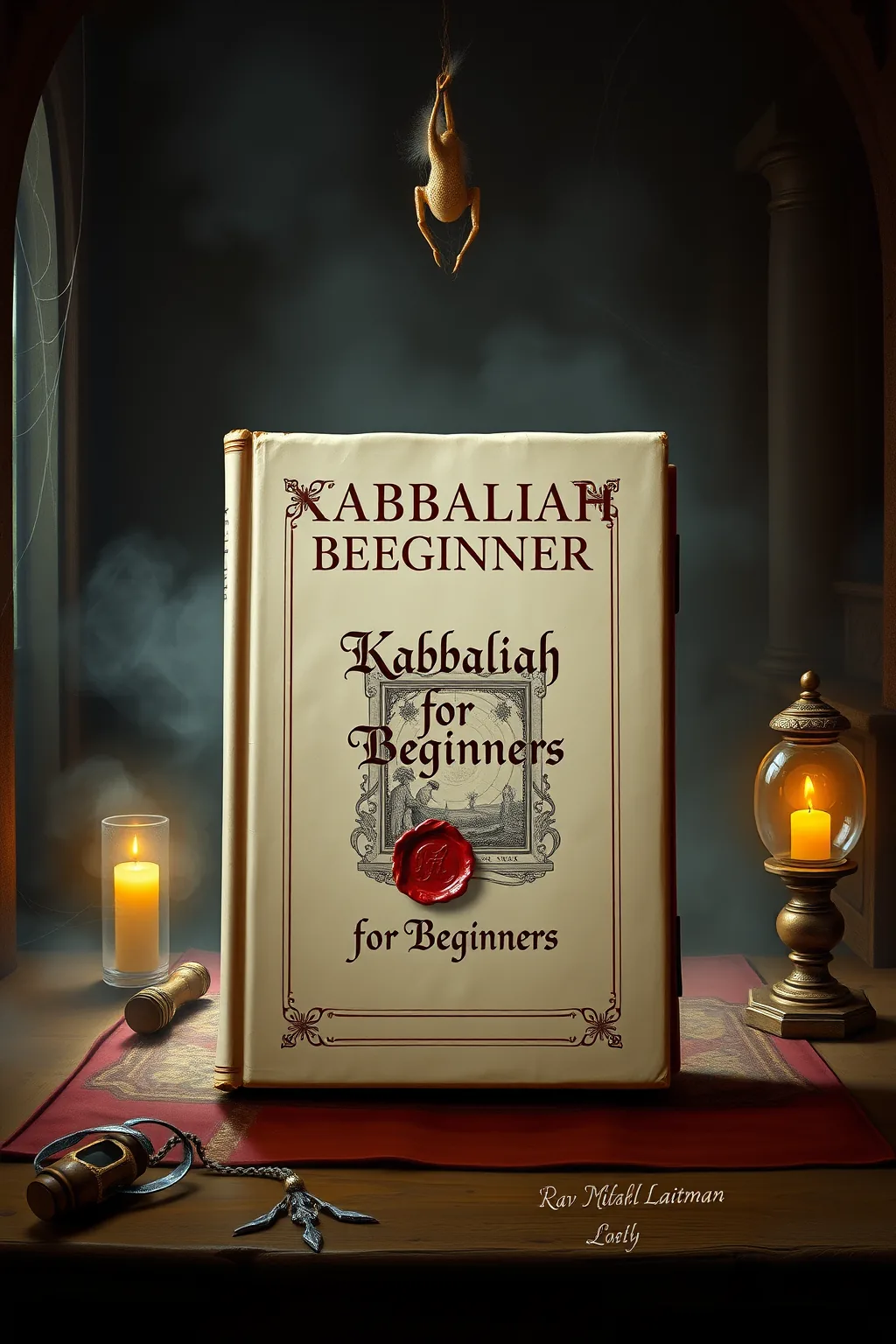
Kabbalah for Beginners
 61
61

Kabbalah for Beginners

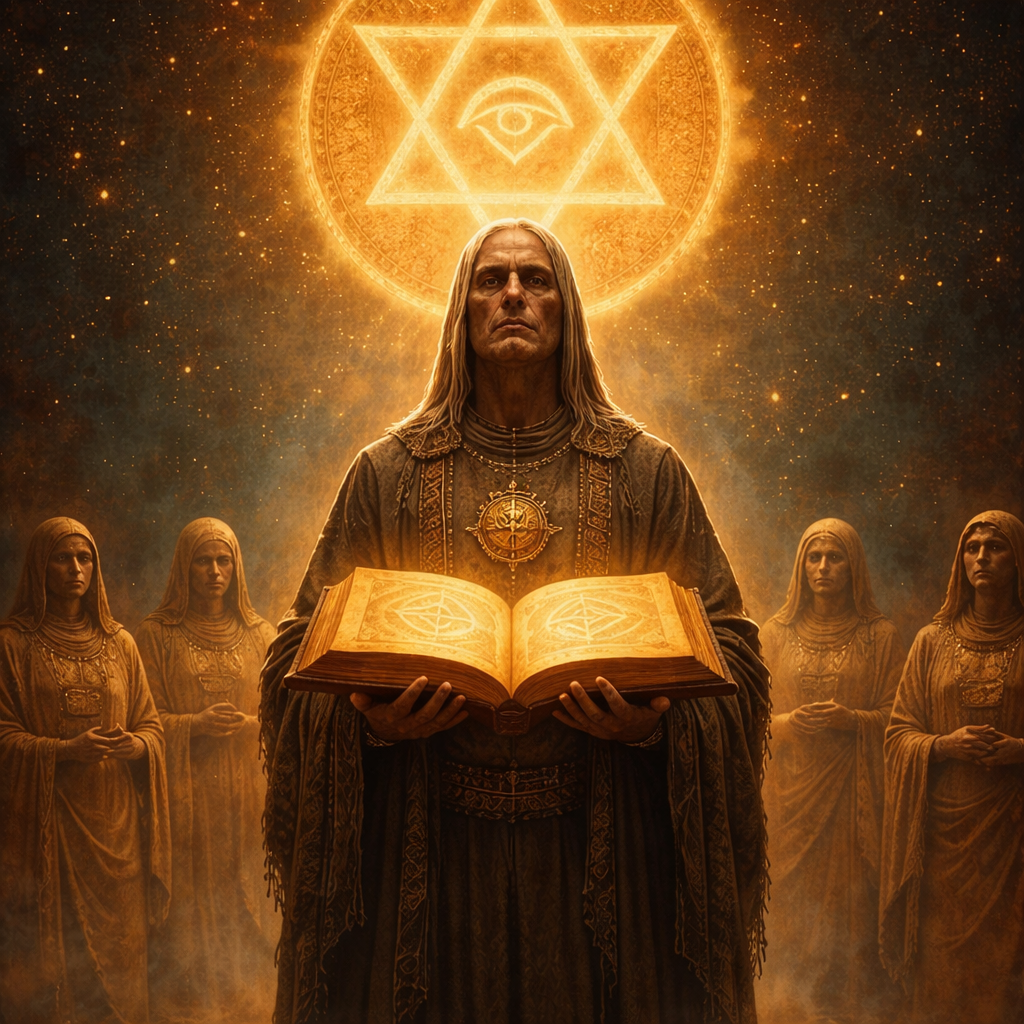

Rav Michael Laitman's "Kabbalah for Beginners" is a beacon for those venturing into the labyrinthine depths of Jewish mysticism. With an accessible yet authoritative voice, Laitman unfurls the core tenets of Kabbalah, presenting esoteric concepts like the Sefirot and the Tree of Life with remarkable clarity. This work transcends mere academic discourse, offering practical insights into spiritual perception and the interconnectedness of all things. It serves as an invaluable primer for sincere seekers ready to engage with the profound philosophical and mystical underpinnings of this ancient tradition. A truly essential read for anyone aspiring to comprehend the hidden spiritual mechanics of our reality.
📝 Description
61
Rav Michael Laitman's 2007 book, 'Kabbalah for Beginners,' introduces core Kabbalistic concepts.
This book aims to explain the foundational ideas of Kabbalah for those new to the subject. Rav Michael Laitman addresses the structure of reality and the spiritual forces that shape it, drawing from Jewish mystical traditions. The text covers key Kabbalistic concepts such as the Sephirot and the Tree of Life, explaining their significance in the process of divine emanation.
Laitman's approach seeks to clarify these complex subjects. The book is intended for readers interested in understanding the underlying principles of creation, the purpose of existence, and the individual's relationship with the spiritual world. It presents Kabbalistic thought as a way to perceive a universe guided by divine intention, suggesting a route toward personal development and spiritual insight.
Kabbalah, a tradition originating within Jewish mysticism, seeks to understand the divine nature and the creation of the universe. It often employs symbolic language and allegorical interpretations of religious texts. The concept of emanation, where the spiritual world is seen as flowing from a single divine source through various levels, is central. This book engages with these established Kabbalistic frameworks, making them accessible to a general audience.
💡 Why Read This Book?
Uncover the profound, hidden architecture of reality and the divine blueprint of creation. 'Kabbalah for Beginners' offers a clear pathway into the esoteric teachings of Jewish mysticism, demystifying complex concepts for the earnest seeker. Ideal for individuals drawn to spiritual growth, philosophical inquiry, and the pursuit of deeper meaning beyond the material world, this book illuminates the path to understanding one's place within the cosmic order.
⭐ Reader Reviews
Honest opinions from readers who have explored this book.
❓ Frequently Asked Questions
What is Kabbalah?
Kabbalah, meaning 'reception' in Hebrew, is the esoteric tradition of Jewish mysticism. It seeks to understand the nature of God, the creation of the universe, and the purpose of human existence through symbolic interpretation of scripture and ancient texts.
Is this book suitable for absolute beginners?
Yes, 'Kabbalah for Beginners' is specifically designed for those with no prior knowledge of Kabbalah. Rav Michael Laitman breaks down complex ideas into digestible concepts, making the wisdom accessible to all.
What are the core concepts discussed?
The book delves into foundational Kabbalistic concepts such as the Sefirot (divine attributes), the Tree of Life, the nature of the Creator, the purpose of creation, and the spiritual path of ascent.
What is the practical application of Kabbalah?
Beyond theoretical understanding, Kabbalah offers a framework for spiritual development, self-awareness, and connecting with a higher purpose. It aims to transform one's perception of reality and foster spiritual growth.
Does this book require a specific religious background?
While rooted in Jewish tradition, the universal principles of Kabbalah can be appreciated by individuals of any background who are seeking spiritual wisdom and a deeper understanding of life's mysteries.
🔮 Key Themes & Symbolism
The Tree of Life and the Sefirot
This central diagram in Kabbalah, the Tree of Life, is explored as a map of creation and spiritual ascent. Its ten Sefirot, or divine emanations, represent attributes through which the infinite Creator interacts with the finite world. Understanding these interconnected spheres reveals the underlying structure of reality, the flow of divine energy, and the pathways available for spiritual transformation. Laitman meticulously deciphers their symbolic language, offering a useful insights into the divine architecture that governs existence and human consciousness.
The Nature of the Creator and Creation
The book examines the profound Kabbalistic understanding of the Creator as an infinite, benevolent force, and the process of creation as an emanation from this singular source. It addresses the apparent paradox of a perfect Creator bringing forth an imperfect world, exploring the concept of 'Tzimtzum' (contraction) and the subsequent 'Shevirat HaKelim' (shattering of the vessels) as crucial steps in the cosmic drama. This exploration offers a unique perspective on divine will, the origin of suffering, and the ultimate purpose of existence.
Spiritual Ascent and Inner Transformation
Beyond mere intellectual comprehension, 'Kabbalah for Beginners' emphasizes the practical application of Kabbalistic principles for personal spiritual growth. It guides the reader on a journey of inner transformation, encouraging the development of higher perception, the correction of one's desires, and the attainment of spiritual consciousness. The book presents Kabbalah not just as a system of knowledge, but as a living path to connect with the divine and realize one's true spiritual essence within the grand collection of creation.
💬 Memorable Quotes
Direct passages from the work, attributed to the author.
“The purpose of creation is to bestow pleasure upon the created beings.”
— This fundamental Kabbalistic tenet highlights the benevolent nature of the Creator, suggesting that all existence is designed for the ultimate happiness and spiritual fulfillment of humanity.
“The Tree of Life is a map of our spiritual journey.”
— This metaphor illustrates the practical utility of the Kabbalistic Tree of Life, portraying it not as an abstract diagram, but as a guide for reading through the stages of spiritual development and self-discovery.
“The Creator is hidden within the creation.”
— This profound statement points to the immanence of the divine; God is not distant, but actively present and concealed within the fabric of the universe, waiting to be revealed through spiritual perception.
“Love of others is the key to spiritual unity.”
— This emphasizes the ethical and social dimension of Kabbalah, suggesting that true spiritual connection is achieved through altruism and the selfless desire to elevate fellow beings.
💡 Key Ideas
Editorial paraphrase of the work's core concepts — not direct quotes.
We must strive to perceive the spiritual world as clearly as we perceive the physical.
This quote captures the goal of Kabbalistic practice: to elevate one's consciousness and develop the inner senses required to apprehend the higher, spiritual realities that underlie our tangible existence.
🌙 Esoteric Significance
Tradition
Kabbalah is the primary esoteric tradition discussed. It represents the mystical dimension of Judaism, offering a profound, symbolic interpretation of creation, divine nature, and the human soul's journey. Its teachings are deeply rooted in ancient Hebrew scriptures and oral traditions, aiming to reveal hidden spiritual truths and guide individuals towards spiritual attainment and union with the divine.
Symbolism
The book heavily relies on Kabbalistic symbolism, most notably the Tree of Life (Etz Chaim) with its ten Sefirot (divine emanations like Keter, Chokhmah, Binah, Chesed, Gevurah, Tiferet, etc.). Other key symbols include the divine names, the letters of the Hebrew alphabet as vessels of creation, and the concept of divine light (Ohr Ein Sof) flowing through the spiritual worlds. These symbols are not merely decorative but are considered keys to understanding the mechanics of reality.
Modern Relevance
In a world often characterized by materialism and spiritual disconnection, Kabbalah offers a profound framework for understanding purpose, consciousness, and interconnectedness. Rav Michael Laitman's approach makes these ancient insights relevant by focusing on the practical application of Kabbalistic principles for personal growth, ethical development, and achieving a balanced, meaningful existence. It provides tools for navigating existential questions and fostering a deeper connection to oneself and the universe.
👥 Who Should Read This Book
This book is an essential primer for absolute beginners curious about the profound world of Jewish mysticism and the esoteric teachings of Kabbalah. It is also highly recommended for spiritual seekers of all backgrounds who are interested in exploring the hidden architecture of reality and the deeper purpose of existence. Scholars of religion and philosophy will find Laitman's clear exposition a valuable addition to their understanding of this ancient tradition. Practitioners of meditation or other spiritual disciplines seeking a conceptual framework for their experiences will also benefit greatly from its useful insights.
📜 Historical Context
The roots of Kabbalah stretch back to ancient Jewish mystical traditions, flourishing prominently during the medieval period in Europe. Its development was deeply intertwined with the intellectual and spiritual milieu of Jewish communities grappling with philosophical questions and seeking deeper meaning in sacred texts. Key texts like the Zohar, appearing in 13th-century Spain, codified and expanded upon earlier teachings, influencing subsequent Kabbalistic thought across generations. The tradition continued to evolve, adapting to different cultural contexts and philosophical currents, while always maintaining its core focus on the hidden dimensions of divinity and creation. Rav Michael Laitman's work represents a modern continuation and interpretation of this rich, enduring lineage, making its profound wisdom accessible to contemporary seekers.
📔 Journal Prompts
Reflect on the concept of divine bestowal. How does this idea challenge or affirm your current understanding of purpose?
Consider the Tree of Life as a map of your own inner landscape. Which Sefirot resonate most strongly with your current experiences?
What does 'spiritual perception' mean to you? How might you cultivate it in your daily life?
Explore the idea of hiddenness. Where do you perceive the divine to be concealed in your life or the world around you?
How can the principle of 'love of others' guide your interactions and contribute to your spiritual development?
🗂️ Glossary
Sefirot
The ten divine emanations or attributes through which the infinite Creator interacts with and manifests in the created world. They form the structure of the Kabbalistic Tree of Life.
Tree of Life (Etz Chaim)
A central symbolic diagram in Kabbalah representing the structure of creation, the flow of divine energy, and the pathways of spiritual ascent, composed of ten Sefirot interconnected by 22 paths.
Ein Sof
The Kabbalistic term for the 'Infinite' or 'Endless' aspect of God, representing God before any manifestation or creation, the absolute, unknowable divine essence.
Tzimtzum
A Hebrew term meaning 'contraction' or 'withdrawal.' In Kabbalah, it refers to the initial divine act of contracting the infinite light to make space for creation to exist.
Ohr
Hebrew for 'light.' In Kabbalah, it signifies divine energy, consciousness, and emanation that flows from the Creator into the created realms, essential for existence and spiritual perception.
This book appears in 1 collection
🔮 Readers Also Liked
Browse all →








More by Rav Michael Laitman
All books →




From the “Kabbalah” Collection
View all →







More Free Kabbalah & Jewish Mysticism Books
View all →