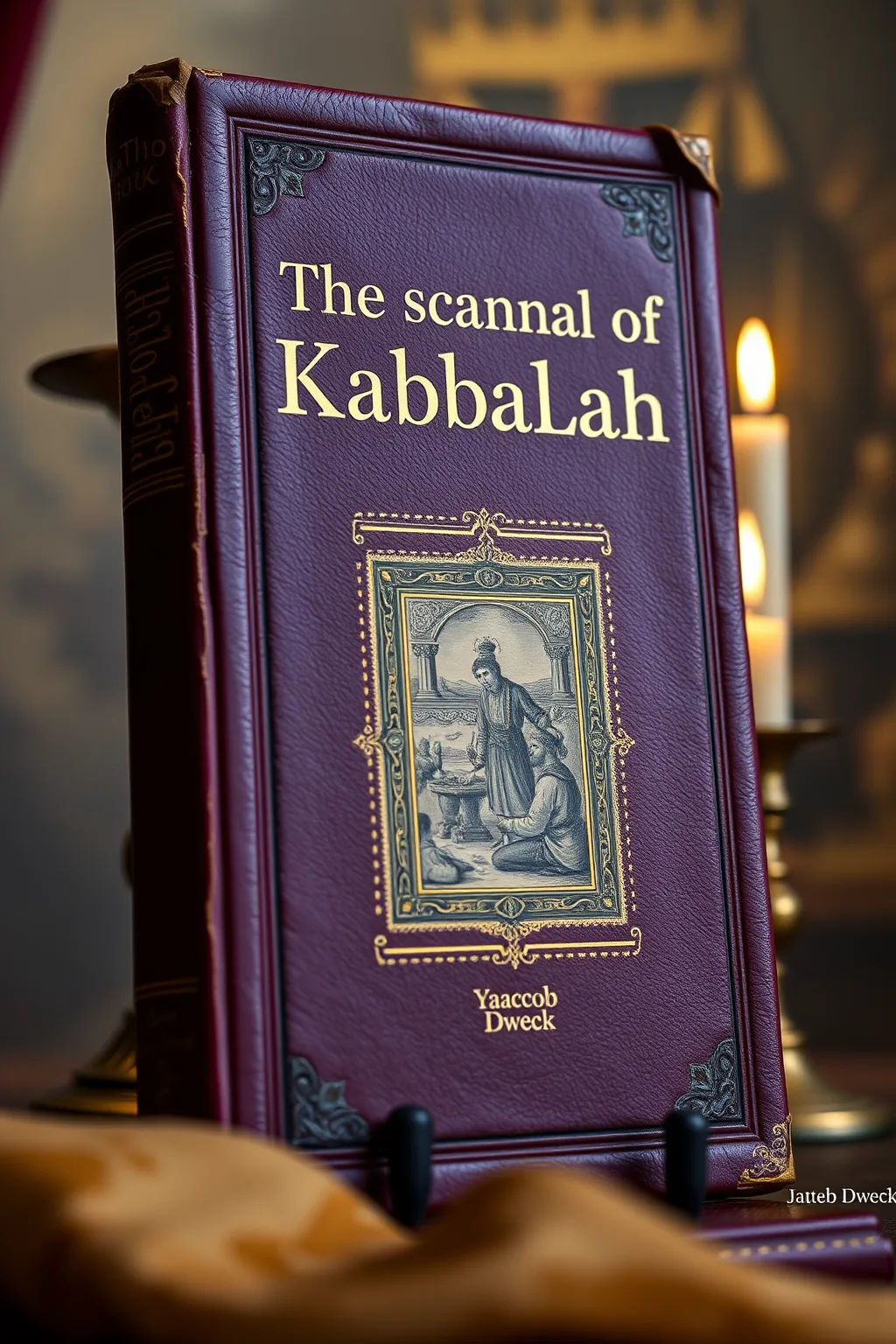
The scandal of Kabbalah
 62
62

The scandal of Kabbalah


Silas Hawthorne (Hermetic Studies Editor) — Yaacob Dweck's "The Scandal of Kabbalah" is a revelation for students of esoteric traditions. It meticulously dissects the historical roots of a spiritual conflict that continues to shape our understanding of mysticism. Dweck navigates the complex interplay between kabbalistic insights and external critique with scholarly rigor and profound empathy. The book offers unparalleled clarity on the revolutionary ideas that propelled Kabbalah from secret knowledge to a widespread phenomenon. Essential reading for anyone interested in the history of Jewish mysticism, religious polemics, and the enduring search for divine truth.
📝 Description
62
Yaacob Dweck's 2011 book examines the controversies surrounding Kabbalah's integration into Jewish life.
In "The Scandal of Kabbalah," Yaacob Dweck investigates the historical controversies that arose as Jewish mysticism, Kabbalah, became more public. The book traces Kabbalah from its early, secretive practices to its significant presence in Jewish communities during the early modern period. Dweck details how this hidden knowledge spread, sparking intense debates about Jewish identity and the correct ways to read religious texts.
The work scrutinizes the intellectual debates and theological disputes that Kabbalah generated. It examines concepts like hidden meanings, divine symbolism, and the challenges to religious authority that emerged. This book offers a look at the complex currents within Jewish mystical thought and how tradition adapted when faced with significant challenges.
This book situates Kabbalah within the broader history of Jewish esoteric traditions. It focuses on the period when these mystical teachings, once confined to select circles, began to influence wider Jewish communal life. The work addresses the tensions inherent in making esoteric knowledge accessible and the debates that resulted over its authenticity and meaning.
💡 Why Read This Book?
Embark on a compelling intellectual odyssey to understand the deep-seated controversies surrounding Kabbalah. This book is vital for scholars dissecting religious history, practitioners seeking a nuanced grasp of Jewish mysticism, and seekers drawn to the enduring power of esoteric traditions. Discover how a secretive spiritual path became a focal point of cultural debate, offering profound insights into the nature of faith and tradition.
⭐ Reader Reviews
Honest opinions from readers who have explored this book.
❓ Frequently Asked Questions
What is Kabbalah?
Kabbalah is the esoteric or mystical tradition within Judaism, aiming to understand the hidden nature of God, the universe, and the relationship between the divine and creation through symbolic interpretation of scripture and spiritual practice.
What is the 'scandal' referred to in the title?
The 'scandal' refers to the intense controversies and debates that arose around Kabbalah from its inception, particularly concerning its esoteric nature, its alleged departure from traditional interpretations of Judaism, and its growing influence.
Who were the primary critics of Kabbalah?
Critics included both internal Jewish voices, such as rationalist philosophers and traditionalists concerned about unorthodox interpretations, and external figures who viewed Kabbalah with suspicion or as a threat to established religious order.
What is the historical period covered by this book?
The book primarily focuses on the early modern period in Europe, examining the spread of Kabbalah and the subsequent intellectual and religious clashes that defined its reception and impact.
Is this book suitable for beginners in Kabbalah?
While the book is scholarly, its clear prose and historical approach make it accessible to dedicated beginners seeking a foundational understanding of Kabbalah's development and its historical context.
🔮 Key Themes & Symbolism
The Genesis of Kabbalistic Thought
Look at the foundational concepts and esoteric philosophies that birthed Kabbalah, exploring its origins as a secret discipline within Jewish mysticism. Understand the symbolic language, the divine emanations, and the quest for hidden knowledge that characterized its early development. This theme illuminates the intellectual and spiritual landscape from which this profound tradition emerged, setting the stage for its subsequent influence and the controversies it would ignite.
The Diffusion and Debate of Kabbalah
Trace the remarkable spread of Kabbalistic ideas from secluded circles to wider engagement across early modern Europe. Witness how this esoteric tradition became a central, yet often contested, feature of Jewish life. This theme examines the revolutionary impact of Kabbalah, juxtaposing its profound spiritual insights with the fierce debates and criticisms it provoked, forging a complex narrative of acceptance, resistance, and reinterpretation.
Kabbalah and the Nature of Religious Tradition
Investigate the core of the cultural war ignited by Kabbalah: the challenge it posed to established notions of Judaism and religious authority. This theme explores how Kabbalistic interpretations questioned traditional understandings, sparking profound discussions about the meaning of scripture, the divine, and the very essence of religious practice. It highlights the enduring tension between esoteric revelation and communal orthodoxy.
💬 Memorable Quotes
Direct passages from the work, attributed to the author.
“The whisper of divine secrets became a shout of contention.”
— This highlights the transition of Kabbalistic teachings from private, esoteric knowledge to public discourse, often met with controversy and debate.
“Tradition's edifice was tested by the architecture of the soul.”
— This suggests that Kabbalah's exploration of inner spiritual realities challenged established religious structures and interpretations of tradition.
“The map of the cosmos was redrawn in the language of the heart.”
— This speaks to Kabbalah's unique method of understanding the universe through symbolic, intuitive, and deeply personal spiritual insight.
“Every question of faith found a new, often scandalous, answer.”
— This emphasizes the provocative nature of Kabbalistic inquiry, which often provided novel and controversial perspectives on fundamental religious questions.
💡 Key Ideas
Editorial paraphrase of the work's core concepts — not direct quotes.
From hidden streams to roaring rivers, Kabbalah reshaped the spiritual landscape.
This quote captures the transformative journey of Kabbalah, moving from its concealed origins to its widespread influence and impact on Jewish thought and practice.
🌙 Esoteric Significance
Tradition
This book explores the esoteric tradition of Kabbalah, a mystical branch of Judaism that seeks to understand the divine nature, the creation of the universe, and humanity's role within it. It explores concepts such as the Sefirot (divine emanations), the Tree of Life, and the hidden meanings within the Torah, all aimed at achieving spiritual illumination and divine connection.
Symbolism
Kabbalah is rich in symbolism, employing Hebrew letters, numbers (gematria), and cosmic imagery to represent profound spiritual truths. The Sefer Yetzirah, the Zohar, and the teachings of Isaac Luria are replete with symbolic systems designed to unlock hidden layers of meaning in scripture and the material world, guiding the initiate towards a deeper understanding of the divine.
Modern Relevance
The debates ignited by Kabbalah in the early modern period continue to resonate today. Understanding this historical controversy provides crucial context for contemporary discussions on religious pluralism, the evolution of spiritual practices, and the ongoing tension between tradition and innovation within mystical traditions, offering insights into the enduring human quest for meaning.
👥 Who Should Read This Book
This book is essential for scholars of Jewish history, religious studies, and comparative mysticism seeking a rigorous examination of Kabbalah's historical impact. Practicing Kabbalists and students of Jewish mysticism will find invaluable context for their studies, understanding the roots of their tradition and its challenges. Seekers interested in the history of esoteric thought and the philosophical underpinnings of religious debate will also find this a compelling and clear read.
📜 Historical Context
The early modern period (roughly 16th-18th centuries) was a crucible of intellectual and religious upheaval across Europe. The Renaissance had fostered humanism and critical inquiry, while the Protestant Reformation fractured religious unity. Within Judaism, this era saw the rise of Lurianic Kabbalah, a complex system of cosmic redemption and divine immanence that rapidly disseminated. This expansion, however, was met with significant resistance. Traditionalists feared its potential to destabilize established law and belief, while rationalists questioned its mystical claims. Figures like Leone Modena, a prominent rabbi and scholar, became vocal critics, engaging in intellectual battles that shaped the discourse surrounding Jewish mysticism. This period of intense debate and adaptation ultimately defined Kabbalah's trajectory and its complex relationship with mainstream Judaism.
📔 Journal Prompts
How did the esoteric nature of Kabbalah contribute to both its appeal and its controversy?
Reflect on the concept of 'tradition' as presented in the book. What are the inherent tensions between preserving tradition and embracing new interpretations?
Consider the role of criticism in the development of spiritual or philosophical movements. How did critiques of Kabbalah shape its evolution?
What does the 'scandal' of Kabbalah reveal about the human desire for hidden knowledge versus the need for communal certainty?
How might the debates surrounding Kabbalah in the early modern period inform contemporary discussions about spirituality and religious authority?
🗂️ Glossary
Kabbalah
The esoteric or mystical tradition within Judaism, seeking to understand the divine nature and the hidden meaning of the universe through symbolic interpretation and spiritual practices.
Sefirot
In Kabbalah, the ten divine emanations or attributes through which God reveals Himself and creates the universe, often visualized as a 'Tree of Life'.
Zohar
The foundational text of Kabbalistic literature, a mystical commentary on the Torah, attributed to Rabbi Shimon bar Yochai, and widely believed to have been compiled by Moses de León.
Gematria
A method of biblical interpretation where words with the same numerical value are considered to have a related meaning, a common practice in Kabbalistic exegesis.
Ari (Isaac Luria)
A central 16th-century Kabbalist whose teachings, known as Lurianic Kabbalah, introduced concepts like Tzimtzum (divine contraction) and Tikkun Olam (world repair), profoundly influencing later Kabbalistic thought.
This book appears in 1 collection
🔮 Readers Also Liked
Browse all →







From the “Kabbalah” Collection
View all →







More Free Kabbalah & Jewish Mysticism Books
View all →