Livres secrets des gnostiques d'Égypte
 84
84

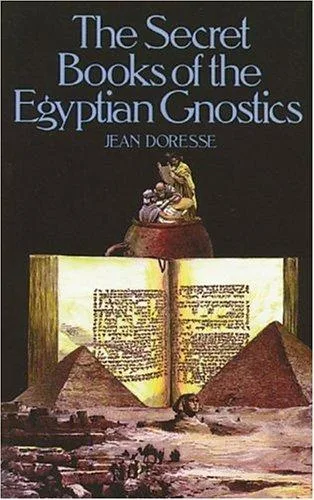
Livres secrets des gnostiques d'Égypte
Jean Doresse's "Livres secrets des gnostiques d'Égypte" presents a dense, yet rewarding, examination of early Gnostic texts discovered in Egypt. The book excels in its meticulous scholarship, offering a critical apparatus that contextualizes these often obscure writings within their historical and philosophical landscape. Doresse’s analysis of the intricate cosmologies found in Coptic manuscripts, particularly concerning the figure of Sophia, is a standout. However, the work's primary limitation is its accessibility; it is written for a specialist audience, assuming a considerable pre-existing knowledge of Gnostic traditions and Coptic language. A passage discussing the Sethian Gnostic interpretations of Genesis provides a clear example of the book's depth, revealing how these texts re-envisioned biblical narratives. "Livres secrets des gnostiques d'Égypte" is an essential, albeit challenging, resource for advanced Gnostic studies.
📝 Description
84
Jean Doresse's 1986 study examines the secret writings of Egyptian Gnostics.
Published in 1986, Jean Doresse's Livres secrets des gnostiques d'Égypte is an analytical study of early Egyptian Gnosticism's esoteric writings. It goes beyond mere translation to provide context and interpretation for texts that remained obscure for centuries. Doresse analyzes the philosophical and religious foundations of Gnostic thought as it developed in the Nile Valley, drawing on a variety of Coptic manuscripts. This work is intended for scholars and advanced students in Gnosticism, comparative religion, and ancient mysticism who possess a background in religious history and philosophy.
Doresse's research emerged during a time of heightened interest in Gnosticism, spurred by the 1945 discovery of the Nag Hammadi library. His work, however, addresses a wider range of Coptic Gnostic literature, potentially predating or existing apart from the Nag Hammadi findings. His scholarship engages with contemporary scholars like Elaine Pagels and Michel Tardieu, contributing to discussions on the origins and diversity of Gnostic movements in Roman Egypt. The book investigates core Gnostic ideas such as the Demiurge, Sophia's fall, the Pleroma, and the concept of a divine spark within humanity.
This work is situated within the study of Gnosticism, a diverse set of religious and philosophical movements prominent in the early centuries CE. Gnosticism often involves complex cosmologies, a dualistic worldview, and the pursuit of secret knowledge (gnosis) for salvation. Doresse's focus on the Egyptian Gnostic tradition, particularly texts written in Coptic, highlights a specific regional development within this broader movement. His analysis contributes to understanding how Gnostic ideas interacted with local Egyptian traditions and developed distinct expressions in the Nile Valley.
💡 Why Read This Book?
• Gain specific insights into the dualistic cosmologies described in Egyptian Gnostic texts, understanding concepts like the Pleroma and the role of Sophia, as detailed in Doresse's analysis of original Coptic manuscripts. • Learn about the historical development of Gnosticism in Roman Egypt, differentiating Doresse's findings from those of the Nag Hammadi library discovery, providing a broader perspective on Gnostic diversity. • Understand the unique soteriological paths offered by these texts, exploring how Gnostic adherents sought liberation from the material world, as presented through Doresse's scholarly interpretation.
⭐ Reader Reviews
Honest opinions from readers who have explored this book.
❓ Frequently Asked Questions
What are the primary Gnostic texts discussed in Livres secrets des gnostiques d'Égypte?
Jean Doresse's work analyzes various Coptic manuscripts, including texts that illuminate the Gnostic understanding of creation, the nature of the divine, and the path to salvation, often differing from the more famous Nag Hammadi collection.
Who was Jean Doresse and what was his contribution to Gnostic studies?
Jean Doresse was a French scholar whose 1986 book provided a detailed academic study of Egyptian Gnostic literature, contributing significantly to the understanding of Gnosticism's presence and development in Roman Egypt.
When was Livres secrets des gnostiques d'Égypte first published?
The book was first published in 1986, a period of significant scholarly interest in Gnosticism following major archaeological discoveries.
Does this book contain direct translations of Gnostic scriptures?
While it discusses and interprets Gnostic scriptures, the book is primarily an analytical study rather than a direct collection of translations, focusing on scholarly examination of the texts.
What is the historical significance of Gnosticism in Egypt?
Gnosticism flourished in Egypt during the Roman period, blending Hellenistic philosophy, Jewish traditions, and local Egyptian beliefs into diverse esoteric systems seeking spiritual knowledge and liberation.
What esoteric traditions does this book explore?
The book specifically explores Egyptian Gnosticism, a complex esoteric tradition that emerged in Roman Egypt, characterized by its dualistic worldview and emphasis on mystical knowledge (gnosis).
🔮 Key Themes & Symbolism
Gnostic Cosmology and Theogony
The work meticulously details the intricate cosmologies presented in Egyptian Gnostic texts. It examines the concept of the Pleroma, the divine area of aeons, and the dramatic fall of Sophia, which leads to the creation of the flawed material world by the Demiurge. Doresse elucidates how these narratives, often distinct from mainstream creation myths, provided a framework for understanding existence and humanity's place within it.
The Role of Sophia
Central to many Gnostic systems, the figure of Sophia (Wisdom) is a key focus. Doresse explores her complex role, often depicted as an aeon whose desire or error precipitates the material cosmos. The book analyzes various interpretations of Sophia's descent and her subsequent efforts to reclaim her divine origin, highlighting her significance as a salvific figure or a catalyst for gnosis.
Soteriology and Salvation
Livres secrets des gnostiques d'Égypte investigates the Gnostic path to salvation, which typically involves acquiring salvific knowledge (gnosis) to escape the material prison created by lower divine beings. Doresse discusses the Gnostic view of the divine spark within humans and the role of redeemers or spiritual guides in awakening this spark and facilitating the soul's ascent back to the Pleroma.
Coptic Egyptian Milieu
The book emphasizes the unique context of Gnosticism's development within Roman Egypt. Doresse examines how indigenous Egyptian religious concepts, philosophical currents from the Hellenistic world, and early Christian ideas may have intermingled to form distinct Gnostic traditions expressed in the Coptic language. This provides a localized perspective on a widespread spiritual movement.
💬 Memorable Quotes
Direct passages from the work, attributed to the author.
“The Gnostic texts from Egypt reveal a complex pantheon and a cosmology far removed from orthodox interpretations.”
— This statement highlights the radical departure of Gnostic thought from established religious doctrines, emphasizing the intricate and often alien spiritual systems they constructed.
“Sophia's transgression is the pivot upon which the material world's existence hinges.”
— This interpretation underscores the central role of the divine feminine figure, Sophia, whose actions, often depicted as a fall or error, are seen as the direct cause of the flawed material reality.
“Salvation lies not in faith or works, but in the attainment of direct, intuitive knowledge.”
— This captures the essence of Gnosticism's focus on 'gnosis' – a special, often experiential, knowledge that liberates the divine spark within humanity from the material illusion.
“The Coptic manuscripts offer a unique window into Gnostic thought shaped by the Egyptian landscape.”
— This points to the specific geographical and cultural context of Roman Egypt, suggesting that Gnosticism developed particular characteristics influenced by its environment and local traditions.
“The Demiurge represents the limited, often ignorant, creator of the physical realm.”
— This defines the Gnostic concept of the Demiurge, typically identified with the God of the Old Testament, as a lesser, imperfect divine entity responsible for the flawed material universe.
🌙 Esoteric Significance
Tradition
This work is deeply rooted in the Gnostic tradition, specifically focusing on its manifestations within the Coptic Egyptian milieu of the Roman period. It explores a lineage that sought spiritual liberation through direct knowledge (gnosis), often positing a radical dualism between a transcendent, true God and the flawed creator of the material world. Doresse's analysis helps position these Egyptian texts within the broader spectrum of Gnostic thought, highlighting both commonalities and unique regional developments.
Symbolism
Key symbols explored include the figure of Sophia, representing divine wisdom whose fall precipitates the material creation, and the Pleroma, the ultimate divine realm from which emanations originate. The concept of the divine spark within humanity, a fragment of the true God trapped in the material body, is also central. These symbols collectively illustrate the Gnostic worldview: a fallen cosmos from which the enlightened soul must ascend back to its divine source.
Modern Relevance
Contemporary Gnostic-inspired movements, esoteric philosophers, and scholars of comparative religion continue to draw upon the foundational texts and analyses presented in works like Doresse's. His meticulous study provides essential source material for understanding the historical roots of ideas concerning spiritual liberation, dualistic cosmologies, and the pursuit of hidden knowledge, which resonate in various modern spiritual and philosophical inquiries.
👥 Who Should Read This Book
• Advanced students of religious studies and Gnostic history: They will benefit from Doresse's detailed analysis of primary Coptic sources and his contextualization of Egyptian Gnosticism within broader Hellenistic and early Christian thought. • Researchers of ancient Mediterranean esoteric traditions: This book offers a crucial scholarly perspective on a specific, influential esoteric movement that shaped late antique spirituality. • Practitioners seeking historical grounding in Gnostic ideas: Individuals interested in the historical development of Gnostic concepts like the Demiurge and Sophia will find a rigorous academic treatment of these themes.
📜 Historical Context
Jean Doresse's "Livres secrets des gnostiques d'Égypte," published in 1986, emerged in a post-Nag Hammadi discovery era, a period of intense scholarly re-evaluation of Gnosticism. The discovery of the Nag Hammadi library in 1945 had revolutionized the field, making available primary Gnostic texts previously known only through the condemnations of Church Fathers. Doresse's work contributed by analyzing a broader range of Coptic Gnostic writings, potentially including materials not found at Nag Hammadi, and situating them within the vibrant intellectual currents of Roman Egypt. His scholarship engaged with the ongoing debate concerning the origins of Gnosticism—whether primarily Hellenistic, Jewish, or indigenous Egyptian—and its relationship with early Christianity. He operated within a scholarly landscape that included figures like Elaine Pagels, whose work also explored Gnostic interpretations of biblical narratives, and Michel Tardieu, who focused on the diversity of Gnostic systems.
📔 Journal Prompts
The concept of Sophia's fall as the genesis of the material world.
Reflections on the dualistic tension between the spiritual Pleroma and the material cosmos.
Contemplating the Gnostic understanding of the 'divine spark' within humanity.
The role of the Demiurge in Gnostic cosmology.
Analyzing the soteriological paths proposed in Egyptian Gnostic texts.
🗂️ Glossary
Gnosticism
A diverse set of religious and philosophical movements in the early centuries CE emphasizing salvation through knowledge (gnosis) of a transcendent, true God, often distinct from the creator of the material world.
Coptic
The final stage of the Egyptian language, written using a modified Greek alphabet, which became the liturgical and literary language of Egyptian Christians from the 3rd century CE onwards.
Pleroma
In Gnosticism, the totality of divine powers and emanations that constitute the supreme, transcendent Godhead. It is the spiritual realm from which the material world is a deviation.
Sophia
Greek for 'Wisdom,' a key figure in Gnostic cosmology, often depicted as an aeon whose desire or error leads to the creation of the material world and the Demiurge.
Demiurge
In Gnosticism, the lesser divine being, often identified with the God of the Old Testament, who created the flawed material universe. It is distinct from the supreme, unknowable God.
Soteriology
The study of salvation or liberation, specifically examining the doctrines and practices that lead to spiritual deliverance from the material world or earthly suffering.
Aeon
Emanations or divine beings that originate from the supreme God in Gnostic cosmology, forming the Pleroma. They are often paired in masculine-feminine syzygies.
🔮 Readers Also Liked
Browse all →







More by Jean Doresse
All books →



More Free Sacred Texts & Gnosticism Books
View all →