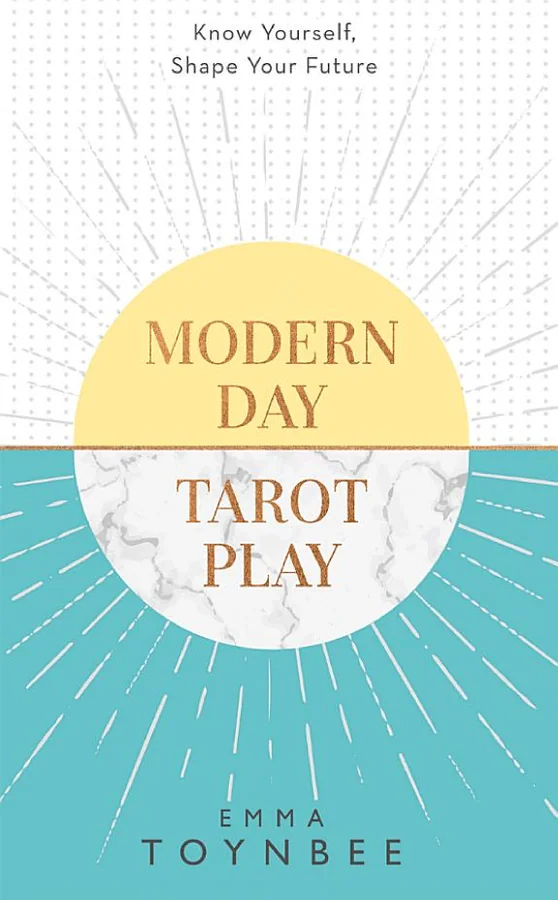
Modern Day Tarot Play: Know yourself, shape your life
 73
73

Modern Day Tarot Play: Know yourself, shape your life
Emma Toynbee’s "Modern Day Tarot Play" sidesteps the usual spiritual platitudes, aiming instead for a pragmatic, almost athletic, mastery of the tarot. The book's strength lies in its directness; it bypasses the mystical fog that often surrounds tarot guides and gets straight to the mechanics of reading. Toynbee’s emphasis on developing a personal interpretive style, rather than adhering to rigid interpretations, is particularly refreshing. A passage detailing how to approach the 'court cards' as distinct personality archetypes, rather than simply heirarchal figures, offers a practical lens for understanding their complex roles in a spread. However, the book’s ambition to fast-track readers to a 'professional' level occasionally feels overzealous. While it provides a solid framework, true professional skill often requires years of diverse reading experiences that no single text can fully replicate. Nevertheless, for the earnest student seeking to move beyond beginner status, Toynbee delivers a no-nonsense toolkit.
📝 Description
73
Emma Toynbee's Modern Day Tarot Play, published in 2018, guides readers beyond basic card meanings.
This 2018 book offers a structured method for using tarot cards to gain personal insight and influence life choices. Toynbee moves past simple interpretations, aiming to give readers the skills for more insightful and effective readings. The book functions as a practical manual, focusing on techniques that can be put into practice and the cultivation of intuitive reading abilities. It presents tarot not just as a divinatory tool, but as a system for self-understanding and active creation.
The work is mainly for people who know some tarot and want to improve their skills. It suits those who find introductory books lacking and desire a deeper understanding. Toynbee's method appeals to independent learners and those who prefer to learn by doing and systematic study. It is also good for people interested in psychological ways of looking at divination, examining how archetypes and symbols can shed light on personal difficulties and chances.
Published in 2018, Toynbee's book fits into a recent period where tarot has gained popularity, often linked with mindfulness and self-help. This era followed the rise of online resources and communities for esoteric studies. Unlike older, more formal traditions that might have treated tarot with strict academic scrutiny or kept its knowledge guarded, the 2018 context allowed for a more accessible, hands-on approach. The book reflects a broader cultural shift toward seeking personal spiritual guidance outside established institutions, influenced by psychological ideas like Carl Jung's work on archetypes.
💡 Why Read This Book?
• Learn to move beyond memorized meanings by developing your unique interpretive voice, as detailed in the section on creating a personal tarot lexicon. • Gain practical techniques for constructing and understanding narrative arcs within card spreads, moving from static symbols to dynamic storytelling. • Understand the Major Arcana as archetypal life lessons and the Minor Arcana as daily influences, offering a framework for applying tarot to concrete life decisions.
⭐ Reader Reviews
Honest opinions from readers who have explored this book.
❓ Frequently Asked Questions
What is the primary goal of Emma Toynbee's 'Modern Day Tarot Play'?
The book aims to transition readers from amateur tarot enthusiasts to confident, skilled readers by providing practical techniques and emphasizing intuitive development beyond rote memorization.
Is 'Modern Day Tarot Play' suitable for complete beginners with no prior tarot knowledge?
While it aims to fast-track readers, the book assumes some basic familiarity with tarot cards and their general purpose. It's best for those ready to deepen their existing understanding.
When was 'Modern Day Tarot Play' first published?
The book was first published on July 12, 2018, positioning it within the modern resurgence of interest in tarot and self-exploration.
What does the book mean by 'Tarot Play'?
'Tarot Play' signifies an active, dynamic, and creative engagement with the cards, encouraging readers to experiment and develop their intuitive connection rather than passively receiving interpretations.
Does the book offer guidance on reading tarot for others?
Yes, the book addresses the practical aspects and ethical considerations involved in reading the tarot for oneself and for other individuals.
How does this book differ from traditional tarot guides?
It focuses on developing a personal reading style and practical application for life shaping, moving away from solely predictive or esoteric dogma, reflecting a more contemporary, psychological approach.
🔮 Key Themes & Symbolism
Developing Reader Intuition
Toynbee posits that tarot reading is not just about memorizing card meanings but cultivating an intuitive connection. The book encourages developing a personal lexicon, where established meanings are a starting point, not an endpoint. This theme is explored through exercises designed to hone the reader's inner voice, distinguishing between symbolic archetypes and personal resonance. It's about learning to 'hear' what the cards are communicating in a specific context, fostering a dynamic dialogue between the reader, the cards, and the querent.
Tarot as a Life-Shaping Tool
The 'play' in the title signifies an active engagement with tarot for personal growth and conscious decision-making. This theme challenges the notion of tarot as a purely predictive or fatalistic system. Instead, it presents the cards as mirrors reflecting inner states and potential pathways. The book guides readers on how to translate insights from a tarot spread into tangible actions and choices, empowering them to actively shape their life circumstances rather than passively observe them.
Archetypes and Narrative
Toynbee frames the tarot deck, particularly the Major Arcana, as a system of archetypal energies and universal life lessons. The book guides readers to interpret these archetypes not as static concepts but as dynamic forces influencing personal narratives. Understanding the flow and story within a card spread is crucial. This involves recognizing how the Major Arcana represent significant life stages or lessons, and how the Minor Arcana illustrate the everyday events and choices that unfold within these larger patterns.
Professionalism and Ethics
A significant aspect of the book is its aspiration to elevate the reader to a 'professional' level of practice. This involves not only technical skill but also an understanding of ethical conduct. Toynbee addresses the responsibilities that come with offering readings, whether for oneself or others. The emphasis is on clarity, integrity, and empowering the querent, moving beyond sensationalism or vague pronouncements. This theme underscores the book's pragmatic approach to tarot as a serious tool for self-awareness and guidance.
💬 Memorable Quotes
Direct passages from the work, attributed to the author.
“The goal is to make the cards speak to your life, not just recite textbook meanings.”
— This highlights the book's core philosophy: encouraging personal interpretation and direct application of tarot symbolism to individual experiences, rather than rigid adherence to traditional definitions.
“Court cards represent people, but more importantly, they represent facets of yourself.”
— This interpretation shifts the focus from external figures to internal psychological states, aligning with a modern, introspective approach to tarot where the cards serve as mirrors of the self.
“Every spread tells a story; learn to read the plot, not just individual sentences.”
— This emphasizes the importance of understanding the narrative flow and interconnectedness of cards in a spread, moving beyond isolated interpretations to a cohesive understanding of the message.
“Intuition is a skill built through consistent, informed practice.”
— This counters the idea that intuition is an innate, unteachable gift, positioning it as a developable faculty, honed through the structured learning and practical application methods presented in the book.
“Use the tarot to illuminate paths, not to decree destinies.”
— This clearly defines the book's stance against fatalism, advocating for tarot as a tool for exploring possibilities and making informed choices, thereby empowering the individual.
🌙 Esoteric Significance
Tradition
While not strictly adhering to a single esoteric lineage, "Modern Day Tarot Play" draws heavily from the psychological interpretations popularized by the Hermetic Order of the Golden Dawn and later expanded by Carl Jung. It aligns with traditions that view tarot as a symbolic language for exploring the psyche and the archetypal forces of existence. The work departs from purely predictive or ceremonial magic, focusing instead on tarot as a tool for self-understanding and conscious manifestation within the mundane world.
Symbolism
The book engages with core tarot symbolism, particularly the journey of the Fool in the Major Arcana, representing the initial leap into the unknown and the unfolding of potential. It also emphasizes the four suits of the Minor Arcana—Wands, Cups, Swords, and Pentacles—as representing distinct domains of human experience: spirit/creativity, emotion/relationships, intellect/conflict, and the material world/practicality. These are presented as fundamental energies to be understood and balanced.
Modern Relevance
This work finds resonance today within contemporary witchcraft, self-help communities, and therapeutic practices that incorporate archetypal psychology. Modern practitioners often cite Toynbee's emphasis on personal interpretation and the 'playful' application of tarot as a refreshing counterpoint to more dogmatic or overly mystical approaches. Its focus on actionable insights makes it relevant for those seeking practical guidance in a complex world, bridging the gap between esoteric symbolism and everyday life.
👥 Who Should Read This Book
• Aspiring tarot readers seeking to move beyond basic card meanings and develop practical, intuitive reading skills. • Individuals interested in a psychological approach to tarot, viewing the cards as tools for self-discovery and personal growth. • Those who prefer a structured, action-oriented guide to learning tarot that emphasizes application over abstract theory.
📜 Historical Context
Emma Toynbee's "Modern Day Tarot Play" emerged in 2018, a period marked by the widespread accessibility of esoteric knowledge through digital platforms and a growing cultural interest in self-help and mindfulness. This era saw tarot integrated into broader wellness movements, often detached from its more esoteric or ceremonial roots. Unlike the early 20th century, when figures like A.E. Waite and Pamela Colman Smith were developing iconic decks within a context of magical orders and occult revivals, Toynbee's work speaks to a contemporary audience seeking practical psychological insights. The book reflects a departure from strictly divinatory traditions, aligning more with a Hermetic principle of 'as above, so below' applied to personal psychology. Its reception occurred in a landscape where many authors, such as Rachel Pollack, were already exploring tarot's psychological and narrative dimensions, yet Toynbee's approach offers a particularly direct, 'playful' methodology.
📔 Journal Prompts
Reflect on the 'Fool's Journey' as a personal narrative arc you are currently navigating.
How does your personal lexicon for the Three of Pentacles differ from standard interpretations?
Analyze the 'court cards' in a recent reading as reflections of your own personality facets.
Consider the narrative structure of your last tarot spread: what was the central conflict?
Explore the Wands suit's symbolism in relation to your creative impulses or passions.
🗂️ Glossary
Major Arcana
The 22 trump cards in a tarot deck, often seen as representing significant life lessons, archetypal energies, and major spiritual themes in a reading.
Minor Arcana
The 56 cards divided into four suits (Wands, Cups, Swords, Pentacles), typically representing everyday events, challenges, and circumstances in a reading.
Court Cards
The Page, Knight, Queen, and King cards found within each suit of the Minor Arcana, often interpreted as representing people, personality types, or specific energies.
Spread
A specific arrangement or layout of tarot cards used for a reading, designed to address particular questions or explore specific areas of inquiry.
Querent
The person for whom a tarot reading is being performed; the individual seeking insight or guidance from the cards.
Personal Lexicon
A reader's unique set of interpretations and associations for tarot cards, developed through personal experience and intuition beyond standard dictionary meanings.
Archetype
A universal, symbolic pattern or model of behavior, thought, or image that is often found in the collective unconscious, as explored in tarot symbolism.
This book appears in 3 collections
🔮 Readers Also Liked
Browse all →








From the “Tarot Reading” Collection
View all →







More Free Occult Philosophy Books
View all →