Aliens from Space: Astounding New Evidence about Erich Von Daniken's Ancient Astronauts and Their Landings on Earth Today
 82
82

Aliens from Space: Astounding New Evidence about Erich Von Daniken's Ancient Astronauts and Their Landings on Earth Today
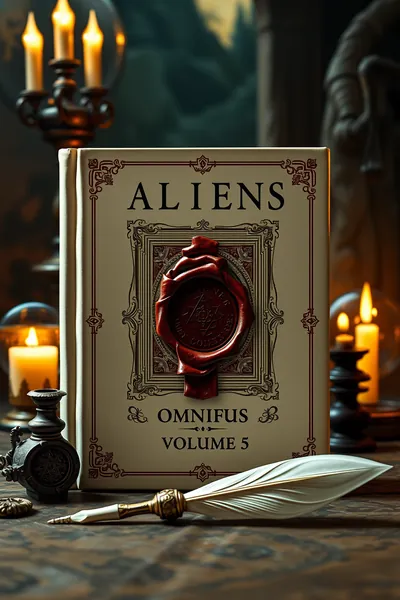
Donald Keyhoe's *Aliens from Space* attempts to buttress Erich von Däniken's ancient astronaut theories with what it terms "astounding new evidence." While the book covers a wide array of purported anomalies, from ancient texts to supposed modern sightings, its presentation often leans heavily on speculative interpretation rather than rigorous proof. The strength lies in its comprehensive cataloging of Däniken-esque claims, offering a dense compilation for adherents of the ancient astronaut paradigm. However, a significant limitation is the lack of critical engagement with mainstream scientific or historical counterarguments. For instance, the book discusses the Nazca Lines, presenting them as runways for alien craft, but glosses over established archaeological explanations for their creation and purpose. The narrative feels more like an advocacy piece than an objective critique. Ultimately, *Aliens from Space* serves as a detailed compendium for believers but offers little to convince skeptics.
📝 Description
82
Donald Keyhoe's 2016 book examines evidence for ancient astronauts and modern alien activity.
Aliens from Space revisits and expands on the ancient astronaut theories, with a specific focus on Erich von Däniken's work. Donald Keyhoe scrutinizes claims of ancient extraterrestrial visitation and presents supposed evidence of ongoing alien presence today. The book attempts to support Däniken's hypotheses by analyzing historical texts, archaeological puzzles, and alleged modern encounters with aliens.
Keyhoe, a known ufologist, synthesizes various accounts and artifacts. He interprets these through the perspective of ancient alien intervention, questioning conventional historical narratives. This work appeals to readers interested in the ancient astronaut theory and its proponents, especially Däniken's controversial ideas. It is for those who seek alternative explanations for ancient human achievements and enjoy speculative history.
This book enters a tradition of esoteric thought that gained popularity in the late 20th century, largely due to Erich von Däniken's *Chariots of the Gods?* published in 1968. This era saw increased public fascination with ancient mysteries and extraterrestrial possibilities, often challenging established archaeological and anthropological views. Keyhoe's work continues this discussion, building on the ideas of Däniken and other ufologists who suggested that ancient myths and structures indicated alien contact. The book's 2016 release shows the enduring nature of these debates decades after their initial surge.
💡 Why Read This Book?
• Gain exposure to the specific arguments and evidence presented by Donald Keyhoe to support Erich von Däniken's ancient astronaut theories, particularly concerning the interpretation of ancient artifacts and texts as evidence of extraterrestrial contact. • Understand the historical trajectory of the ancient astronaut hypothesis, including its resurgence in popular culture and the specific claims that fueled debate around figures like Däniken in the late 20th century. • Explore how certain interpretations of historical events and archaeological sites, such as the Nazca Lines or ancient religious iconography, are reframed within the context of extraterrestrial intervention.
⭐ Reader Reviews
Honest opinions from readers who have explored this book.
❓ Frequently Asked Questions
What is the main focus of Donald Keyhoe's Aliens from Space?
The book primarily focuses on bolstering Erich von Däniken's ancient astronaut theories. It presents supposed new evidence and interpretations of historical artifacts, texts, and alleged sightings to support the idea that extraterrestrials visited Earth in antiquity and continue to interact with it.
When was Aliens from Space first published?
Aliens from Space by Donald Keyhoe was first published on December 7, 2016. This publication date places it within a later wave of interest in the ancient astronaut theory.
Who is Erich von Däniken and why is he central to this book?
Erich von Däniken is a Swiss author famous for his theories that ancient alien visitors influenced human civilization. Keyhoe's book builds upon and attempts to validate Däniken's controversial ideas, using them as a foundational framework for presenting further 'evidence'.
What kind of evidence does the book claim to present?
The book claims to present evidence ranging from interpretations of ancient texts and religious myths to archaeological anomalies like the Nazca Lines and alleged accounts of modern UFO landings and alien encounters.
Does this book offer a mainstream historical perspective?
No, Aliens from Space does not present a mainstream historical or archaeological perspective. It champions the speculative ancient astronaut theory, which is largely rejected by conventional academia.
What is the author Donald Keyhoe known for?
Donald Keyhoe was a prominent American aviation writer and UFO researcher, known for his early advocacy and investigation into UFO phenomena and alleged government cover-ups. His work often aligns with popular ufology narratives.
🔮 Key Themes & Symbolism
Ancient Astronaut Theory
The core concept is the 'ancient astronaut theory,' asserting that extraterrestrials visited Earth in prehistoric times, influencing human development, religion, and technology. This book meticulously examines various historical accounts, myths, and archaeological findings, such as megalithic structures and ancient artwork, reinterpreting them as evidence of advanced alien intervention rather than solely human achievement. It posits that figures like gods in ancient pantheons were actually alien visitors, and their 'miracles' were demonstrations of advanced technology.
Extraterrestrial Landings
Beyond ancient history, the book strongly suggests ongoing extraterrestrial activity, including documented or alleged 'landings on Earth today.' It compiles anecdotal reports, witness testimonies, and supposed photographic or physical evidence of UFOs and alien craft. Keyhoe, a known ufologist, presents these accounts as credible indicators of continued alien presence and surveillance, often implying that official denials or explanations are part of a systematic cover-up.
Reinterpretation of History
A significant theme is the radical reinterpretation of established historical and religious narratives. The book challenges conventional archaeological and anthropological explanations for ancient civilizations' achievements, suggesting that human progress was significantly accelerated or directly guided by alien intelligence. This includes interpreting religious texts, ancient maps, and enigmatic structures not through their traditional cultural contexts but as records or artifacts of extraterrestrial contact.
Evidence and Skepticism
The work presents itself as a collection of 'astounding new evidence' that supports the ancient astronaut hypothesis. It scrutinizes specific artifacts and historical events, offering alternative explanations rooted in extraterrestrial visitation. While aiming to convince skeptics, the book's methodology often relies on selective interpretation and anecdotal evidence, which is a point of contention with mainstream scientific and historical communities.
💬 Memorable Quotes
Direct passages from the work, attributed to the author.
“Alleged modern UFO sightings corroborate ancient visitation claims.”
— This concept underscores the book's effort to bridge the gap between ancient history and contemporary phenomena, suggesting that modern UFO reports serve as ongoing evidence for the ancient astronaut theory.
“Ancient myths often describe beings from the sky.”
— This interpretation emphasizes how the book re-examines global mythology, suggesting that divine figures and creation stories are not purely symbolic but literal accounts of encounters with extraterrestrial visitors.
“Evidence of ongoing alien landings persists despite official silence.”
— This concept reflects the book's engagement with ufology and alleged government cover-ups, positing that contemporary reports of alien craft and activities are suppressed but nonetheless indicative of a continuing extraterrestrial presence on Earth.
💡 Key Ideas
Editorial paraphrase of the work's core concepts — not direct quotes.
Interpretations of ancient texts and artifacts suggest non-human intelligence.
This paraphrase highlights the book's central thesis: that historical records and archaeological finds, when viewed through a specific lens, point towards extraterrestrial influence rather than purely human origins or development.
Megalithic structures hint at advanced technological assistance.
This paraphrase points to the book's focus on monumental ancient architecture, such as pyramids and stone circles, proposing that their construction implies technological capabilities beyond those attributed to ancient humans, thus requiring external, possibly alien, intervention.
🌙 Esoteric Significance
Tradition
While not strictly adhering to a single esoteric lineage, the book draws heavily from the modern esoteric interest in ancient civilizations and non-human intelligence that emerged in the late 19th and early 20th centuries, particularly influenced by Theosophy and its successors. Theosophy, founded by Helena Blavatsky, explored ancient wisdom, lost continents, and extraterrestrial origins of life on Earth. Keyhoe's work, like that of Däniken, aligns with this broader esoteric tradition's fascination with uncovering hidden histories and challenging orthodoxies through speculative interpretation of ancient texts and artifacts.
Symbolism
The book engages with symbols found in ancient cultures, reinterpreting them through an extraterrestrial lens. Common motifs include depictions of 'sky gods' or winged beings in ancient art, interpreted not as mythological figures but as literal representations of alien visitors. Structures like the Pyramids of Giza or the Nazca Lines are treated as symbolic of advanced alien technology—landing sites, energy conduits, or communication devices—rather than solely as products of ancient human ritual or engineering.
Modern Relevance
The ideas presented in *Aliens from Space* continue to resonate within contemporary ufology, alternative history communities, and online forums dedicated to ancient mysteries. Thinkers and content creators exploring topics such as ancient aliens, conspiracy theories, and the possibility of extraterrestrial intelligence often reference or build upon the foundational arguments popularized by Däniken and expanded by authors like Keyhoe. The work fuels ongoing discussions about humanity's origins and our place in a potentially populated cosmos.
👥 Who Should Read This Book
• Enthusiasts of ancient astronaut theories and Erich von Däniken's work who seek further compilation and purported evidence supporting these ideas. • Readers interested in speculative history and alternative explanations for ancient human achievements who are open to challenging mainstream archaeological and historical consensus. • Ufology researchers and followers of conspiracy theories looking for material that connects historical anomalies with alleged modern alien encounters and potential government cover-ups.
📜 Historical Context
Published in 2016, *Aliens from Space* enters a long-standing debate ignited by Erich von Däniken's *Chariots of the Gods?* in 1968. This period, often termed the 'golden age' of ufology and ancient mysteries, saw a proliferation of theories challenging conventional archaeological and historical narratives. Authors like Däniken proposed that ancient civilizations received technological and cultural guidance from extraterrestrial visitors, interpreting biblical accounts, megalithic structures, and ancient artifacts as proof. Keyhoe's work revisits these claims, drawing from a long history of ufological investigation that gained momentum in the mid-20th century, influenced by figures like Donald Keyhoe himself, who was a significant proponent of UFO investigation and alleged cover-ups. The book's continued exploration of these themes reflects a persistent counter-narrative to mainstream academic thought, engaging with a public fascination that also produced contemporary works on alternative histories and conspiracy theories.
📔 Journal Prompts
The concept of ancient astronaut theories as presented by Däniken and Keyhoe.
Interpretations of ancient myths as evidence of extraterrestrial contact.
The evidence for alleged modern alien landings on Earth today.
The symbolic meaning of megalithic structures like the Nazca Lines.
How do you reconcile claims of ancient alien influence with established historical records?
🗂️ Glossary
Ancient Astronaut Theory
The hypothesis that extraterrestrial beings visited Earth in antiquity, influencing human culture, religion, technology, and development. It suggests ancient myths and artifacts are evidence of this contact.
Ufology
The systematic study of unidentified flying objects (UFOs) and related phenomena, often involving investigation into alleged alien visitations and government secrecy surrounding them.
Megalithic Structures
Large, prehistoric structures made of stone, such as Stonehenge or the pyramids. Proponents of the ancient astronaut theory often cite these as evidence of advanced, possibly alien-assisted, construction techniques.
Erich von Däniken
A Swiss author famous for popularizing the ancient astronaut theory with his 1968 book *Chariots of the Gods?*, which proposed that alien visitors influenced early human civilization.
Nazca Lines
A series of large geoglyphs etched into the desert floor in southern Peru. While conventionally explained as ritualistic or cultural, some theories, including those discussed in the book, propose they served as landing strips for alien spacecraft.
Extraterrestrial
Originating from or existing outside the planet Earth; relating to beings from other worlds.
Cover-up
A conspiracy to conceal wrongdoing or embarrassing facts, often alleged in the context of UFO phenomena, suggesting governments hide evidence of alien contact.