Santería
 77
77

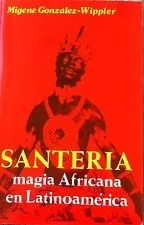
Santería
Migene González-Wippler's 1992 work provides a much-needed structured introduction to Santería, a religion often shrouded in mystery for outsiders. Its strength lies in its systematic approach, breaking down the complex pantheon and ritual structures into digestible components. The section detailing the Orishas and their correspondences is particularly illuminating. However, the book occasionally feels like a textbook, sometimes lacking the lived, spiritual resonance that a practitioner might convey. The discussion of divination, while informative, could benefit from more nuanced exploration of the interpretive art involved. Still, for its clarity and comprehensive scope in 1992, it remains a valuable reference for serious students of Afro-Cuban spirituality.
📝 Description
77
Migene González-Wippler's 1992 text examines Santería, an Afro-Cuban religion blending West African and Catholic traditions.
This 1992 book presents an overview of Santería, the Afro-Cuban religion formed by the fusion of West African spiritual traditions and Roman Catholicism. It moves beyond surface-level descriptions to detail the complex belief systems, the rituals practiced, and the pantheon of deities known as Orishas. The work also traces the religion's historical development and its continuing presence in contemporary society.
The book is written for readers who want a serious, academic understanding of Santería, not a popularized version. It is useful for students of comparative religion, anthropologists, and anyone interested in West African diasporic traditions. Practitioners looking to deepen their understanding of core principles and historical background will also find it valuable, provided they approach it with an academic perspective.
Published in 1992, the book appeared at a time when interest in Afro-Caribbean religions was growing. While other scholars had studied related traditions, González-Wippler's work focused on the unique syncretic forms in Cuba and its diaspora. It became a significant resource for understanding a tradition previously shared mainly through oral transmission and private practice, offering a clear and structured account.
Santería, as detailed in this 1992 study, represents a vibrant example of religious syncretism, a common phenomenon in diasporic spiritual systems. The blending of West African Orisha worship with Roman Catholicism demonstrates how traditions adapt and persist under pressure, creating unique theological and ritual frameworks. This book situates Santería within the broader study of Afro-Caribbean religions, highlighting its specific historical trajectory and cultural expressions.
💡 Why Read This Book?
• Gain a structured understanding of the Orisha pantheon and their syncretic links to Catholic saints, as detailed in the book's extensive listings. • Comprehend the foundational role of initiation rituals and the significance of the Babalawo and Iyalorisha within the Santería religious structure. • Appreciate the historical development of Santería in Cuba, understanding its roots in West African traditions and its adaptation within a new environment.
⭐ Reader Reviews
Honest opinions from readers who have explored this book.
❓ Frequently Asked Questions
When was Migene González-Wippler's book on Santería first published?
Migene González-Wippler's seminal work on Santería was first published in 1992, making it an important early text for understanding the religion outside of Cuba.
What are the Orishas in Santería?
The Orishas are divine manifestations or spirits in Santería, each governing specific aspects of nature and human existence. They are often syncretized with Catholic saints.
Who is a Babalawo in Santería?
A Babalawo is a high-ranking priest in Santería, often referred to as a 'Father of Secrets'. They are masters of divination, particularly the Ifá oracle, and play a crucial role in spiritual guidance and rituals.
Is this book suitable for beginners interested in Santería?
Yes, this book is highly suitable for beginners seeking a factual and comprehensive overview of Santería's structure, beliefs, and practices as they were understood in 1992.
What is the relationship between Santería and Catholicism?
Santería exhibits significant syncretism with Catholicism, a historical adaptation where West African deities (Orishas) were associated with Catholic saints, allowing practitioners to maintain their spiritual traditions under colonial rule.
What is the Ifá oracle?
The Ifá oracle is a complex divination system central to Santería and other related traditions. It uses a set of sixteen seeds or palm nuts and a divination board to interpret messages from the Orishas.
🔮 Key Themes & Symbolism
The Orisha Pantheon
The book meticulously details the pantheon of Orishas, the divine forces central to Santería. It explains their origins in Yoruba spirituality and their syncretic association with Catholic saints, a key characteristic of this Afro-Cuban religion. Each Orisha is presented with their domains, attributes, and preferred offerings, providing a framework for understanding their roles in both natural phenomena and human life. This comprehensive listing serves as a foundational element for grasping the religion's spiritual architecture.
Ritual and Initiation
Central to the practice of Santería, as explored in the text, are the intricate rituals and the crucial process of initiation. The book outlines the significance of ceremonies like the Kariocha (initiation into the priesthood) and the role of godparents and the spiritual community. It describes the preparation and execution of various rites, emphasizing the sacredness of these transformative experiences and their importance in establishing a practitioner's connection with the Orishas.
Syncretism and Adaptation
A core theme is the syncretic nature of Santería, born from the forced amalgamation of West African religious beliefs with Roman Catholicism during the era of slavery in Cuba. González-Wippler explains how enslaved Africans preserved their spiritual heritage by mapping their Orishas onto the images and stories of Catholic saints. This adaptation was a survival mechanism that allowed the religion to flourish and evolve, creating a unique spiritual system.
Divination and Spiritual Guidance
The book illuminates the vital role of divination in Santería, particularly the complex Ifá system presided over by Babalawos. It explains how practitioners consult the Orishas and ancestors for guidance on life's challenges. The text details the tools and methods used in divination, underscoring its function not just as a predictive tool, but as a means of understanding spiritual dynamics and maintaining balance in one's life.
💬 Memorable Quotes
Direct passages from the work, attributed to the author.
“The Orishas are not merely spirits but forces of nature.”
— This statement highlights the immanent quality of the Orishas within Santería, suggesting they are not external entities but integral components of the natural world and human experience.
“Initiation is a death and rebirth.”
— This powerful metaphor underscores the profound, transformative nature of Santería initiation ceremonies, emphasizing the shedding of the old self and the emergence into a new spiritual identity and community role.
“Syncretism was a bridge built of necessity.”
— This concisely explains the historical imperative behind Santería's blend of African and Catholic traditions, framing it as a survival strategy that allowed spiritual continuity under oppressive conditions.
“The Babalawo interprets the voices of Ifá.”
— This emphasizes the specialized role of the Babalawo as the conduit for divine communication through the Ifá divination system, positioning them as essential guides for practitioners.
“Every object has its own energy and purpose.”
— This points to the animistic worldview underpinning Santería, where even inanimate objects are imbued with spiritual significance and potential, playing active roles in ritual and daily life.
🌙 Esoteric Significance
Tradition
Santería, as presented in this work, occupies a unique position within diasporic African traditions, blending Yoruba cosmology and ritual with Catholic elements. It does not align neatly with Western esoteric lineages like Hermeticism or Theosophy but shares with them an emphasis on intermediary spiritual beings, divine forces, and the importance of ritual practice for spiritual development and connection. Its significance lies in its demonstration of how ancient spiritual frameworks can adapt and persist, creating robust, living traditions that fulfill profound spiritual needs.
Symbolism
The book highlights several key symbols. The Odu Ifá, the 64 fundamental signs of the Ifá divination system, represent cosmic principles and archetypal situations, serving as a complex language for spiritual guidance. The colors associated with specific Orishas, such as the white and red of Eleguá or the blue of Yemayá, are potent visual signifiers of their power and domain. The use of specific herbs (ewe) in rituals is also symbolic, representing the healing and energetic properties drawn directly from nature, connecting the practitioner to the earth's spiritual essence.
Modern Relevance
Contemporary practitioners and scholars of Afro-Caribbean religions frequently reference González-Wippler's foundational text. Its clear explanations of Orisha relationships and ritual structures continue to inform newcomers to the faith and comparative religion students alike. Schools of thought focusing on Yoruba traditions and their diaspora, as well as practitioners seeking to understand the historical underpinnings of modern Santería, find its 1992 analysis a crucial point of reference for tracing the religion's evolution and cultural impact.
👥 Who Should Read This Book
• Students of comparative religion and cultural anthropology seeking a comprehensive introduction to the structure and beliefs of Santería. • Individuals interested in Afro-Caribbean spiritual traditions looking for a text that details the Orisha pantheon and the syncretic relationship with Catholicism. • Researchers investigating the impact of the African diaspora on religious practices and the resilience of indigenous spiritual systems in new environments.
📜 Historical Context
Published in 1992, Migene González-Wippler's "Santería" arrived at a time when academic and popular interest in Afro-Caribbean religions was burgeoning, moving beyond earlier, often romanticized, explorations like Maya Deren's work on Haitian Vodou. The late 20th century saw a greater willingness to study traditions previously marginalized or misunderstood. While Santería had been practiced for centuries, its formal documentation and dissemination to a wider audience, particularly in English, was still developing. The book emerged as a significant contribution to this growing body of literature, offering a structured overview of a religion that had primarily been transmitted orally. It provided a counterpoint to more esoteric or sensationalized portrayals, aiming for a factual account of its origins, pantheon, and rituals, thereby contextualizing its place within the diasporic African religious landscape.
📔 Journal Prompts
The role of Eleguá as the opener of paths and guardian of the threshold.
The syncretic correspondences between Orishas and Catholic saints.
The significance of initiation ceremonies like the Kariocha.
The interpretation of messages received through divination systems.
The concept of Ashe as divine energy and its manifestation.
🗂️ Glossary
Orisha
Divine beings or spirits in Santería, originating from Yoruba mythology, who govern aspects of nature and human life. They are often syncretized with Catholic saints.
Babalawo
A high-ranking priest in Santería, a 'Father of Secrets,' who is an expert in divination, particularly the Ifá oracle.
Iyalorisha
A high-ranking priestess in Santería, a 'Mother of the Orisha,' who has undergone initiation and serves as a spiritual leader and healer.
Ifá
A complex divination system central to Santería and other Yoruba-derived religions, used to interpret the will of the Orishas and ancestors.
Ashe
A spiritual force or divine energy believed to be inherent in all things, granting power, authority, and the ability to manifest intentions.
Kariocha
The initiation ceremony through which an individual becomes a priest or priestess (Olorisha) of the Orishas in Santería.
Eleguá
The Orisha who opens the paths of destiny and guards the crossroads. Often syncretized with the Child Jesus or Saint Anthony.
🔮 Readers Also Liked
Browse all →








More by Migene González-Wippler
All books →



More Free Occult Philosophy Books
View all →