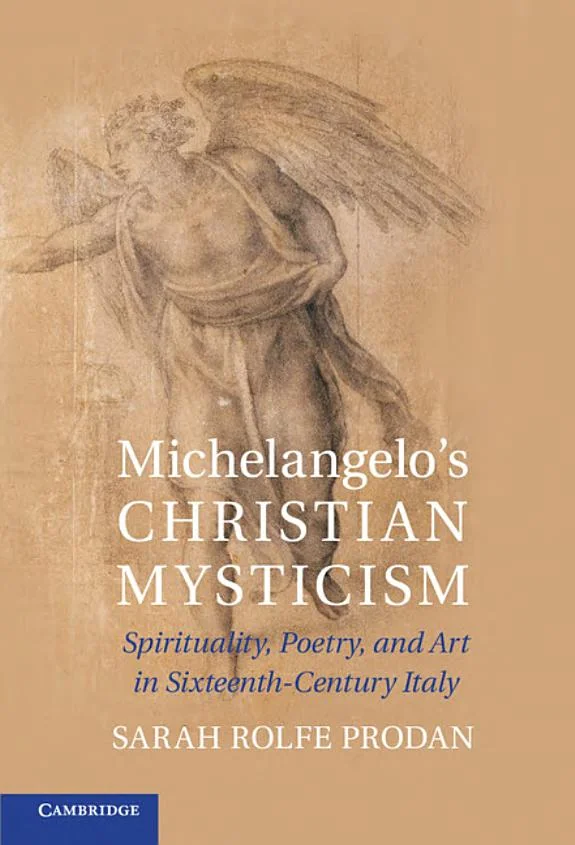
Michelangelo's Christian Mysticism
 84
84

Michelangelo's Christian Mysticism
Sarah Rolfe Prodan's examination of Michelangelo's poetry offers a welcome departure from purely aesthetic interpretations. By anchoring the analysis in the specific theological currents of the mid-sixteenth century, particularly Renaissance Augustinianism and the Catholic Reformation, Prodan reveals the profound spiritual dialectic within the artist's verse. The strength of the book lies in its detailed literary and historical exegesis, which illuminates how Michelangelo's "mystical constructs and conceits" function within their immediate context. A limitation, however, might be the dense academic prose, which, while precise, could present a barrier for readers unfamiliar with Augustinian theology or the intricacies of the Counter-Reformation. The discussion of Michelangelo's engagement with Augustinian concepts of divine grace and human imperfection, particularly in relation to his sonnets, is particularly illuminating. Overall, "Michelangelo's Christian Mysticism" provides a rigorously researched and insightful look into the artist's soul.
📝 Description
84
Sarah Rolfe Prodan's 2014 book examines Michelangelo's spiritual poetry.
Michelangelo's Christian Mysticism, published in 2014, analyzes the spiritual poetry of the Renaissance artist Michelangelo Buonarroti. The book scrutinizes his verse through the lenses of the Catholic Reformation, Renaissance Augustinianism, and the devotional practices common in Italy. Prodan situates Michelangelo's mystical poetry within the mid-sixteenth century, a period shaped by the Council of Trent and the intellectual climate influenced by Augustine of Hippo. The analysis focuses on Michelangelo's "mystical constructs and conceits," his particular ways of expressing spiritual insights through paradoxical imagery and an engagement with Augustinian ideas of divine love and human longing. These poetic expressions reflect the artist's personal spiritual journey amidst the broader Catholic Reform movement.
The work is intended for scholars of Renaissance art and literature, students of religious history, and individuals interested in the intersection of artistic creation and spiritual experience. It appeals to those seeking to understand the deeper theological and mystical underpinnings of major artistic works, particularly within the context of the vibrant Italian religious landscape characterized by personal devotion and reformist zeal.
This book engages with a tradition of interpreting religious figures' creative output as a manifestation of their inner spiritual life. It connects Michelangelo's poetry to specific theological currents within late medieval and Renaissance Christianity, particularly Augustinian thought and the reformist spirit of the Counter-Reformation. The focus on "mystical constructs and conceits" suggests an interest in how profound personal spiritual experiences are articulated through artistic and literary means, a common concern in contemplative traditions.
💡 Why Read This Book?
• Gain a nuanced understanding of Michelangelo's spiritual life, moving beyond his sculptural and fresco work to explore his poetic expressions of divine longing, specifically through his engagement with Renaissance Augustinianism. • Grasp the theological landscape of the mid-sixteenth century, understanding how the Catholic Reformation and Italian devotional practices shaped the spiritual outlook and artistic output of the era. • Discover how Michelangelo's unique "mystical constructs and conceits" functioned as vehicles for expressing complex spiritual experiences, offering a model for how artists can integrate profound faith into their creative work.
⭐ Reader Reviews
Honest opinions from readers who have explored this book.
❓ Frequently Asked Questions
What specific poetic works of Michelangelo are examined in "Michelangelo's Christian Mysticism"?
The book primarily analyzes Michelangelo's sonnets and madrigals, focusing on those that most clearly articulate his spiritual and mystical experiences within the context of his time.
How does Sarah Rolfe Prodan connect Michelangelo's poetry to the Catholic Reformation?
Prodan illustrates how Michelangelo's verse reflects the spiritual anxieties and reformist impulses of the Catholic Church during the mid-sixteenth century, particularly in its emphasis on divine grace and personal piety.
What is Renaissance Augustinianism as discussed in the book?
Renaissance Augustinianism refers to the revival and reinterpretation of the theological ideas of Saint Augustine of Hippo during the Renaissance, focusing on themes of divine love, the will, and the nature of salvation, which significantly influenced Michelangelo.
Does the book discuss Michelangelo's famous artworks?
While the focus is on his poetry, the book implicitly enriches the understanding of his visual art by exploring the spiritual and intellectual framework that informed his creative output across all media.
When was "Michelangelo's Christian Mysticism" first published?
The book was first published on April 14, 2014.
What approach does Prodan take in analyzing Michelangelo's poems?
Prodan employs a multi-faceted approach, combining literary criticism, historical analysis, and biographical insights to interpret the mystical elements within Michelangelo's poetry.
🔮 Key Themes & Symbolism
Poetry as Spiritual Autobiography
The work posits Michelangelo's poems not merely as artistic expressions but as deeply personal spiritual documents. Prodan demonstrates how the artist used poetic language to grapple with theological concepts, divine love, and the human condition, reflecting a profound interior life shaped by the spiritual currents of the sixteenth century.
Augustinianism in Renaissance Devotion
Central to the analysis is the influence of Saint Augustine. The book explores how Michelangelo engaged with Augustinian ideas, particularly concerning grace, free will, and the soul's yearning for God. This intellectual framework is presented as crucial for understanding the complex theological underpinnings of his verse.
Catholic Reformation's Spiritual Climate
Prodan meticulously places Michelangelo's poetic output within the specific milieu of the Catholic Reformation. This context, marked by efforts to reaffirm doctrine and foster intense personal piety, provides a critical lens through which to interpret the spiritual intensity and theological concerns present in the artist's later writings.
Mystical Constructs and Conceits
The book focuses on Michelangelo's unique ways of articulating spiritual truths through poetic imagery and metaphor. These "mystical constructs and conceits" are analyzed to reveal how the artist navigated complex theological ideas and personal spiritual experiences, offering insight into the subjective nature of divine encounter.
💬 Memorable Quotes
Direct passages from the work, attributed to the author.
“Michelangelo's poems are analyzed in light of Renaissance Augustinianism.”
— This highlights the book's core methodology, emphasizing the significant philosophical and theological lineage traced through Michelangelo's verse, connecting him to a foundational figure of Western Christian thought.
“The Catholic Reformation context shapes the understanding of the artist's spiritual life.”
— This points to the book's commitment to historical specificity, arguing that Michelangelo's mystical expressions cannot be divorced from the institutional and spiritual reforms occurring within the Catholic Church during his later years.
“Prodan examines the 'mystical constructs and conceits' in Michelangelo's poems.”
— This indicates a focus on the specific literary devices and symbolic language Michelangelo employed to convey his spiritual insights, suggesting a deep dive into the unique poetics of his mysticism.
“Italian religious devotion is a key lens for interpretation.”
— This suggests the book considers the broader cultural and devotional practices prevalent in Italy, understanding how these vernacular expressions of faith might have informed Michelangelo's personal spiritual journey and poetic expression.
“A literary, historical, and biographical approach is employed.”
— This reveals the interdisciplinary nature of Prodan's study, combining textual analysis with historical context and an understanding of Michelangelo's life to create a holistic interpretation of his spiritual poetry.
🌙 Esoteric Significance
Tradition
While not overtly part of a specific esoteric lineage like Hermeticism or Kabbalah, Michelangelo's Christian Mysticism engages with the contemplative and mystical traditions within Christianity, particularly the Augustinian emphasis on the soul's direct union with the divine. This study connects with esoteric practices that seek inner transformation and direct spiritual experience, viewing Michelangelo's poetry as a textual manifestation of such pursuits within an orthodox framework.
Symbolism
The work likely explores symbols inherent in Christian mysticism, such as the 'divine light' representing God's presence, the 'dark night of the soul' symbolizing spiritual trials, and the paradox of human love mirroring divine love. These motifs, deeply rooted in Christian contemplative literature, serve as conduits for expressing the ineffable nature of mystical union.
Modern Relevance
Contemporary spiritual seekers and artists interested in integrating faith with creative expression can find resonance in Michelangelo's struggle and articulation of spiritual truths. The book's exploration of personal mysticism within a structured religious tradition offers a model for contemporary practices that seek authentic spiritual experience, bridging historical devotion with modern contemplative approaches.
👥 Who Should Read This Book
• Scholars of Renaissance art and literature seeking to deepen their understanding of Michelangelo's intellectual and spiritual world beyond his visual masterpieces. • Students of theology and religious history interested in the practical application of Augustinian thought and the impact of the Catholic Reformation on artistic expression. • Individuals exploring the intersection of art, spirituality, and personal faith, looking for historical examples of profound spiritual engagement within a creative context.
📜 Historical Context
Michelangelo's Christian Mysticism is situated within the dynamic mid-sixteenth century, a period dominated by the Catholic Reformation. This era saw the Church grappling with the Protestant challenge, leading to the Council of Trent (1545-1563) and a renewed emphasis on orthodox doctrine and intense personal spirituality. Sarah Rolfe Prodan places Michelangelo's poetic explorations within this milieu, examining how the artist engaged with the theological resurgence of figures like Augustine of Hippo, a key influence on Renaissance thought. The prevalent Italian religious devotion, characterized by a fervent, often mystical, approach to faith, further informed the spiritual climate. While the period saw a flourishing of religious art and literature, it was also one of intellectual scrutiny, with theological debates shaping artistic expression. The work implicitly engages with the broader intellectual currents of Renaissance humanism, demonstrating how classical learning intersected with Christian theology in Michelangelo's spiritual outlook, contrasting with the more scholastic theological trends elsewhere.
📔 Journal Prompts
Michelangelo's mystical constructs and their Augustinian underpinnings.
Reflecting on the spiritual climate of the Catholic Reformation through poetic expression.
The tension between human limitations and divine grace in Michelangelo's verse.
How Italian religious devotion finds voice in Michelangelo's sonnets.
The biographical context of Michelangelo's spiritual poetry.
🗂️ Glossary
Catholic Reformation
The period of Catholic resurgence initiated in response to the Protestant Reformation, beginning roughly with the Council of Trent (1545–1563) and ending around the early 17th century.
Renaissance Augustinianism
A renewed scholarly and devotional interest in the writings of Saint Augustine of Hippo during the Renaissance, focusing on themes of divine grace, free will, and the nature of the Church.
Mystical Constructs
The unique conceptual frameworks and symbolic language an individual uses to express or understand experiences of divine presence or union with God.
Conceits (Poetic)
Elaborate and often surprising metaphors or extended comparisons used in poetry to link disparate ideas or images, particularly common in Renaissance verse.
Spiritual Poetry
Verse that explores themes of religious faith, divine experience, the soul's relationship with God, and theological concepts.
Devotional Practices
Religious exercises and rituals undertaken by individuals or groups to foster piety, spiritual growth, and connection with the divine.
Council of Trent
The ecumenical council of the Catholic Church from 1545 to 1563, which clarified Catholic doctrine and reformed church practices in response to the Protestant Reformation.
This book appears in 1 collection
🔮 Readers Also Liked
Browse all →


From the “Christian Mysticism” Collection
View all →





More Free Mysticism & Contemplation Books
View all →