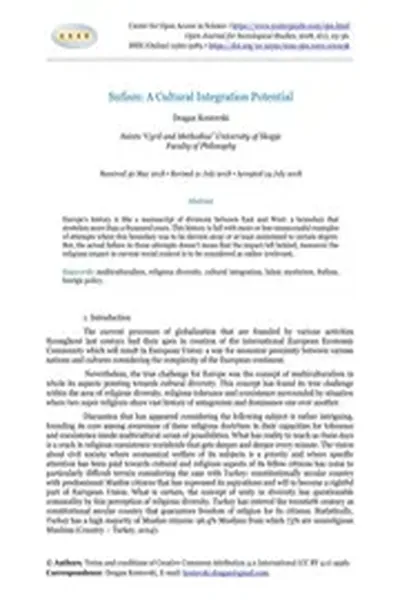
Vom Sufitum

 80
80

Vom Sufitum
Titus Burckhardt's 'Vom Sufitum' is a commendable attempt to elucidate the profound metaphysical dimensions of Islamic mysticism. Its strength lies in Burckhardt's deep understanding of traditionalist thought, allowing him to articulate Sufi doctrines with a clarity often missing in Western accounts. The section detailing the concept of the Perfect Man (al-Insan al-Kamil) is particularly illuminating, presenting a sophisticated theological framework. However, the work occasionally suffers from its very rigor; the dense philosophical language, while accurate, can create a barrier for readers unfamiliar with the specific vocabulary of perennial philosophy or traditional Islamic theology. The book's adherence to a strict traditionalist interpretation, while valuable, might overlook the diversity of Sufi practice and belief that has evolved over centuries. Nonetheless, for those willing to engage with its intellectual demands, 'Vom Sufitum' offers a robust and orthodox presentation of a vital spiritual path.
📝 Description
80
Titus Burckhardt's 'Vom Sufitum', published in 1953, examines the metaphysical doctrines and symbolic language of Islamic mysticism.
Originally published in 1953, Titus Burckhardt's 'Vom Sufitum' offers a scholarly examination of Sufism, the mystical dimension of Islam. The book moves beyond superficial accounts to dissect the principles, practices, and philosophical underpinnings of this spiritual tradition. It details the metaphysical doctrines and the symbolic language used to express Sufi wisdom, and it looks closely at the spiritual hierarchy and the methods Sufis use on the path to divine union.
Burckhardt positions Sufism not as a sect, but as the universal heart of Islam. This text is intended for serious students of comparative religion, esotericism, and Islamic mysticism. Readers seeking a deep understanding of Sufi cosmology, ontology, and epistemology will find substantial material. It is particularly suited for those who appreciate rigorous intellectual inquiry alongside spiritual depth, and who wish to grasp the historical and doctrinal integrity of Sufism. This is a comprehensive study for dedicated scholars and practitioners, not a casual introduction.
Published in the mid-20th century, 'Vom Sufitum' emerged during a period of renewed Western interest in Eastern spiritual traditions. Burckhardt, however, approached Sufism from a traditionalist perspective, aligning with thinkers who emphasized the universality of perennial wisdom across cultures. This context is important, as Burckhardt sought to present Sufism in its authentic, orthodox form, countering both Western misunderstandings and modernist interpretations.
💡 Why Read This Book?
• Understand the esoteric core of Islam by exploring the concept of Tawhid (Divine Unity) as interpreted by Sufis, offering a unique metaphysical perspective beyond common theological understandings. • Grasp the spiritual hierarchy and cosmology presented in the book, including the role of the Perfect Man (al-Insan al-Kamil), providing a framework for understanding spiritual realization within an Islamic context. • Appreciate the integration of Sharia and Haqiqa by examining how Burckhardt details the necessity of harmonizing exoteric law with esoteric practice for authentic Sufi attainment.
⭐ Reader Reviews
Honest opinions from readers who have explored this book.
❓ Frequently Asked Questions
When was Titus Burckhardt's 'Vom Sufitum' first published?
'Vom Sufitum' by Titus Burckhardt was first published in 1953. This places its intellectual origins within the mid-20th century's renewed engagement with Eastern spiritual traditions.
What is the primary focus of 'Vom Sufitum'?
The book's primary focus is the metaphysical and doctrinal aspects of Sufism, the mystical dimension of Islam. It explores its principles, practices, and philosophical underpinnings from a traditionalist viewpoint.
What key Sufi concept does the book explain in detail?
The book explains several key concepts, notably Tawhid (Divine Unity) and the role of the Perfect Man (al-Insan al-Kamil). It also covers the stages of the spiritual journey (maqamat) and sacred invocation (dhikr).
Is 'Vom Sufitum' suitable for beginners in Islamic studies?
While comprehensive, the book's rigorous intellectual and theological language makes it more suitable for serious students of comparative religion or esotericism rather than absolute beginners.
What intellectual tradition influenced Titus Burckhardt's approach to Sufism?
Burckhardt's approach was influenced by the traditionalist school, particularly thinkers like René Guénon and Frithjof Schuon, emphasizing the universality of perennial wisdom.
Does the book discuss Sufi practices?
Yes, 'Vom Sufitum' discusses Sufi practices such as dhikr (sacred invocation) and highlights the importance of the spiritual master (Shaykh) in guiding practitioners on the path.
🔮 Key Themes & Symbolism
The Perfect Man
Burckhardt elaborates on the concept of al-Insan al-Kamil, the Perfect Man, as a central archetype in Sufi cosmology. This figure represents the total manifestation of divine attributes and the archetype of spiritual realization. The work details how this concept integrates human potential with divine perfection, serving as the ultimate model for the Sufi seeker's journey. It's not merely an individualistic ideal but a cosmic principle, reflecting the divine order and the interconnectedness of all creation within the Islamic metaphysical framework.
Divine Unity (Tawhid)
The book meticulously analyzes Tawhid, the absolute oneness of God, as the foundational principle of Sufism. Burckhardt distinguishes the Sufi understanding of Tawhid from simple monotheism, looking at its implications for ontology and cosmology. It explores how the realization of Tawhid dismantles the illusion of separation between the individual and the Divine, leading to a direct experience of unity. This concept underpins the entire Sufi path, guiding practitioners towards the ultimate dissolution of the ego in the Divine Presence.
Sharia and Haqiqa
A significant theme is the inseparable relationship between Sharia (Islamic law) and Haqiqa (ultimate truth or reality). Burckhardt argues that true Sufism is not a departure from Islamic law but its spiritual essence and fulfillment. The work illustrates how adherence to Sharia provides the necessary framework and discipline for the spiritual aspirant, while Haqiqa represents the inner realization that Sharia is meant to facilitate. This integration is presented as vital for orthodox Sufi practice.
The Spiritual Path (Maqamat)
The book details the stages (maqamat) and states (ahwal) of the Sufi path. Burckhardt outlines the progressive spiritual disciplines and transformations undertaken by the seeker under the guidance of a Shaykh. This includes the practice of dhikr (remembrance of God) and the overcoming of egoic limitations. The emphasis is on a structured, arduous journey towards spiritual purification and proximity to the Divine, moving from initial devotion to ecstatic union.
💬 Memorable Quotes
Direct passages from the work, attributed to the author.
“Sufism is the heart of Islam.”
— This concise statement captures Burckhardt's thesis that Sufism represents the inner, spiritual dimension of the Islamic faith, vital for its wholeness and authentic expression.
“Dhikr is the soul's remembrance of its origin.”
— This interpretation emphasizes the function of sacred invocation (dhikr) as a practice to reconnect the soul with its Divine Source, anchoring the Sufi's spiritual awareness and practice.
“The Shaykh guides the seeker through the stages.”
— This points to the indispensable role of the spiritual master (Shaykh) in working through the complexities of the spiritual path (maqamat), ensuring correct progress and authentic realization for the disciple.
💡 Key Ideas
Editorial paraphrase of the work's core concepts — not direct quotes.
The Perfect Man is the mirror of God.
This paraphrase highlights the Sufi understanding of al-Insan al-Kamil as the ultimate reflection of divine attributes, serving as the paradigm for spiritual perfection and the goal of the mystic's aspiration.
Unity is not division, but the abolition of division.
This paraphrase clarifies the Sufi concept of Tawhid, suggesting that divine unity is not merely about the absence of multiple gods but the transcendence of all perceived separation and duality.
🌙 Esoteric Significance
Tradition
Burckhardt's work is deeply rooted in the Traditionalist School of perennial philosophy, aligning with thinkers who posited a universal, unchanging spiritual truth across diverse traditions. Within Islam, he specifically addresses Sufism, viewing it as the esoteric dimension (Batin) that complements the exoteric law (Zahir). He presents Sufism not as a heterodox sect but as the authentic spiritual core of the Islamic revelation, emphasizing its metaphysical doctrines and symbolic language as expressions of universal principles.
Symbolism
The book frequently engages with key Sufi symbols. The concept of the 'Perfect Man' (al-Insan al-Kamil) is central, representing the archetype of divine manifestation and human spiritual potential. The Quran itself is often discussed as a profound symbolic text, containing layers of meaning accessible through esoteric interpretation. The Kaaba, as the 'House of God,' is explored not just as a physical structure but as a symbol of cosmic order and the spiritual center of existence, embodying the concept of divine presence.
Modern Relevance
Contemporary scholars and practitioners of Islamic esotericism continue to reference Burckhardt's work for its systematic presentation of Sufi metaphysics. His emphasis on the integration of Sharia and Haqiqa remains relevant for discussions on the authenticity and practice of Sufism in the modern world. Thinkers within traditionalist circles and those exploring perennial philosophy often draw upon 'Vom Sufitum' to understand the universal aspects of spiritual realization as exemplified within the Islamic context.
👥 Who Should Read This Book
• Students of Comparative Religion: Those seeking to understand the intricate relationship between Islamic theology and its mystical dimension will find a detailed doctrinal framework. • Practitioners of Perennial Philosophy: Individuals interested in universal spiritual truths across traditions will appreciate Burckhardt's traditionalist interpretation of Sufism's metaphysical underpinnings. • Scholars of Islamic Esotericism: Researchers and academics looking for a rigorous, orthodox exposition of Sufi cosmology, ontology, and the role of the Perfect Man will find substantial material.
📜 Historical Context
Titus Burckhardt's 'Vom Sufitum', published in 1953, emerged during a crucial period for the study and understanding of Islamic spirituality in the West. Following World War II, there was a significant scholarly and popular interest in Eastern religions, though often viewed through a lens of Orientalism or comparative religion that sometimes missed the internal coherence of traditions. Burckhardt, however, was part of the Traditionalist School, alongside thinkers like René Guénon and Frithjof Schuon. This perspective emphasized the perennial wisdom underlying all major religions and sought to present them in their most orthodox and metaphysical forms. 'Vom Sufitum' thus aimed to articulate the deep spiritual truths of Sufism as the heart of Islam, countering both Western misinterpretations and modernist reformist trends within the Islamic world that sought to secularize or diminish its mystical dimension. Its publication provided a rigorous, traditionalist interpretation of Sufism, distinct from more sociological or historical accounts.
📔 Journal Prompts
Reflection on the concept of al-Insan al-Kamil and its implications for personal spiritual development.
Contemplating Tawhid: How does the Sufi understanding of Divine Unity differ from common monotheistic views?
Examining the relationship between Sharia and Haqiqa in the context of spiritual practice.
Exploring the symbolic meaning of the Kaaba as presented in esoteric Islamic thought.
Consider the role of the Shaykh in guiding the spiritual journey (maqamat).
🗂️ Glossary
Sufism
The mystical dimension of Islam, focused on the pursuit of direct experience of God through asceticism, devotion, and esoteric practices.
Tawhid
The Islamic concept of Divine Unity, understood in Sufism as the absolute oneness of God and the illusory nature of all separation.
al-Insan al-Kamil
The Perfect Man, an archetypal concept representing the complete manifestation of divine attributes and the ideal spiritual human being.
Sharia
Islamic divine law, encompassing religious and moral duties, considered the exoteric aspect of religion.
Haqiqa
Ultimate truth or reality; the esoteric dimension of Islam, often understood as the inner meaning or spiritual essence of Sharia.
Maqamat
Stages or stations on the Sufi spiritual path, representing progressive levels of spiritual attainment and purification.
Dhikr
The remembrance of God, a central Sufi practice involving the repetition of divine names or phrases, often rhythmically.
🔮 Readers Also Liked
Browse all →





More by Titus Burckhardt
All books →




More Free Mysticism & Contemplation Books
View all →