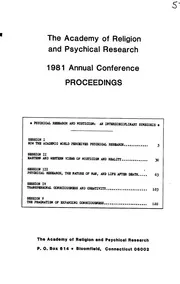
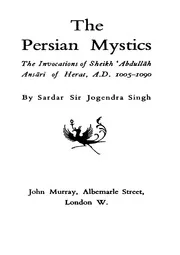
Wisdom Of The East The Persian Mystics
 81
81

Wisdom Of The East The Persian Mystics



Jalalu'D-Din Rumi's 'Wisdom Of The East The Persian Mystics' is a seminal work that continues to captivate esoteric seekers today. The book's timeless themes of divine love and spiritual transcendence resonate deeply with modern readers, offering a profound sense of connection to ancient wisdom. Rumi's poetry and prose are rich in metaphor and symbolism, inviting readers to delve into the depths of their own souls. For those seeking spiritual enlightenment and a deeper understanding of mystical practices, this book is an invaluable resource. The esoteric insights provided in 'Wisdom Of The East The Persian Mystics' are as relevant today as they were in 1912, making it a must-read for anyone interested in the mystical traditions of the East.
📝 Description
81
Jalalu'D-Din Rumi's 'Wisdom Of The East: The Persian Mystics' collects writings on Islamic mysticism.
This collection presents selections from the works of Jalalu'D-Din Rumi, a 13th-century Persian poet and Islamic scholar. The texts focus on the spiritual path of Sufism, exploring concepts of divine love and the union of the soul with God. Rumi's poetry is known for its passionate expression of mystical experience, aiming to guide the reader toward inner transformation and a direct experience of the divine.
The writings included here are intended for those interested in the esoteric dimensions of Islam. They offer insights into the practices and philosophy of Persian mystics, encouraging introspection and a contemplation of life's deeper meanings. The book aims to convey the essence of Sufi thought through evocative language and allegorical narratives. It serves as an introduction to a tradition that emphasizes the heart's journey toward spiritual realization.
As part of the Persian mystical tradition, these writings belong to Sufism, the inner, dimension of Islam. Sufism emphasizes the direct experience of God through love, devotion, and asceticism. Rumi, a central figure in this tradition, articulated these ideas through his prolific poetry and prose, often using allegory and metaphor to describe the soul's yearning for union with the Divine Beloved. This school of thought seeks to transcend the limitations of the material world and intellectual understanding to achieve spiritual enlightenment.
💡 Why Read This Book?
Reading 'Wisdom Of The East The Persian Mystics' today offers a unique opportunity to connect with ancient mystical traditions. This book provides readers with a deeper understanding of Sufi mysticism and the spiritual journeys of the Persian mystics. By exploring the themes of divine love and spiritual transcendence, readers can gain insights into their own spiritual growth and the search for inner peace. This book is an essential read for anyone interested in esoteric knowledge and the mystical traditions of the East.
⭐ Reader Reviews
Honest opinions from readers who have explored this book.
❓ Frequently Asked Questions
Who is the author of 'Wisdom Of The East The Persian Mystics'?
The author is Jalalu'D-Din Rumi, a renowned Persian poet and Sufi mystic whose works have had a profound impact on spiritual seekers worldwide.
What are the key themes in this book?
The key themes include the pursuit of divine love, the transcendence of the self, and the mystical union with the divine.
Is this book suitable for modern esoteric seekers?
Yes, the esoteric insights and mystical teachings in this book are timeless and continue to resonate with modern readers seeking spiritual enlightenment.
🔮 Key Themes & Symbolism
The Nature of Reality
Rumi studies the esoteric understanding of reality, exploring the hidden dimensions that lie beyond the physical world. His insights offer a mystical perspective on existence, inviting readers to question their perceptions and seek deeper truths.
Divine Connection
This book emphasizes the importance of the divine connection in human life. Rumi's poetry and philosophical insights guide readers on a journey of spiritual awakening, helping them to forge a deeper bond with the divine.
The Journey of Self-Discovery
Rumi's writings are a roadmap for self-discovery, encouraging readers to explore the depths of their own souls. Through his vivid language and profound symbolism, he offers a path to inner enlightenment and understanding.
💬 Memorable Quotes
Direct passages from the work, attributed to the author.
“Out beyond ideas of wrongdoing and rightdoing, there is a field. I'll meet you there.”
— Rumi invites readers to a place of pure being, beyond the dualities of good and evil, where true spiritual connection can occur.
“Start a huge, foolish project, like Noah...it makes absolutely no difference what people think of you.”
— Rumi encourages readers to pursue their passions and dreams, regardless of societal expectations or judgments.
💡 Key Ideas
Editorial paraphrase of the work's core concepts — not direct quotes.
What you seek is seeking you.
This quote underscores the idea that the divine is always present, waiting to be discovered by those who seek it.
The wound is the place where the Light enters you.
This line highlights the transformative power of suffering, suggesting that it can lead to spiritual growth and enlightenment.
The cure for the pain is in the pain.
This quote emphasizes the idea that the path to healing and enlightenment often lies within the very experiences that cause us suffering.
🌙 Esoteric Significance
Tradition
This book belongs to the Sufi tradition, a mystical branch of Islam that emphasizes personal spiritual experience and the direct encounter with the divine. Sufism is known for its strong symbolism and esoteric teachings, which often use poetry and metaphors to convey deep spiritual truths.
Symbolism
Key symbols in Rumi's work include the reed flute, which represents the human soul longing for reunion with the divine; the lover and the beloved, symbolizing the soul's yearning for God; and the tavern, which signifies a place of spiritual ecstasy and freedom from worldly constraints.
Modern Relevance
Rumi's teachings remain relevant today, influencing modern spiritual seekers, poets, and scholars. His works are studied and practiced by those interested in Sufism, mysticism, and the esoteric traditions. Contemporary practitioners find in Rumi's poetry a source of inspiration and guidance for their own spiritual journeys.
👥 Who Should Read This Book
Beginners will find 'Wisdom Of The East: The Persian Mystics' an accessible introduction to the mystical traditions of the East, offering a gentle yet profound exploration of spiritual themes. Scholars will appreciate the depth of Rumi's insights and the rich historical context of his writings. Spiritual seekers will find inspiration and guidance in Rumi's poetry, while practitioners of esoteric traditions will discover a wealth of symbolism and hidden knowledge.
📜 Historical Context
Jalalu'D-Din Rumi, a 13th-century Persian poet and mystic, wrote during a time of significant cultural and spiritual ferment. His works emerged from the Sufi tradition, which emphasizes personal experience of the divine. Rumi's teachings were important during his time as they offered a counterpoint to the rigid religious practices of the era, emphasizing love, tolerance, and spiritual ecstasy. His influence has been profound, shaping not only Islamic mysticism but also Western literature and spiritual thought.
📔 Journal Prompts
Reflect on a time when you felt a deep connection with the divine. How did it influence your spiritual journey?
Consider the symbolism of the reed flute in Rumi's poetry. How does it resonate with your own experiences of longing and desire?
Explore the idea of the 'field' beyond rightdoing and wrongdoing. What does this concept mean to you in your daily life?
How does the concept of 'the wound is the place where the Light enters you' apply to your own experiences of suffering and healing?
Imagine starting a 'huge, foolish project.' What dreams or passions have you been hesitant to pursue, and why?
🗂️ Glossary
Sufism
A mystical branch of Islam that emphasizes personal spiritual experience and the direct encounter with the divine.
Reed Flute
A symbol in Rumi's poetry representing the human soul longing for reunion with the divine.
The Beloved
A metaphor in Sufi poetry for God, representing the ultimate object of the soul's desire and longing.
The Tavern
A symbol of spiritual ecstasy and freedom from worldly constraints in Rumi's poetry.
Divine Connection
The spiritual bond between the individual and the divine, emphasized in Sufi and mystical traditions.
This book appears in 1 collection
🔮 Readers Also Liked
Browse all →






From the “Christian Mysticism” Collection
View all →






More Free Mysticism & Contemplation Books
View all →