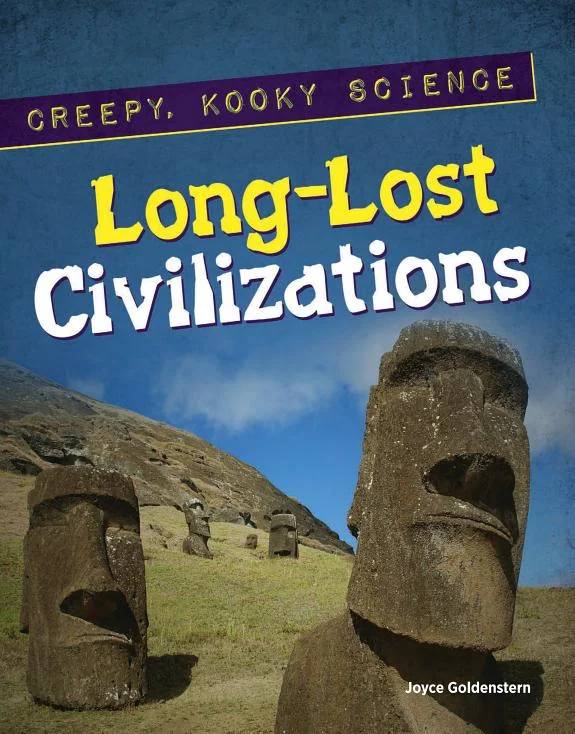
Long-Lost Civilizations
 76
76

Long-Lost Civilizations
Joyce Goldenstern's "Long-Lost Civilizations" offers a commendable look at how scientific rigor has resurrected the stories of forgotten peoples. The strength lies in its clear articulation of archaeological processes, particularly how sites like Machu Picchu were re-contextualized not just by discovery, but by scientific dating and analysis of recovered materials. A notable passage details the careful work involved in preserving and interpreting Bonampak murals, illustrating the blend of meticulous fieldwork and scientific interpretation. However, the work sometimes leans towards a simplified presentation, which, while beneficial for a younger audience, might leave seasoned academics wanting deeper theoretical engagement. The absence of a more critical examination of the ethical dimensions of excavation and repatriation, common in contemporary archaeological discourse, is a minor limitation. Despite this, Goldenstern effectively demonstrates the power of empirical methods in rewriting history.
📝 Description
76
Joyce Goldenstern's 2014 book details scientific methods used to uncover ancient societies.
Joyce Goldenstern's "Long-Lost Civilizations" reconstructs the narratives of ancient societies through the scientific methodologies applied to their discovery. The book explains how archaeological teams used advanced techniques to extract evidence from sites like Bonampak and Harappa, which had remained concealed for centuries. It covers the processes of dating artifacts and deciphering the meanings in murals and sculptures, thereby transforming our understanding of human history through empirical discovery.
This work targets students and educators in archaeology, history, and anthropology. Its clear language, sidebars, and visuals make complex archaeological processes understandable. It functions as a supplementary text for courses on ancient history or archaeological methods, showing scientific discovery in action.
"Long-Lost Civilizations" is part of a 20th and 21st century archaeological movement that embraced scientific instrumentation and interdisciplinary work. The book contrasts earlier speculative approaches with the rigor of modern dating techniques and stratigraphic analysis. It demonstrates how technological advancements have refined our understanding, moving from legend to verifiable fact.
While presented as a study of scientific archaeology, "Long-Lost Civilizations" resonates with esoteric traditions that seek hidden knowledge of past ages. Esoteric thought often posits lost golden ages or forgotten peoples whose wisdom or existence has been obscured by mainstream history. This book, by detailing the rigorous scientific process of unearthing these very things, provides a factual counterpoint and a modern framework for understanding how such 'lost' elements of the past can be brought to light.
💡 Why Read This Book?
• Gain insight into the scientific methods that archaeologists employ, such as analyzing stratigraphy and dating artifacts, to reconstruct the past, moving beyond speculation to verifiable facts about sites like Harappa. • Understand how specific discoveries, like the scientific dating of murals at Bonampak, have fundamentally revised our understanding of artistic and cultural practices in ancient societies. • Appreciate the practical application of technology in archaeology, learning how tools and techniques are used to unearth and interpret evidence previously obscured by natural elements, as seen in the recovery of sites buried under ashes and stones.
⭐ Reader Reviews
Honest opinions from readers who have explored this book.
❓ Frequently Asked Questions
What specific scientific tools are mentioned for dating ancient artifacts?
While the book doesn't detail specific tool names like radiocarbon dating, it discusses the scientific processes used to date murals, sculptures, and artifacts. These methods help determine the age of materials and establish chronological timelines for civilizations.
How does "Long-Lost Civilizations" differ from general history books?
This book focuses on the *process* of rediscovery through scientific archaeology, emphasizing the methodologies used to revise and revitalize historical narratives, rather than just presenting historical facts.
Which ancient sites are prominently featured in the book?
Key sites discussed include the Mayan city of Bonampak, the ancient Indus Valley city of Harappa, and the Inca citadel of Machu Picchu, among others that were once unknown to the modern world.
Is the book suitable for younger readers?
Yes, the book is designed with engaging text, colorful images, and informative sidebars, making complex archaeological concepts accessible to students and younger audiences.
What is the primary focus of the "Further Reading" section?
The "Further Reading" section, along with chapter notes, provides resources for readers interested in delving deeper into specific archaeological sites, scientific techniques, or related historical contexts mentioned in the book.
How does the book explain the 'long-lost' aspect of these civilizations?
It explains that these civilizations were 'long-lost' because their sites and artifacts were hidden by time, natural phenomena like ashes and stones, or simply forgotten, only to be rediscovered through dedicated archaeological efforts.
🔮 Key Themes & Symbolism
Scientific Archaeology
The book centers on the transformative role of scientific methodology in archaeology. It illustrates how empirical tools and systematic investigation allow for the objective reconstruction of past human societies. From dating methods applied to murals at Bonampak to the excavation of buried structures at Harappa, the work underscores how scientific precision moves beyond speculation to verifiable historical understanding, revitalizing the stories of civilizations lost to time.
Rediscovery and Revision
A central theme is the process of rediscovery, not just of physical sites like Machu Picchu, but of the narratives associated with them. Goldenstern highlights how archaeological science revises and revitalizes our understanding of these cultures. The book shows how artifacts, sculptures, and architectural remains, once obscured by grime or buried beneath earth, are scientifically analyzed to reveal complex social structures, beliefs, and daily life, thereby correcting or expanding upon previous historical accounts.
Material Culture as Evidence
The work emphasizes the importance of material culture – murals, sculptures, and artifacts – as primary evidence for understanding ancient civilizations. It details how these objects, often found in challenging conditions, are scientifically treated, dated, and interpreted. The book demonstrates that through meticulous study of these tangible remnants, archaeologists can piece together the histories of peoples whose written records may be scarce or non-existent, providing concrete links to their existence.
Bridging Past and Present
"Long-Lost Civilizations" serves as a bridge, connecting contemporary readers with ancient worlds through the lens of modern scientific achievement. It showcases how the application of scientific tools in the 21st century allows us to understand societies from millennia ago. The book implicitly argues for the enduring relevance of studying these past cultures, demonstrating that their rediscovery through science enriches our collective human heritage and provides context for our present.
💬 Memorable Quotes
Direct passages from the work, attributed to the author.
“Archaeologists revised and revitalized the stories of these 'lost' civilizations.”
— This highlights the active, interpretive role of modern archaeology. It's not just about finding old things, but about using scientific methods to re-examine and enrich our understanding of past human societies.
“Scientists rediscovered and scientifically dated murals, sculptures, and artifacts.”
— This emphasizes the reliance on empirical evidence and scientific techniques like dating processes. It contrasts with purely speculative historical accounts, grounding the narrative in verifiable, scientific discovery.
“Sites were truly 'long lost' to the modern world.”
— This phrase captures the essence of historical obscurity. It speaks to civilizations whose existence or significance had faded from collective memory, only to be brought back into focus through dedicated research.
“Artifacts covered with grime or buried under ashes and stones.”
— This vividly describes the challenging conditions under which archaeological evidence is often found. It underscores the difficulty and meticulousness required to recover and interpret these remnants of the past.
“Using scientific tools, archaeologists revised and revitalized the stories.”
— This core concept explains that the book isn't just about ancient history, but about the *methodology* of historical reconstruction. Scientific tools are presented as key agents in correcting and enhancing our knowledge of forgotten cultures.
🌙 Esoteric Significance
Tradition
While the book is presented as general archaeology, its focus on uncovering hidden histories and forgotten peoples can resonate with esoteric traditions that seek lost knowledge and ancient wisdom. Esoteric lineages, such as Theosophy or certain branches of Hermeticism, often explore pre-diluvian civilizations or lost spiritual lineages. "Long-Lost Civilizations" provides a scientific counterpoint and, for some readers, a grounding in empirical reality for speculative historical narratives found in esoteric texts.
Symbolism
The very act of rediscovering sites like Machu Picchu or deciphering murals from Bonampak can be seen as symbolic within an esoteric framework. These rediscovered sites and symbols represent the uncovering of hidden truths or forgotten spiritual knowledge. The buried artifacts and obscured structures symbolize the obscured nature of inner wisdom, which requires careful excavation and interpretation to reveal its profound meaning and connection to ancient, perhaps even mystical, human experiences.
Modern Relevance
Contemporary esoteric practitioners and researchers often draw upon archaeological findings to substantiate or contextualize ancient myths and spiritual traditions. "Long-Lost Civilizations" offers a scientifically-grounded perspective that can inform or challenge esoteric interpretations of history. For instance, understanding the empirical dating of Mayan or Indus Valley sites provides a factual basis against which more mystical claims about these cultures can be weighed or integrated, fostering a more nuanced approach to ancient wisdom.
👥 Who Should Read This Book
• Students of archaeology and anthropology seeking a clear overview of scientific discovery processes in uncovering ancient sites. • Educators looking for supplementary material that makes archaeological methods engaging and accessible for classroom use. • Enthusiasts of ancient history and world cultures interested in how scientific tools have revised our understanding of civilizations like the Maya and the Indus Valley.
📜 Historical Context
Published in late 2018, Joyce Goldenstern's "Long-Lost Civilizations" emerged during a period of intense public fascination with archaeological discoveries, fueled by ongoing excavations and popular media. The intellectual currents it engages with are rooted in the broader development of scientific archaeology throughout the 20th century, which sought to move beyond antiquarianism towards more systematic, evidence-based methodologies. The work implicitly contrasts with earlier, more romanticized explorations of ancient ruins. While the book focuses on scientific methods, it arrives in an era where discussions around archaeological ethics, repatriation, and the decolonization of history are prominent, though these aspects are not explicitly foregrounded in the provided blurb. Its reception is likely within educational circles and among general readers interested in history and science, rather than academic debate, though it builds upon decades of scholarship from figures like Sir Mortimer Wheeler and Kathleen Kenyon.
📔 Journal Prompts
The scientific dating of Bonampak murals: how does precise chronology alter our perception of Mayan artistry?
Rediscovering Harappa: what parallels exist between uncovering buried cities and uncovering personal forgotten memories?
Interpreting artifacts from Machu Picchu: how can material objects speak volumes about a lost culture?
The process of archaeological revitalization: how can scientific methods breathe new life into historical narratives?
Buried under ashes and stones: what metaphorical 'burials' of knowledge exist in contemporary society?
🗂️ Glossary
Archaeological Site
A location where evidence of past human activity is preserved. These sites, like Bonampak or Harappa, are studied by archaeologists to understand ancient civilizations.
Artifacts
Objects made by humans, typically of cultural or historical interest, such as pottery, tools, or jewelry. Scientific analysis of artifacts is key to dating and understanding past societies.
Murals
Wall paintings found in ancient structures, such as those at Bonampak. They provide visual information about the art, beliefs, and daily life of past cultures.
Scientific Dating
The process of determining the age of an artifact, fossil, or geological material using scientific methods, such as radiocarbon dating or thermoluminescence. Crucial for establishing historical timelines.
Excavation
The careful digging and uncovering of archaeological sites to recover artifacts and information about the past. It involves systematic methods to preserve context.
Stratigraphy
The study of rock layers (strata) and their relationship to the sequence of events occurring in the past. In archaeology, it helps date artifacts based on their position within the earth.
Revitalized Stories
The process by which new evidence and scientific interpretation significantly change or enhance the understanding of a civilization's history, moving beyond older or incomplete accounts.
This book appears in 1 collection
🔮 Readers Also Liked
Browse all →








From the “Lost Civilizations” Collection
View all →




More Free Occult Philosophy Books
View all →