Reiki
 80
80

Reiki
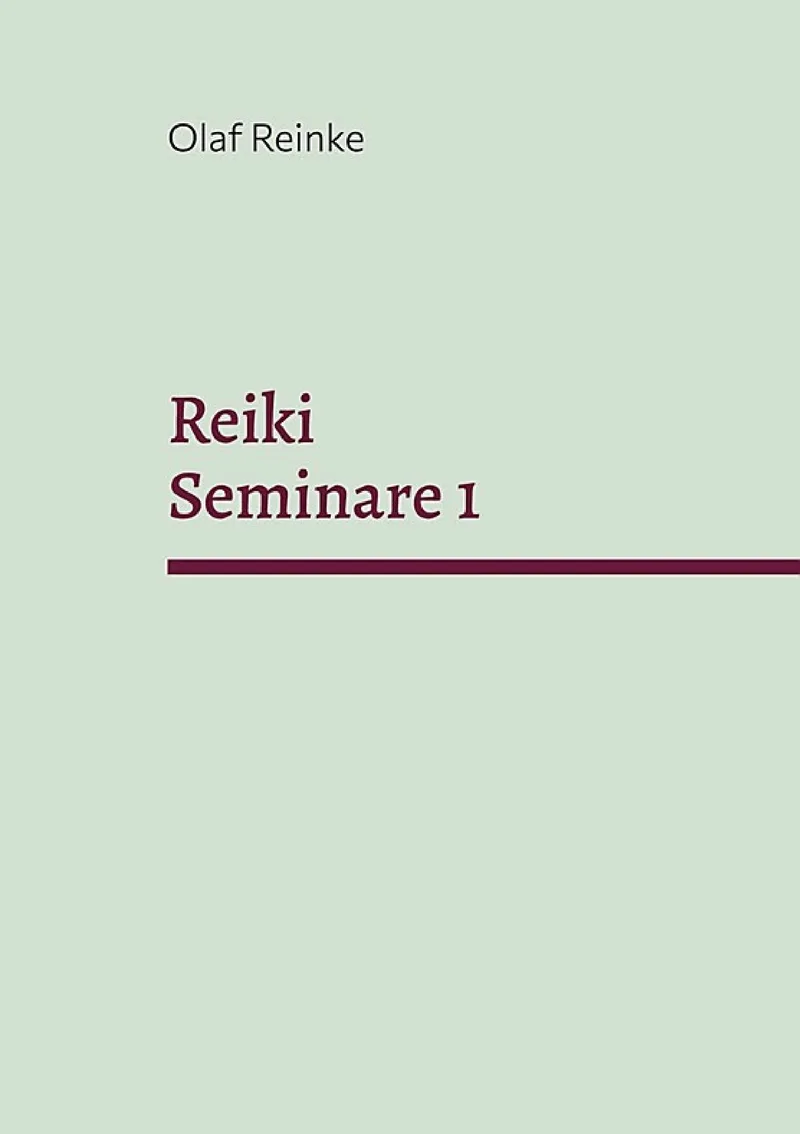
Olaf Reinke's "Reiki" offers a welcome perspective on a practice often reduced to mere hand placements. The book correctly identifies Reiki as a comprehensive life philosophy, a point frequently overlooked in more superficial treatments. Reinke's emphasis on Reiki as a tool for forging an individual path, free from external dictates, is particularly strong. However, the work could benefit from a more direct engagement with the specific energetic mechanics, moving beyond general descriptions of 'life force.' A passage discussing the 'Five Precepts' as foundational ethical guidelines for channeling Reiki effectively provides a concrete anchor for the spiritual dimension. While informative, the text occasionally leans towards generalized spiritual language, which might not satisfy readers seeking rigorous theoretical underpinnings. It serves as a solid introduction to the philosophical dimensions of Reiki.
📝 Description
80
Olaf Reinke's 2001 book presents Reiki not just as a healing method, but as a philosophy for life.
This text frames Reiki as more than a technique for physical well-being; it is a philosophy for living a harmonious life aligned with one's inner truth. It suggests that by engaging with Reiki, individuals can move beyond societal expectations and discover new personal directions. The practice encourages active self-shaping, guiding readers to live according to their deepest values.
The book is aimed at those interested in self-discovery and personal growth, particularly individuals seeking to integrate spiritual practices into their daily routines. It speaks to people who feel disconnected from their own life path or who want a structured approach to more intentional living. Readers looking for a framework to guide their lives with greater purpose will find this work relevant.
The historical context traces Reiki's origins to Mikao Usui in early 20th-century Japan. Usui, a Buddhist scholar, is recognized for rediscovering and codifying the practice. This development occurred within a Japanese environment rich with Buddhist and Shinto influences, alongside broader cultural and spiritual exchanges. The book also touches on Reiki's spread to the West, notably through figures like Hawayo Takata in the mid-20th century, placing it within the rise of holistic health movements.
Reiki, as presented by Reinke, is situated within a broader tradition of energy work and spiritual healing that gained prominence in the late 20th century. Its roots in Japanese Buddhism and Shinto connect it to Eastern philosophies that emphasize the interconnectedness of mind, body, and spirit. The practice's focus on channeling universal life force energy aligns with concepts found in various esoteric traditions, including Qi Gong and certain yogic practices, all of which explore the manipulation and direction of vital energy for personal transformation and healing.
💡 Why Read This Book?
• Learn how Reiki serves as a framework for individual life path creation, moving beyond conformity, a concept explored from its early 20th-century origins. • Understand the foundational role of the 'Five Precepts' in guiding the ethical and effective channeling of universal life force energy, as detailed in the text. • Gain insight into Reiki as a practice to foster inner harmony and align with one's authentic truth, distinguishing it from purely physical healing methods.
⭐ Reader Reviews
Honest opinions from readers who have explored this book.
❓ Frequently Asked Questions
When was the practice of Reiki first rediscovered?
The practice of Reiki is widely attributed to Mikao Usui, who rediscovered and systematized it in Japan during the early 20th century.
What is the primary energy concept in Reiki?
The primary energy concept in Reiki is 'ki' or 'chi,' understood as the universal life force energy that flows through all living beings and can be channeled for healing.
How did Reiki spread globally?
Reiki's global dissemination, particularly to the West, was significantly influenced by figures like Hawayo Takata during the mid-20th century.
What are the guiding principles of Reiki?
Reiki is often guided by principles known as the 'Five Precepts,' which offer ethical and mindful guidelines for practitioners to foster inner peace and well-being.
Is Reiki solely a physical healing method?
No, Reiki is presented as more than a physical healing method; it is viewed as a life philosophy aimed at fostering inner harmony and aligning with one's authentic truth.
What is the core invitation of Reiki according to the book?
The core invitation of Reiki is to shape one's life individually and in harmony with inner truth, encouraging a courageous approach to one's personal path.
🔮 Key Themes & Symbolism
Universal Life Force Energy
The book posits Reiki as a method for channeling 'ki' or 'chi,' the fundamental life force believed to permeate existence. This energy is not abstract but a tangible current that can be directed for therapeutic and personal growth outcomes. The text emphasizes understanding this energy's flow as crucial for both self-healing and assisting others, grounding the practice in a concept familiar to many Eastern traditions while presenting it within a Western esoteric framework. Its availability to all practitioners underscores a principle of universal energetic access.
Authentic Self-Path
A central theme is Reiki's role in guiding individuals toward their unique life path, distinct from societal norms or imposed expectations. The work encourages the reader to listen to their inner truth and make choices that reflect this authenticity. This personal journey is framed as an active, courageous undertaking, supported by the energetic and philosophical insights derived from Reiki practice. It’s about empowerment and self-determination through spiritual awareness.
Harmony and Well-being
Reiki is presented as a means to cultivate profound inner harmony and overall well-being. This extends beyond mere physical health to encompass emotional balance and spiritual integration. The practice aims to create a state of equilibrium within the individual, facilitating a more peaceful and centered existence. The text suggests that by aligning with Reiki's principles, one can achieve a more holistic state of health and contentment, fostering resilience against life's challenges.
The Five Precepts
The ethical and philosophical underpinnings of Reiki are often anchored in the 'Five Precepts.' These guidelines serve as a moral compass for practitioners, encouraging mindful living and positive conduct. They are presented not as rigid rules but as foundational principles for cultivating a state of grace and effectiveness in channeling Reiki energy. Their inclusion highlights the holistic nature of the practice, integrating spiritual awareness with daily ethical conduct.
💬 Memorable Quotes
Direct passages from the work, attributed to the author.
“Reiki is far more than a method – it is a treasure chest full of experiences and wisdom.”
— This highlights the depth of Reiki, positioning it not as a simple technique but as a rich source of knowledge and lived experience that can profoundly enrich one's life journey.
“It grants us healing impulses, shows us new ways, and helps us find and bravely walk our very own life path.”
— This captures Reiki's active role in personal guidance, suggesting it provides both internal shifts and external direction, empowering individuals to move forward with courage on their unique life journey.
“Reiki invites you to shape your life individually and in harmony with your inner truth.”
— This emphasizes the personal agency and authenticity at the heart of Reiki practice, urging practitioners to live in alignment with their core values rather than external pressures.
“Away from conformity and dictates.”
— This phrase succinctly expresses the liberating aspect of Reiki, promoting freedom from societal expectations and encouraging an independent, self-directed approach to life.
“In a world full of different approaches...”
— This acknowledges the diverse range of spiritual and healing practices available today, suggesting Reiki offers a distinct and valuable path among them.
🌙 Esoteric Significance
Tradition
Reiki, as presented by Reinke, aligns with the broader esoteric tradition of energy work and spiritual healing that has roots in both Eastern philosophies (like Taoism and Buddhism) and Western vitalistic thought. While not strictly Hermetic or Kabbalistic, it shares the core esoteric principle of an underlying universal life force ('ki'/'chi') that can be manipulated for transformative purposes. It departs from some Western traditions by its emphasis on direct energetic transmission and its relatively recent systematization by Mikao Usui in the early 20th century, distinguishing it from ancient lineages.
Symbolism
The primary symbolism in Reiki revolves around the concept of 'ki' itself, representing the vital animating force. Hand positions are symbolic gestures, acting as conduits and focal points for directing this energy. While Usui developed specific Reiki symbols (like Cho Ku Rei, Sei Hei Ki, Hon Sha Ze Sho Nen), their symbolic meaning often relates to power, harmony, and connection across distance, respectively. These symbols are not merely decorative but are considered energetic keys to unlock specific qualities of the universal life force.
Modern Relevance
In contemporary esoteric circles, Reiki continues to be a highly relevant practice, particularly within New Age spirituality and holistic health communities. Thinkers and practitioners exploring consciousness, energy medicine, and mind-body connections often draw upon Reiki principles. Its accessibility and focus on personal empowerment make it appealing to individuals seeking self-guided spiritual development. Modern interpretations often integrate Reiki with other modalities, reflecting an ongoing evolution within the broader esoteric landscape, demonstrating its adaptability.
👥 Who Should Read This Book
• Individuals new to energy healing modalities seeking a foundational understanding of Reiki's philosophical underpinnings and its role in personal development. • Practitioners of other spiritual or healing arts interested in comparing and contrasting Reiki's approach to universal life force energy and self-discovery. • Seekers of personal growth looking for a framework to live more authentically and intentionally, moving beyond societal conformity and external pressures.
📜 Historical Context
Olaf Reinke's "Reiki" emerges in a contemporary landscape deeply influenced by the early 20th-century rediscovery of Reiki by Mikao Usui in Japan. Usui, a Buddhist scholar, developed the practice during a period of intense spiritual and philosophical inquiry in Japan, drawing from Buddhist sutras and Shinto practices. His work gained significant traction outside Japan primarily through the efforts of Hawayo Takata, who began teaching Reiki in the United States in the 1970s. This era saw a burgeoning interest in Eastern spirituality and holistic health in the West, with Reiki finding a place alongside other New Age movements. While Usui's original intent may have focused on spiritual development, its Western reception often emphasized its therapeutic applications, a dynamic that continues to shape discussions around the practice. Reinke's work engages with this lineage, seeking to articulate Reiki's broader philosophical implications beyond its therapeutic use, a common aim among contemporary esoteric authors seeking to revitalize older traditions.
📔 Journal Prompts
The invitation to shape your life individually and in harmony with your inner truth: how does this contrast with your current path?
Reflect on the concept of 'ki' or universal life force energy; how might consciously connecting with it alter your daily experience?
Consider the 'Five Precepts' as guidelines for living; which precept presents the most significant challenge for your current lifestyle?
Explore the idea of finding and bravely walking your very own life path; what small step can you take today toward this goal?
Analyze the notion of Reiki as a 'treasure chest full of experiences and wisdom'; what 'treasures' have you already uncovered in your spiritual journey?
🗂️ Glossary
Reiki
A Japanese practice for stress reduction and relaxation that also promotes healing. The word 'Reiki' is derived from the Japanese word 'rei' (universal) and 'ki' (life force energy).
Ki
The Japanese word for 'life force energy.' It is understood in Reiki as the vital energy that animates all living beings and can be channeled for healing and well-being.
Mikao Usui
The Japanese Buddhist monk credited with rediscovering and systematizing the practice of Reiki in the early 20th century.
Five Precepts
A set of ethical and philosophical guidelines associated with Reiki practice, intended to foster personal development, mindfulness, and a harmonious way of living.
Universal Life Force Energy
The concept that a fundamental, omnipresent energy flows through all creation, which Reiki practitioners learn to channel for healing and spiritual growth.
Inner Truth
One's authentic core self and deepest values, which Reiki encourages individuals to connect with and live in accordance with.
Hawayo Takata
A Japanese-American woman who was instrumental in introducing and popularizing Reiki in the Western world, particularly in the United States, during the mid-20th century.