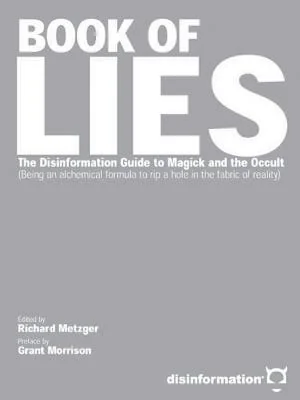
Book of Lies
 76
76

Book of Lies
Richard Metzger’s *Book of Lies* presents a panoramic view of esoteric subjects that, while broad, often lacks a singular, cohesive voice. The strength of the collection lies in its sheer variety; one moment you are considering the mechanics of spellcraft, the next you are steeped in the cosmic dread of Lovecraft’s Cthulhu Mythos. This breadth offers a valuable survey for those new to the wider occult landscape. However, this very diversity becomes a limitation. The essays, while individually informative, do not always coalesce into a unified argument or thematic exploration. A notable passage exploring the historical development of Wicca, for instance, provides solid factual grounding but feels disconnected from the more speculative essays on personal magical development. The work functions best as a curated introduction to disparate fields rather than a deep dive into any single one. It serves as a serviceable, if uneven, gateway.
📝 Description
76
Richard Metzger's 2003 Book of Lies gathers diverse essays on occultism and magical theory.
Published in 2003, Book of Lies is an anthology edited by Richard Metzger that compiles various perspectives on occult practices, magical theory, and esoteric philosophies. The collection spans subjects from the practical application of spellcasting to the theoretical ideas behind modern paganism. It aims to connect theoretical discussions with actionable insights for those interested in these fields.
The book is intended for individuals already engaged with occult and magical traditions. It offers material relevant to readers curious about topics such as the fundamentals of Wicca, the philosophical scope of H.P. Lovecraft's mythos, or the path of a practicing magician. It speaks to those who examine the limits of established belief systems.
The early 2000s saw accelerated communication of niche interests like occult studies. Metzger's compilation reflects a contemporary effort to synthesize esoteric thought, often referencing 20th-century movements and thinkers. It appeared during a time of renewed attention to figures like Aleister Crowley and pagan revivals, which had previously been dispersed across specialized publications.
💡 Why Read This Book?
• Gain an introduction to diverse magical practices, including spellcasting techniques and the principles of Wicca, as presented in essays from Metzger's 2003 compilation. • Understand the influence of H.P. Lovecraft's cosmic horror on modern esoteric thought, a concept explored within the book's varied perspectives. • Explore pathways for becoming a practicing magician, offering practical considerations beyond theoretical discussions found in other occult literature.
⭐ Reader Reviews
Honest opinions from readers who have explored this book.
❓ Frequently Asked Questions
When was Richard Metzger's Book of Lies first published?
Richard Metzger's *Book of Lies* was first published in January 2003. This initial release marked its entry into the contemporary esoteric literature landscape.
What kind of topics are covered in Book of Lies?
The book covers a wide array of subjects including spellcasting, the practice of magic, Wicca, modern paganism, and the literary works of H.P. Lovecraft.
Is Book of Lies a single author's work or an anthology?
Book of Lies is an anthology, presenting a collection of essays from various authors edited by Richard Metzger.
Who is Richard Metzger?
Richard Metzger is the editor of *Book of Lies*. He is known for curating collections of esoteric and occult writings, bringing together diverse perspectives on these subjects.
What is the primary audience for Book of Lies?
The primary audience includes individuals interested in magic, the occult, Wicca, modern paganism, and the influence of authors like H.P. Lovecraft on esoteric thought.
Does the book provide practical advice for aspiring magicians?
Yes, the book addresses how to become a practicing magician, offering insights into the practical application of magical principles and spellcasting.
🔮 Key Themes & Symbolism
Practical Magic and Spellcraft
The collection dedicates significant attention to the actionable aspects of magic. Essays explore the mechanics of spellcasting, offering readers potential frameworks for understanding how magical energies are directed and manifest. This theme moves beyond purely theoretical discussions, aiming to provide insights into the deliberate crafting of magical intent and its application in ritual or personal practice, reflecting a key concern within modern occultism.
Wicca and Modern Paganism
A substantial portion of the book engages with the tenets and practices of Wicca and broader modern pagan movements. It seeks to delineate their origins, core beliefs, and rituals, positioning them within the contemporary spiritual landscape. This theme provides context for understanding the resurgence of nature-based spiritualities and their philosophical underpinnings, distinguishing them from earlier esoteric traditions.
Lovecraftian Esotericism
The influence of H.P. Lovecraft's fictional mythos on esoteric thought is a recurring thread. The essays examine how Lovecraft's tales of cosmic horror, forbidden knowledge, and ancient entities have inspired magical practitioners and shaped certain branches of occult philosophy. This theme highlights the intersection of literature and esoteric practice, where fictional narratives can serve as conduits for spiritual exploration.
The Path of the Magician
The book addresses the concept of becoming a practicing magician, outlining potential approaches and philosophical considerations. It examines what it means to actively engage with magical forces, emphasizing personal development, discipline, and the integration of esoteric knowledge into one's life. This theme appeals to those seeking a structured understanding of the magician's role and responsibilities.
💬 Memorable Quotes
Direct passages from the work, attributed to the author.
“Metzger's collection examines the philosophical underpinnings of modern paganism.”
— This highlights the book's interest in the intellectual and spiritual foundations of contemporary pagan traditions. It implies an analysis of their worldview, ethical considerations, and divergence from or relation to older belief systems.
“The essays consider the legacy of H.P. Lovecraft's cosmic dread.”
— This points to the book's engagement with the psychological and philosophical impact of Lovecraft's fiction. It suggests an exploration of how themes of existential insignificance and unknowable cosmic forces have resonated within esoteric circles.
“The collection touches on the journey of becoming a practicing magician.”
— This emphasizes the book's focus on the practical development and personal transformation involved in embracing a magical path, rather than solely theoretical contemplation.
“Essays look at the diverse expressions of Wicca and its contemporary adherents.”
— This indicates the book's coverage of the specific practices and beliefs within Wicca, showcasing its modern manifestations and its place within the broader spectrum of neo-paganism.
💡 Key Ideas
Editorial paraphrase of the work's core concepts — not direct quotes.
The work explores how spellcasting involves focused intent and symbolic action.
This paraphrased concept underscores the active, deliberate nature of magic as presented in the book. It suggests that successful spellcraft relies not merely on ritual, but on the practitioner's mental concentration and the meaningful use of symbolic elements.
🌙 Esoteric Significance
Tradition
This work engages with the broad spectrum of Western Esotericism, particularly drawing from Hermeticism and contemporary magical orders. It represents a modern effort to compile and present diverse occult traditions, including Wicca and neo-paganism, which themselves often have roots in older magical systems. The book departs from strictly lineage-bound texts by offering a more accessible, anthology-style introduction to various facets of the magical arts and beliefs.
Symbolism
The book likely touches upon symbols common in Western Esotericism, such as the pentagram, often used for protection or elemental invocation in Wicca and other magical practices. It may also explore archetypal imagery derived from H.P. Lovecraft's mythos, like the Elder Sign, which functions as a protective ward against malevolent entities, reflecting a blend of traditional occult symbolism and modern literary influences.
Modern Relevance
Contemporary practitioners of Wicca and eclectic paganism find value in the book's discussions on ritual and belief. Furthermore, students of comparative religion and occult history reference such compilations to understand the evolution and popularization of esoteric ideas in the late 20th and early 21st centuries, particularly concerning the intersection of literature and magic.
👥 Who Should Read This Book
• Aspiring practitioners of Western Esotericism seeking an overview of diverse magical traditions and practical techniques. • Students of comparative religion interested in the development and expressions of modern paganism and Wicca. • Readers fascinated by the influence of literature, such as H.P. Lovecraft's works, on occult philosophy and magical practice.
📜 Historical Context
Published in 2003, *Book of Lies* emerged during a period of burgeoning online esoteric communities and renewed interest in occultism, partly fueled by the accessibility of information via the internet. Richard Metzger's anthology reflects a synthesis of various strands of magical thought prevalent at the turn of the millennium. It appeared in a landscape where figures like Aleister Crowley, whose work influenced many occultists, were being re-examined, and where neo-paganism, particularly Wicca, had solidified its presence. While contemporary authors like Doreen Valiente were foundational to Wicca, Metzger's work sought to consolidate diverse perspectives, ranging from practical spellcasting to philosophical explorations influenced by H.P. Lovecraft. The reception of such collections often varied, with some academics noting their role in popularizing esoteric subjects, while practitioners found value in the breadth of topics presented. This era saw a marked increase in comparative occult studies and a desire to bridge historical traditions with modern practice.
📔 Journal Prompts
Consider the symbolic language used in H.P. Lovecraft's tales and its potential application in modern ritual.
Reflect on the core tenets of Wicca as presented and how they might inform personal ethics.
Outline a personal spellcasting intention, focusing on the clarity of purpose discussed in the book.
Analyze the concept of the 'practicing magician' and identify elements relevant to your own path.
Explore the historical context of modern paganism and its divergence from earlier spiritual movements.
🗂️ Glossary
Spellcasting
The practice of employing focused intent, ritual, and symbolic actions to influence events or manifest desired outcomes through magical means.
Occult
Relating to hidden or secret knowledge, particularly concerning supernatural, mystical, or magical powers and phenomena.
Wicca
A modern, nature-based, duotheistic or polytheistic religion, often characterized by its reverence for the divine feminine and masculine principles and its practice of witchcraft.
Paganism (Modern)
A broad term for contemporary spiritual paths inspired by or revived from pre-Christian, polytheistic religions of Europe and the Mediterranean, often emphasizing nature and earth-based spirituality.
H.P. Lovecraft
An American author known for his influential works of horror fiction, particularly his creation of the Cthulhu Mythos, which has significantly impacted occult and esoteric subcultures.
Magician (Practicing)
An individual who actively engages in the study and application of magical principles, often involving ritual, energy manipulation, and a commitment to personal transformation.
Esoteric
Intended for or likely to be understood by only a small number of people with a specialized knowledge or interest; pertaining to inner, spiritual truths.
This book appears in 3 collections
🔮 Readers Also Liked
Browse all →








From the “Occultism” Collection
View all →![The Conference Of The Birds Penguin Classics [download]](/img/thumb/the-conference-of-the-birds-penguin-classics-download.webp)





More Free Occult Philosophy Books
View all →