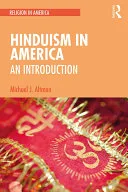
Hinduism in America
 81
81

Hinduism in America
Altman's "Hinduism in America" provides a welcome antidote to simplistic narratives of Eastern spirituality arriving fully formed on American shores. The strength of this work lies in its meticulous documentation of the *process* of reception, showing how Hinduism was not just adopted but actively constructed and reinterpreted by American minds long before significant Indian immigration. The book's limitation, however, is its focus primarily on the pre-1900 period, leaving the dramatic transformations of the mid-to-late 20th century largely unaddressed. A particularly illuminating section details the late nineteenth-century arrival of figures like Swami Vivekananda, illustrating the initial, often exoticized, reception of Hindu teachers. This is a scholarly introduction, essential for understanding the foundational stages of Hinduism's American journey.
📝 Description
81
Michael J. Altman's 2017 book traces Hindu traditions' reception in America from the colonial era.
Michael J. Altman's "Hinduism in America" examines how Hindu traditions were understood and incorporated into American religious life. The book moves beyond a single definition, detailing the historical reception and adaptation of these practices from colonial times up to the arrival of the first Hindu teachers in the late nineteenth century. It highlights the varied interpretations and religious expressions that defined this early encounter.
Altman's narrative begins with early American interest in Indian religions, a curiosity that existed before the physical presence of Indian spiritual leaders. By the end of the 19th century, this fascination had grown, making Americans receptive to figures who could offer direct instruction. The work places these developments within the larger contexts of Orientalism and the rise of alternative spiritualities, setting the groundwork for the substantial Hindu diaspora and influence that followed in later centuries.
The book analyzes key ideas like how Hinduism was represented and how its image was shaped in American discussions. It also looks at the diverse ways Hindu traditions were actually practiced. Rather than just a chronological report, Altman dissects the intellectual and social systems that shaped how Americans perceived and engaged with Hindu concepts and customs.
This work situates the introduction of Hindu thought into America within a broader pattern of Western engagement with non-Western spiritualities. It examines how concepts often considered esoteric in their homeland were filtered, reinterpreted, and sometimes commodified within an American context. The book tracks the intellectual currents that made certain Hindu ideas accessible, moving from abstract fascination to direct instruction and practice, connecting to traditions of comparative religion and the study of Western esotericism.
💡 Why Read This Book?
• Learn how American perceptions of Hinduism were shaped by colonial-era Orientalism, moving beyond simplistic notions of spiritual import. • Understand the historical context of the late nineteenth century, a pivotal period when the first Hindu teachers arrived in the United States, influencing early American spiritual seekers. • Gain insight into the diverse and often conflicting ways Hinduism has been represented and practiced in America, challenging monolithic interpretations.
⭐ Reader Reviews
Honest opinions from readers who have explored this book.
❓ Frequently Asked Questions
When did Americans first become interested in Hinduism?
American interest in Hinduism dates back to the colonial period, long before the arrival of the first Hindu teachers in the late nineteenth century. This early fascination was often mediated through texts and early encounters with Indian culture.
What is the main argument of "Hinduism in America"?
The book argues that Hinduism in America is best understood not as a static import, but as a dynamic tradition that has been actively represented, constructed, and practiced in diverse ways by Americans throughout history.
Does this book define what Hinduism is?
No, the book explicitly states it is not meant to define Hinduism. Instead, it introduces the variety of ways Hinduism has been understood and practiced within the American context.
Who were the first Hindu teachers in America?
The book notes the arrival of the first Hindu teachers in the United States occurred by the late nineteenth century, marking a significant shift from earlier intellectual interest to direct spiritual engagement.
What historical periods does "Hinduism in America" cover?
The work primarily covers the period from the colonial era up to the late nineteenth century, detailing the initial encounters and the groundwork laid for Hinduism's presence in America.
Is this book suitable for beginners?
Yes, "Hinduism in America" is designed as an introduction, making it suitable for beginners interested in the historical and cultural interactions between India and America regarding religious traditions.
🔮 Key Themes & Symbolism
Historical Reception
This theme examines how Hinduism has been received and interpreted in America since the colonial period. It moves beyond simple historical timelines to analyze the intellectual and cultural frameworks Americans used to understand Indian religious traditions. The work highlights that this reception was not passive but involved active construction and reinterpretation, shaping the very image of Hinduism within the United States before significant Indian immigration began.
Representation and Construction
Altman focuses on the 'representation' and 'construction' of Hinduism in the American psyche. This involves analyzing how various groups and individuals portrayed Hindu beliefs and practices, often through the lens of Orientalism or as exotic spiritual alternatives. The book illustrates how these representations, whether accurate or not, significantly influenced the perceived identity of Hinduism in America, creating a distinct Americanized version of the tradition.
Early Encounters
The book details the earliest forms of engagement between Americans and Hindu traditions, starting from the colonial era. It highlights a growing interest that culminated in the late nineteenth century with the arrival of the first Hindu teachers. This period marks a critical transition from intellectual curiosity and textual study to direct spiritual transmission and practice within American soil.
Diversity of Practice
A central tenet is the exploration of the 'variety of ways' Hinduism has been practiced in the United States. This acknowledges that Hinduism is not a monolithic entity and its American manifestations are diverse, influenced by local contexts and the specific interpretations of both American converts and Indian immigrants. The work underscores the fluid and adaptive nature of religious traditions when transplanted.
💬 Memorable Quotes
Direct passages from the work, attributed to the author.
“Americans have been interested in the religions of India since the colonial period.”
— This statement underscores the deep historical roots of American engagement with Indic traditions, predating the more visible spiritual movements of the 20th century and suggesting a long-standing intellectual and spiritual curiosity.
“by the late nineteenth century the first Hindu teachers arrived in the United States”
— This marks a crucial historical juncture, indicating the shift from abstract interest to direct, embodied spiritual guidance, which fundamentally altered how Hinduism would be understood and practiced in America.
“It is not a book that will tell you what Hinduism is; rather, it is an introduction to the variety of ways in which Hinduism has been represented, constructed, and practiced in the United States.”
— This core assertion clarifies the book's methodological approach: focusing on the social, historical, and cultural processes of Hinduism's reception and adaptation in America, rather than offering a dogmatic definition of the religion itself.
“the long history of religion in the encounter between America and India.”
— This framing emphasizes the book's scope, positioning the study within a broader narrative of cross-cultural religious exchange and highlighting the enduring, multi-faceted relationship between these two nations.
“the variety of ways in which Hinduism has been represented, constructed, and practiced”
— This phrase expresses the book's analytical focus, pointing to the dynamic and complex nature of Hinduism's presence in America, shaped by perception, interpretation, and lived experience.
🌙 Esoteric Significance
Tradition
While not strictly an esoteric text itself, "Hinduism in America" examines the historical reception of Hindu ideas within contexts that often overlapped with esoteric Western movements. The late 19th century saw a surge in interest from groups like the Theosophical Society, which sought to synthesize Eastern and Western spiritual knowledge. Altman's work provides the historical backdrop for how these traditions were introduced and often reinterpreted through an esoteric or syncretic lens by Western practitioners.
Symbolism
The book's exploration of how Hinduism was represented implicitly touches upon the appropriation and reinterpretation of its symbols. Concepts like Karma and Dharma, when introduced to American audiences, were often stripped of their complex philosophical underpinnings and simplified into more accessible, sometimes secularized, tenets. The very act of representation can be seen as a symbolic act, shaping the meaning and perceived power of these traditions for Western audiences.
Modern Relevance
Contemporary thinkers and practitioners exploring the globalization of spirituality and the evolution of religious identity in diaspora communities draw upon the historical groundwork detailed in this book. Understanding the early reception of Hinduism in America is crucial for analyzing modern yoga, Vedanta, and other Hindu-inspired movements, revealing how historical representations continue to subtly influence contemporary understandings and practices.
👥 Who Should Read This Book
• Researchers in American religious history: Gain a nuanced understanding of the early stages of Hindu traditions' presence and adaptation in the US, moving beyond simplistic narratives. • Students of comparative religion: Explore the complex dynamics of cultural and religious exchange between India and America, particularly during the formative late 19th century. • Individuals interested in the history of spirituality in the West: Understand how Eastern philosophies were introduced, interpreted, and integrated into American spiritual landscapes.
📜 Historical Context
Published in 2022, Michael J. Altman's "Hinduism in America" engages with a scholarly landscape shaped by decades of research into Asian religions in the West. The book's focus on the pre-1965 era, particularly the late nineteenth century, places it in dialogue with earlier works that examined figures like Swami Vivekananda and the Theosophical Society's role in popularizing Eastern thought. While the mid-to-late 19th century saw figures like Helena Blavatsky and Henry Steel Olcott drawing inspiration from Indian philosophies, Altman's work specifically addresses the *American* construction and reception of Hinduism. The period covered is marked by burgeoning Orientalist studies and a spiritual marketplace that was beginning to accommodate non-Western traditions, often through exoticizing lenses, setting a complex stage for later, more established Hindu communities.
📔 Journal Prompts
The colonial-era interest in Indian religions: How did early American perceptions differ from direct engagement?
The arrival of the first Hindu teachers in the late nineteenth century: What societal conditions facilitated this?
Representations of Hinduism: How might early American portrayals have shaped contemporary understanding?
The construction of Hinduism: In what ways was the tradition adapted to American contexts?
American practices of Hinduism: What does the historical variety reveal about religious adaptation?
🗂️ Glossary
Orientalism
A term coined by Edward Said, referring to the way Western cultures perceive and represent Eastern societies, often through stereotypes, exoticism, and a sense of Western superiority.
Diaspora
The dispersion of any people from their original homeland. In this context, it refers to the migration and settlement of people from India in other countries, including the United States.
Syncretism
The merging of different religions, cultures, or schools of thought. In religious studies, it often describes the blending of distinct traditions into a new form.
Theosophical Society
An organization founded in 1875 by Helena Blavatsky and others, dedicated to the study of comparative religion, philosophy, and science, and the investigation of the latent human powers.
Vedanta
A school of Hindu philosophy that aims to understand the nature of reality (Brahman) and the self (Atman) through interpretations of the Upanishads, Bhagavad Gita, and Brahma Sutras.
Swami
A title of respect used for a Hindu monk or ascetic, often denoting a spiritual teacher or leader.
Karma
In Hinduism, the principle of cause and effect where intent and actions of an individual influence their future. It is a core concept governing the cycle of rebirth.