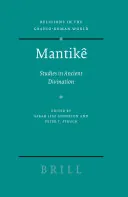
Arcana philosophia, or, Chymical secrets
 62
62

Arcana philosophia, or, Chymical secrets



Evander Ashcroft (Alchemy & Hermeticism Editor) — John Headrich's 'Arcana Philosophia' is a cornerstone text for any serious student of Hermetic philosophy and early chemical arts. This work transcends simple recipe-book alchemy, offering a deeply philosophical and spiritual interpretation of the Great Work. Headrich masterfully weaves together practical instruction with esoteric symbolism, guiding the reader towards an understanding of both material transmutation and spiritual purification. Its strength lies in its evocative language and its insistence on the interconnectedness of microcosm and macrocosm. This is essential reading for practitioners seeking the deeper meaning behind alchemical operations and scholars delving into the intellectual currents of the Renaissance and beyond.
📝 Description
62
John Headrich's 'Arcana Philosophia' (1662) details alchemical secrets and the spiritual ascent.
Published in 1662, John Headrich's 'Arcana Philosophia, or, Chymical Secrets' presents alchemical processes alongside their spiritual interpretations. The book maps the transformation of base metals to the soul's journey toward divine understanding. Headrich discusses cosmic order, the underlying principles of nature, and the energies that influence both the physical and spiritual worlds. The text frames the 'Great Work' as a spiritual practice as much as a material endeavor. It addresses those interested in concealed knowledge, those pursuing adeptship, and academics studying old learning. Readers are encouraged to study its cryptic statements to find genuine philosophical insight. The book requires deep thought, instinct, and an openness to seeing the cosmos as a unified spiritual and material system.
This work belongs to the Hermetic and alchemical traditions of the 17th century, a period when alchemists sought to understand the material world as a reflection of divine principles. Headrich's text connects the practical art of transmutation with the inner spiritual development necessary for achieving gnosis or divine illumination. It reflects a worldview where the microcosm (human soul) and macrocosm (universe) are intrinsically linked, and the manipulation of matter is a path to spiritual purification and knowledge.
💡 Why Read This Book?
Uncover the veiled wisdom of alchemical transformation, where matter and spirit intertwine. 'Arcana Philosophia' offers a profound glimpse into the esoteric worldview of early modern Europe, revealing the symbolic language of nature's deepest secrets. Ideal for seekers of hidden knowledge, practitioners of Hermetic arts, and scholars fascinated by the philosophical underpinnings of alchemy.
⭐ Reader Reviews
Honest opinions from readers who have explored this book.
❓ Frequently Asked Questions
What is the primary focus of 'Arcana Philosophia'?
The primary focus is on the philosophical and spiritual dimensions of alchemy, exploring the symbolic transformation of matter as a parallel to the soul's journey towards enlightenment, rather than solely a practical guide to chemical processes.
Is this book suitable for beginners in alchemy?
While challenging, it serves as an excellent foundational text for dedicated beginners willing to engage with symbolic language and philosophical contemplation. Prior exposure to Hermetic concepts may be beneficial.
What kind of 'secrets' does the book claim to reveal?
It claims to reveal the 'secrets' of the Great Work, encompassing the principles of universal transformation, the hidden properties of elements, and the spiritual ascent achievable through alchemical understanding and practice.
What is the historical significance of this text?
It represents a crucial bridge between medieval alchemy and the more scientific, yet still deeply symbolic, approaches that emerged in the early modern period, offering insights into the intellectual and spiritual milieu of its time.
Does the book offer practical alchemical recipes?
Yes, it contains formulae and prescriptions, but these are deeply embedded within a philosophical framework, suggesting they are keys to understanding underlying principles rather than mere practical instructions.
🔮 Key Themes & Symbolism
The Great Work as Spiritual Ascent
This theme posits alchemy not merely as a physical pursuit of transmuting metals, but as a profound metaphor for the soul's purification and evolution. The operations in the laboratory are seen as mirroring internal transformations, guiding the practitioner through stages of spiritual refinement. The text emphasizes the interconnectedness of the outer work with the inner journey, suggesting that true alchemical success lies in the perfection of the self, leading to divine union.
The Symbology of Nature and the Cosmos
Headrich explores the hidden language of the natural world, interpreting elements, processes, and celestial influences as symbolic representations of divine principles. The book argues that the universe itself is a grand alchemical text, with each component holding a specific meaning within the cosmic order. Understanding these symbols unlocks the secrets of creation and provides a roadmap for the alchemist to harmonize with these universal forces.
Chymical Pharmacy and Esoteric Medicine
Beyond the metallurgical aspects, 'Arcana Philosophia' explores the medicinal applications of alchemical preparations. It treats the human body as a complex chemical system susceptible to imbalance and disease, which can be rectified through carefully prepared elixirs and tinctures derived from the principles of the Great Work. This perspective connects the macrocosm to the microcosm, viewing health as a reflection of cosmic harmony.
💬 Memorable Quotes
Direct passages from the work, attributed to the author.
“Solve et Coagula: Dissolve and Coagulate.”
— A fundamental alchemical axiom, representing the cyclical process of breaking down and rebuilding. It signifies the need to deconstruct existing forms (dissolve) to understand their essence, and then to recompose them into a higher state (coagulate).
“Nature is a wise woman, and her secrets are deep.”
— This personification of Nature highlights her inherent wisdom and the profound, often hidden, knowledge she holds. It encourages a respectful and intuitive approach to studying the natural world, recognizing its intricate mysteries.
“The true gold is not of the earth, but of the spirit.”
— This profound statement underscores the spiritual dimension of alchemy, asserting that the ultimate goal is not material wealth but inner transformation and spiritual enlightenment, often referred to as the 'spiritual gold.'
“To know the principles is to know the whole.”
— This emphasizes the fractal nature of wisdom and the power of understanding fundamental laws. By grasping the core principles of alchemy, one gains insight into the interconnectedness of all things and the workings of the universe.
💡 Key Ideas
Editorial paraphrase of the work's core concepts — not direct quotes.
The Stone is not made, but found.
This quote suggests that the Philosopher's Stone is not a creation ex nihilo, but rather a discovery of inherent principles or a state of being already present, waiting to be revealed through diligent work and understanding.
🌙 Esoteric Significance
Tradition
This text is deeply rooted in the Hermetic and Neoplatonic traditions, which emphasize the unity of all things and the spiritual potential within matter. It aligns with the alchemical pursuit of the Great Work, a path of transformation that mirrors spiritual enlightenment. The book also draws from Paracelsian ideas concerning the vital forces within nature and the body, linking chymistry to medicine.
Symbolism
The book is rich in alchemical symbolism, employing cryptic language to describe processes and substances. Key symbols likely include the prima materia (primordial matter), the Philosopher's Stone (symbol of perfection and transformation), various metals and elements representing different stages or qualities, and celestial influences. These symbols are not merely decorative but are integral to understanding the philosophical and spiritual dimensions of the work.
Modern Relevance
In an age often characterized by materialism and fragmentation, 'Arcana Philosophia' offers a compelling reminder of the interconnectedness of spirit and matter. Its exploration of transformation and hidden knowledge speaks to contemporary seekers of personal growth, holistic health, and deeper meaning. The symbolic language can inspire new ways of perceiving the world and one's place within it, offering timeless wisdom for navigating life's challenges.
👥 Who Should Read This Book
This text is essential for dedicated scholars of Hermeticism, alchemy, and the history of science and philosophy. Practitioners of esoteric arts will find invaluable insights into the symbolic and spiritual dimensions of transformation. For seekers of profound philosophical understanding, it offers a challenging yet rewarding journey into ancient wisdom. Beginners with a serious commitment to esoteric studies will benefit from its foundational, albeit complex, perspectives on the Great Work.
📜 Historical Context
Written during a period of intense intellectual ferment, 'Arcana Philosophia' emerges from the alchemical and Hermetic traditions that flourished in the late Renaissance and early modern era. This was an age where the boundaries between science, philosophy, and mysticism were fluid. Alchemists sought to understand the fundamental nature of reality, viewing the material world as imbued with spiritual significance. The work reflects the era's fascination with ancient wisdom, Neoplatonic ideas, and the belief in a hidden order governing the cosmos. It stands as a evidence of the enduring human quest for knowledge, transformation, and a deeper connection to the divine, bridging the gap between occult practices and nascent scientific inquiry.
📔 Journal Prompts
Reflect on a personal 'dissolving' process you have undergone. What was broken down, and what new form emerged?
Consider a natural phenomenon you find particularly symbolic. What 'secrets' might nature be whispering through it?
How does the concept of 'true gold' as spiritual wealth challenge conventional notions of value?
If the universe is an alchemical text, what chapter are you currently studying, and what symbols are most prominent?
Explore the connection between external transformation (like alchemical processes) and internal spiritual growth in your own life.
🗂️ Glossary
Prima Materia
The fundamental, undifferentiated substance from which all matter is believed to originate in alchemical theory. It is the raw material for the Great Work, often described as chaotic and potent.
Philosopher's Stone
The legendary alchemical substance sought after for its purported ability to transmute base metals into gold or silver, and to grant immortality. Symbolically, it represents perfection and spiritual attainment.
Great Work (Major work)
The central process in alchemy, encompassing the creation of the Philosopher's Stone. It is understood both as a physical operation of transmutation and a spiritual path of purification and enlightenment.
Solve et Coagula
Latin for 'dissolve and coagulate.' This fundamental alchemical axiom describes the cyclical process of breaking down a substance to its essence and then reforming it into a higher state.
Chymistry
An archaic term for chemistry, particularly as practiced during the Renaissance and early modern periods, often encompassing philosophical and esoteric elements alongside practical experimentation.
This book appears in 3 collections
🔮 Readers Also Liked
Browse all →








More by John Headrich
All books →![Arcana philosophica [sic] or, Chymical secrets](/img/thumb/arcana-philosophica-sic-or-chymical-secrets-john-headrich.webp)
From the “Tarot” Collection
View all →









More Free Divination & Tarot Books
View all →