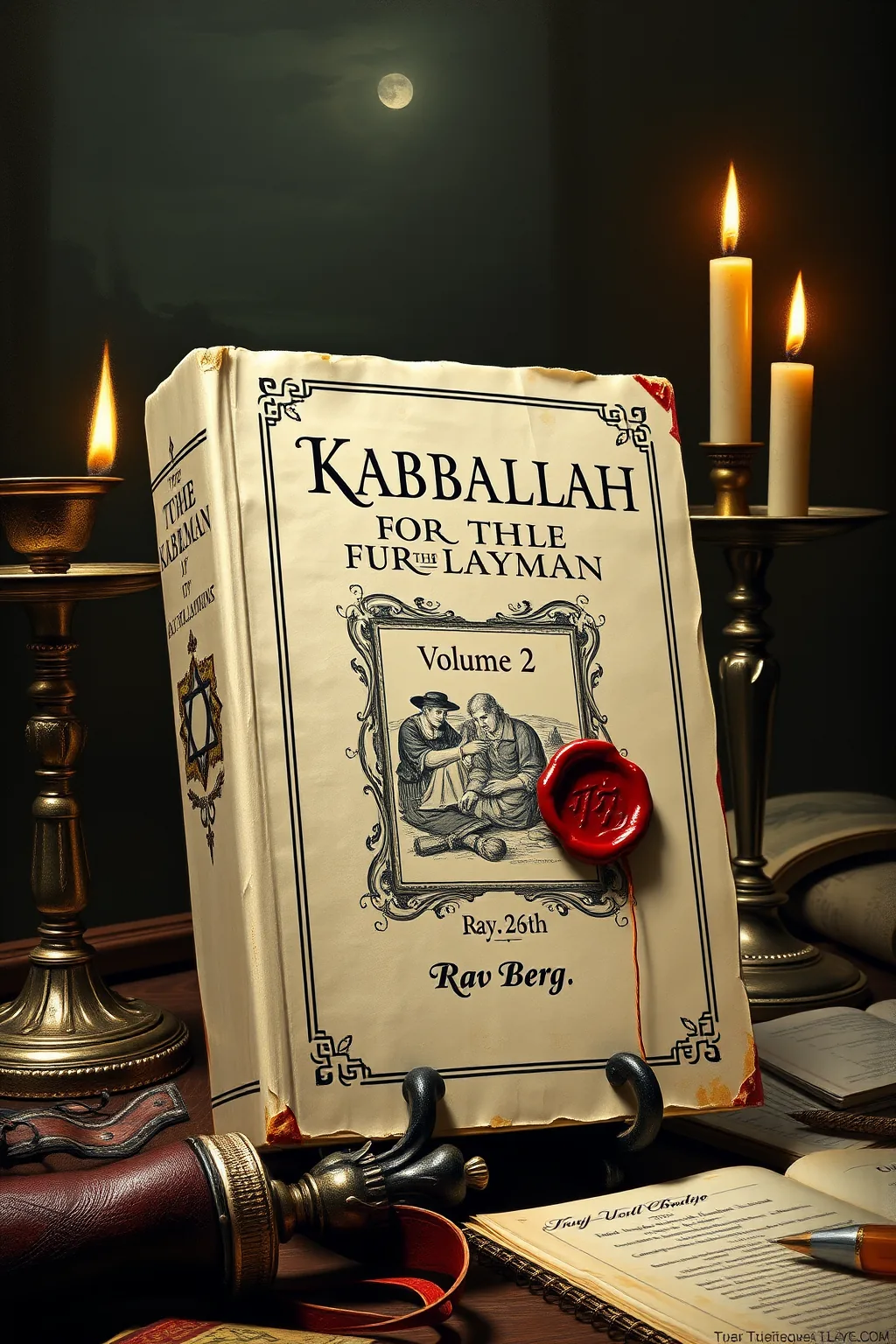
Kabbalah for the Layman (Vol. 2) (Kabbalah for the Layman)
 62
62

Kabbalah for the Layman (Vol. 2) (Kabbalah for the Layman)



Celeste Moreau (Divination & Symbolism Reviewer) — "Kabbalah for the Layman (Vol. 2)" is a luminous beacon for those drawn to the profound depths of Jewish mysticism. Rav Berg’s distinctive approach simplifies the seemingly impenetrable, offering accessible yet potent insights into the Kabbalistic worldview. This volume excels in articulating the energetic flows and symbolic language that underpin spiritual reality, making it indispensable for students of esotericism. It doesn't merely explain; it invites an experiential understanding of divine principles. For practitioners seeking to deepen their spiritual practice or scholars intrigued by ancient wisdom traditions, this book provides a foundational and transformative reading experience.
📝 Description
62
Rav Berg's 1980s work, 'Kabbalah for the Layman (Vol. 2),' continues its detailed explanation of Kabbalistic concepts.
This second volume by Rav Berg builds upon the foundational ideas presented previously. It aims to make the complex teachings of Kabbalah accessible to a general audience, moving beyond introductory material. The book dissects specific Kabbalistic doctrines, seeking to clarify the structure of the universe and humanity's place within it. Berg focuses on core principles that he believed underlie creation and consciousness. Readers are taken through discussions of the Tree of Life, the sefirot, and the spiritual forces described in Kabbalistic thought.
The text endeavors to provide a clear understanding of these esoteric ideas. It addresses fundamental questions about existence and the nature of the soul. The author's intent is to help individuals recognize the interconnectedness of all things. This volume serves as a guide for those interested in deepening their comprehension of these mystical concepts and their potential for personal insight.
This book engages with Kabbalah, a Jewish mystical tradition that originated in the medieval period. Kabbalistic texts, such as the Zohar, are known for their complex symbolism and metaphysical interpretations of the Torah. The tradition describes a divine structure, often represented by the Tree of Life, with ten sefirot or emanations that bridge the infinite divine and the created world. Kabbalah also addresses the nature of the soul, reincarnation, and the process of spiritual ascent. Rav Berg's work attempts to translate these often dense theological and cosmological concepts into a more digestible format for those outside of traditional rabbinical study.
💡 Why Read This Book?
Unravel the cosmic blueprint and your place within it. This book offers a clear, accessible path into the esoteric teachings of Kabbalah, transforming abstract concepts into practical wisdom. Ideal for spiritual seekers, students of mysticism, and anyone yearning for a deeper understanding of existence, it provides tools to navigate life’s mysteries with insight and purpose. Discover the hidden currents of spiritual energy and unlock your innate potential for transformation.
⭐ Reader Reviews
Honest opinions from readers who have explored this book.
❓ Frequently Asked Questions
What is the primary focus of Volume 2?
Volume 2 delves deeper into the practical application and further esoteric interpretations of Kabbalistic principles, building upon the foundational knowledge established in the first volume. It explores more advanced concepts and their relevance to personal spiritual growth and understanding the universe.
Is prior knowledge of Kabbalah required to read this book?
While Volume 1 provides foundational knowledge, Volume 2 is designed to be accessible to dedicated beginners. However, a basic familiarity with the concepts introduced in the first volume will enhance the reader's comprehension and appreciation of the deeper teachings presented here.
What are the 'sefirot' and why are they important in Kabbalah?
The sefirot are the ten divine emanations or attributes through which the Infinite (Ein Sof) reveals itself and creates the universe. They form the structure of the Kabbalistic Tree of Life and are central to understanding the divine flow of energy and consciousness.
How does this book relate to Jewish mysticism?
This book is a direct exploration of Kabbalah, which is the esoteric and mystical tradition within Judaism. It seeks to explain its core tenets and symbolism in a way that is understandable to a wider audience, connecting the mystical with the everyday.
Can this book be used for personal spiritual development?
Absolutely. Rav Berg's work is renowned for its focus on practical spirituality. The teachings in this volume are intended to provide insights and tools for personal transformation, self-awareness, and a more profound connection to the divine.
🔮 Key Themes & Symbolism
The Tree of Life as a Cosmic Map
This volume meticulously unpacks the Kabbalistic Tree of Life, presenting it not merely as a symbolic diagram but as a profound map of creation, consciousness, and the divine journey. Each sefirah and path is illuminated, revealing its unique energetic signature and its interconnectedness within the celestial architecture. Readers will learn how this sacred geometry serves as a blueprint for understanding the material and spiritual realms, offering a framework for spiritual ascent and the realization of one's higher purpose. It's a guide to reading through the subtle energies that govern existence.
Understanding Divine Emanations (Sefirot)
Central to Kabbalistic thought are the ten sefirot, the divine emanations through which the Infinite conceals and reveals itself. Rav Berg masterfully clarifies these powerful attributes, exploring their individual meanings and collective interplay. From Keter (Crown) to Malkhut (Kingdom), each sefirah represents a distinct aspect of the divine consciousness and its manifestation in the universe. This section provides useful insights into the nature of God, the creation process, and the spiritual forces that shape our reality, offering a deeper understanding of divine love, wisdom, and justice.
The Soul's Journey and Spiritual Transformation
Beyond theoretical concepts, "Kabbalah for the Layman (Vol. 2)" offers a profound exploration of the soul's journey and the path towards spiritual transformation. It illuminates the purpose of our earthly existence, the challenges we face, and the potential for growth inherent within us. Through the lens of Kabbalistic wisdom, readers are guided to understand their divine spark, the lessons embedded in their experiences, and the practices that can lead to a more enlightened state of being. This volume empowers individuals to actively participate in their spiritual evolution and align with their highest potential.
💬 Memorable Quotes
Direct passages from the work, attributed to the author.
“Into this mysterious universe we are born, with no apparent set of instructions.”
— This poignant observation highlights the inherent human quest for meaning and guidance in a vast, seemingly uncharted existence, setting the stage for the book's exploration of ancient wisdom.
“Our equally unfathomable instincts, intuitions, and reasoning abilities.”
— These innate human faculties are presented as our primary tools for reading through the unknown, suggesting that the answers we seek are often found within ourselves, guided by deeper, intuitive knowledge.
“To see the divine in every aspect of life is the ultimate aim.”
— This captures the spiritual goal of Kabbalistic practice: to perceive the sacred presence and divine light in all mundane and extraordinary experiences, fostering a sense of unity and transcendence.
“The Tree of Life is our celestial roadmap.”
— This metaphorical statement underscores the Tree of Life's function as a comprehensive guide, clear the pathways of spiritual development and cosmic understanding for the seeker.
💡 Key Ideas
Editorial paraphrase of the work's core concepts — not direct quotes.
The Kabbalah offers a divine blueprint for understanding creation.
This quote positions Kabbalah as a sacred guide, providing a framework and underlying structure that reveals the intelligent design and interconnectedness of all existence.
🌙 Esoteric Significance
Tradition
This book is deeply rooted in the esoteric tradition of Kabbalah, the mystical dimension of Judaism. It explores the hidden meanings and spiritual interpretations of Jewish scripture and tradition, focusing on the divine structure of the universe, the nature of God, and the path of human spiritual evolution. It offers a unique lens through which to understand creation, consciousness, and the interconnectedness of all beings, drawing from a lineage of ancient wisdom intended for spiritual enlightenment.
Symbolism
Kabbalah is rich with symbolism, and this volume meticulously deciphers key elements. The Tree of Life, with its ten sefirot and twenty-two paths, serves as the central symbolic map, representing divine emanations, human consciousness, and the pathways of spiritual ascent. Other vital symbols include Hebrew letters, divine names, and archetypal imagery, each imbued with profound spiritual significance, acting as keys to unlock deeper levels of understanding about the cosmos and the divine.
Modern Relevance
In an age of rapid change and existential questioning, the esoteric wisdom of Kabbalah offers profound relevance. "Kabbalah for the Layman (Vol. 2)" provides tools for spiritual grounding, self-discovery, and a deeper understanding of life's challenges. Its teachings on interconnectedness foster a sense of global unity and responsibility, while its emphasis on divine potential empowers individuals to navigate complexity with wisdom, resilience, and a renewed sense of purpose in their personal and collective lives.
👥 Who Should Read This Book
This book is an invaluable resource for a diverse range of readers. For the **spiritual seeker**, it offers a clear path to understanding profound metaphysical concepts and their application in daily life. **Students of mysticism and comparative religion** will find it an authoritative yet accessible introduction to the core tenets of Kabbalah. **Practitioners** of spiritual disciplines seeking to deepen their practice will appreciate the insights into energetic flow and divine principles. Even **skeptics** curious about ancient wisdom traditions might find their perspectives broadened by the profound philosophical underpinnings presented.
📜 Historical Context
Rav Berg's "Kabbalah for the Layman (Vol. 2)" emerges from the modern resurgence of interest in Kabbalah, a mystical tradition with roots stretching back centuries within Jewish thought. While its origins are ancient, the text reflects a 20th and 21st-century endeavor to make these profound, often esoteric teachings accessible to a global audience. Berg, a prominent figure in popularizing Kabbalah through the Kabbalah Centre, aimed to bridge the gap between complex theological concepts and the everyday seeker. This volume stands as a evidence of the enduring appeal of mystical inquiry and humanity's persistent desire to understand its place in the cosmos, drawing from a rich lineage of Zoharic and Lurianic Kabbalah.
📔 Journal Prompts
Reflect on the concept of 'divine blueprint' as presented in the book. How does this idea influence your perception of your own life and the universe?
Meditate on one of the sefirot discussed. What aspects of this divine emanation do you feel most connected to, and why?
Consider the 'soul's journey' as described. What lessons or challenges from your own life resonate with this concept?
How can the symbolic language of Kabbalah, such as the Tree of Life, serve as a practical guide in your daily decision-making?
Imagine yourself walking a path on the Tree of Life. Which path calls to you most strongly, and what might this signify for your spiritual growth?
🗂️ Glossary
Ein Sof
The Kabbalistic term for the Infinite, the unknowable, absolute Godhead that exists beyond all comprehension and manifestation. It represents the primordial, unmanifest aspect of divinity.
Sefirot
The ten divine emanations or attributes through which the Infinite (Ein Sof) expresses itself and creates the universe. They form the structure of the Kabbalistic Tree of Life.
Tree of Life
A central symbolic diagram in Kabbalah, consisting of ten interconnected spheres (sefirot) and twenty-two paths, representing the structure of the cosmos, divine energies, and the human soul's journey.
Keter
The first Sefirah, often translated as 'Crown.' It represents the highest emanation of divine will, the ultimate source of all creation, and the aspect of God closest to the unknowable Ein Sof.
Malkhut
The tenth and final Sefirah, often translated as 'Kingdom.' It represents the physical world, the field of manifestation, and the divine presence as it is received and expressed in our reality.
This book appears in 1 collection
🔮 Readers Also Liked
Browse all →







From the “Kabbalah” Collection
View all →








More Free Kabbalah & Jewish Mysticism Books
View all →