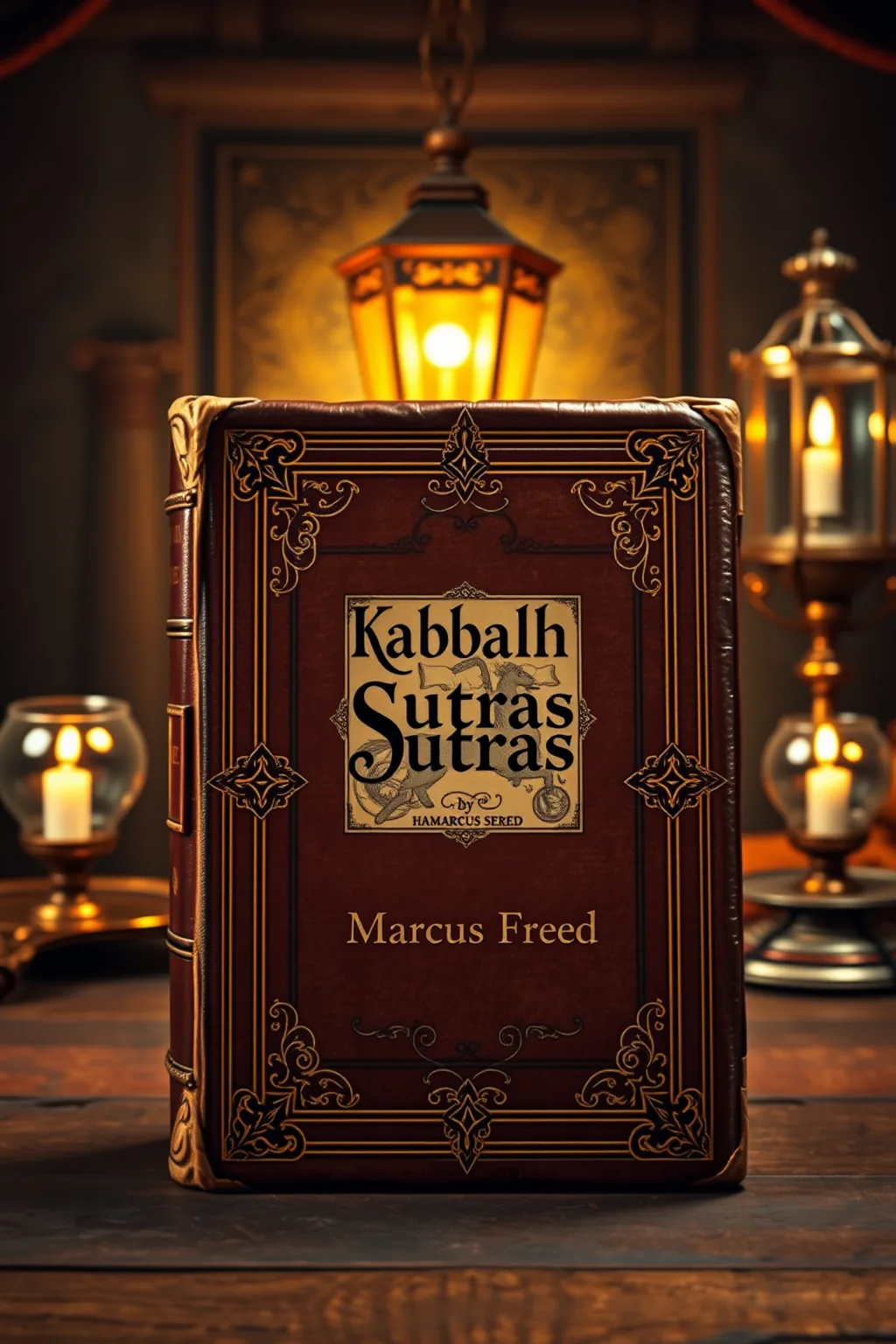
Kabbalah Sutras
 61
61

Kabbalah Sutras

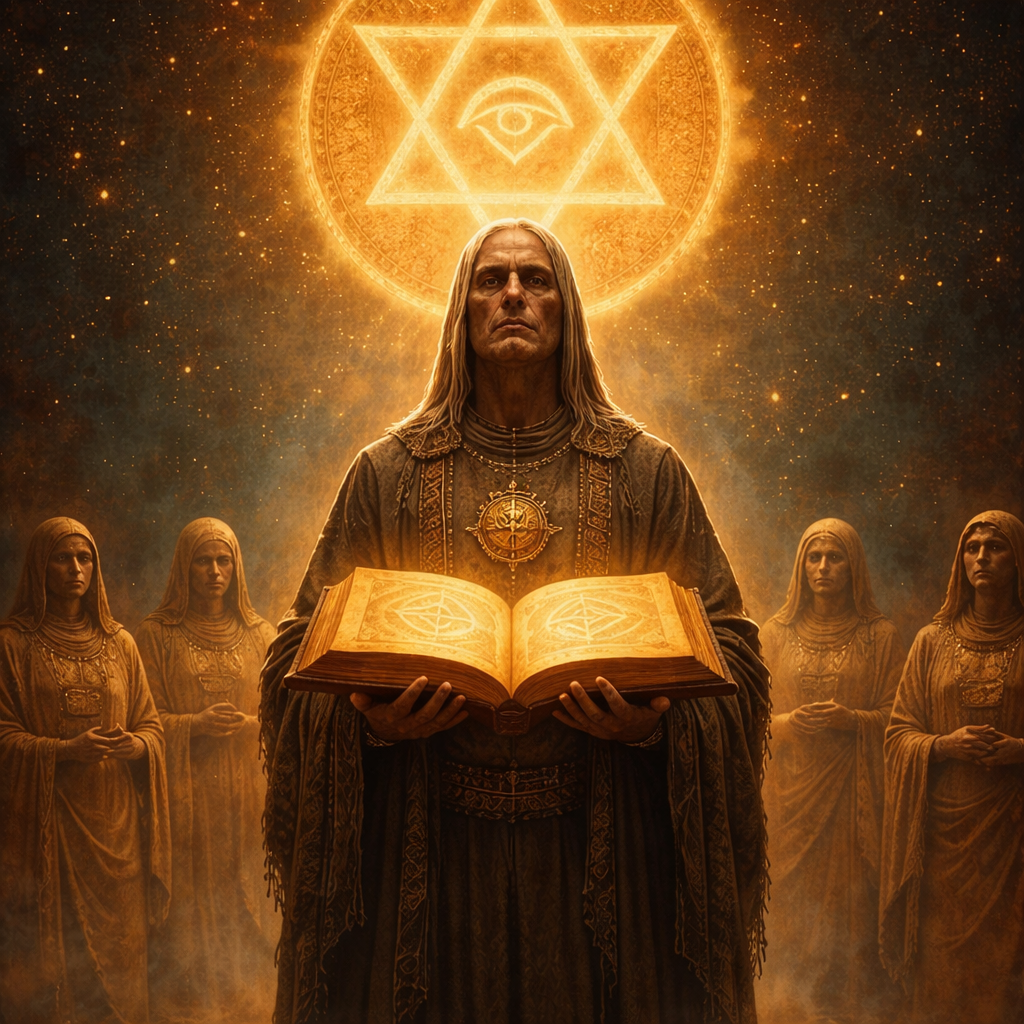

Isolde Whitaker (Sacred Texts Editor): Marcus Freed's 'Kabbalah Sutras' is a luminous beacon in the landscape of contemporary Kabbalistic studies. Freed possesses a rare gift for articulating the profound, often abstruse, concepts of Jewish mysticism with clarity and evocative power. He doesn't just present information; he guides the reader through an experience, illuminating the symbolic language and spiritual architecture that underpin the tradition. This work is particularly strong in its ability to bridge the gap between ancient texts and the lived experience of the spiritual seeker. It’s an essential read for anyone seeking to move beyond mere intellectual understanding into a lived encounter with Kabbalistic wisdom.
📝 Description
61
Marcus Freed's Kabbalah Sutras was published in 2017.
Marcus Freed's Kabbalah Sutras presents a structured approach to understanding Jewish mysticism. The book details concepts such as divine emanations, the structure of creation, and the use of sacred names within Kabbalistic thought. Freed aims to make these complex ideas accessible to a contemporary audience, blending academic study with spiritual practice. It guides readers through the symbolic language and philosophical underpinnings of Kabbalah. The text encourages a contemplative stance, fostering a sense of connection to both the cosmos and the inner self.
This work is designed for individuals seeking a deeper comprehension of universal principles and their personal spiritual development. It focuses on bridging the gap between abstract spiritual concepts and lived experience. Freed utilizes sacred language and insightful commentary to illuminate aspects of the divine presence. The book invites readers to engage with the material in a way that promotes personal reflection and growth. It is a resource for those interested in the theoretical and practical dimensions of Kabbalah.
Kabbalah Sutras situates itself within the broader tradition of Kabbalah, a complex system of Jewish mysticism that emerged in the Middle Ages. This tradition concerns itself with the nature of God, the creation of the universe, and the relationship between the divine and the human. Freed's work engages with core Kabbalistic concepts, often interpreting them through a lens that seeks practical application for modern spiritual seekers. It follows in a lineage of texts that aim to demystify Kabbalistic teachings, making them more approachable than some of the denser, older source materials.
💡 Why Read This Book?
Embark on a transformative journey into the heart of Jewish mysticism. 'Kabbalah Sutras' offers a unique synthesis of profound wisdom, illuminating the hidden connections between the cosmos and the self. Ideal for seekers yearning for deeper spiritual understanding, scholars interested in esoteric traditions, and practitioners looking to enrich their contemplative practices with ancient, potent insights.
⭐ Reader Reviews
Honest opinions from readers who have explored this book.
❓ Frequently Asked Questions
What is Kabbalah?
Kabbalah is an esoteric tradition within Judaism that explores the mystical nature of God, the universe, and humanity's relationship with the Divine. It utilizes symbolic language, meditation, and contemplative practices to reveal hidden truths.
Is prior knowledge of Kabbalah required to read this book?
While some familiarity can enhance the experience, Marcus Freed's accessible writing style makes 'Kabbalah Sutras' suitable for both newcomers and seasoned students of mysticism. The book guides readers through complex concepts with clarity.
What are 'Sutras' in the context of Kabbalah?
In this context, 'Sutras' refers to concise, aphoristic statements or teachings that distill profound Kabbalistic principles, offering distilled wisdom for contemplation and practice, akin to traditional aphorisms.
How does this book differ from other Kabbalah texts?
Freed's work distinguishes itself through its lyrical prose and focus on the experiential aspect of Kabbalah, integrating its philosophical depth with practical application for personal spiritual growth and cosmic awareness.
What kind of spiritual practices can one derive from this book?
Readers can explore practices such as contemplative meditation on divine attributes, visualization of the Tree of Life, and mindful engagement with sacred Hebrew letters and names, fostering inner transformation and connection.
🔮 Key Themes & Symbolism
The Tree of Life as Cosmic Blueprint
This theme explores the Sephirot, the ten divine emanations of God, as depicted in the Kabbalistic Tree of Life. It looks at their symbolic representation of the structure of the universe, the divine attributes, and the pathways of creation. The book illuminates how each Sephirah functions as a distinct energetic center, influencing both the macrocosm and the microcosm. Understanding this sacred geometry is presented as crucial for comprehending the divine plan and one's place within it, offering a map for spiritual ascent and integration.
Sacred Names and Divine Manifestation
This section investigates the profound power embedded within the sacred names of God in Kabbalistic tradition. It reveals how these names are not mere labels but potent vibrational keys that can unlock divine energies and facilitate manifestation. The book elucidates the concept that by understanding and contemplating these names, individuals can align themselves with specific divine forces, thereby influencing their reality and fostering spiritual growth. It emphasizes the transformative potential inherent in the utterance and internalization of these holy appellations.
The Journey of the Soul and Tikkun Olam
This theme focuses on the Kabbalistic understanding of the soul's journey through various reincarnations and its ultimate purpose: to achieve Tikkun Olam, the cosmic repair or perfection of the world. The book explores the concept of spiritual evolution, the lessons learned through life's experiences, and the interconnectedness of all souls in this grand endeavor. It highlights how personal spiritual work contributes to the healing and elevation of the entire cosmos, offering a profound sense of purpose and responsibility for the seeker.
💬 Memorable Quotes
Direct passages from the work, attributed to the author.
“The letters are the bones of creation, the words its breath.”
— This highlights the Kabbalistic belief in the power of Hebrew letters as fundamental building blocks of reality, and how their arrangement into sacred words imbues them with life-giving and creative force.
“To know the self is to glimpse the Infinite.”
— This aphorism connects self-awareness with divine consciousness, suggesting that through deep introspection and understanding of one's own being, one can begin to perceive the boundless nature of the Divine.
“The path upward is often found by looking within.”
— This underscores the introspective nature of spiritual growth in Kabbalah, implying that true progress and ascension are achieved through internal exploration rather than solely external actions or pursuits.
💡 Key Ideas
Editorial paraphrase of the work's core concepts — not direct quotes.
Within the silence, the Divine whispers its secrets.
This quote emphasizes the importance of inner stillness and contemplative practice as the primary means to access divine knowledge, suggesting that profound truths are revealed not through external noise but through internal receptivity.
Every moment is an echo of eternity.
This quote encourages presence and mindfulness, suggesting that each present moment holds within it the timeless essence of the Divine, linking the transient to the eternal.
🌙 Esoteric Significance
Tradition
Kabbalah Sutras is deeply rooted in the Jewish mystical tradition, specifically exploring its esoteric dimensions. It looks at the profound cosmological and theological insights that have been passed down through generations of Kabbalists. The book focuses on the practical application of these ancient teachings for spiritual development, emphasizing the hidden meanings and symbolic language used to describe the Divine, creation, and the human soul's journey.
Symbolism
The work meticulously unpacks the detailed symbolism of Kabbalah, with a particular focus on the Tree of Life (Etz Chaim) and its ten Sephirot, representing divine emanations. It explores the significance of Hebrew letters, sacred names of God, and numerical gematria as keys to unlocking deeper spiritual truths. These symbols are presented not as mere abstract concepts but as dynamic forces and gateways to divine consciousness.
Modern Relevance
In an age often characterized by spiritual searching and a desire for deeper meaning, 'Kabbalah Sutras' offers a timeless wisdom relevant to contemporary life. It provides a framework for understanding the interconnectedness of all things, the nature of consciousness, and the potential for personal transformation. The book empowers individuals to navigate their inner worlds and connect with a transcendent reality, fostering a sense of purpose and spiritual resilience.
👥 Who Should Read This Book
This book is a treasure for the dedicated spiritual seeker yearning to explore the profound depths of Jewish mysticism. Scholars of comparative religion and esoteric traditions will find it a valuable resource for its insightful analysis. Practitioners of meditation and contemplative arts will discover potent tools and perspectives to enrich their practice. Even those new to Kabbalah, but drawn to its ancient wisdom and profound philosophical questions, will find Marcus Freed's accessible yet deep exploration an useful starting point for their journey.
📜 Historical Context
Kabbalah emerged in medieval Europe, primarily in Spain and Provence, during a period of intense intellectual and spiritual ferment. It drew upon earlier Jewish mystical traditions, including the Merkabah mysticism of the Talmudic era, and was deeply influenced by Neoplatonic philosophy. The Zohar, the foundational text of Kabbalah, appeared in the late 13th century, rapidly shaping the development of mystical thought. Following the expulsion of Jews from Spain in 1492, Kabbalistic ideas spread throughout the Jewish diaspora, notably flourishing in Safed, Palestine, in the 16th century with figures like Isaac Luria. This era saw the systematization of Kabbalistic concepts, including the doctrine of tzimtzum (Divine contraction) and tikkun (cosmic repair). Kabbalah has since exerted a profound influence on Jewish religious practice, philosophy, and even art, while also captivating thinkers and seekers in the broader Western esoteric tradition.
📔 Journal Prompts
Reflect on a time you experienced profound silence. What 'whispers' did you perceive?
Consider the Hebrew alphabet. Which letter resonates most deeply with you, and why?
How can understanding your 'inner self' lead to a greater perception of the Infinite?
Identify one 'upward' spiritual path you are currently on. What 'within' aspects are you exploring?
In what small, everyday moment can you find an 'echo of eternity' today?
🗂️ Glossary
Sephirot
The ten divine emanations or attributes of God in Kabbalistic cosmology, often visualized as a tree, representing the stages of divine creation and revelation.
Ein Sof
The Kabbalistic concept of God as the Infinite, Unknowable, and Absolute Divine Essence that exists beyond all comprehension and manifestation.
Tzimtzum
The Kabbalistic concept of Divine contraction or withdrawal, a necessary act by God to create a space for the existence of the universe and free will.
Tikkun Olam
A central Kabbalistic concept meaning 'repair of the world.' It refers to the cosmic task of restoring harmony and wholeness to creation through spiritual action and ethical living.
Gematria
A Kabbalistic interpretive method that assigns numerical values to Hebrew letters and words, seeking hidden meanings and connections between different concepts based on their numerical equivalence.
This book appears in 1 collection
🔮 Readers Also Liked
Browse all →








From the “Kabbalah” Collection
View all →





More Free Kabbalah & Jewish Mysticism Books
View all →