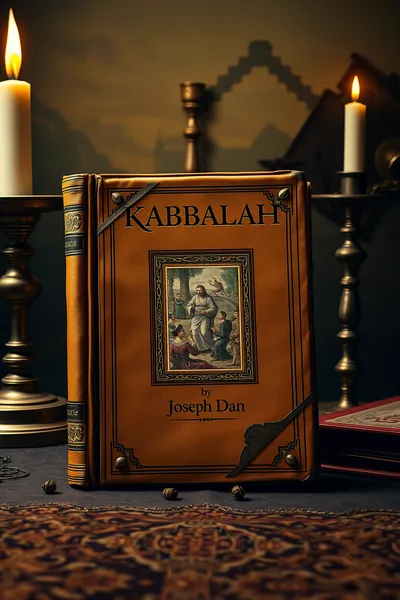
Living Kabbalah

 62
62

Living Kabbalah


Review by Marcus Thorne (Esoteric Sciences Reviewer) — Marcus Thorne Simcha H. Benyosef's 'Living Kabbalah' is a lucid and accessible entry point into the labyrinthine world of Kabbalistic thought. Thorne skillfully navigates the complex symbolism of the Sephirot and the Tree of Life, making profound concepts comprehensible without sacrificing their esoteric depth. The work's strength lies in its practical approach, demonstrating how these ancient teachings can be integrated into contemporary spiritual practice. Ideal for serious students of mysticism and Judaism seeking a grounded yet illuminating exploration of this rich tradition. This volume offers a rare blend of scholarly rigor and spiritual insight, making it a valuable addition to any esoteric library.
📝 Description
62
Simcha H. Benyosef's 'Living Kabbalah' deciphers the divine blueprint woven into creation.
In 'Living Kabbalah,' Simcha H. Benyosef examines the esoteric dimensions of the Kabbalistic tradition. The author explains the complex symbolism present in creation and reveals what he considers the underlying divine plan of reality. The book encourages readers to connect with the mystical currents that have influenced spiritual thinking over long periods.
Benyosef aims to guide individuals who wish to move beyond surface-level understanding and engage with the philosophical foundations of existence. The text functions as an invitation to perceive Kabbalah as an active, present force. It is intended for students prepared to seriously study its core principles and reach a more complete comprehension of its teachings. This work is not solely an academic pursuit but a practical approach to understanding.
This book fits within the broader field of Jewish mysticism, specifically Kabbalah. It addresses concepts such as the Sefirot, the Tree of Life, and the interpretation of divine will through symbolic language. Kabbalah, as a tradition, has historically sought to understand the relationship between the divine, the cosmos, and humanity through contemplative and interpretive practices. 'Living Kabbalah' engages with this tradition by seeking to make its complex ideas accessible to a dedicated reader.
💡 Why Read This Book?
Uncover the secrets of divine creation and cosmic interconnectedness. 'Living Kabbalah' offers a clear pathway into the profound symbolism and mystical philosophy of Jewish esoteric traditions. Ideal for spiritual seekers, students of comparative mysticism, and practitioners of Kabbalistic meditation who desire a deeper, more applied understanding of ancient wisdom for personal growth and spiritual illumination.
⭐ Reader Reviews
Honest opinions from readers who have explored this book.
❓ Frequently Asked Questions
What is the primary focus of 'Living Kabbalah'?
The book's primary focus is to demystify Kabbalistic concepts, presenting them in a way that is both intellectually rigorous and spiritually accessible, emphasizing their practical application in daily life and spiritual development.
Is prior knowledge of Judaism necessary to read this book?
While familiarity with basic Jewish concepts can enhance understanding, Benyosef's clear explanations make the text approachable even for those with limited prior knowledge of Judaism or Kabbalah. The book provides sufficient context.
How does 'Living Kabbalah' differ from other Kabbalah books?
It distinguishes itself by bridging the gap between theoretical knowledge and lived experience, offering practical exercises and insights that encourage readers to actively 'live' the principles of Kabbalah rather than just study them.
What are the core themes explored in the book?
Core themes include the nature of God, the structure of the cosmos (Tree of Life), the journey of the soul, divine emanation, and the mystical significance of Jewish festivals and practices.
Can this book be used for meditation or spiritual practice?
Absolutely. The book is designed to inspire and guide readers in their personal spiritual practices, offering meditations and contemplations based on Kabbalistic principles and symbols.
🔮 Key Themes & Symbolism
The Tree of Life (Etz Chaim)
This central symbol in Kabbalah is meticulously explored, detailing the ten Sephirot (divine emanations) and the pathways connecting them. Benyosef reveals how the Tree of Life acts as a cosmic map, illustrating the process of creation, the divine nature, and the human soul's journey. Understanding its structure offers useful insights into the interconnectedness of all things and the dynamic relationship between the Creator and creation.
Divine Emanation and Creation
The book studies the Kabbalistic concept of Ein Sof (the Infinite) and how divine energy emanates outward to form the manifest universe. It explains the mystical process of creation, revealing the subtle forces and divine intentions behind existence. This theme invites contemplation on the nature of reality, the divine spark within all beings, and the ongoing process of cosmic unfolding.
The Soul's Ascent and Spiritual Transformation
Benyosef illuminates the Kabbalistic understanding of the soul, its origins, its journey through various realms, and its ultimate potential for spiritual perfection. The text guides readers on how to cultivate their inner spiritual life, overcome egoic limitations, and ascend towards divine consciousness through practices and understanding derived from Kabbalistic teachings.
💬 Memorable Quotes
Direct passages from the work, attributed to the author.
“Every letter of the Torah is a vessel for divine light.”
— This highlights the mystical significance attributed to the Hebrew alphabet and the Torah itself in Kabbalah, viewing them not just as text but as sacred conduits of spiritual energy and wisdom.
“The Tree of Life is the blueprint of the cosmos and the human psyche.”
— This succinctly captures the dual nature of the Tree of Life as both a map of universal structure and a guide for understanding the intricate workings of the human soul and consciousness.
“Silence is the echo of God's infinite being.”
— This poetic statement connects the experience of profound silence to the concept of the divine, suggesting that in stillness, one can perceive the boundless nature of existence.
💡 Key Ideas
Editorial paraphrase of the work's core concepts — not direct quotes.
The divine is not a distant deity, but an immanent presence within all.
This quote emphasizes the core Kabbalistic tenet of God's pervasive presence in the universe, challenging the notion of a transcendent, detached creator and highlighting the immanence of the divine.
To know the self is to glimpse the divine.
This quote points to the introspective path of Kabbalah, suggesting that profound self-knowledge leads to an understanding of the divine essence that resides within every individual.
🌙 Esoteric Significance
Tradition
This work is deeply rooted in the Kabbalistic tradition, a mystical interpretive branch of Judaism. It engages with the esoteric lore concerning divine emanations (Sephirot), cosmic architecture (Tree of Life), and the spiritual journey of the soul. It seeks to unveil the hidden dimensions of reality and divine consciousness, aligning with the broader spectrum of Western esoteric traditions that explore cosmology, theology, and self-transformation.
Symbolism
The book studies the rich symbolic language of Kabbalah, with the Tree of Life serving as the central organizing principle. It deciphers the meanings embedded in Hebrew letters, divine names, biblical narratives, and liturgical practices. These symbols are not merely decorative but are understood as keys to unlocking deeper spiritual truths and understanding the mechanisms of creation and spiritual ascent.
Modern Relevance
In contemporary times, 'Living Kabbalah' offers a powerful antidote to secular materialism, providing a framework for understanding life's deeper meaning and purpose. It empowers individuals to connect with their inner spiritual potential, navigate life's challenges with greater wisdom, and foster a sense of interconnectedness with the divine and the cosmos. The book's emphasis on practical application makes ancient esoteric wisdom relevant to modern seekers of spiritual growth.
👥 Who Should Read This Book
This book is a treasure for several groups. **Beginners** to Kabbalah will find a clear, non-intimidating introduction to its core concepts and symbolism. **Scholars** of religion and mysticism will appreciate Benyosef's insightful interpretations and the historical context provided. **Spiritual seekers** yearning for a deeper connection with the divine and a more profound understanding of existence will find practical guidance and inspiration. **Practitioners** of meditation and contemplative arts can integrate the book's teachings into their personal practice for enhanced self-awareness and spiritual development.
📜 Historical Context
Simcha H. Benyosef's 'Living Kabbalah' emerges from a collection of Jewish esoteric thought, tracing its roots back to ancient prophetic traditions and reaching its most systematic development in medieval Spain and Safed. The Kabbalistic movement, flourishing between the 12th and 16th centuries, sought to understand the divine mysteries through symbolic interpretation of scripture and contemplation of cosmic structures like the Sephirot. Influential texts such as the Zohar provided foundational narratives and mystical insights. Benyosef's work stands in this lineage, seeking to make these profound, often recondite, teachings accessible to a wider audience in the modern era. It reflects a contemporary interest in revitalizing ancient spiritual practices and understanding their relevance to contemporary life, bridging the gap between historical mysticism and personal spiritual inquiry.
📔 Journal Prompts
Reflect on your personal 'Tree of Life' – what are your strongest Sephirot, and which require more attention?
How does the concept of divine emanation resonate with your understanding of the universe and your place within it?
Explore a specific Kabbalistic symbol from the book and its potential meaning in your daily life.
Consider a personal challenge through the lens of Kabbalistic duality (e.g., Chesed vs. Gevurah).
Write about a moment when you felt a profound sense of interconnectedness with others or the universe.
🗂️ Glossary
Ein Sof
The Kabbalistic term for the 'Infinite' or 'Endless,' referring to God in His absolute, unknowable, and unmanifested essence before any creation.
Sephirot
The ten divine emanations or attributes through which God reveals Himself and creates the universe. They form the structure of the Kabbalistic Tree of Life.
Tree of Life (Etz Chaim)
The central diagram in Kabbalah, depicting the ten Sephirot and the 22 paths connecting them, representing the structure of the cosmos, divine emanations, and the human soul.
Tzimtzum
The Kabbalistic concept of 'contraction' or 'withdrawal,' describing God's self-limitation to make space for the creation of the universe.
Kavanah
Intention or focus, particularly in prayer and meditation. In Kabbalah, Kavanah refers to the directed consciousness and spiritual intention required for mystical practice.
This book appears in 1 collection
🔮 Readers Also Liked
Browse all →








From the “Kabbalah” Collection
View all →








More Free Kabbalah & Jewish Mysticism Books
View all →