Kabbalah and Tarot of the Spirit
 61
61

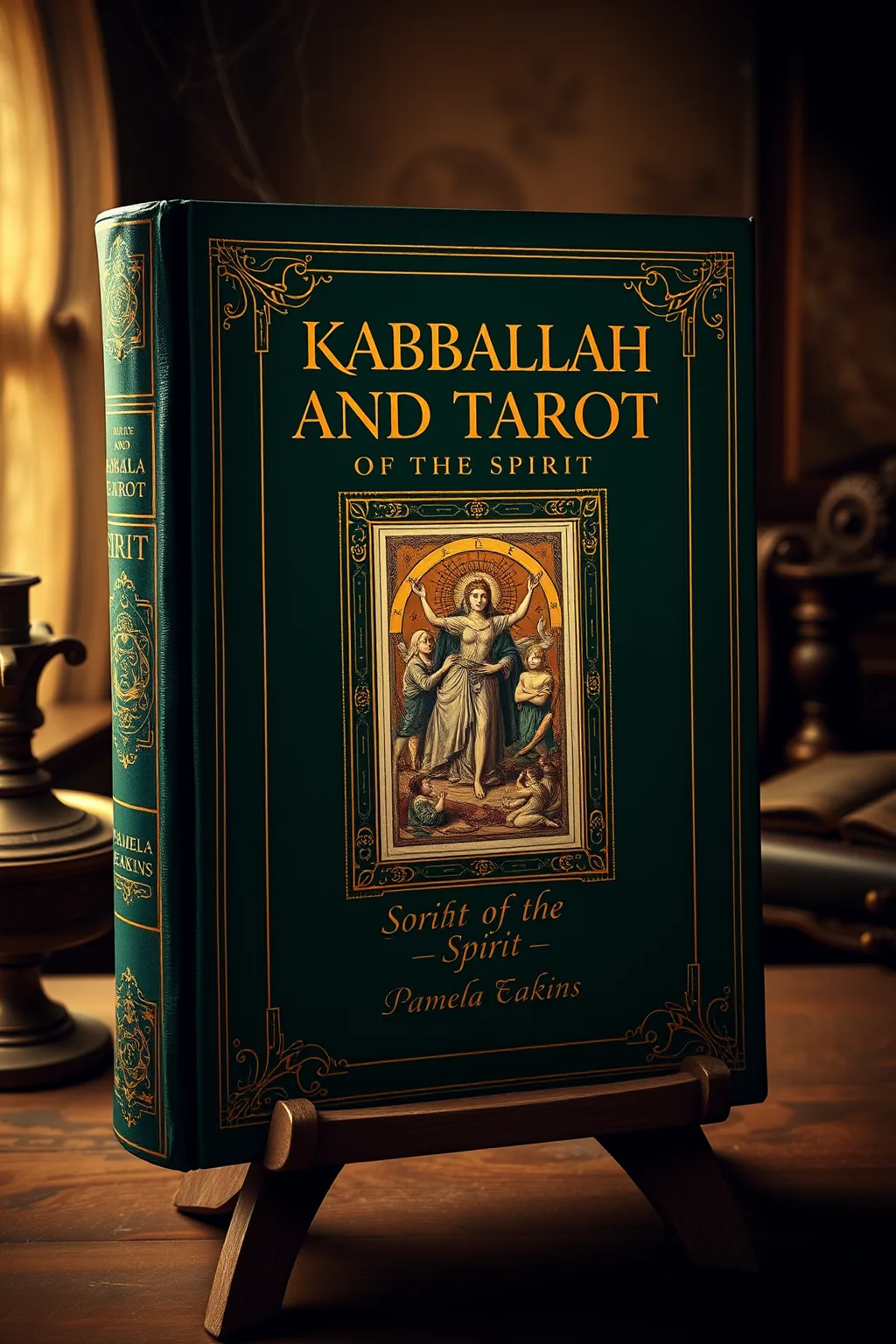
Kabbalah and Tarot of the Spirit



By Aurelia Blackwood (Occult Philosophy Critic) — Pamela Eakins' "Kabbalah and Tarot of the Spirit" is a monumental achievement, offering a deeply insightful synthesis of two foundational pillars of Western esotericism. Eakins possesses a rare gift for illuminating the intricate connections between the Kabbalistic Tree of Life and the archetypal narrative of the Tarot, revealing a unified system of spiritual intelligence. Her scholarship is both rigorous and accessible, making complex concepts remarkably clear. This work is indispensable for anyone seeking to transcend mere card reading and engage with the profound, transformative power of these ancient wisdom traditions. It is a beacon for serious practitioners and scholars alike, guiding them towards a deeper understanding of the soul's journey.
📝 Description
61
Pamela Eakins' 1999 book connects the Kabbalistic Tree of Life to the Tarot's Major and Minor Arcana.
Pamela Eakins' "Kabbalah and Tarot of the Spirit" examines the relationship between the Kabbalistic Tree of Life and the Tarot. Published in 1999, the book details how the Sephiroth and the 72 Names of God correspond with the archetypal symbolism found in the Tarot's cards. Eakins aims to show a unified structure underlying these two esoteric systems.
The work breaks down the Kabbalistic concepts like the paths on the Tree of Life and their connections to specific Tarot cards. It also discusses the numerical and symbolic correspondences. Eakins' approach is intended for readers seeking a deeper understanding of Western esoteric traditions and their practical application for personal growth.
This book sits within the Western esoteric tradition, specifically drawing on Hermeticism and Kabbalah. These traditions often seek to map divine principles and cosmic order onto human experience and symbolism. The Kabbalah, particularly the Lurianic and Hermetic variants, provides a framework of emanations (Sephiroth) and paths used for spiritual development. The Tarot, in this context, is viewed not just as a divination tool but as a symbolic language reflecting these deeper cosmic structures. Eakins' work attempts to synthesize these elements, suggesting a coherent system for understanding spiritual reality.
💡 Why Read This Book?
Uncover the profound, interwoven destinies of Kabbalah and Tarot. 'Kabbalah and Tarot of the Spirit' offers a unique lens for understanding spiritual growth, divine correspondences, and the archetypal forces shaping existence. Ideal for seekers of hidden knowledge, practitioners aiming for deeper insight, and scholars of esoteric traditions. This book provides a rare key to unlocking transformative wisdom.
⭐ Reader Reviews
Honest opinions from readers who have explored this book.
❓ Frequently Asked Questions
What is the primary connection between Kabbalah and Tarot explored in this book?
The book meticulously details how the 22 Major Arcana of the Tarot correspond to the 22 paths on the Kabbalistic Tree of Life, revealing a shared symbolic language for spiritual ascent and divine manifestation.
Is this book suitable for beginners in Tarot or Kabbalah?
While dense with information, Eakins’ clear explanations make it accessible. However, prior foundational knowledge in either system will enhance the reader's comprehension of the deeper connections presented.
How does this book differ from other Tarot or Kabbalah guides?
Its strength lies in its comprehensive synthesis, moving beyond isolated studies to present a unified esoteric framework. It emphasizes the practical application of these combined systems for spiritual development.
What practical applications can a reader expect to gain?
Readers will learn to interpret Tarot readings with greater depth by understanding their Kabbalistic underpinnings, and conversely, to see the Kabbalistic principles reflected in Tarot archetypes, fostering personal transformation.
Does the book include visual aids or diagrams?
Yes, the book typically features essential diagrams of the Tree of Life and Tarot spreads, crucial for visualizing the complex correspondences and pathways discussed.
🔮 Key Themes & Symbolism
The Symbiotic Dance of Kabbalah and Tarot
This theme studies the profound, often unseen, connections between the Kabbalistic Tree of Life and the archetypal narratives of the Tarot. Eakins illuminates how the 22 paths on the Tree of Life directly correspond to the 22 Major Arcana, creating a unified map of spiritual consciousness and divine expression. The book explores the inherent symbolism within each Sephirah and its mirrored reflection in specific Tarot cards, revealing a cohesive system for understanding creation, human nature, and the journey of the soul. This synthesis offers a richer, more layered interpretation of both traditions, highlighting their shared purpose in guiding seekers toward enlightenment.
Archetypal Journeys and Spiritual Evolution
Pamela Eakins frames the Tarot not merely as a divinatory tool but as a profound symbolic representation of the soul's evolutionary journey. Each card, particularly the Major Arcana, is presented as a stage or an archetypal challenge on the path to self-realization. When viewed through the lens of Kabbalah, this journey is further contextualized within the grand cosmic design of the Tree of Life. The book guides readers to understand how traversing these archetypal landscapes, mirrored in both Tarot and Kabbalistic concepts, facilitates personal growth, spiritual awakening, and the integration of higher consciousness into everyday life.
The Hermetic Principles of Correspondence and Unity
At the core of 'Kabbalah and Tarot of the Spirit' lies the Hermetic principle of 'As Above, So Below.' Eakins masterfully demonstrates how this fundamental axiom is embodied in the relationship between the celestial order described by the Kabbalah and the earthly manifestations represented by the Tarot. The book emphasizes the interconnectedness of all things, showcasing how the macrocosm (Kabbalah) is reflected in the microcosm (Tarot), and vice versa. This perspective encourages readers to see the divine order operating in all aspects of existence, fostering a sense of unity and a deeper appreciation for the underlying spiritual architecture of the universe.
💬 Memorable Quotes
Direct passages from the work, attributed to the author.
“The Tree of Life is the blueprint of creation.”
— This highlights the Kabbalistic concept of the Tree of Life as the fundamental structure and divine plan upon which the universe is built.
“Each path is a lesson, each card a revelation.”
— This emphasizes the dynamic and educational nature of both the Kabbalistic paths and the Tarot archetypes, promising insights and personal growth with each exploration.
“To know the Tarot is to know the self.”
— This suggests a deep, introspective connection where understanding the archetypes of the Tarot leads to a profound understanding of one's own inner landscape and potential.
“Kabbalah provides the map, the Tarot reveals the terrain.”
— This succinctly describes the synergy between the two systems, with Kabbalah offering the overarching structure and the Tarot detailing the experiential journey within that structure.
💡 Key Ideas
Editorial paraphrase of the work's core concepts — not direct quotes.
The Tarot is the visual language of the soul.
This quote captures the book's view of the Tarot as more than just cards, but as a profound symbolic system that speaks directly to our inner being and spiritual journey.
🌙 Esoteric Significance
Tradition
This book is deeply rooted in the Western Esoteric Tradition, specifically drawing from Hermeticism, Kabbalah, and the symbolic language of Tarot. It bridges the mystical dimensions of Jewish Kabbalah with the Christianized esoteric interpretations that developed within Western occultism, particularly influenced by the Hermetic Order of the Golden Dawn. The work emphasizes the interconnectedness of these streams, presenting them not as separate entities but as facets of a single, unified spiritual cosmology.
Symbolism
The core symbolism revolves around the Kabbalistic Tree of Life, with its ten Sephiroth and 22 paths, and the 78 cards of the Tarot. Eakins meticulously maps the correspondences, showing how the Hebrew letters and divine names of Kabbalah align with the archetypal imagery and narratives of the Tarot. Key symbols explored include the Fool's journey, the divine emanations, the celestial spheres, and the alchemical processes, all presented as pathways for spiritual transformation and cosmic understanding.
Modern Relevance
In an age often characterized by spiritual fragmentation, 'Kabbalah and Tarot of the Spirit' offers a powerful framework for synthesis and integration. It provides practitioners with a deeper, more philosophical understanding of Tarot readings, moving beyond simple fortune-telling to profound self-inquiry. For those drawn to Kabbalah, it offers a visual and experiential dimension through the Tarot. Its emphasis on archetypal journeys and the interconnectedness of existence remains profoundly relevant for navigating personal challenges and seeking holistic spiritual growth in the 21st century.
👥 Who Should Read This Book
This book is essential for dedicated Tarot practitioners seeking to deepen their understanding beyond mere divination and engage with the profound archetypal and spiritual underpinnings of the cards. Scholars of Western Esotericism and comparative mythology will find Eakins' synthesis of Kabbalah and Tarot to be a valuable and insightful resource. Spiritual seekers yearning for a more structured and profound exploration of consciousness and the divine will find a comprehensive roadmap. Beginners in either system may find it challenging but ultimately rewarding if approached with dedication, offering a pathway to advanced study.
📜 Historical Context
Published during a period of burgeoning interest in esoteric studies and the New Age movement, 'Kabbalah and Tarot of the Spirit' emerged as a significant contribution to the literature bridging ancient mystical traditions with contemporary spiritual seeking. The late 20th century saw a resurgence in the study of Western esotericism, with many scholars and practitioners re-examining foundational texts and seeking to synthesize disparate systems. Pamela Eakins' work resonated deeply within this milieu, offering a rigorous yet accessible exploration of the Kabbalah and Tarot. It built upon the legacy of pioneers like Eliphas Lévi and A.E. Waite, while carving out its own unique perspective on their interconnectedness, solidifying its place as a modern classic in occult philosophy.
📔 Journal Prompts
Reflect on the Major Arcana card that most speaks to your current life path. How does its Kabbalistic correspondence offer a new perspective?
Consider a recent Tarot spread you performed. How might understanding the Kabbalistic paths enhance your interpretation of the card placements?
Meditate on the concept of 'divine emanation' as described in Kabbalah. How does this concept manifest in the archetypes of the Minor Arcana?
Explore a personal challenge you are facing. Can you identify a specific Sephirah or path on the Tree of Life that relates to this challenge, and how might a corresponding Tarot card offer guidance?
Journal about the principle of 'As Above, So Below' in relation to your own daily experiences. Where do you see the macrocosm reflected in your microcosm?
🗂️ Glossary
Sephiroth
The ten divine emanations or attributes of God described in Kabbalistic cosmology, forming the structure of the Tree of Life. Each Sephirah represents a stage of creation and a facet of divine energy.
Tree of Life (Etz Chaim)
A central diagram in Kabbalah, depicting the ten Sephiroth and the 22 paths connecting them, symbolizing the structure of the universe, the divine nature, and the path of spiritual ascent.
Major Arcana
The 22 trump cards of the Tarot deck, each representing a significant archetypal force, spiritual lesson, or stage in the journey of consciousness. They are often seen as corresponding to the paths on the Kabbalistic Tree of Life.
Minor Arcana
The 56 cards of the Tarot deck, divided into four suits (Wands, Cups, Swords, Pentacles), representing the everyday experiences, challenges, and energies of life, often seen as reflecting the Sephiroth.
Archetype
A universally understood symbol, character, or pattern of behavior that is part of the collective unconscious. In Tarot and Kabbalah, archetypes represent fundamental forces and stages of existence.
This book appears in 3 collections
🔮 Readers Also Liked
Browse all →
More by Pamela Eakins
All books →
From the “Tarot” Collection
View all →
More Free Divination & Tarot Books
View all →