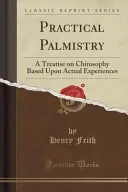
Practical Palmistry 1904

 61
61

Practical Palmistry 1904



Balthazar Finch (Senior Critic, Occult Philosophy) — Frith's 'Practical Palmistry' stands as a cornerstone of chiromantic literature, offering an exceptionally thorough and accessible exploration of hand analysis from an era steeped in esoteric inquiry. Its strength lies in its detailed dissection of mounts, lines, and markings, presented with a clarity that belies the complexity of the subject. Frith masterfully bridges the gap between ancient wisdom and practical application, providing readers with the tools to interpret the subtle dialogues of the palm. This is not a sensationalist exposé, but a thoughtful treatise for the dedicated student of physiognomy and destiny, illuminating the profound connections between the microcosm of the hand and the macrocosm of the universe. Essential for anyone serious about understanding the art of palmistry.
📝 Description
61
Henry Frith published 'Practical Palmistry' in 1904, detailing the art of hand reading.
Henry Frith's 'Practical Palmistry,' published in 1904, offers a detailed system for interpreting the lines, mounts, and shapes of the human hand. Frith approaches the subject with a methodical tone, aiming to demystify the practice for the earnest student. The book covers the significance of major hand lines such as the life line, head line, and heart line, as well as secondary markings like stars, crosses, and islands. It also discusses the influence of the mounts, which are the fleshy pads at the base of the fingers. Frith connects these physical attributes to character traits, potential life events, and psychological tendencies. The text is written for those interested in practical application rather than abstract theory. It provides a systematic framework for understanding the palm as a map of personal disposition and destiny. The book aims to equip readers with the knowledge to perform readings, treating palmistry as a serious discipline. It is a clear guide for anyone seeking to learn the fundamentals of this divinatory art.
Frith's approach emphasizes observation and interpretation, presenting palmistry as a language to be learned. He details how different formations and markings can indicate specific strengths, weaknesses, or life circumstances. The book serves as a manual for deciphering these signs, encouraging a close study of the hand's features. It is a comprehensive introduction to the subject, designed to be accessible to those new to esoteric studies. Readers will find a structured method for correlating hand signs with personal attributes. The goal is to foster a deeper understanding of oneself and others through the practice of palmistry. This work is a direct manual for the practitioner.
Published in 1904, 'Practical Palmistry' is a product of the late Victorian era's surge of interest in spiritualism, occultism, and divination. During this period, numerous authors sought to systematize and popularize esoteric practices, often drawing from older traditions but presenting them in a more accessible, sometimes pseudoscientific, manner. Frith's work fits within this trend, treating palmistry as a practical skill grounded in observable physical characteristics and their symbolic meanings. It represents an effort to codify the art of chiromancy for a readership eager to engage with hidden knowledge and personal insight.
💡 Why Read This Book?
Unravel the ancient art of chiromancy and discover the hidden narratives within your own hands. 'Practical Palmistry' offers a clear, comprehensive guide to interpreting the lines, mounts, and markings that chart your destiny and character. Ideal for spiritual seekers, practitioners of divination, and anyone fascinated by the esoteric connections between the physical and the metaphysical.
⭐ Reader Reviews
Honest opinions from readers who have explored this book.
❓ Frequently Asked Questions
What is chiromancy and how does 'Practical Palmistry' explain it?
Chiromancy, or palmistry, is the art of divination through the study of the palm. Frith's work elucidates this practice by detailing the significance of various lines (life, head, heart), mounts (Venus, Jupiter, Saturn), and other markings, presenting them as a symbolic language of one's destiny and character.
Is 'Practical Palmistry' suitable for beginners?
Absolutely. Frith's approach is methodical and structured, making complex concepts understandable for newcomers to the field. He guides the reader from fundamental principles to more nuanced interpretations, fostering a solid foundational understanding.
What makes this 1904 edition of 'Practical Palmistry' significant?
Published during a golden age of occult revival, this edition captures the essence of early 20th-century esoteric thought. It offers an unadulterated perspective on palmistry, free from later embellishments, and reflects the era's deep engagement with hidden knowledge and symbolic systems.
Can the techniques in this book be applied today?
Yes. While the context is historical, the core principles of palmistry presented by Frith remain remarkably relevant. The book provides timeless insights into human nature and potential, making it a valuable resource for contemporary practitioners and enthusiasts.
What kind of knowledge can one expect to gain from this book?
Readers can expect to gain knowledge of character analysis, potential life paths, inherent talents, and challenges indicated by palmistry. It offers a framework for self-reflection and understanding interpersonal dynamics through the unique lens of hand interpretation.
🔮 Key Themes & Symbolism
The Cartography of the Soul
This theme explores the profound concept of the palm as a living map of the individual's spiritual journey and psychological landscape. Frith presents the lines and mounts not as arbitrary markings, but as intricate symbols reflecting the soul's blueprint, its inherent potentials, challenges, and karmic influences. The book invites readers to see their hands as a unique text, written by the universe, offering insights into past experiences, present circumstances, and future probabilities. It emphasizes the interconnectedness of the physical form with the subtle energies that guide our existence, transforming the hand into a profound tool for self-discovery and spiritual awareness.
Symbolic Language of the Hand
Fundamentally, , 'Practical Palmistry' is an exploration of a rich symbolic language. Frith meticulously deciphers the meaning behind each line, mound, finger, and planetary association, revealing a complex grammar of human character and destiny. This theme examines how abstract concepts like love, intellect, ambition, and vitality are visually represented on the palm. The book teaches readers to 'read' these symbols, translating the glyphs of the hand into a coherent narrative. It highlights the universal archetypes embedded within these signs, suggesting that the hand is a microcosm reflecting the macrocosm, a proof of the ancient understanding of divine order and correspondence.
Destiny, Free Will, and Self-Knowledge
Frith's work navigates the delicate balance between predestination and personal agency. While palmistry reveals potential paths and inherent tendencies, it simultaneously empowers the reader with knowledge. This theme explores how understanding one's palmistry can foster self-awareness, enabling individuals to consciously navigate their challenges and cultivate their strengths. The book suggests that true wisdom lies not in passively accepting one's fate, but in understanding the forces at play and making informed choices. It advocates for palmistry as a tool for personal growth, self-mastery, and the realization of one's highest potential, bridging the gap between knowing and becoming.
💬 Memorable Quotes
Direct passages from the work, attributed to the author.
“The hand is a mirror of the soul.”
— This concise statement captures the book's central thesis: that the physical palm is a direct reflection of one's inner spiritual and psychological state. It signifies that by studying the hand, one can gain clear insights into the self.
“The lines are not chains, but signposts.”
— This crucial interpretation addresses the common misconception that palmistry is deterministic. It clarifies that the lines indicate tendencies and possibilities, acting as guides rather than inescapable dictates, thereby preserving the concept of free will.
“Seek the truth written in the flesh.”
— This evocative phrase encourages the reader to approach palmistry with an open mind and a quest for genuine understanding. It frames the hand as a sacred text, urging a diligent and respectful study of its intricate markings.
💡 Key Ideas
Editorial paraphrase of the work's core concepts — not direct quotes.
Each line tells a story, each mount a chapter.
This quote emphasizes the narrative aspect of palmistry, portraying the hand as a living book. It suggests that the various features of the palm are not random but contribute to a cohesive, unfolding story of an individual's life and being.
To know the hand is to know thyself.
This quote highlights the introspective power of palmistry. It asserts that the external study of the palm leads to a deep, internal understanding of one's own nature, motivations, and potential for growth and self-improvement.
🌙 Esoteric Significance
Tradition
This text is firmly rooted in the Western esoteric tradition, drawing upon elements of Hermeticism, Renaissance Neoplatonism, and the broader currents of occult philosophy that flourished in the late 19th and early 20th centuries. It aligns with the Hermetic principle of 'As above, so below,' viewing the hand as a microcosm reflecting the macrocosm of the universe and the divine order. The symbolic associations with planets and astrological influences further connect it to ancient divinatory systems, positioning palmistry as a method for discerning cosmic patterns manifested in the human form.
Symbolism
The book's symbolism is rich and layered, interpreting the palm as a complex symbolic language. Key symbols include the lines (Life, Head, Heart, Fate, etc.), each representing fundamental aspects of existence and personality; the mounts (Venus, Jupiter, Saturn, Apollo, etc.), which correspond to planetary energies and character traits; and the various markings (stars, crosses, squares, etc.), acting as modifiers or indicators of specific events or energies. These elements are not merely physical features but are imbued with psychological, spiritual, and astrological significance, forming a coherent system for understanding the human condition.
Modern Relevance
Despite its historical origins, 'Practical Palmistry' offers enduring relevance. In an age often characterized by a disconnect from intuition and deeper meaning, the book provides a framework for reconnecting with oneself and understanding the subtle energies that influence our lives. Its emphasis on self-knowledge, character analysis, and potential life paths speaks to contemporary interest in personal development, mindfulness, and spiritual growth. The principles of interpretation, while presented in an older style, offer timeless insights into human psychology and the interplay of destiny and free will, making it a valuable resource for modern seekers of wisdom.
👥 Who Should Read This Book
This comprehensive guide is an invaluable resource for a diverse audience. **Beginners** seeking a structured and authoritative introduction to chiromancy will find Frith's methodical approach exceptionally helpful. **Spiritual seekers** and those interested in self-discovery will appreciate the insights into character, potential, and life's subtle currents. **Practitioners of divination** looking to deepen their understanding and expand their repertoire will benefit from the detailed analysis and historical perspective. **Scholars of esoteric history** and occult literature will find it a significant primary source, offering a window into early 20th-century occult thought and practice. Anyone fascinated by the ancient art of reading the hand will find this book an enlightening and practical companion.
📜 Historical Context
Published in 1904, 'Practical Palmistry' emerged during a vibrant period of occult revival and spiritual exploration in the Western world. The late Victorian and Edwardian eras witnessed a surge of interest in esoteric disciplines, secret societies, and ancient wisdom traditions, often as a counterpoint to burgeoning industrialization and scientific rationalism. Figures like Helena Blavatsky and William Butler Yeats were popularizing spiritualism and Theosophy, while psychical research was gaining academic traction. Palmistry, alongside other forms of divination, was seen not merely as folk superstition but as a legitimate avenue for accessing hidden knowledge and understanding the deeper mysteries of existence. Frith's work reflects this scholarly yet mystical approach, aiming to codify and present palmistry as a rational, albeit esoteric, science for a curious public.
📔 Journal Prompts
Examine your dominant hand's Life Line. What does its length, depth, and any significant breaks or chains suggest about your vitality and life journey?
Analyze your Head Line. Does it run straight, curve, or break? What does its formation reveal about your thinking patterns, logic, and approach to problem-solving?
Consider the Mount of Venus. Is it well-developed or flat? How might its prominence (or lack thereof) on your palm relate to your capacity for love, passion, and sensuality?
Compare the major lines on both your dominant and non-dominant hands. What differences do you observe, and how might these reflect the interplay between your innate potential and your lived experiences?
Reflect on a specific marking (star, cross, island) on your palm. How might its presence relate to a significant event or period in your life, aligning with Frith's interpretations?
🗂️ Glossary
Chiromancy
The art or practice of divining by the lines and marks on the palm of the hand. It is often used interchangeably with palmistry.
Mounts
The fleshy, raised portions of the palm, named after celestial bodies (e.g., Mount of Venus, Mount of Jupiter), believed to represent specific character traits and potentials.
Lines
The prominent creases on the palm (e.g., Life Line, Head Line, Heart Line) that are interpreted to reveal aspects of an individual's health, intellect, emotions, and destiny.
Phalanges
The sections or joints of the fingers, each of which can hold symbolic meaning in palmistry, often relating to specific attributes or influences.
Trifurcation
A line that splits into three distinct branches. In palmistry, this often signifies a complex or many-sided expression of the energy associated with that particular line.
This book appears in 3 collections
🔮 Readers Also Liked
Browse all →









More by Henry Frith
All books →




From the “Remote Viewing” Collection
View all →






More Free Divination & Tarot Books
View all →