I Ching Companion
 61
61

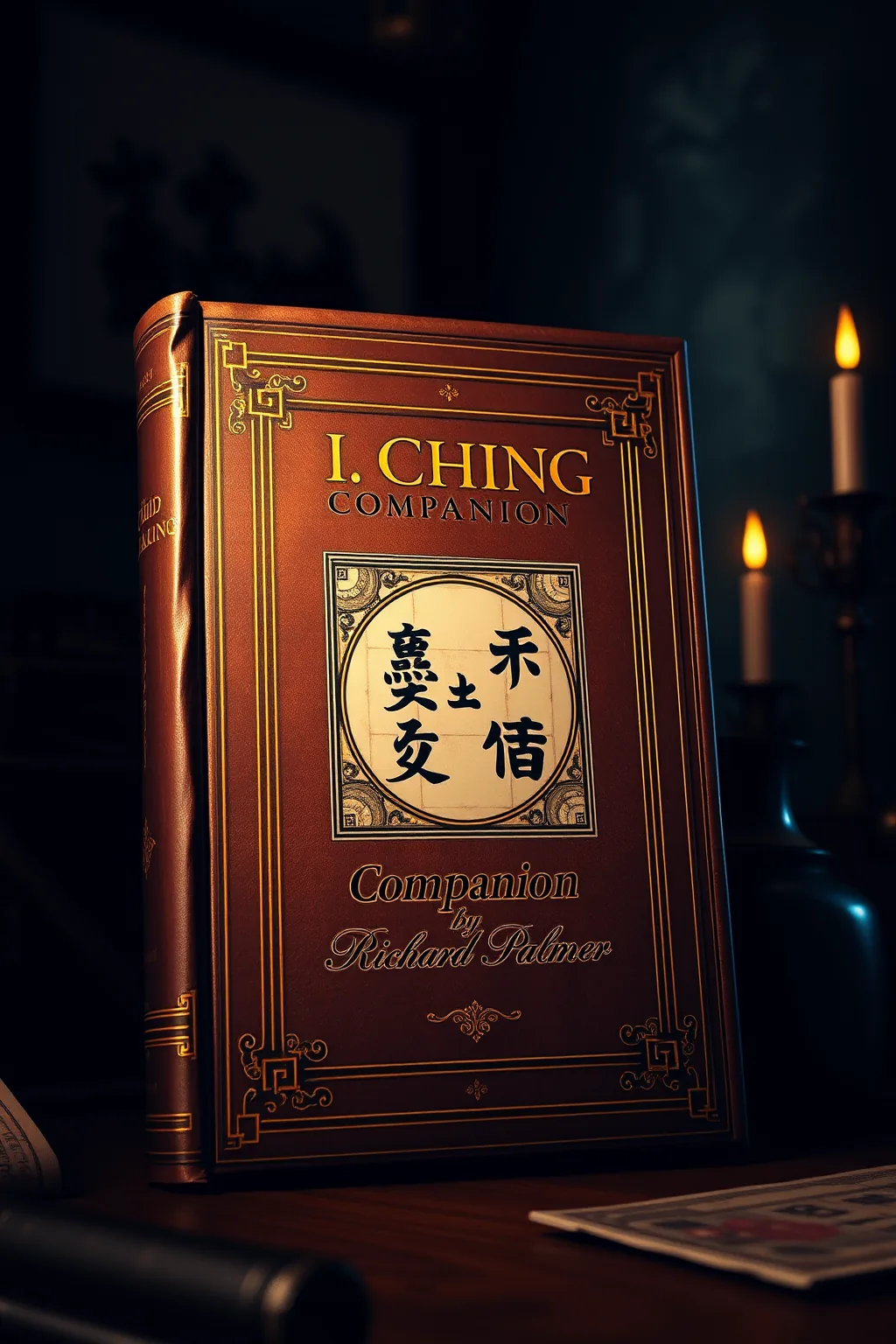
I Ching Companion



Richard Palmer's "I Ching Companion" is an indispensable addition to any serious practitioner's library. With eloquent prose and deep scholarly insight, Palmer illuminates the profound philosophical underpinnings and esoteric symbolism of the *Book of Changes*. This is not a superficial introduction; it is a guide for those who seek to truly engage with the I Ching's transformative power. Palmer's strengths lie in his ability to bridge the gap between ancient wisdom and contemporary understanding, making the complex accessible without sacrificing its inherent mystery. It is ideal for practitioners, scholars, and anyone fascinated by the intricate dance of fate and free will.
📝 Description
61
Richard Palmer's "I Ching Companion" (1996) decodes the *Book of Changes* for modern readers.
Richard Palmer's "I Ching Companion" provides a detailed look at the *I Ching*, also known as the *Book of Changes*. Published in 1996, the book aims to make the complex system of hexagrams and their meanings accessible. Palmer focuses on the structure and interpretation of the *I Ching*'s sixty-four hexagrams, along with the smaller units called trigrams, explaining how they combine and change. The work is presented not just as a translation but as a guide to understanding the underlying principles of cosmic order and human fate that the text represents.
Palmer's approach encourages contemplation and aims to help earnest students grasp the subtle patterns of destiny and the cyclical nature of existence. The book emphasizes the symbolic language of the *I Ching* as a tool for self-discovery and spiritual awareness. It seeks to create an atmosphere conducive to introspection, where the boundaries between the ordinary and the mystical may seem to lessen, revealing deeper insights.
The *I Ching* is a foundational text in Chinese philosophy and divination, dating back over 2,500 years. Its system of sixty-four hexagrams, derived from combinations of eight trigrams, has been used for centuries as a tool for understanding change, making decisions, and contemplating the patterns of the universe. Within esoteric traditions, it is seen as a map of cosmic principles and a guide for aligning human actions with natural forces. Palmer's companion situates this ancient oracle within a modern context, aiming to unlock its interpretive depth for those interested in its philosophical and divinatory applications.
💡 Why Read This Book?
Unravel the timeless wisdom of the *Book of Changes* with an expert guide. This companion offers deep dives into the symbolic language of the I Ching, fostering profound self-reflection and spiritual growth. Ideal for seekers, scholars, and practitioners of divination, it provides the keys to understanding cosmic patterns and navigating life's intricate pathways with newfound clarity and insight.
⭐ Reader Reviews
Honest opinions from readers who have explored this book.
❓ Frequently Asked Questions
What is the I Ching?
The I Ching, or *Book of Changes*, is an ancient Chinese divination text and philosophical classic, revered for its profound insights into the cycles of nature, human relationships, and the unfolding of destiny. It uses a system of 64 hexagrams to represent fundamental archetypes and situations.
Who is Richard Palmer?
Richard Palmer is a respected scholar and author in the field of esoteric studies, known for his insightful and accessible interpretations of ancient mystical traditions, particularly the I Ching.
What is a hexagram?
A hexagram is a figure composed of six stacked horizontal lines, where each line can be either yang (solid) or yin (broken). The 64 unique combinations of these lines form the core of the I Ching's divinatory and philosophical system.
How can the I Ching be used for divination?
The I Ching is consulted by posing a question and then generating a hexagram, typically through coin tossing or yarrow stalks. The resulting hexagram, along with its changing lines, is then interpreted to offer guidance and insight into the question.
Is this book suitable for beginners?
Yes, while offering depth for experienced practitioners, "I Ching Companion" is structured to be accessible to newcomers, providing clear explanations and a supportive framework for understanding this ancient system of wisdom.
🔮 Key Themes & Symbolism
The Harmony of Opposites
This theme explores the fundamental principle of yin and yang within the I Ching, illustrating how seemingly opposing forces are not in conflict but are in fact interdependent and complementary. The text looks at how their dynamic interplay creates the constant flux and transformation that defines existence, from the cosmic dance of celestial bodies to the subtle shifts in human consciousness. Understanding this balance is key to achieving equilibrium and reading through the inherent dualities of life with wisdom and grace.
The Unfolding of Destiny
The I Ching Companion illuminates the concept of destiny not as a fixed, predetermined fate, but as a flowing river of potential influenced by action and awareness. Palmer guides readers through the hexagrams as archetypal stages in this journey, revealing how choices made in the present moment shape the unfolding of future possibilities. It emphasizes the importance of aligning oneself with natural cosmic rhythms to manifest positive outcomes and understand the karmic threads that tie through our lives.
Symbolic Language of the Cosmos
Fundamentally, the I Ching is a profound system of symbolic language that mirrors the underlying order of the universe. This theme examines how the trigrams and hexagrams are not arbitrary symbols but potent representations of fundamental natural phenomena and human archetypes. Palmer reveals how these symbols act as a universal lexicon, offering insights into the forces at play in any given situation and providing a framework for understanding the interconnectedness of all things within the grand cosmic design.
💬 Memorable Quotes
Direct passages from the work, attributed to the author.
“In stillness, the deepest truths are revealed.”
— This highlights the contemplative aspect of I Ching practice, suggesting that true understanding comes from quiet introspection and receptivity to subtle guidance.
“Seek not to control fate, but to understand its currents.”
— This emphasizes a proactive yet respectful approach to destiny, advocating for wisdom and insight over forceful manipulation.
💡 Key Ideas
Editorial paraphrase of the work's core concepts — not direct quotes.
The past is a shadow, the future a dream, but the present is a gift.
This quote emphasizes the I Ching's focus on the immediate moment as the locus of power and transformation, encouraging mindful engagement with the 'now'.
Change is the only constant; embrace its flow.
A core tenet of the I Ching, this quote encourages acceptance and adaptation to life's inevitable shifts, seeing them as opportunities for growth.
The wise man observes the patterns, the fool fights against them.
This quote speaks to the value of understanding cosmic and personal cycles, suggesting that alignment with these patterns leads to harmony and success.
🌙 Esoteric Significance
Tradition
The I Ching belongs to the profound lineage of Chinese metaphysical thought, deeply intertwined with Taoism and ancient shamanic practices. It is considered a foundational text for understanding the principles of *qi* (life force), the cyclical nature of existence, and the interconnectedness of the human realm with the cosmic order. Its esoteric significance lies in its ability to act as a living oracle, offering guidance that transcends mere prediction, fostering spiritual discernment and alignment with universal laws.
Symbolism
The I Ching's symbolism is rich and many-sided, primarily revolving around the 64 hexagrams, each composed of six yin (broken) or yang (solid) lines. These hexagrams represent archetypal situations, forces, and transformations. The trigrams, three-line combinations, symbolize fundamental elements like Heaven, Earth, Fire, Water, Mountain, Lake, Thunder, and Wind. The dynamic interplay between these symbols, their changing lines, and associated judgments offers a profound symbolic language for interpreting the subtle energies and patterns governing all phenomena.
Modern Relevance
In the modern era, the I Ching continues to offer a powerful framework for navigating complexity and uncertainty. Its emphasis on cyclical change, balance, and mindful action resonates deeply with contemporary challenges. Esoteric practitioners find it an invaluable tool for self-reflection, decision-making, and spiritual development. Psychologically, Carl Jung recognized its archetypal patterns, linking it to the collective unconscious. The I Ching provides a timeless perspective that encourages adaptability, wisdom, and a deeper understanding of one's place within the grand cosmic dance.
👥 Who Should Read This Book
This comprehensive companion is a vital resource for a diverse readership. For the **beginner**, it offers a clear and accessible entry point into the profound world of the I Ching, explaining its core concepts and practices. **Scholars** of Eastern philosophy and esoteric traditions will appreciate the meticulous detail and insightful interpretations that deepen their understanding. **Spiritual seekers** will find it an invaluable tool for self-discovery, divination, and aligning their lives with universal principles. **Practitioners of divination**, including those interested in Tarot, astrology, or other symbolic systems, will find the I Ching's unique approach to guidance and insight to be a powerful complement to their existing practices.
📜 Historical Context
The I Ching, or *Book of Changes*, emerged from the crucible of ancient Chinese civilization, with its origins stretching back to the Shang Dynasty (c. 1600–1046 BCE). Initially a divinatory tool used by rulers and shamans, it gradually evolved into a profound philosophical and cosmological text, deeply influencing Confucianism, Taoism, and later, esoteric traditions worldwide. During the Zhou Dynasty (c. 1046–256 BCE), King Wen and his son the Duke of Zhou are credited with significant additions, including the judgment texts for each hexagram. Confucius and his disciples further elaborated on its philosophical meanings, imbuing it with ethical and moral dimensions. The Han Dynasty (206 BCE–220 CE) saw the I Ching firmly established as one of the Five Classics of Chinese literature. Its influence later spread to East Asia and eventually to the West, where it captivated scholars, mystics, and psychologists like Carl Jung, who recognized its profound archetypal significance.
📔 Journal Prompts
Reflect on a recent challenge: which hexagrams from the I Ching might best represent the situation and its potential outcomes?
Consider a recurring pattern in your life. How does the concept of 'change' as presented in the I Ching apply to this pattern?
Meditate on the symbolism of a specific hexagram that speaks to you today. What personal insights does it offer about your current path?
If you were to consult the I Ching for guidance on a major life decision, what question would you pose, and what would be your initial interpretation of a potential answer?
Explore the relationship between 'action' and 'destiny' as depicted in the I Ching. How can you consciously influence your path while respecting natural flows?
🗂️ Glossary
Hexagram
A fundamental symbol in the I Ching, composed of six stacked lines, each of which can be either yin (broken) or yang (solid). There are 64 unique hexagrams, representing archetypal situations and transformations.
Trigram
A basic symbol of the I Ching, consisting of three stacked lines (yin or yang). The eight trigrams represent fundamental elements and forces of nature, such as Heaven, Earth, Fire, and Water.
Yin
Represented by a broken line (-- --), yin symbolizes the feminine, passive, receptive, dark, and yielding aspects of existence. It is complementary to yang.
Yang
Represented by a solid line (---), yang symbolizes the masculine, active, creative, bright, and assertive aspects of existence. It is complementary to yin.
Judgment
A brief text associated with each hexagram in the I Ching, offering advice, interpretation, and commentary on the situation represented by the hexagram.
This book appears in 3 collections
🔮 Readers Also Liked
Browse all →








From the “Tarot” Collection
View all →





![The New-England primre [sic] improved.](/img/thumb/the-new-england-primre-sic-improved.webp)



More Free Divination & Tarot Books
View all →