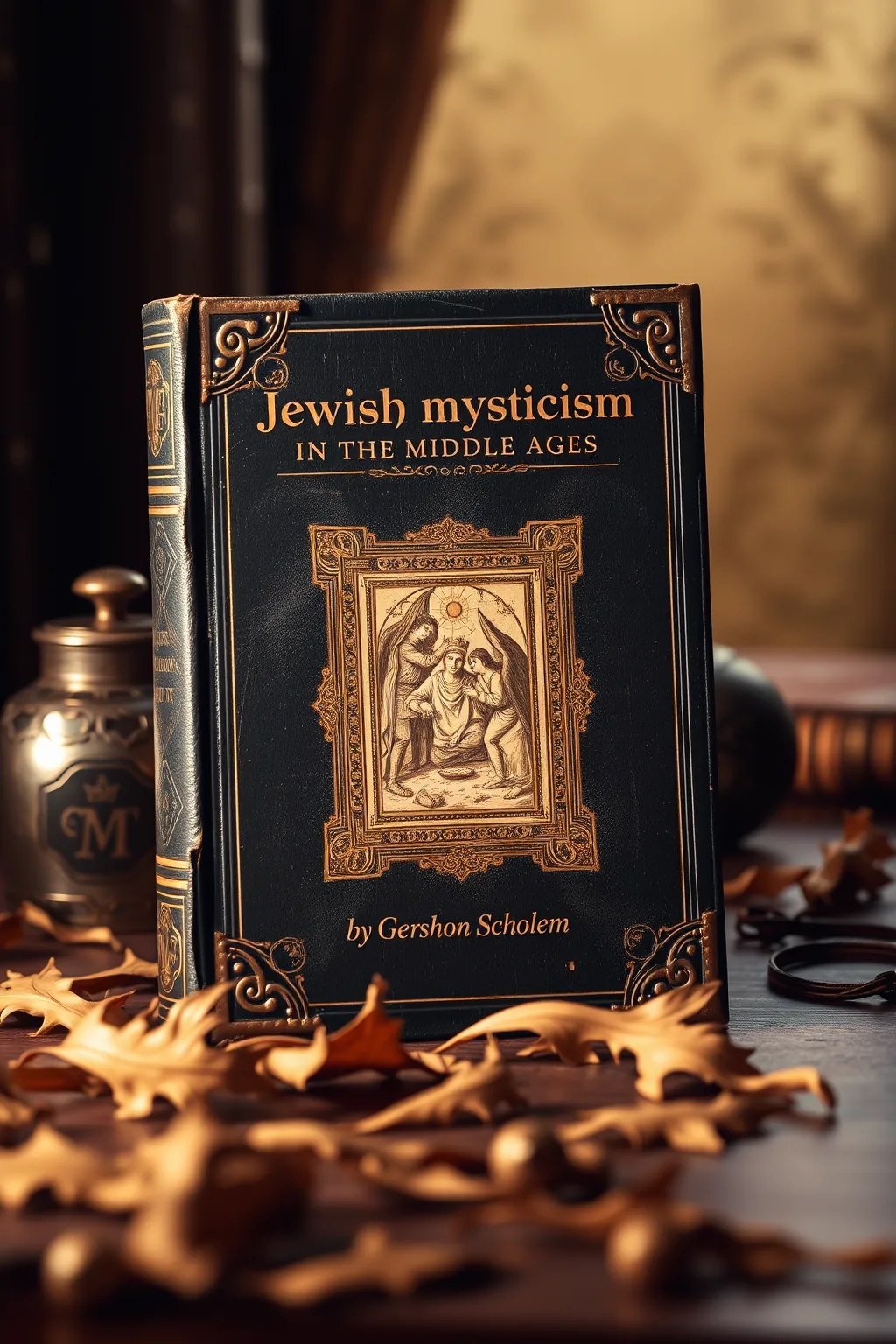
Jewish mysticism in the Middle Ages
 61
61

Jewish mysticism in the Middle Ages



Silas Hawthorne (Hermetic Studies Editor) — Gershon Scholem's "Jewish Mysticism in the Middle Ages" remains an unparalleled beacon for anyone navigating the labyrinthine pathways of Kabbalah. Scholem's erudition shines, offering crystal-clear exposition of complex doctrines, from the enigmatic Sephirot to the mystical significance of Hebrew letters. He breathes life into ancient texts, revealing the profound contemplative and ecstatic dimensions of Jewish spiritual life. This is not merely historical recounting; it is an invitation to engage with a living tradition of profound esoteric insight. Essential for scholars, but equally illuminating for serious seekers yearning for a deeper understanding of the soul's journey and the hidden architecture of reality.
📝 Description
61
Gershon Scholem's 1965 book deciphers the core concepts of medieval Jewish mysticism.
Gershon Scholem's study examines the development of Jewish mysticism in the Middle Ages, focusing on the Kabbalah. He analyzes the symbolic language, cosmologies, and practices that shaped this tradition. The book details concepts such as divine emanations, the soul's ascent, and interpretations of sacred texts.
Scholem demonstrates how Kabbalah reinterpreted Jewish tradition, influencing metaphysical thought and spiritual practice during the medieval period. This work provides a detailed account of a spiritual tradition that sought direct experience of the divine. It is a significant resource for understanding the history of Jewish esoteric thought.
Jewish mysticism, particularly the Kabbalah, represents a significant strain within esoteric traditions that seek direct, often ecstatic, experience of the divine. It developed complex symbolic systems and metaphysical frameworks to understand creation, God's nature, and the human soul's relationship to the divine. Scholem's work places this medieval Jewish phenomenon within a broader context of mystical inquiry, showing its unique historical development and its engagement with Jewish scripture and law.
💡 Why Read This Book?
Unravel the ancient secrets of Kabbalah, the mystical heart of Judaism. This book offers profound insights into divine symbolism, spiritual ascent, and the hidden language of the cosmos. Ideal for seekers of esoteric wisdom, scholars of comparative religion, and practitioners interested in the roots of contemplative traditions. Discover a powerful lens through which to view the human experience and the divine.
⭐ Reader Reviews
Honest opinions from readers who have explored this book.
❓ Frequently Asked Questions
What is Kabbalah?
Kabbalah is the esoteric tradition of Jewish mysticism, seeking to understand the nature of God, the universe, and humanity's place within it through symbolic interpretation and contemplative practice, particularly focusing on divine emanations and hidden meanings in scripture.
Who was Gershon Scholem?
Gershon Scholem (1897-1982) was a pioneering historian of Jewish mysticism, widely regarded as the foremost scholar of Kabbalah. His groundbreaking work revolutionized the academic study of this complex and often misunderstood tradition.
What are the Sephirot?
The Sephirot (emanations) are ten divine attributes or vessels through which God manifests in the created universe. They form a central concept in Kabbalistic cosmology, representing stages of divine unfolding and pathways for spiritual connection.
Is this book suitable for beginners?
While dense with information, Scholem's work is foundational. Beginners seeking a serious introduction to Kabbalah will find it invaluable, though a willingness to engage with complex philosophical and theological concepts is recommended.
What is the historical period covered?
The book primarily focuses on the development and flourishing of Jewish mysticism during the Middle Ages, a period marked by the emergence of key Kabbalistic texts and movements in regions like Spain and Provence.
🔮 Key Themes & Symbolism
The Divine Emanations (Sephirot)
This theme examines the Kabbalistic concept of the Sephirot, the ten divine attributes or vessels through which the Infinite Ein Sof manifests and interacts with creation. Scholem meticulously dissects their symbolic meanings, their interconnectedness, and their role in the cosmic drama of divine revelation and the soul's journey. Understanding the Sephirot is crucial for grasping the Kabbalistic worldview, which posits a structured yet dynamic divine presence permeating all existence, offering pathways for human consciousness to ascend towards the divine source.
The Ascent of the Soul
Central to medieval Jewish mysticism is the concept of the soul's journey and its potential for ecstatic union with the Divine. Scholem illuminates the various techniques, meditations, and contemplative practices employed by mystics to achieve this transcendence. He explores the symbolic landscapes of the divine realms, the challenges and transformations faced by the soul, and the ultimate goal of achieving a profound, albeit often ineffable, connection with the Godhead. This theme highlights the intensely personal and experiential nature of Kabbalistic practice.
Symbolic Interpretation of Scripture
Scholem demonstrates how Kabbalists viewed the Torah not merely as a historical or legal text, but as a living, breathing repository of divine secrets, encoded with layers of mystical meaning. This theme explores the methods of gematria, notarikon, and temurah – techniques used to uncover hidden messages within the Hebrew alphabet and biblical narratives. By reinterpreting biblical stories and commandments through a mystical lens, Kabbalists sought to reveal the underlying divine structure of reality and the path to spiritual redemption.
💬 Memorable Quotes
Direct passages from the work, attributed to the author.
“God is one, but His manifestations are many.”
— This concise statement expresses the Kabbalistic understanding of divine unity (Ein Sof) expressed through the multiplicity of the Sephirot, bridging the infinite with the finite world.
“Mysticism is the art of approaching the divine without intermediaries.”
— This highlights the direct, experiential nature of mystical pursuit, stressing the individual's quest for immediate communion with the divine presence.
“The world is a garment of God, woven with threads of light and shadow.”
— This evocative metaphor suggests that the material world is a divine creation, imbued with divine essence, yet also containing dualities that mystics seek to understand and reconcile.
💡 Key Ideas
Editorial paraphrase of the work's core concepts — not direct quotes.
The Torah is a divine tree of life, its roots hidden in the heavens.
This quote emphasizes the sacred and transcendent nature of the Torah, portraying it as a conduit to divine wisdom and a reflection of heavenly order.
To know God is to know oneself, for the microcosm reflects the macrocosm.
This quote points to the Hermetic principle of 'as above, so below,' emphasizing the interconnectedness of the individual soul and the divine universe, and the path to self-discovery through spiritual exploration.
🌙 Esoteric Significance
Tradition
This book is a starting point for understanding Kabbalah, the primary esoteric tradition within Judaism. Kabbalah offers a profound system of spiritual philosophy and practice aimed at comprehending the nature of God, the universe, and the human soul through symbolic interpretation, meditation, and ecstatic experience. It provides a framework for understanding divine emanations, the structure of reality, and the pathways for spiritual ascent and redemption.
Symbolism
The esoteric significance lies deeply within its strong symbolism. Key symbols include the Sephirot (divine attributes), the Tree of Life (a cosmic map), the Hebrew alphabet (a divine code), and the divine names. These symbols are not mere representations but active conduits of divine energy and meaning, used by mystics to visualize, contemplate, and connect with transcendent realities, unlocking hidden layers of spiritual insight.
Modern Relevance
Despite its medieval origins, Kabbalah continues to resonate profoundly today. Scholem's work makes these ancient teachings accessible, offering modern readers useful insights into consciousness, the nature of reality, and the human search for meaning. Its emphasis on interconnectedness, spiritual transformation, and the hidden potential within the individual speaks directly to contemporary spiritual seekers and those interested in the deeper philosophical underpinnings of existence.
👥 Who Should Read This Book
This key work is essential for scholars of religion, Jewish studies, and comparative mysticism. Aspiring Kabbalists and serious spiritual seekers will find it an indispensable guide to the foundational concepts and historical development of Jewish mysticism. Practitioners of contemplative disciplines seeking to deepen their understanding of esoteric traditions will benefit immensely. Even those new to the subject but possessing intellectual curiosity will find Scholem's clear exposition a compelling entry point into the profound world of Kabbalah.
📜 Historical Context
The Middle Ages, particularly from the 12th to the 15th centuries, was a fertile ground for the development of Jewish mysticism. This era witnessed significant social, intellectual, and spiritual shifts within Jewish communities across Europe and the Middle East. The expulsion from Spain in 1492, a key event, intensified introspective and mystical currents as communities grappled with trauma and sought solace and meaning in esoteric traditions. Scholem's work situates Kabbalah within this dynamic historical landscape, demonstrating how it emerged as a response to philosophical challenges, a quest for deeper spiritual connection, and a means of preserving Jewish identity and tradition in the face of external pressures and internal theological debates. The emergence of foundational texts like the Zohar during this period underscores its lasting impact.
📔 Journal Prompts
Reflect on a time you felt a profound sense of interconnectedness. How might this relate to Kabbalistic ideas of divine unity?
Consider the concept of 'divine emanations.' How might understanding these 'attributes' change your perception of the divine and the world?
Explore the idea of a 'hidden language' within sacred texts. What personal texts or symbols hold deep, perhaps unspoken, meaning for you?
What does the 'ascent of the soul' mean to you on a personal level? What are the obstacles and what are the aids on this inner journey?
How can the understanding of duality (light and shadow) in mystical traditions help navigate challenges in your own life?
🗂️ Glossary
Kabbalah
The esoteric tradition of Jewish mysticism, focused on understanding the divine nature, creation, and the path to spiritual enlightenment through symbolic interpretation and contemplative practices.
Ein Sof
The Kabbalistic concept of the Infinite, the unknowable, transcendent Godhead that exists beyond all comprehension or description, the ultimate source of all existence.
Sephirah (plural: Sephirot)
One of ten divine attributes or emanations through which the Infinite God manifests and interacts with the created universe, forming the structure of the Kabbalistic Tree of Life.
Gematria
A method of Kabbalistic interpretation that assigns numerical values to Hebrew letters to find hidden meanings and connections between words and concepts in sacred texts.
Zohar
The foundational text of Kabbalah, a mystical commentary on the Torah, known for its strong symbolism, complex cosmology, and profound theological insights.
This book appears in 1 collection
🔮 Readers Also Liked
Browse all →









More by Gershon Scholem
All books →




From the “Kabbalah” Collection
View all →






More Free Kabbalah & Jewish Mysticism Books
View all →