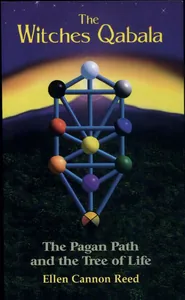
Kabbalah

 61
61

Kabbalah

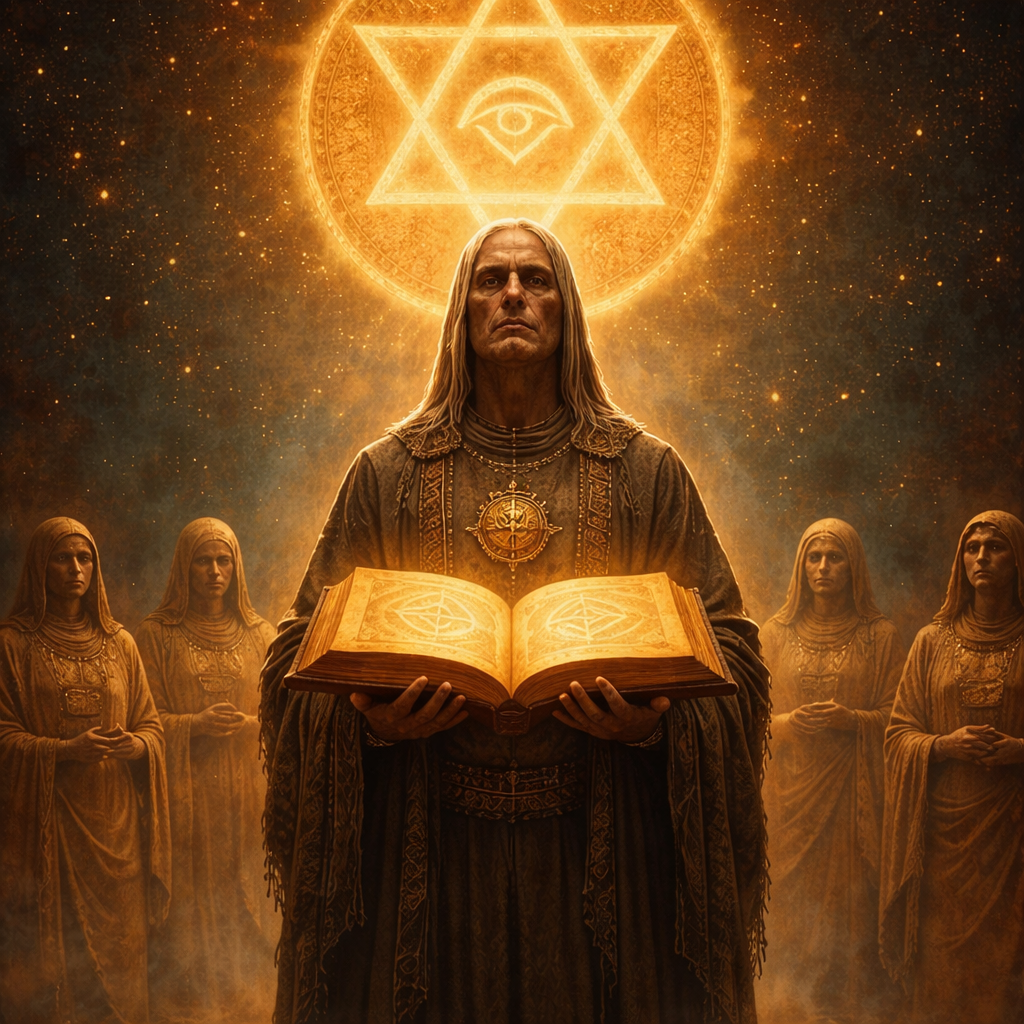

Sophia Crane, Associate Editor: Jeremiah Genest's 'Kabbalah' is a profound and illuminating exploration of one of the most ancient and revered mystical traditions. Genest's erudition shines through his meticulous exposition of core Kabbalistic concepts, from the enigmatic Ein Sof to the practical application of meditative techniques. He navigates the complex symbolism with clarity and grace, making this dense subject accessible without sacrificing its inherent depth. The book serves as an indispensable guide for those seeking to grasp the esoteric architecture of reality and the soul's journey toward the Divine. Highly recommended for practitioners and scholars alike, offering both intellectual rigor and spiritual inspiration.
📝 Description
61
Jeremiah Genest's 2019 book examines Kabbalah's historical development and core concepts.
Jeremiah Genest’s study of Kabbalah offers a clear exposition of Jewish mysticism's key ideas. The author details the symbolic structure of the Tree of Life, explaining the ten Sephirot and their roles in divine emanation and creation. Genest also traces the philosophical roots of Kabbalistic thought, showing how these ideas were understood and applied by mystics throughout history.
The book discusses concepts such as the divine name, the nature of the soul, and the methods used for spiritual ascent. It aims to make these complex teachings accessible to those interested in esoteric traditions and the deeper aspects of religious experience. The work addresses both the theoretical frameworks and the practical applications of Kabbalah, seeking to illuminate its relevance for contemporary spiritual seekers.
Kabbalah, a system of Jewish mysticism, emerged in medieval Provence and Spain. It interprets the Hebrew Bible and rabbinic literature through esoteric symbolism, aiming to understand God's relationship with the created world. Key texts like the Zohar and later Lurianic Kabbalah developed complex cosmologies, including divine emanations (Sephirot) and the process of cosmic repair (Tikkun). This tradition has influenced various esoteric movements globally, often focusing on spiritual transformation and direct experience of the divine.
💡 Why Read This Book?
This book offers a profound gateway into the heart of Jewish mysticism, unveiling ancient secrets of creation, consciousness, and divine connection. Ideal for seekers of hidden knowledge, spiritual practitioners, and academic scholars, 'Kabbalah' provides a clear, yet deeply profound, exploration of esoteric principles. Uncover the symbolic language of the universe and deepen your spiritual understanding.
⭐ Reader Reviews
Honest opinions from readers who have explored this book.
❓ Frequently Asked Questions
What is the primary focus of Kabbalah?
Kabbalah primarily focuses on the mystical interpretation of the Torah and the nature of God, exploring the divine emanations (Sephirot) and the structure of the spiritual realms to understand creation and the human soul's connection to the Divine.
Is prior knowledge of Judaism required to understand this book?
While a basic familiarity with Jewish concepts can be helpful, Jeremiah Genest's 'Kabbalah' is written to be accessible to newcomers. He provides necessary context and explanations for core ideas, making it suitable for those new to the subject.
What is the Tree of Life in Kabbalah?
The Tree of Life (Etz Chaim) is a central symbolic diagram in Kabbalah, representing the divine emanations and the path of creation. It consists of ten Sephirot, interconnected by paths, illustrating the structure of the cosmos and the soul's ascent.
How can Kabbalah be applied practically?
Kabbalah offers practical applications through meditation, prayer, ethical conduct, and the study of sacred texts. It aims to facilitate spiritual growth, self-understanding, and a deeper connection with the Divine, influencing one's perception and actions in the world.
What does 'esoteric' mean in the context of Kabbalah?
Esoteric refers to knowledge that is intended for or likely to be understood by only a small number of people with a specialized background or interest. In Kabbalah, it signifies hidden meanings, inner dimensions of scripture, and direct spiritual experiences beyond ordinary comprehension.
🔮 Key Themes & Symbolism
The Divine Emanations (Sephirot)
This theme examines the ten Sephirot, the fundamental building blocks of the Kabbalistic cosmos. Each Sephirah represents a divine attribute or stage of creation, from Keter (Crown) to Malkhut (Kingdom). The book explores their interconnectedness, symbolism, and their role in manifesting the Divine will in the universe and within the human soul. Understanding the Sephirot is crucial for comprehending the flow of divine energy and the structure of reality as conceived by Kabbalists.
The Tree of Life as a Mystical Map
The Tree of Life (Etz Chaim) is presented not merely as a diagram but as a profound mystical map of creation and consciousness. Genest elucidates how the ten Sephirot and the twenty-two paths connecting them represent the journey of the soul, the stages of spiritual development, and the pathways to divine union. This section illuminates the symbolic language used to describe the ascent from the material world to the divine source, offering practical insights for personal transformation.
Scriptural Interpretation and Gnosis
This theme focuses on the Kabbalistic method of interpreting sacred texts, particularly the Torah, to uncover hidden, esoteric meanings. Genest explores how Kabbalah seeks gnosis—direct, experiential knowledge of the Divine—through a deep understanding of divine names, gematria (numerical value of Hebrew letters), and allegorical readings. The aim is to reveal the divine wisdom embedded within scripture and to guide the practitioner towards a profound spiritual awakening and union with the Godhead.
💬 Memorable Quotes
Direct passages from the work, attributed to the author.
“Each letter is a vessel, each word a river flowing from the Infinite.”
— This highlights the Kabbalistic view of language, particularly Hebrew, as imbued with divine energy and meaning, capable of conveying profound spiritual truths and connecting us to the source.
“The ascent is not outward, but inward, a turning of the gaze toward the soul's true home.”
— This emphasizes that spiritual growth and divine connection are primarily internal processes, involving introspection and self-discovery rather than external pursuits.
“The Sephirot are not static points, but dynamic currents of divine light.”
— This conveys the understanding that the divine emanations are not fixed entities but active, flowing energies that shape and sustain all existence.
“To know the Divine is to know oneself, for the microcosm reflects the macrocosm.”
— This captures the Hermetic principle of 'as above, so below,' suggesting that understanding the human being (microcosm) provides insights into the workings of the universe (macrocosm) and vice versa, both being reflections of the Divine.
💡 Key Ideas
Editorial paraphrase of the work's core concepts — not direct quotes.
The veil between worlds is thinnest where the soul yearns most deeply.
This quote suggests that intense spiritual desire and focused intention can weaken the boundaries between the physical and spiritual realms, making divine connection more accessible.
🌙 Esoteric Significance
Tradition
Kabbalah is the quintessential esoteric tradition within Judaism, representing its mystical and contemplative dimension. It seeks to understand the nature of God, the creation of the universe, and the soul's journey toward spiritual perfection and union with the Divine. Its practices and teachings are often guarded, passed down through lineages of initiates who strive for direct, experiential knowledge of the divine mysteries beyond literal interpretation.
Symbolism
The symbolism in Kabbalah is rich and complex, with the Tree of Life (Etz Chaim) being its most prominent icon. Other key symbols include Hebrew letters, divine names, the Sephirot (divine emanations), and various mystical diagrams. These symbols are not mere representations but are seen as conduits of divine energy and keys to unlocking hidden spiritual truths about existence, consciousness, and the interconnectedness of all things.
Modern Relevance
In contemporary times, Kabbalah continues to hold profound relevance for those seeking deeper spiritual understanding and personal transformation. Its teachings offer frameworks for exploring consciousness, the nature of reality, and the human condition. The emphasis on interconnectedness, personal responsibility, and the pursuit of wisdom speaks to modern seekers across various spiritual and philosophical paths, providing a rich source of inspiration for personal growth and ethical living.
👥 Who Should Read This Book
This book is an essential resource for a diverse audience. **Beginners** will find a clear and accessible introduction to the foundational concepts of Kabbalah, clarifying its complex symbolism. **Scholars** of religion and mysticism will appreciate the depth of scholarship and the comprehensive analysis of Kabbalistic texts and philosophy. **Spiritual seekers** yearning for a deeper connection to the Divine and a richer understanding of the universe will discover clear insights and practical guidance. **Practitioners** of meditation and contemplative arts will find valuable tools and conceptual frameworks to enhance their spiritual disciplines and expand their awareness.
📜 Historical Context
The origins of Kabbalah are shrouded in antiquity, with its most significant developments occurring in medieval Spain and Provence. During the 11th to 13th centuries, a period marked by intellectual ferment and significant interaction between Jewish, Christian, and Muslim scholars, Kabbalistic thought flourished. Figures like Moses de León, author of the Zohar, synthesized earlier mystical traditions into a comprehensive system. This era saw a profound engagement with Neoplatonic philosophy and Gnosticism, influencing Kabbalah's focus on divine emanations, the nature of the soul, and the hidden meanings of scripture. The historical context of the Iberian Peninsula, a crossroads of cultures and ideas, provided fertile ground for the development and dissemination of these esoteric teachings, often practiced in clandestine circles due to societal pressures and the desire to protect its sacred knowledge.
📔 Journal Prompts
Reflect on a time you felt a profound sense of connection to something larger than yourself. How might the concept of divine emanations explain this experience?
Consider the Hebrew alphabet as described in Kabbalah. How might viewing letters as 'vessels of divine energy' change your perception of language and communication?
Meditate on the Sephirot. Which Sephirah do you feel most aligned with currently, and why? What lessons might it hold for your current life situation?
The Kabbalistic concept of 'Tzimtzum' (divine contraction) implies a creative void. How does this idea of absence and presence resonate with your understanding of creation and existence?
Explore the interconnectedness between the microcosm (yourself) and the macrocosm (the universe) as presented in Kabbalah. How does this connection influence your sense of purpose and responsibility?
🗂️ Glossary
Sephirot
The ten divine emanations or attributes through which God manifests and interacts with the created universe. They form the structure of the Kabbalistic Tree of Life.
Ein Sof
The Kabbalistic concept of the 'Infinite' or 'Without End,' representing God in God's absolute, unknowable essence prior to any manifestation or emanation.
Tree of Life (Etz Chaim)
A central diagram in Kabbalah, composed of ten Sephirot and twenty-two paths, symbolizing the structure of the cosmos, the process of creation, and the spiritual journey of the soul.
Gnosis
Direct, intuitive, or experiential knowledge of divine or spiritual truths, often sought through mystical practices and inner revelation, as opposed to mere intellectual understanding.
Tzimtzum
A Kabbalistic concept describing God's primordial 'contraction' or 'withdrawal' to create a void in which creation could occur, signifying the paradoxical nature of divine immanence and transcendence.
This book appears in 1 collection
🔮 Readers Also Liked
Browse all →







From the “Kabbalah” Collection
View all →



![EBOOK COLLECTION ( PART 8) [ CSI][h 33t]](/img/thumb/ebook-collection-part-8-csi-h-33t.webp)





More Free Kabbalah & Jewish Mysticism Books
View all →