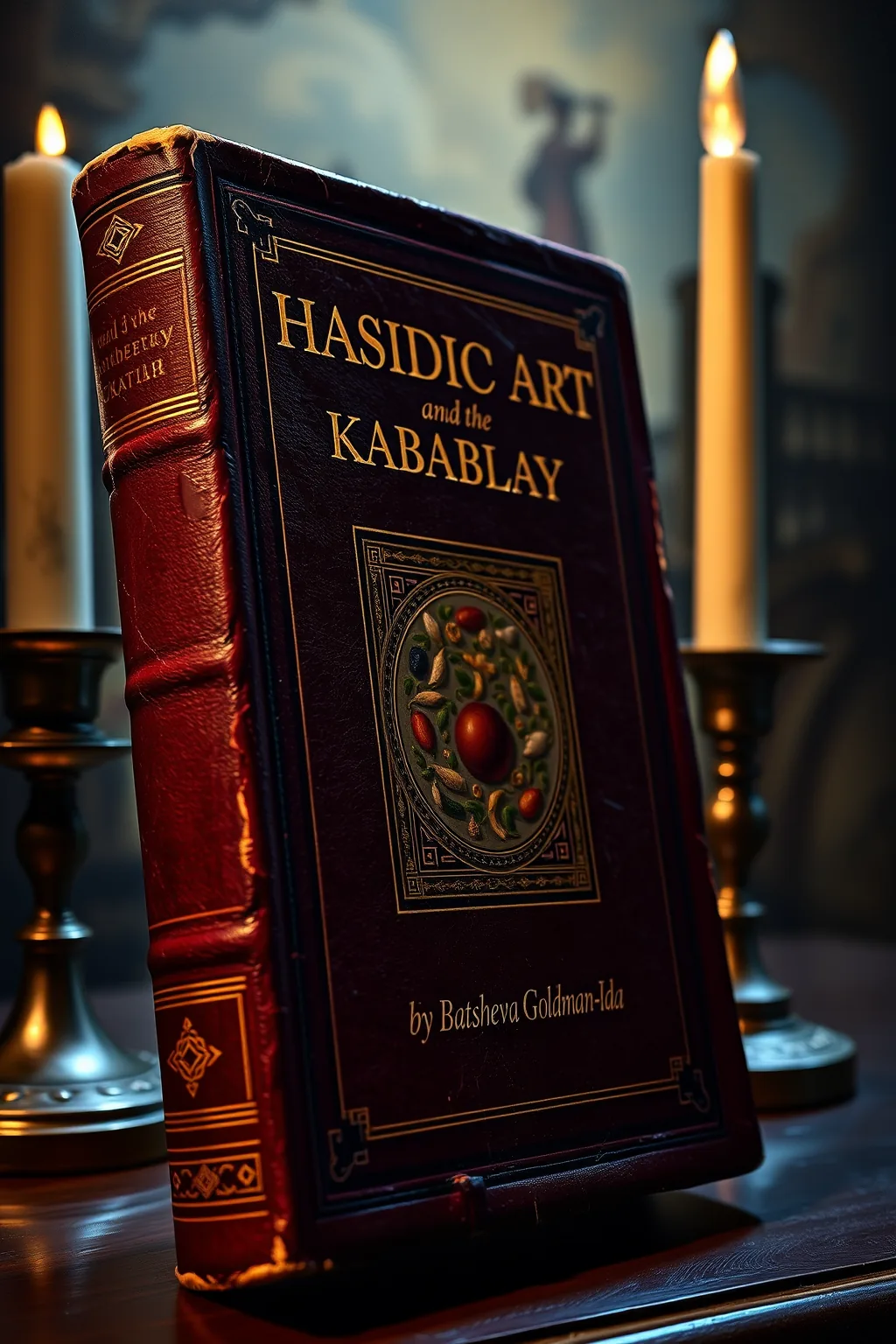
Hasidic Art and the Kabbalah
 61
61

Hasidic Art and the Kabbalah


Silas Hawthorne (Hermetic Studies Editor) — "Hasidic Art and the Kabbalah" is a revelation, a scholarly yet deeply resonant journey into the visual language of Jewish mysticism. Batsheva Goldman-Ida has achieved a remarkable feat, bridging the gap between abstract Kabbalistic concepts and their tangible artistic expressions within the Hasidic tradition. Her meticulous analysis uncovers layers of meaning, revealing how art served as a conduit for divine illumination and spiritual aspiration. This book is indispensable for anyone seeking to understand the profound interplay between faith, philosophy, and aesthetics in one of Judaism's most dynamic mystical movements. It speaks directly to the soul of the serious student of esotericism.
📝 Description
61
Batsheva Goldman-Ida's 2019 book connects Hasidic thought with Jewish mystical art.
This study examines the visual manifestations of Hasidic ideas, drawing connections between Jewish mysticism and artistic creation. Batsheva Goldman-Ida investigates how the spiritual energy and hidden teachings of Hasidism were translated into art. The book decodes the symbolic language within sacred images, showing the links between the divine and the material world as understood through Kabbalah.
Details like brushstrokes and carved designs are presented as pathways to understanding cosmic structures, the divine emanations known as Sefirot, and the soul's path. The work aims to show the philosophical basis of Jewish spiritual practices through art. It encourages readers to see the universe as a divine expression and find spiritual meaning in everyday life.
The book situates its analysis within the broader currents of Jewish mysticism, particularly Kabbalah, and its later development in Hasidism. It explores how these traditions, which often focus on abstract concepts and hidden meanings, found concrete expression in visual forms. The work traces how artists interpreted esoteric doctrines, such as the Sefirot and the soul's ascent, translating them into tangible imagery. This approach highlights the role of art not just as decoration, but as a vehicle for conveying complex theological and mystical ideas within Jewish spiritual life.
💡 Why Read This Book?
Uncover the hidden visual language of Jewish mysticism. "Hasidic Art and the Kabbalah" offers a unique gateway into the esoteric symbolism that permeates Hasidic art, revealing profound spiritual insights. Ideal for seekers of hidden knowledge, scholars of religious art, and practitioners of Kabbalah who wish to deepen their understanding through visual contemplation.
⭐ Reader Reviews
Honest opinions from readers who have explored this book.
❓ Frequently Asked Questions
What is the primary focus of this book?
The book's primary focus is the intricate relationship between Kabbalistic philosophy, Hasidic spirituality, and the resulting artistic expressions, revealing the hidden symbolism and esoteric meanings within Jewish art.
Is prior knowledge of Kabbalah required to understand this book?
While prior knowledge can enhance the experience, the author's clear explanations and rich contextualization make "Hasidic Art and the Kabbalah" accessible to newcomers interested in exploring its esoteric themes.
What are some key artistic elements explored?
The book delves into the symbolism of colors, geometric forms, scriptural motifs, and architectural designs as they relate to Kabbalistic concepts and Hasidic teachings.
How does this book connect art with spiritual practice?
It demonstrates how Hasidic art served as a meditative tool, a visual aid for contemplating divine mysteries, and a means of expressing the ineffable nature of G-d and the cosmos.
Who is the ideal reader for this work?
This book is ideal for students of Jewish mysticism, art historians, theologians, and anyone fascinated by the intersection of spirituality, symbolism, and creative expression.
🔮 Key Themes & Symbolism
The Kabbalistic Blueprint of Creation
This theme explores how Kabbalistic cosmology, particularly the concept of the Sefirot (divine emanations), serves as the underlying blueprint for understanding the structure and meaning of the universe. The book investigates how artists visually represented these abstract concepts, translating the divine architecture into tangible forms and patterns, offering a visual roadmap to the hidden order of existence and the pathways of spiritual ascent.
Hasidic Joy and Divine Presence
Here, the focus shifts to the effervescent spirit of Hasidism, characterized by fervent prayer, ecstatic devotion, and the belief in the immanent presence of G-d in all aspects of life. The art discussed within this theme embodies this spiritual vitality, often depicting scenes of communal prayer, joyous celebration, and the profound connection between the tzaddik (righteous leader) and the divine, revealing how art became a vehicle for experiencing and expressing spiritual ecstasy.
The Language of Sacred Symbols
This crucial theme looks at the rich lexicon of symbols employed in Hasidic art. It deciphers the meanings behind recurring motifs, such as the Tree of Life, the menorah, animal imagery, and Hebrew letters, revealing their deeper Kabbalistic and mystical interpretations. The book demonstrates how these symbols are not merely decorative but are potent carriers of hidden knowledge, acting as keys to unlocking profound spiritual truths and facilitating a deeper communion with the divine.
💬 Memorable Quotes
Direct passages from the work, attributed to the author.
“Within the brushstroke lies the blueprint of the soul's ascent.”
— This implies that the act of creating or observing art, particularly within a mystical context, can guide the viewer or creator on a spiritual journey, revealing the path towards self-realization and divine connection.
“Every line a prayer, every color a Sefirah.”
— This powerful statement equates artistic elements with fundamental spiritual components, suggesting that the very act of artistic composition is a form of prayer and a visualization of Kabbalistic divine emanations.
“The hidden meaning blooms in the visible form.”
— This highlights the esoteric nature of the art, asserting that its true significance lies not on the surface but in the deeper, concealed layers of symbolic meaning that can be uncovered through dedicated study and contemplation.
“Where words falter, the image speaks volumes of the Infinite.”
— This emphasizes the limitations of language in expressing divine truths and posits that visual art, with its symbolic depth, can communicate profound spiritual concepts that transcend verbal description.
💡 Key Ideas
Editorial paraphrase of the work's core concepts — not direct quotes.
Art is the echo of the divine whisper.
This quote suggests that artistic creation is a response to, or a reflection of, the subtle, ineffable communication from the divine realm, transforming spiritual inspiration into tangible form.
🌙 Esoteric Significance
Tradition
This book is deeply rooted in the esoteric traditions of Kabbalah and Hasidism, two pillars of Jewish mysticism. It explores how these traditions, with their emphasis on hidden meanings, divine emanations (Sefirot), and the soul's journey, are not merely abstract philosophies but find profound and tangible expression in visual art, serving as a conduit for mystical experience.
Symbolism
The core of the esoteric significance lies in the deciphering of the rich symbolic language inherent in Hasidic art. The book illuminates how everyday objects, scriptural references, and abstract forms are imbued with layered meanings, acting as keys to understanding divine mysteries, cosmic order, and the path to spiritual enlightenment, transforming art into a sacred text.
Modern Relevance
In a contemporary world often perceived as secular or materialistic, "Hasidic Art and the Kabbalah" offers a vital bridge to ancient wisdom. It demonstrates that esoteric principles and the pursuit of spiritual understanding remain profoundly relevant, suggesting that visual contemplation of sacred art can still facilitate inner peace, self-discovery, and a deeper connection to the transcendent, offering timeless insights for modern seekers.
👥 Who Should Read This Book
This book is a treasure for a diverse audience. Beginners in Jewish mysticism will find it an useful introduction to the visual manifestations of Kabbalistic thought and Hasidic spirituality. Scholars of religious art and cultural history will appreciate its meticulous research and insightful analysis. Seekers of deeper spiritual meaning will be drawn to its exploration of hidden symbolism and its capacity to inspire contemplation. Practitioners of Kabbalah and meditation will discover new dimensions for their practice, using the art as a powerful tool for connecting with divine realms.
📜 Historical Context
This work emerges from a rich historical epoch characterized by intense spiritual seeking and the flourishing of Jewish mystical thought. The Hasidic movement, which gained momentum in 18th-century Eastern Europe, was a profound spiritual revival, emphasizing personal experience, joyous prayer, and the accessibility of the divine. Simultaneously, Kabbalah, with its intricate metaphysical systems, continued to evolve, providing a theoretical framework for understanding G-d's creation and the human soul's place within it. The art produced during this period, deeply influenced by these currents, served as a vital medium for expressing complex theological ideas, fostering communal identity, and charting paths towards spiritual transcendence. Goldman-Ida's analysis situates these artistic expressions within their dynamic socio-religious milieu, showcasing their enduring power as windows into a vibrant mystical tradition.
📔 Journal Prompts
Reflect on a piece of art that evokes a sense of the divine. What elements contribute to this feeling?
How can visual symbols act as a 'blueprint' for understanding complex spiritual ideas?
Consider the concept of 'divine immanence.' How might Hasidic art visually represent G-d's presence in the everyday?
Explore a recurring symbol in your own life. What deeper meanings might it hold?
How does the act of creating or observing art influence your own spiritual journey or emotional state?
🗂️ Glossary
Kabbalah
A system of Jewish mysticism concerned with the nature of G-d, the creation of the universe, and the soul's relationship with the divine, often expressed through complex symbolism and esoteric interpretations of scripture.
Hasidism
A spiritual movement within Judaism that arose in 18th-century Eastern Europe, emphasizing joyous worship, fervent prayer, and the belief in G-d's immanent presence in all aspects of life.
Sefirot
The ten divine emanations or attributes of G-d described in Kabbalah, representing the stages through which G-d created and sustains the universe. Often depicted as a tree (Etz Chaim).
Tzaddik
A righteous leader or spiritual guide within Hasidic communities, believed to have a profound connection with the divine and to act as an intermediary between G-d and the people.
Etz Chaim
The 'Tree of Life,' a central symbolic diagram in Kabbalah representing the ten Sefirot and their interrelationships, illustrating the pathways of divine emanation and spiritual ascent.
This book appears in 1 collection
🔮 Readers Also Liked
Browse all →








From the “Kabbalah” Collection
View all →






More Free Kabbalah & Jewish Mysticism Books
View all →