Kabballah

 65
65

Kabballah

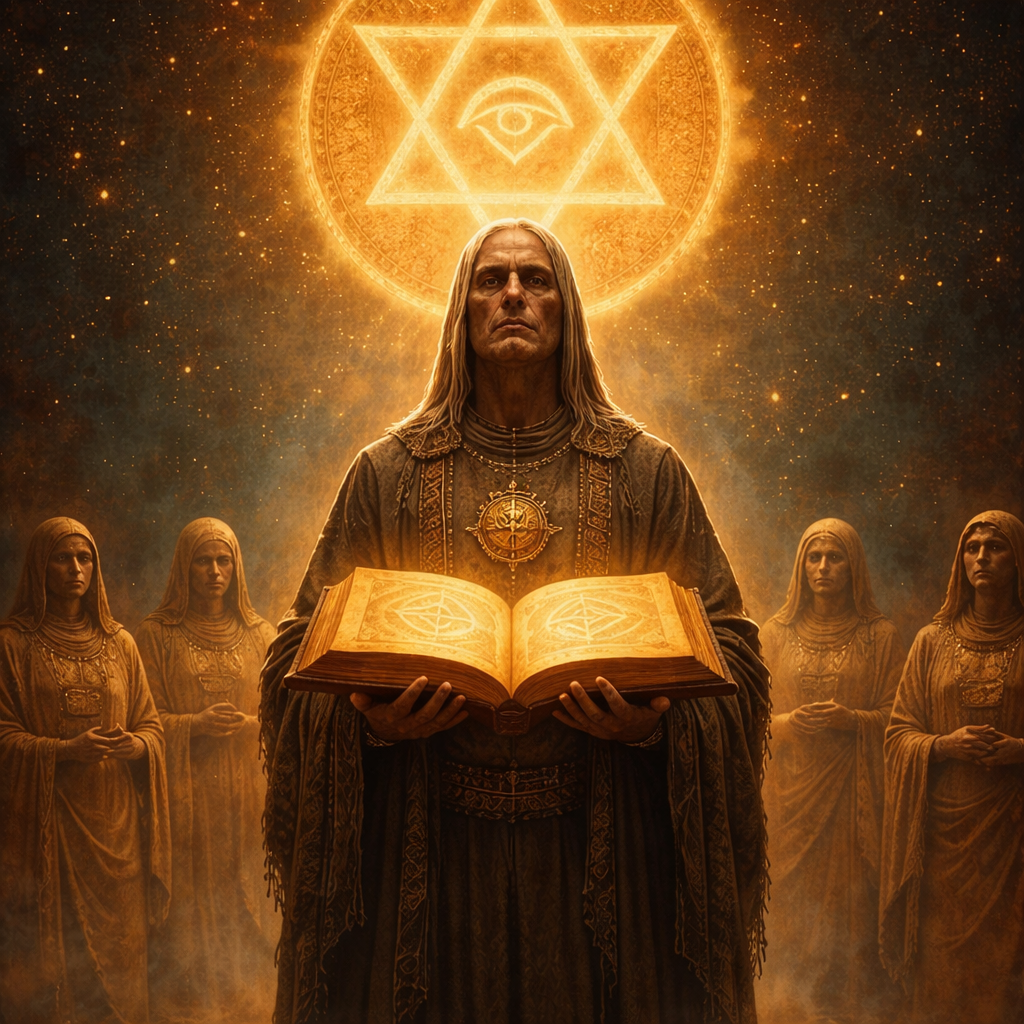

Gershon Scholem's "Kabbalah" remains the definitive scholarly exposition of this complex mystical tradition. Rothmann praises Scholem's meticulous scholarship and unparalleled ability to translate abstruse concepts into comprehensible prose. The book is a cornerstone for understanding the historical development and theological underpinnings of Jewish mysticism, revealing its profound impact on Western esotericism. Scholem's work is indispensable for scholars, serious students of mysticism, and those seeking an authoritative guide to the Tree of Life, the Sephirot, and the mystical dimensions of the Torah. It offers deep insights into the pursuit of divine knowledge.
📝 Description
65
Gershon Scholem's 1965 book "Kabbalah" examines Jewish mysticism from its medieval origins.
Gershon Scholem's "Kabbalah" is a foundational study of Jewish mystical traditions. Scholem traces the development of Kabbalistic thought from its early medieval roots through later periods. He analyzes key texts and concepts, including the Sefer ha-Bahir and the Zohar, to explain the evolution of this complex spiritual system. The book discusses ideas such as divine emanations, the nature of God, and the structure of the cosmos as understood by Kabbalists. Scholem also examines the role of ritual, meditation, and symbolism in Kabbalistic practice. The work aims to clarify the historical and intellectual currents that shaped Jewish mysticism. It presents Kabbalah not as a monolithic entity, but as a diverse and evolving tradition. Scholem's scholarship provides a detailed look at the core beliefs and practices that define this esoteric path within Judaism.
This book analyzes Kabbalah, a major esoteric tradition within Judaism that emerged primarily in medieval Provence and Spain. It deals with the mystical apprehension of God and the nature of reality, often expressed through complex symbolism, numerology, and meditation practices. Kabbalah seeks to understand the hidden divine forces at work in the universe and the path for human spiritual connection. Scholem's work situates this tradition within its historical Jewish context, distinguishing it from other mystical or occult movements while acknowledging its unique spiritual aims. The book explores how Kabbalists understood creation, the divine, and the human role in the cosmic order.
💡 Why Read This Book?
Unravel the mysteries of Jewish mysticism with Gershon Scholem's authoritative "Kabbalah." This book offers unparalleled insight into a rich, symbolic tradition, perfect for scholars, spiritual seekers, and anyone fascinated by esoteric philosophies. Understand the historical evolution of Kabbalistic thought and its enduring influence. Ideal for those who wish to explore the hidden dimensions of scripture and the human soul's quest for divine connection.
⭐ Reader Reviews
Honest opinions from readers who have explored this book.
❓ Frequently Asked Questions
What is Kabbalah?
Kabbalah, meaning 'reception' or 'tradition' in Hebrew, refers to the esoteric teachings and mystical interpretations within Judaism, particularly those that flourished from the Middle Ages onward.
Who was Gershon Scholem?
Gershon Scholem was a pioneering historian of Jewish mysticism, renowned for his groundbreaking scholarship on Kabbalah and his role in establishing it as a legitimate field of academic study.
What are the primary texts of Kabbalah?
Key texts include the Zohar, the Sefer Yetzirah, and various commentaries and mystical treatises that delve into divine names, angelic hierarchies, and the structure of the cosmos.
Is Kabbalah only for Jewish people?
While originating within Judaism, Kabbalistic concepts and symbols have influenced broader esoteric traditions and are studied by individuals of diverse backgrounds interested in mysticism and spirituality.
What is the Tree of Life in Kabbalah?
The Tree of Life is a central symbolic diagram representing the divine emanations (Sephirot) and the structure of creation, serving as a map for spiritual ascent and understanding.
🔮 Key Themes & Symbolism
The Divine Emanation and the Sephirot
This theme explores the Kabbalistic concept of Ein Sof (the Infinite) manifesting into ten divine attributes known as the Sephirot. These emanations, often visualized as the Tree of Life, represent the dynamic structure of God's presence in the universe and serve as intermediaries between the divine and the created world. Understanding the Sephirot is crucial for grasping the Kabbalistic cosmology and the pathways of divine revelation and human spiritual ascent. It's a framework for understanding God's relationship with creation and the very essence of existence.
Symbolism and Mystical Interpretation of Scripture
Kabbalah imbues the Torah and other Jewish texts with profound esoteric meanings, seeking hidden layers of wisdom beyond the literal. This involves intricate systems of gematria (numerology), notarikon (acrostics), and temurah (letter permutations) to unlock divine secrets. These symbolic interpretations reveal the interconnectedness of all things and the divine blueprint embedded within the fabric of reality. The act of interpretation becomes a sacred practice, a means of drawing closer to the divine through a deeper understanding of sacred texts.
The Journey of the Soul and Divine Union
Central to Kabbalah is the concept of the soul's journey through various spiritual realms, striving for purification and eventual union with the divine. This path often involves ascetic practices, contemplative meditation, and the understanding of cosmic forces. The ultimate goal is devekut, a state of cleaving to God, achieved through profound spiritual awareness and alignment with divine will. It represents the human aspiration for transcendence and the realization of one's divine potential within the earthly realm.
💬 Memorable Quotes
Direct passages from the work, attributed to the author.
“The Kabbalah is a tradition of esoteric Judaism.”
— This concise statement highlights Kabbalah's origin and its nature as a hidden, inner spiritual path within the broader Jewish tradition.
“The universe is a revelation of God's hidden glory.”
— This suggests that the physical world is not merely material but a divine manifestation, holding deeper, unseen spiritual truths waiting to be discovered.
“Every letter in the Torah contains a universe of meaning.”
— This emphasizes the profound significance attributed to the smallest elements of sacred text, implying that divine wisdom is encoded within the very structure of scripture.
“The soul yearns for its divine source.”
— This points to the inherent spiritual longing within humanity, a mystical drive to reconnect with the divine origin from which the soul emanates.
“Through contemplation, the veil between worlds is thinned.”
— This highlights the power of meditative practices in Kabbalah to bridge the gap between the material and spiritual realms, fostering direct experience of the divine.
🌙 Esoteric Significance
Tradition
Kabbalah represents the most profound and enduring esoteric tradition within Judaism. It offers a mystical cosmology, a system of divine names, and a path of spiritual ascent aimed at achieving union with the divine. Rooted in ancient Hebrew wisdom, it seeks to reveal the hidden meanings of the Torah and the structure of creation, providing a framework for understanding God's immanence and transcendence. It is a comprehensive system for spiritual transformation and the attainment of divine knowledge.
Symbolism
The symbolism in Kabbalah is rich and many-sided, centered around the Tree of Life, a diagram depicting ten Sephirot (divine emanations). Other key symbols include divine names, angelic hierarchies, the Hebrew alphabet's mystical properties, and the concept of the divine light (Ohr). These symbols are not merely decorative but are considered keys to unlocking cosmic secrets, understanding spiritual states, and facilitating communion with the divine. They form a visual and conceptual language for the ineffable.
Modern Relevance
Kabbalah's exploration of consciousness, the interconnectedness of all things, and the search for meaning continues to resonate profoundly in contemporary society. Its symbolic language and contemplative practices offer tools for personal growth, spiritual inquiry, and understanding the deeper dimensions of existence. While its origins are firmly rooted in Jewish tradition, its universal themes of divine immanence, the soul's journey, and the pursuit of wisdom attract a diverse audience seeking spiritual depth and a more profound connection to the universe.
👥 Who Should Read This Book
This foundational text is essential for academics and students of religious studies, comparative mysticism, and Jewish history. Spiritual seekers and practitioners drawn to esoteric traditions will find useful insights into the nature of divinity, the cosmos, and the soul's journey. Beginners will benefit from Scholem's clear exposition of complex ideas, while seasoned scholars will appreciate the depth and rigor of his analysis. Anyone interested in the hidden currents of Western spirituality and the rich heritage of Jewish mystical thought will find this book an indispensable guide.
📜 Historical Context
Gershon Scholem's "Kabbalah" meticulously chronicles the emergence and evolution of Jewish mysticism during a period of immense upheaval and intellectual ferment. From the 12th century onwards, in centers like Provence and Spain, Kabbalah arose as a response to the philosophical rationalism of the time and the spiritual yearning of communities facing persecution. This era saw the development of foundational texts like the Zohar, which synthesized earlier mystical traditions with Gnostic and Neoplatonic influences. The intellectual and spiritual landscape was shaped by a desire to find deeper meaning in scripture and to understand the divine nature in a more immediate, experiential way, leading to profound theological innovations and mystical practices that would resonate for centuries.
📔 Journal Prompts
Reflect on a time you felt a profound sense of interconnectedness. How might Kabbalistic concepts of emanation help explain this?
What personal symbols hold deep meaning for you? How could these be interpreted through a Kabbalistic lens of hidden significance?
Consider the concept of 'divine sparks' in creation. Where do you see these sparks in your everyday life?
Explore the idea of the soul's journey. What 'veils' might prevent you from experiencing deeper spiritual connection, and how could they be transcended?
How can the pursuit of esoteric knowledge contribute to personal growth and a more meaningful existence?
🗂️ Glossary
Ein Sof
The Kabbalistic term for the Infinite, the unknowable, primordial essence of God before any manifestation or creation. It represents God's absolute transcendence.
Sephirot
Ten divine emanations or attributes through which Ein Sof reveals itself and creates the universe. They are often depicted on the Kabbalistic Tree of Life.
Gematria
A system of Jewish mysticism where Hebrew letters are assigned numerical values, used to find hidden meanings and connections between words and concepts in sacred texts.
Zohar
The foundational work of Kabbalah, a mystical commentary on the Torah, believed to have been written by Rabbi Shimon bar Yochai in the 2nd century, though more accurately dated to the late 13th century.
Devekut
A Hebrew term meaning 'cleaving' or 'adherence,' referring to a state of intense spiritual communion and intimacy with God, a primary goal in Kabbalistic practice.
This book appears in 1 collection
🔮 Readers Also Liked
Browse all →








More by Gershon Scholem
All books →




From the “Kabbalah” Collection
View all →





More Free Kabbalah & Jewish Mysticism Books
View all →