George Eliot, Judaism, and the novels

 61
61

George Eliot, Judaism, and the novels

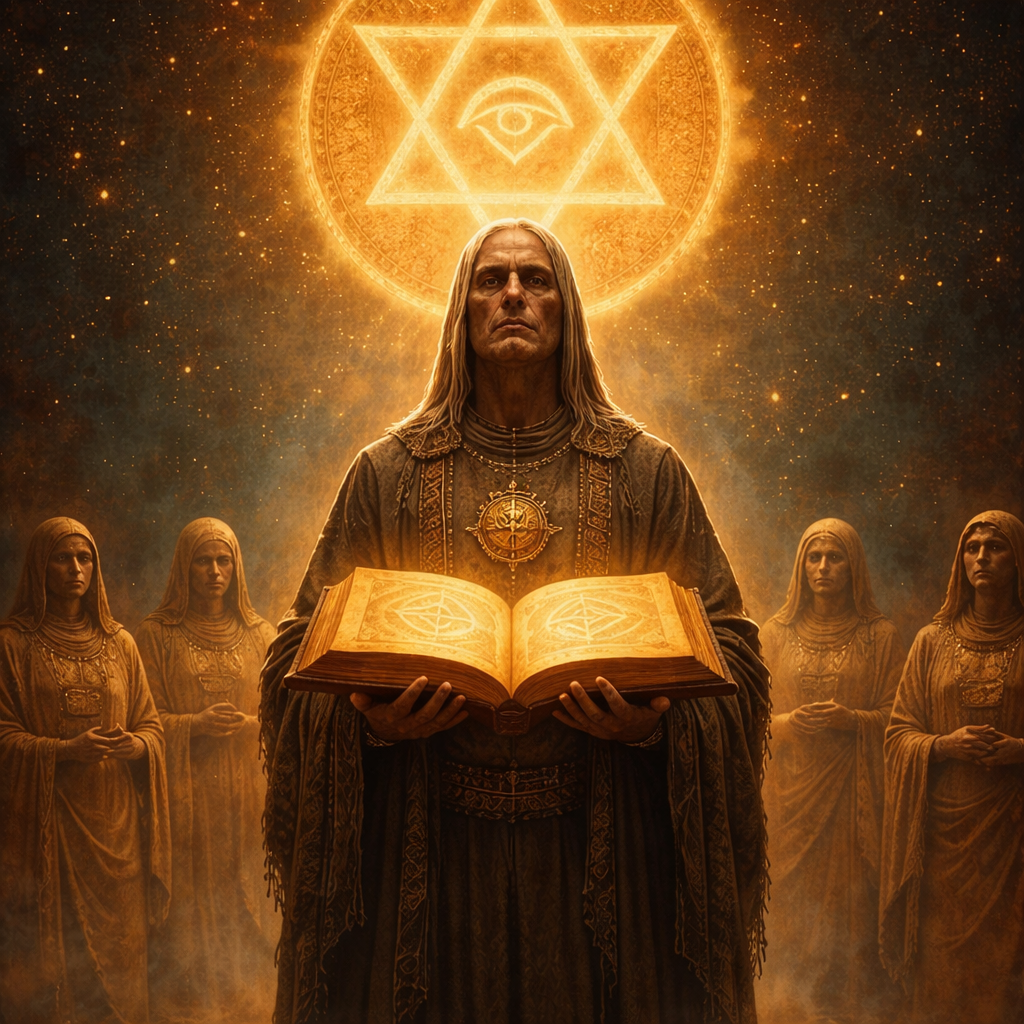

Saleel Nurbhai's 'George Eliot, Judaism, and the Novels' is a revelatory work that dramatically reorients our understanding of George Eliot's literary genius. Moving beyond conventional critical frameworks, Nurbhai meticulously demonstrates the pervasive influence of Jewish mysticism and myth across Eliot's entire body of work. This study offers profound esoteric insights, revealing a cohesive mystic structure that underpins her narratives, particularly the symbolic depth of 'Daniel Deronda.' It is an essential read for scholars of Victorian literature, comparative religion, and anyone fascinated by the hidden currents of spiritual thought in art. Nurbhai's scholarship is both rigorous and illuminating, making complex mystical concepts accessible within the context of literary analysis.
📝 Description
61
Saleel Nurbhai argues George Eliot's novels are shaped by Kabbalistic thought.
Saleel Nurbhai's study examines the presence of Jewish myth and mysticism in George Eliot's fiction. Moving beyond the common view of Eliot as solely a realist, Nurbhai posits that her engagement with Kabbalah informs her entire body of work, not just 'Daniel Deronda.' The book details how concepts and symbolic structures from Jewish mysticism are woven into the fabric of her narratives. This approach challenges established interpretations of her novels by highlighting an esoteric dimension. Nurbhai suggests that understanding these mystical underpinnings reveals a deeper layer of meaning in Eliot's storytelling.
The study aims to show a consistent mystical framework across Eliot's novels. It presents her as an artist consciously employing the symbolic language of Kabbalah. This perspective invites readers to reconsider their understanding of Eliot's literary project and its spiritual sources. The work focuses on the interplay between religious tradition, literary creation, and the enduring influence of mystical ideas.
This book situates George Eliot's writings within the esoteric tradition of Kabbalah, a form of Jewish mysticism. Kabbalah, with its complex system of interpretation and symbolic understanding of the divine, offers a framework for analyzing hidden meanings in texts. Nurbhai connects Eliot's literary techniques and thematic concerns to this specific mystical tradition, suggesting a deliberate engagement with its ideas. The study treats Kabbalistic concepts not merely as subject matter, but as structural and symbolic tools employed within her novels, aligning her work with a lineage of texts that seek deeper spiritual truths through symbolic interpretation.
💡 Why Read This Book?
This book offers a profound re-evaluation of George Eliot's literary legacy, unveiling the hidden mystical dimensions of her work. It is a must-read for scholars seeking to challenge existing critical paradigms, for seekers interested in the esoteric underpinnings of classic literature, and for practitioners of Jewish mysticism curious about its broader cultural impact. Discover a George Eliot you never knew, one whose narratives resonate with ancient wisdom.
⭐ Reader Reviews
Honest opinions from readers who have explored this book.
❓ Frequently Asked Questions
Does this book focus solely on 'Daniel Deronda'?
No, while 'Daniel Deronda' is a central focus, Saleel Nurbhai's thesis argues that the influence of Jewish myth and mysticism extends to and informs ALL of George Eliot's fiction, revealing a pervasive thematic and symbolic thread throughout her literary career.
Is prior knowledge of Kabbalah required to understand this book?
While familiarity with Kabbalistic concepts will enhance the reading experience, Nurbhai's accessible prose and thorough explanations make the work engaging and understandable for readers new to Jewish mysticism. The book serves as an excellent introduction to its esoteric themes within a literary context.
How does this study differ from previous analyses of George Eliot?
This is the first study to comprehensively argue for the pervasive influence of Jewish mysticism across Eliot's entire oeuvre, moving beyond the traditional realist interpretation. It uncovers a cohesive mystic structure and challenges the dominant critical understanding of her work.
What is the intended audience for this book?
The primary audience includes scholars of Victorian literature, religious studies, comparative literature, and students of Jewish mysticism. It will also appeal to general readers interested in literary analysis, esoteric traditions, and uncovering deeper meanings in classic texts.
Does the book explore the historical context of George Eliot's engagement with Judaism?
Yes, the book delves into the historical and intellectual milieu of the Victorian era, examining George Eliot's personal engagement with Jewish culture and thought, and how this engagement informed her literary output and her nuanced portrayal of Jewish characters and themes.
🔮 Key Themes & Symbolism
The Kabbalistic Undercurrent
This study meticulously traces the subtle yet potent influence of Kabbalistic thought on George Eliot's narrative structures and character development. Nurbhai reveals how concepts of divine emanation, hidden spiritual realms, and the interconnectedness of all things, central to Kabbalah, are woven into the fabric of Eliot's fictional worlds. The exploration looks at how these mystical frameworks provide a deeper, symbolic layer to her explorations of human consciousness, ethical dilemmas, and the search for spiritual meaning, offering a profound reinterpretation of her literary aims.
Mythic Resonance and Symbolic Language
Nurbhai argues that George Eliot's engagement with Jewish mythology extends far beyond mere thematic inclusion; it informs her very language and symbolic repertoire. The book examines how ancient Jewish myths, archetypes, and narrative patterns are recontextualized and imbued with new meaning within her novels. This theme focuses on the transformative power of myth in shaping human understanding and how Eliot masterfully employs this symbolic language to explore universal truths about identity, destiny, and the divine, inviting readers to perceive her fiction through a richer, mythopoeic lens.
Challenging the Realist Paradigm
A core tenet of this work is its direct challenge to the prevailing critical view of George Eliot as solely a realist author. Nurbhai posits that her deep immersion in Jewish mysticism provided her with a unique framework for understanding reality, one that embraced the unseen and the spiritual alongside the empirical. The study demonstrates how a cohesive mystic structure underpins her novels, suggesting that her realism was not a limitation but a vehicle for exploring profound esoteric dimensions, thus presenting a more complex and spiritually attuned vision of her literary project.
💬 Memorable Quotes
Direct passages from the work, attributed to the author.
“Judaism's ancient wisdom illuminates her modern voice.”
— This highlights how the historical and mystical traditions of Judaism are not just subjects but active influences shaping the very essence and expression of Eliot's literary style.
“Deronda's quest is a microcosm of esoteric searching.”
— This points to the protagonist's journey in 'Daniel Deronda' as a symbolic representation of the deeper, spiritual or mystical quests that Nurbhai argues are present throughout Eliot's fiction.
“From Hebrew lore, new narrative seeds were sown.”
— This evocative line suggests that the rich heritage of Jewish stories and teachings provided the fertile ground and inspiration for Eliot's original literary creations.
“Eliot's pen danced with mystic fire.”
— This metaphorical statement implies that Eliot's writing process was infused with a passionate, almost spiritual energy derived from her engagement with esoteric knowledge.
💡 Key Ideas
Editorial paraphrase of the work's core concepts — not direct quotes.
The veil of realism conceals a deeper, mystic architecture.
This quote suggests that the conventional understanding of Eliot's work as purely realistic is incomplete, hinting at a hidden, spiritual foundation that informs her narratives.
🌙 Esoteric Significance
Tradition
This study primarily engages with the esoteric tradition of Kabbalah, a mystical interpretation of Judaism that explores the divine nature, the creation of the universe, and the spiritual path of humanity. It looks at concepts such as the Sefirot (divine emanations), Gematria (numerological interpretation of Hebrew letters), and the Zohar (a foundational Kabbalistic text). Nurbhai argues that Eliot's narratives reflect an intuitive understanding and symbolic incorporation of these profound mystical principles, offering a bridge between ancient Jewish esoteric thought and modern literary expression.
Symbolism
The book uncovers rich layers of symbolism within Eliot's novels, drawing parallels between her literary motifs and established Kabbalistic imagery. This includes the Tree of Life as a framework for understanding character relationships and narrative progression, the symbolism of light and darkness representing spiritual states, and the profound significance attributed to Hebrew letters and names. Nurbhai highlights how Eliot uses seemingly mundane details to evoke deeper spiritual realities, transforming her characters' journeys into allegorical explorations of the soul's ascent and the quest for divine connection.
Modern Relevance
The esoteric significance of 'George Eliot, Judaism, and the Novels' lies in its demonstration that ancient mystical traditions can profoundly inform and enrich contemporary literary analysis. By revealing the hidden spiritual architecture in Eliot's work, the study suggests that literature can serve as a conduit for exploring timeless questions of meaning, purpose, and human connection. It offers a framework for readers to engage with classic texts on a deeper, symbolic level, encouraging a holistic understanding of art and spirituality that speaks to modern desires for meaning and transcendence in a secularizing world.
👥 Who Should Read This Book
This useful study is essential for scholars of Victorian literature seeking to expand their critical vocabulary beyond realism, offering a radical new lens through which to view George Eliot's oeuvre. It is equally vital for students and practitioners of Kabbalah and Jewish mysticism, providing a fascinating case study of how these ancient esoteric traditions can manifest in secular art. For the general reader with an appetite for deeper meaning, this book offers a compelling journey into the hidden spiritual currents of classic literature, revealing the profound interconnectedness of faith, philosophy, and creative expression. Seekers of wisdom will find Nurbhai's work an enriching exploration of timeless themes.
📜 Historical Context
The Victorian era (roughly 1837-1901) was a period of immense intellectual ferment, marked by scientific advancements, burgeoning industrialization, and a complex engagement with religion and philosophy. While the dominant literary trend was realism, there was also a parallel undercurrent of interest in the esoteric, the occult, and comparative religion. Scholars and intellectuals grappled with the implications of Darwinian theory, questioned traditional biblical interpretations, and explored spiritualism and Eastern philosophies. George Eliot, born Mary Ann Evans, lived and wrote during this dynamic period. Her intellectual curiosity was vast, and her engagement with Jewish culture and thought, particularly through her relationship with George Henry Lewes and her studies, coincided with a broader European fascination with Semitic languages and ancient traditions. This study positions Eliot not just as a product of her time but as a unique synthesiser of contemporary intellectual currents with ancient, mystical wisdom, particularly from the Jewish tradition, demonstrating how this engagement profoundly shaped her literary vision.
📔 Journal Prompts
How does the concept of 'Ein Sof' (the Infinite) resonate with the unresolved mysteries in George Eliot's novels?
In what ways do the narrative structures of Eliot's novels mirror the Sephirotic path of the Kabbalistic Tree of Life?
Explore the symbolic significance of light and darkness in Eliot's works, drawing parallels to Kabbalistic interpretations.
How might Eliot's characters' searches for identity and belonging be understood through the Kabbalistic concept of 'Tzimtzum' (divine contraction)?
Consider the role of language and names in Eliot's fiction; how does this relate to the mystical importance of Hebrew letters in Kabbalah?
🗂️ Glossary
Kabbalah
A complex system of Jewish mysticism that seeks to understand the nature of God, the universe, and the human soul through esoteric interpretation of religious texts and symbolism, often focusing on divine emanations and spiritual pathways.
Sephirot
In Kabbalah, the ten divine attributes or emanations through which God reveals himself and creates the universe. Often visualized as the 'Tree of Life,' representing stages of divine manifestation and spiritual ascent.
Gematria
A method of Kabbalistic interpretation that assigns numerical values to Hebrew letters, believing that words or phrases with the same numerical value share a hidden mystical connection or meaning.
Tzimtzum
A Kabbalistic concept describing God's self-contraction or withdrawal to make space for creation. It signifies the idea that divinity limits itself to allow for the existence of the finite world and free will.
Ein Sof
The Kabbalistic term for God in His absolute, unknowable essence, meaning 'Without End' or 'Infinite.' It represents the primordial, transcendent aspect of divinity before any manifestation or creation.
This book appears in 1 collection
🔮 Readers Also Liked
Browse all →







From the “Kabbalah” Collection
View all →








More Free Kabbalah & Jewish Mysticism Books
View all →