Jewish Magic and Superstition
 73
73

Jewish Magic and Superstition
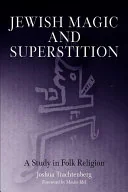
Joshua Trachtenberg’s *Jewish Magic and Superstition* offers a scholarly, yet accessible, exploration of a facet of Jewish life often relegated to the shadows of theological discourse. Trachtenberg navigates a vast array of sources with impressive diligence, presenting a comprehensive catalog of charms, incantations, and beliefs concerning the supernatural. A notable strength lies in its detailed examination of the practical application of these beliefs, moving beyond abstract theological concepts to the lived experiences of individuals seeking divine or magical intervention. The section detailing the use of divine names in amulets is particularly illuminating, showcasing the intricate relationship between textual power and practical magic. However, the sheer breadth of material can occasionally feel encyclopedic, with less emphasis on nuanced interpretation of the psychological underpinnings for some beliefs. Trachtenberg’s work remains a vital, if dense, foundation for understanding the historical dynamics of Jewish folk religion and its engagement with the occult. It is a rigorous academic survey that provides essential context for further study.
📝 Description
73
Joshua Trachtenberg's 1939 study examines Jewish folk beliefs and practices.
First published in 1939, Jewish Magic and Superstition by Joshua Trachtenberg is a historical survey of Jewish folk magic. Trachtenberg documents a range of traditions, from ancient amulets and incantations to medieval demonology and Kabbalistic angelology. The book considers how these beliefs interacted with formal religious law and the human need for security and understanding in a world seen as influenced by unseen powers. It focuses on the everyday magical thinking that was part of Jewish life for centuries. This work is not a practical guide to performing magic but an academic examination of its role within Jewish culture. Trachtenberg drew on medieval Hebrew manuscripts and early modern Yiddish literature to illustrate his points.
The book details specific concepts, such as the power attributed to names in magical acts, the presence and influence of angels and demons in daily life, and the use of talismans and amulets for protection and healing. It also touches on the interpretation of dreams. Trachtenberg's research offers a perspective on the popular beliefs that existed alongside official rabbinic Judaism, engaging with the field of Jewish ethnography during a time of growing academic interest in comparative religion and folklore.
This book is situated within the scholarly study of religious folklore and the history of magic. It examines belief systems that operated outside the formal theological structures of rabbinic Judaism, focusing on popular practices and superstitions. Trachtenberg's work engages with traditions that sought to influence or understand supernatural forces through ritual and belief, placing it in conversation with broader studies of Western esotericism and folk magic across cultures. It documents a historical engagement with concepts often considered occult or superstitious, analyzed through an anthropological and historical lens.
💡 Why Read This Book?
• Understand the historical function of amulets and divine names in Jewish folk practice, as meticulously documented by Trachtenberg's research up to the early 20th century, offering a unique perspective on applied mysticism. • Explore the specific roles attributed to angels and demons in everyday Jewish life across various historical periods, providing concrete examples of how supernatural beings were perceived and invoked for protection and influence. • Gain insight into the relationship between Kabbalistic concepts and popular magic, learning how esoteric ideas from texts like the Zohar were adapted into tangible folk rituals and superstitions by ordinary people.
⭐ Reader Reviews
Honest opinions from readers who have explored this book.
❓ Frequently Asked Questions
What is the primary focus of Joshua Trachtenberg's book, Jewish Magic and Superstition?
The book's primary focus is a scholarly examination of Jewish folk beliefs, magical practices, and superstitions throughout history. Trachtenberg documents amulets, incantations, demonology, and angelology as they were integrated into daily Jewish life.
When was Jewish Magic and Superstition originally published?
The original publication date for Joshua Trachtenberg's *Jewish Magic and Superstition* was 1939. The edition available from Esoteric Library is a later reprint, first published in paperback on 2004-02-13.
Does this book provide practical instructions for performing Jewish magic?
No, this is an academic and historical study. While it details magical practices and beliefs, it does not offer practical instructions or rituals for performing them. It serves as an anthropological and historical documentation.
What historical periods does Jewish Magic and Superstition cover?
The work covers a broad historical sweep, examining Jewish magic and superstition from ancient times through the medieval period and into the early modern era. Trachtenberg draws on sources from various centuries to illustrate the evolution of these beliefs.
Who is the new introduction by in the 2004 edition?
The 2004 paperback edition features a new introduction by a contemporary scholar of Jewish mysticism, though the specific name of this scholar is not provided in the original blurb. This introduction situates Trachtenberg's work within current academic discourse.
What is the relationship between Kabbalah and folk magic discussed in the book?
Trachtenberg explores how esoteric Kabbalistic concepts were often adapted and applied in popular folk magic. He illustrates this by examining how mystical ideas were translated into practical rituals, amulets, and incantations used by common people.
🔮 Key Themes & Symbolism
Angels, Demons, and the Unseen
Trachtenberg meticulously documents the pervasive belief in angels and demons within Jewish folk traditions. These entities were not abstract theological concepts but active participants in daily life, believed to influence health, fortune, and spiritual well-being. The book details how individuals sought to appease, ward off, or enlist the aid of these beings through specific prayers, incantations, and the use of protective amulets inscribed with divine names or angelic sigils. This theme highlights the tangible manifestation of the spiritual realm in the lives of ordinary Jews across centuries.
The Power of Names and Words
A central tenet explored is the potent efficacy attributed to names, particularly divine names and angelic appellations. Trachtenberg illustrates how these names were not merely labels but held inherent power, capable of effecting change when invoked correctly. This is most evident in the creation of amulets and charms, where the precise inscription of sacred names was believed to grant protection against illness, evil spirits, or misfortune. The work examines the historical development of this belief, connecting it to ancient Near Eastern magical traditions and Kabbalistic concepts of divine utterance.
Kabbalah's Folkloric Influence
The book investigates the complex interplay between high mystical Kabbalah and popular folk magic. Trachtenberg demonstrates how sophisticated esoteric concepts, originating in texts like the Zohar, were often simplified, adapted, and integrated into the practical magical beliefs and rituals of the general populace. This includes the use of Kabbalistic permutations of divine names, angelic hierarchies, and cosmological ideas in the crafting of talismans and incantations, revealing a dynamic flow between elite mysticism and grassroots spirituality.
Protection and Prosperity Charms
A significant portion of the study is dedicated to the material culture of Jewish magic: the amulets, talismans, and charms used for specific purposes. Trachtenberg details the variety of these objects, their common inscriptions (often divine names, biblical verses, or angelic seals), and their intended functions—from safeguarding against the evil eye and demons to ensuring safe childbirth or promoting marital harmony. This theme underscores the practical, often anxious, engagement with the supernatural aimed at securing mundane benefits and warding off worldly dangers.
💬 Memorable Quotes
Direct passages from the work, attributed to the author.
“The name of God, in its various forms, was the supreme magical agent.”
— This highlights a core concept in Jewish folk magic: the belief that divine names possessed inherent power. Trachtenberg shows how these names were central to amulets and incantations, functioning as potent tools for protection and influence.
“Angels were not merely messengers of God, but active agents in the lives of men.”
— This interpretation emphasizes the demysticized, practical role of angels in Jewish superstition. They were seen as tangible forces to be invoked or appeased, rather than solely celestial beings in abstract theological frameworks.
“Superstition was not necessarily antagonistic to religious observance, but often intertwined with it.”
— This points to the complex relationship between formal religious practice and folk belief. Trachtenberg illustrates how magical practices often coexisted with, and were sometimes justified within, the broader context of Jewish religious life.
💡 Key Ideas
Editorial paraphrase of the work's core concepts — not direct quotes.
The belief in the evil eye and its remedies was widespread.
This paraphrase captures the pervasive nature of a common superstition and the active measures taken against it. The book details various charms and practices developed to counteract perceived malevolent glances.
Kabbalistic ideas filtered down into popular magic, becoming tools for practical ends.
This summarizes the book's analysis of how esoteric Kabbalistic doctrines were adapted by the general populace. Complex mystical theories were transformed into accessible magical practices for everyday concerns.
🌙 Esoteric Significance
Tradition
This work is firmly situated within the academic study of Western Esotericism and Folklore, specifically focusing on Jewish traditions. While not a practitioner's manual, it meticulously documents practices that often draw from or intersect with Kabbalistic cosmology and angelology, traditions often considered esoteric. Trachtenberg’s empirical approach contrasts with the speculative nature of some esoteric traditions but provides crucial historical grounding for understanding their popular manifestations and evolution.
Symbolism
Key symbols explored include the potent efficacy of divine names (e.g., the Tetragrammaton, angelic names) used in amulets and incantations, believed to grant protection and power. Angelic sigils and hierarchies, drawn from Kabbalistic lore, also feature prominently as protective or invocatory symbols. The Hamsa (Hand of Miriam) and other protective talismans, often inscribed with biblical verses or divine names, represent tangible manifestations of the desire for safeguarding against spiritual and physical harm.
Modern Relevance
Contemporary scholars of Jewish mysticism and folklore continue to cite Trachtenberg's foundational research. Practitioners of modern Kabbalah and those interested in Jewish folk magic may consult his work for historical context on specific practices, symbols, and beliefs. Thinkers exploring the intersection of religion, psychology, and magic find value in his detailed cataloging of historical belief systems, offering a lens through which to view enduring human desires for meaning and control.
👥 Who Should Read This Book
• Scholars of Jewish studies and religious history seeking a comprehensive overview of folk beliefs and magical practices beyond formal theology. • Researchers in folklore and anthropology interested in the cross-cultural study of superstition, amulets, and the belief in supernatural agents. • Readers of esoteric literature curious about the historical manifestations of Kabbalah and angelology in the daily lives of Jewish communities across different eras.
📜 Historical Context
Published in 1939, Joshua Trachtenberg's *Jewish Magic and Superstition* emerged during a fertile period for the academic study of religion and folklore. It was a time when scholars like Gershom Scholem were revolutionizing the understanding of Jewish mysticism, and ethnographers were diligently collecting the customs of various communities. Trachtenberg’s work contributed to this by meticulously documenting the popular magical beliefs and practices that existed alongside, and often in tension with, official rabbinic Judaism. His research provided a counter-narrative to purely theological interpretations, focusing instead on the lived spiritual and magical experiences of Jewish people. This contrasted with purely theological scholarship and offered a more anthropological perspective. The book drew upon a wide array of medieval Hebrew manuscripts and early modern Yiddish texts, reflecting a growing academic interest in these often-overlooked sources.
📔 Journal Prompts
The widespread use of divine names in amulets and incantations suggests a belief in their intrinsic power; how might this concept of immanent power differ from abstract theological notions of God?
Consider the documented angelic hierarchies; how might understanding these roles inform contemporary perspectives on spiritual guidance or intervention?
Reflect on the historical tension between rabbinic authority and popular superstition; what does this dynamic reveal about the evolving nature of religious practice?
Analyze the function of charms and talismans for protection; what does their historical prevalence indicate about human responses to uncertainty and perceived threats?
Examine the integration of Kabbalistic ideas into folk magic; what does this process suggest about the accessibility and adaptation of complex esoteric systems?
🗂️ Glossary
Gabbai
In Jewish tradition, a synagogue beadle or treasurer responsible for managing communal affairs and assisting with religious services, sometimes involved in community-level organization that might touch upon communal welfare beliefs.
Goel
Literally 'redeemer' or 'kinsman-redeemer.' In Jewish law, a relative with certain rights and obligations, particularly concerning inheritance and avenging blood. In folklore, the concept can extend to spiritual or protective roles.
Kame'a
A Hebrew term for an amulet or charm, typically inscribed with sacred texts, divine names, or symbols believed to offer magical protection or bring good fortune.
Lilith
A figure in Jewish folklore, often depicted as a dangerous female demon, particularly associated with harming infants and seducing men. She represents a significant supernatural threat addressed by protective magic.
Mazal
Hebrew for 'luck' or 'fortune,' often associated with astrological influences. Belief in mazal played a role in folk practices aimed at influencing or mitigating one's destiny.
Shed
A general term in Hebrew and Yiddish for a demon or evil spirit, believed to cause harm or misfortune. Warding off sheds was a common concern addressed by magical practices.
Tetragrammaton
The four-letter Hebrew name of God (YHWH), considered the most sacred and powerful divine name. Its use in amulets and incantations was believed to confer potent protection and efficacy.
This book appears in 1 collection
🔮 Readers Also Liked
Browse all →








From the “Superstition” Collection
View all →







More Free Occult Philosophy Books
View all →