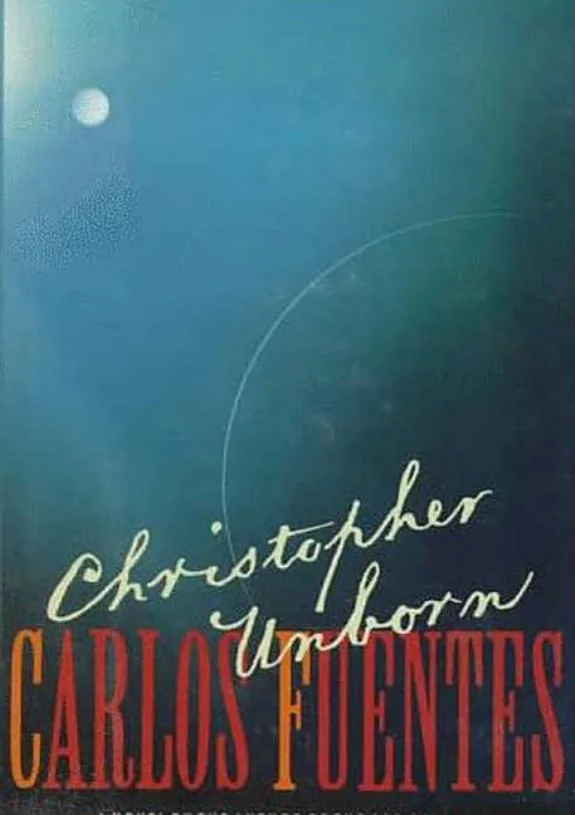
Christopher Unborn
 82
82

Christopher Unborn
Carlos Fuentes’s *Christopher Unborn* plunges the reader into a Mexico City so toxic it might as well be a post-apocalyptic landscape, drenched in "black acid rain." The premise – a prize for the first child born on the 500th anniversary of Columbus's landing – is a potent, savage hook. Fuentes, never one to shy away from grand, often brutal, narratives, crafts a narrator whose voice is as sharp and desperate as the city itself. The descriptions of "Makesicko City" are unflinching, a potent if harrowing depiction of environmental and societal collapse. However, the novel’s relentless bleakness, while effective in conveying its message, can at times feel overwhelming, leaving little room for nuanced emotional development beyond sheer survival and existential dread. The sheer density of allegory, while intellectually stimulating, occasionally risks obscuring the human element at its core. Still, the novel's sheer imaginative power and its unflinching gaze at the consequences of history and industry make it a significant, albeit challenging, work. It is a powerful, if grim, testament to the enduring human spirit in the face of overwhelming decay.
📝 Description
82
First published in 1989, Carlos Fuentes's Christopher Unborn imagines Mexico City in 1991 as a city choking under black acid rain.
Christopher Unborn chronicles the anticipation and arrival of a child named Christopher, born on the 500th anniversary of Columbus's arrival in the Americas. The narrator, the child himself, documents the dystopian reality of "Makesicko City," a vision of urban decay and ecological collapse. This novel appeals to readers who appreciate allegorical fiction that examines existential dread and societal critique. It suits those interested in Latin American literature that questions historical legacies and current environmental crises through a stylized and unsettling perspective.
The book emerged in 1989, a time of growing global awareness about environmental issues and urban futures. Fuentes, a key figure in the Latin American Boom, uses this work to address the consequences of colonialism and the impact of modernization and pollution on developing nations, particularly Mexico. The novel reflects the ecological consciousness of the late 20th century.
This novel engages with a tradition of speculative fiction that uses extreme environmental and societal collapse to mirror internal states of dread and transformation. Fuentes places the birth of his protagonist, Christopher, on a date charged with historical and symbolic weight – the quincentennial of European arrival in the Americas. This framing invites reflection on cyclical histories, the weight of inherited trauma, and the potential for radical rupture or rebirth, aligning with esoteric thought that perceives profound meaning in calendrical events and symbolic births.
💡 Why Read This Book?
• Understand the potent symbolism of "Makesicko City" as a critique of urban environmental decay, offering a unique allegorical framework for ecological anxieties that emerged prominently in the late 20th century. • Engage with the concept of inherited destinies, examining how the narrator's birth on the 500th anniversary of Columbus's arrival forces a confrontation with historical legacies and their impact on contemporary identity. • Experience Carlos Fuentes's distinctive narrative voice, a powerful tool for conveying existential dread and societal critique through vivid, often disturbing, imagery that distinguishes his literary style.
⭐ Reader Reviews
Honest opinions from readers who have explored this book.
❓ Frequently Asked Questions
When was Christopher Unborn originally published?
Christopher Unborn was first published on August 21, 1989, making it a product of the late 20th century's growing environmental awareness and anxieties about urban futures.
What is the significance of the child's birth date in Christopher Unborn?
The child, Christopher, is born on the 500th anniversary of Columbus's discovery of America, a date laden with historical and symbolic weight that the novel explores through the narrator's consciousness.
What does 'Makesicko City' represent in the novel?
'Makesicko City' is a fictionalized, dystopian version of Mexico City, serving as a potent symbol of extreme pollution, overpopulation, and ecological collapse, reflecting anxieties about urban environments.
Who is the author of Christopher Unborn?
The author of Christopher Unborn is Carlos Fuentes, a prominent Mexican novelist celebrated for his contributions to Latin American literature and his engagement with historical and social themes.
What kind of atmosphere does the novel create?
The novel creates a bleak, apocalyptic atmosphere characterized by "black acid rain" and pervasive decay, immersing the reader in a world grappling with environmental catastrophe and societal breakdown.
Does the book offer hope?
While the setting is deeply dystopian, the birth of Christopher, the narrator, introduces a focus on new life emerging from desolation, offering a complex, often unsettling, exploration of potential futures rather than simple optimism.
🔮 Key Themes & Symbolism
Ecological Apocalypse
The novel vividly portrays Mexico City as "Makesicko City," a nightmarish urban landscape suffocating under "black acid rain." This extreme environmental degradation serves as a central theme, reflecting contemporary anxieties about pollution, overpopulation, and the destructive impact of unchecked industrialization on the planet. Fuentes uses this setting not just as a backdrop but as an active force shaping the lives and consciousness of its inhabitants, highlighting the profound connection between environmental health and human existence.
Historical Reckoning
The birth of the narrator, Christopher, coincides with the 500th anniversary of Columbus's arrival in the Americas. This temporal alignment is crucial, forcing a confrontation with the enduring legacies of colonialism, conquest, and their subsequent impact on contemporary societies. The novel interrogates how historical events continue to shape identity, destiny, and the very fabric of existence in the present, presenting a narrative that is deeply rooted in Mexico's complex past.
Identity and Fate
Christopher, the "unborn" narrator, grapples with his identity in a world teetering on the brink of collapse. His existence, predicated on a historically significant date, raises questions about free will versus determinism, and whether new life can forge its own path or is irrevocably bound by the sins and triumphs of the past. The novel explores the psychological toll of living in a corrupted environment and the search for meaning amidst profound existential uncertainty.
Urban Decay and Survival
Fuentes paints a stark picture of urban survival in a hyper-polluted "Makesicko City." The narrative focuses on the daily realities of life under extreme conditions, where basic survival is a constant struggle. This theme studies the resilience and desperation of individuals and communities facing environmental catastrophe, examining the psychological and social adaptations required to exist in such a hostile environment. It’s a raw portrayal of humanity pushed to its limits.
💬 Memorable Quotes
Direct passages from the work, attributed to the author.
“Black acid rain falls on 'Makesicko City,' the most polluted, most populated city in the world.”
— This opening statement immediately establishes the novel's dystopian setting and its central allegorical critique of urban environmental collapse, setting a tone of urgent decay.
“A prize is being offered to the first child born on the 500th anniversary of Columbus's discovery of America.”
— This highlights the novel's intersection of contemporary anxieties with historical anniversaries, framing the new generation's arrival within the context of colonial legacies and their ongoing consequences.
“That child is the narrator of this passionate, savage novel.”
— This identifies the unique narrative perspective, positioning the child as an observer and chronicler of a harsh reality, suggesting a voice shaped by both innocence and profound environmental and historical burdens.
“Amid this apocalyptic landscape a prize is being offered...”
— This phrase captures the juxtaposition of extreme desolation with a seemingly hopeful, yet ultimately ironic, incentive, highlighting the novel's exploration of survival and the search for meaning in dire circumstances.
💡 Key Ideas
Editorial paraphrase of the work's core concepts — not direct quotes.
The narrator chronicles the dystopian reality of "Makesicko City."
This paraphrased concept underscores the narrator's role as a witness to extreme societal and ecological breakdown, emphasizing the novel's critical examination of urban life and its environmental toll.
🌙 Esoteric Significance
Tradition
While not explicitly tied to a single esoteric lineage, *Christopher Unborn* draws heavily on Gnostic and apocalyptic themes prevalent in esoteric thought. The depiction of a corrupted world and the birth of a figure who navigates this desolation can be interpreted through a Gnostic lens, where the material world is seen as flawed and a new consciousness or savior figure is needed. The pervasive sense of doom and the focus on a key birth echo apocalyptic narratives found across various mystical traditions, offering a modern, secularized interpretation of these ancient archetypes.
Symbolism
The "black acid rain" symbolizes a poisoned spiritual and material environment, a manifestation of collective human failure and the degradation of the natural order. "Makesicko City" itself functions as a potent symbol of the material world perceived as inherently sick or corrupt, a common theme in Gnostic cosmology. The birth of Christopher on the 500th anniversary of Columbus's arrival imbues him with the symbolic weight of historical reckoning, representing a new consciousness emerging from or grappling with the consequences of past actions and foundational myths.
Modern Relevance
Contemporary eco-mysticism and post-colonial theory find fertile ground in *Christopher Unborn*. Thinkers exploring the spiritual dimensions of ecological collapse and the psychological impact of historical trauma can draw upon Fuentes’s stark vision. The novel’s allegorical power speaks to modern practitioners of ecospirituality who seek to understand humanity's relationship with a damaged Earth, and with scholars analyzing the ongoing effects of colonial narratives on global consciousness and identity formation.
👥 Who Should Read This Book
• Readers interested in post-colonial literature who wish to explore the enduring impact of historical events on contemporary identity and societal structures. • Aspiring authors and literary critics seeking examples of dystopian allegories that critique urban environments and ecological crises with visceral prose. • Students of comparative religion and esotericism looking for modern literary interpretations of apocalyptic narratives and Gnostic themes of a corrupted material world.
📜 Historical Context
Christopher Unborn, first published in 1989, emerged during a period marked by increasing global concern over environmental degradation and the future of megacities. Carlos Fuentes, a leading voice in Latin American literature, penned this novel as a potent allegory for the ecological and social crises facing Mexico and other developing nations. The work engages with the complex aftermath of the Columbian Exchange and the subsequent centuries of colonialism, viewed through the lens of a hyper-polluted Mexico City. It appeared in an era where authors like Salman Rushdie were also exploring post-colonial identities and fragmented realities. The novel’s stark portrayal of urban decay and its critical engagement with historical narratives can be seen as a counterpoint to the more optimistic futurism sometimes found in science fiction of the time, reflecting a particular strain of late 20th-century disillusionment with progress. The book’s reception highlighted its powerful, albeit grim, vision, solidifying Fuentes’s reputation for tackling profound societal issues with unflinching literary force.
📔 Journal Prompts
The "black acid rain" as a symbol of spiritual pollution.
Christopher's birth on the 500th anniversary of Columbus's arrival and its implications for inherited destinies.
Reflecting on the concept of "Makesicko City" as a microcosm of global urban environmental challenges.
The narrator's perspective on survival in a world defined by decay.
Confronting the intersection of historical legacies and personal identity as depicted in the novel.
🗂️ Glossary
Makesicko City
A fictionalized, dystopian portrayal of Mexico City, symbolizing extreme pollution, overpopulation, and ecological collapse, serving as a potent allegorical setting.
Black Acid Rain
A literal and symbolic element in the novel representing environmental devastation and the poisoned state of the world, contributing to the apocalyptic atmosphere.
500th Anniversary of Columbus's Discovery
The specific date of the narrator's birth, highlighting the novel's engagement with historical reckoning and the enduring consequences of colonialism.
Unborn Narrator
Refers to the child protagonist, Christopher, whose perspective frames the narrative, suggesting a consciousness emerging into a profoundly damaged world.
Apocalyptic Landscape
Describes the pervasive sense of doom and destruction characterizing the novel's setting, where the environment itself seems to be in a state of terminal decline.
Prize for First Born
An ironic plot device offering a reward for a child born on a historically significant, yet environmentally catastrophic, date, underscoring the novel's critical stance.
Savage Novel
A descriptor for the book's tone and style, indicating its fierce, uncompromising, and often brutal examination of societal and environmental issues.
This book appears in 1 collection
🔮 Readers Also Liked
Browse all →









From the “Apocalyptic Literature” Collection
View all →



More Free Occult Philosophy Books
View all →