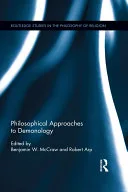
Philosophical Approaches to Demonology
 74
74

Philosophical Approaches to Demonology
Benjamin W. McCraw and Robert Arp's "Philosophical Approaches to Demonology" offers a refreshing, albeit challenging, intellectual exercise. It successfully moves beyond historical recounting to subject demonological concepts to robust philosophical scrutiny. One notable strength lies in the essay exploring the logical coherence of infernal hierarchies, a piece that meticulously dissects the structural inconsistencies often overlooked in traditional demonological texts. However, the collection occasionally suffers from an overreliance on abstract philosophical jargon, which can obscure the core arguments for those not deeply immersed in contemporary analytic philosophy. A specific passage discussing the epistemology of infernal testimony, questioning how one could reliably acquire knowledge from entities defined by deception, is particularly illuminating. This volume provides a valuable, if sometimes dense, contribution to the philosophical study of the supernatural.
📝 Description
74
Published in 2017, this collection treats demonological concepts as subjects for philosophical inquiry.
This volume presents original academic papers by philosophers who engage directly with demonological concepts. Instead of surveying historical occurrences or theological doctrines, the contributors apply lenses from metaphysics, epistemology, logic, and moral philosophy to understand demonic entities and phenomena. The collection aims to foster rigorous debate and analytical dialogue, treating these subjects as topics for philosophical investigation rather than solely religious or cultural artifacts.
The book is intended for individuals with a serious interest in the philosophical underpinnings of demonology. It appeals to academics in philosophy and religious studies, as well as independent scholars and advanced students. Readers will benefit from a foundational understanding of philosophical concepts and a willingness to engage with abstract arguments concerning existence, knowledge, and ethics. The work actively positions itself against purely descriptive accounts, seeking instead a more analytical approach to its subject matter.
Emerging in 2017, this collection sought to establish a distinct space for philosophical analysis within demonology, a field often confined to historical, cultural, or theological treatments. It engages with a long tradition of philosophical discourse on evil and non-human intelligences. By focusing on rational and logical dimensions, the work offers a contemporary perspective on subjects typically found in specialized theological or folkloric studies, moving beyond purely descriptive accounts to rigorous analytical examination.
💡 Why Read This Book?
• Gain a rigorous philosophical framework for understanding concepts like infernal logic and demonic epistemology, moving beyond anecdotal evidence to structured analysis, as explored in the essays on metaphysics and epistemology. • Understand the specific challenges posed by the 2017 publication date, situating the philosophical arguments within contemporary academic discourse and distinct from earlier historical or theological treatments. • Develop critical thinking skills by engaging with arguments that question the very possibility of rational discourse about entities traditionally relegated to faith or folklore, particularly concerning moral philosophy.
⭐ Reader Reviews
Honest opinions from readers who have explored this book.
❓ Frequently Asked Questions
What specific philosophical disciplines are applied to demonology in this book?
The book applies core philosophical disciplines including metaphysics, epistemology, logic, and moral philosophy to the study of demonology, treating demonic concepts as subjects for rigorous analytical debate rather than mere historical curiosities.
Who are the primary authors and what is their contribution to the field?
Benjamin W. McCraw and Robert Arp are the editors, bringing together scholars to present newly written papers. Their contribution lies in curating a collection that specifically focuses on philosophical argumentation concerning demonology, distinct from theological or historical studies.
When was "Philosophical Approaches to Demonology" first published?
The collection "Philosophical Approaches to Demonology" was first published on March 31, 2017.
Does this book discuss specific historical accounts of demonic encounters?
No, the book's primary focus is not on historical accounts. Instead, it analyzes the philosophical implications and logical structures of demonological concepts themselves, rather than detailing specific historical or cultural narratives.
What distinguishes this book from traditional theological or folkloric studies of demons?
This book distinguishes itself by prioritizing philosophical argument, debate, and dialogue. It treats demonology as a subject for analytical inquiry within Western philosophy, rather than a topic for historical documentation or theological exposition.
Are the papers in this collection new or previously published?
The papers featured in "Philosophical Approaches to Demonology" are newly written specifically for this collection, offering original philosophical arguments and analyses on the subject.
🔮 Key Themes & Symbolism
Metaphysical Nature of Demons
This theme probes the ontological status of demonic entities. Contributors examine the conceptual frameworks required to posit the existence of non-corporeal beings, the nature of their presence, and the metaphysical implications of their perceived agency. The discussion moves beyond simplistic notions of good versus evil to analyze the philosophical architecture necessary to conceive of such beings within broader metaphysical systems, questioning their place in reality as understood through philosophical lenses.
Epistemology of the Infernal
The collection critically assesses how knowledge of demonic entities might be acquired or verified. This involves dissecting the reliability of testimony, the potential for deception, and the limits of human perception when confronted with phenomena traditionally attributed to the demonic. It questions the epistemological validity of claims made about demons, considering whether objective knowledge is even possible given the inherent nature of such subjects and the potential for manipulation.
Logical Structures and Paradoxes
This theme focuses on the logical coherence of demonological systems. Contributors analyze the internal consistency of hierarchies, attributes, and behaviors ascribed to demons. It addresses paradoxes that arise when applying formal logic to concepts often presented through myth or scripture, seeking to understand if demonology can withstand rational scrutiny or if its traditional formulations contain inherent logical contradictions that philosophers can expose.
Ethical Dimensions of Demonology
The volume engages with the moral philosophy surrounding demonic concepts. This includes exploring questions of responsibility, the nature of evil, and the ethical implications of beliefs about demonic influence. Contributors debate whether the existence of demons necessitates certain moral frameworks or if the concept of demonic evil can be understood through existing ethical theories, examining the relationship between philosophical ethics and traditional demonological narratives.
💬 Memorable Quotes
Direct passages from the work, attributed to the author.
“The collection features newly written papers by philosophers engaged specifically in philosophical argument, debate, and dialogue involving ideas and topics in demonology.”
— This statement highlights the book's unique contribution: a focus on analytical philosophy applied to demonology, moving beyond historical or theological perspectives to engage in direct intellectual debate about the subject's core concepts.
“Contributors approach the subject from the perspective of the broadest areas of Western philosophy, namely metaphysics, epistemology, logic, and moral philosophy.”
— This indicates the comprehensive philosophical toolkit employed by the authors. It signals that the book systematically dissects demonological ideas using fundamental branches of philosophical inquiry, promising a deep and structured analysis.
“In contradistinction to the many monographs and edited volumes devoted to historical, cultural, or theological treatments of demonology...”
— This opening remark clearly positions the work against existing literature, emphasizing its departure from conventional approaches and signaling its innovative focus on philosophical argumentation.
“The volume explores the conceptual frameworks required to even discuss such entities rationally.”
— This interpretation suggests the book examines the foundational logic and language needed to engage with demonological concepts, implying an analysis of how we frame and understand supernatural beings through rational discourse.
“The work aims to foster rigorous debate and analytical dialogue concerning demonic concepts.”
— This emphasizes the active, argumentative nature of the papers. It suggests the book is not merely descriptive but aims to stimulate intellectual exchange and critical examination of the subject matter.
🌙 Esoteric Significance
Tradition
While not directly aligning with a single esoteric lineage like Hermeticism or Kabbalah, this work engages with the philosophical underpinnings of concepts often found within esoteric traditions. It provides a framework for analyzing the metaphysical and epistemological claims that implicitly or explicitly inform various occult belief systems concerning spiritual hierarchies and adversarial forces. The book offers a critical apparatus for understanding the rational basis, or lack thereof, for such beliefs, serving as a meta-text for esoteric practitioners.
Symbolism
The book's focus is primarily conceptual rather than symbolic. However, by dissecting the philosophical nature of demonic entities, it indirectly addresses the symbolic weight attributed to them within various traditions. For instance, the philosophical exploration of 'evil' as a concept can illuminate the symbolic representation of demons as embodiments of malevolence, or the metaphysical discussions on non-corporeal existence can inform the symbolic understanding of demons as spiritual forces.
Modern Relevance
Contemporary thinkers and practitioners exploring the philosophical basis of occultism, demonolatry, or even existentialist interpretations of adversarial archetypes may find this volume relevant. It offers a method for critically examining beliefs about supernatural entities, applicable to modern dialogues within comparative religion, philosophy of religion, and even certain branches of speculative philosophy that engage with concepts of consciousness and the non-physical. It provides tools for a more intellectually rigorous approach.
👥 Who Should Read This Book
• Students of philosophy of religion seeking to understand how abstract philosophical concepts apply to traditionally theological subjects like demonology. • Academics and researchers in comparative mythology and religious studies looking for analytical frameworks beyond historical or cultural descriptions. • Independent scholars and advanced practitioners interested in the logical and metaphysical foundations of concepts related to adversarial spiritual entities.
📜 Historical Context
Published in 2017, "Philosophical Approaches to Demonology" emerged during a period when academic interest in demonology was largely confined to historical, cultural, and theological studies. This collection distinguished itself by dedicating its pages exclusively to philosophical analysis, a niche often overlooked. It implicitly engaged with a long lineage of philosophical inquiry into evil and non-human intelligences, tracing back to thinkers like Plato and Augustine, but reframed these discussions through the lens of contemporary analytic philosophy. Unlike works by scholars such as Jeffrey Burton Russell, whose extensive scholarship focused on the history of the concept of the devil, McCraw and Arp's contributors tackle the subject's logical and metaphysical dimensions. The volume's emphasis on structured argument and debate offered a counterpoint to purely descriptive or narrative accounts, seeking to establish demonology as a legitimate subject for philosophical exploration.
📔 Journal Prompts
The metaphysical nature of demons: Consider the philosophical frameworks required to conceptualize non-corporeal beings.
Epistemological challenges in demonic knowledge: Reflect on the difficulties of verifying information from entities defined by deception.
Logical paradoxes in infernal hierarchies: Analyze the internal consistency of traditional descriptions of demonic orders.
Ethical implications of demonic existence: Debate the moral responsibilities and the nature of evil as posited by demonological concepts.
Philosophical argument and demonology: How does applying logic and reason to subjects like demons reshape our understanding of both?
🗂️ Glossary
Metaphysics
The branch of philosophy concerned with the fundamental nature of reality, existence, and the world. It explores questions about being, time, space, and causality.
Epistemology
The theory of knowledge, especially regarding its methods, validity, and scope. It investigates what distinguishes justified belief from opinion.
Logic
The study of reasoning and argumentation, focusing on the principles of valid inference and the structure of arguments.
Moral Philosophy
Also known as ethics, this branch of philosophy explores questions of morality, right and wrong, good and evil, virtue and vice, justice and crime.
Ontological Status
Refers to the nature of a thing's existence or being; its place within the hierarchy of reality or its fundamental mode of existence.
Infernal Hierarchies
The structured systems of rank and authority traditionally attributed to demonic or hellish realms within theological and folkloric contexts.
Adversarial Forces
In a broad sense, entities or powers perceived as opposing or acting against a particular goal, belief system, or group, often with spiritual or metaphysical connotations.