Celtic Druidry
 62
62

Celtic Druidry


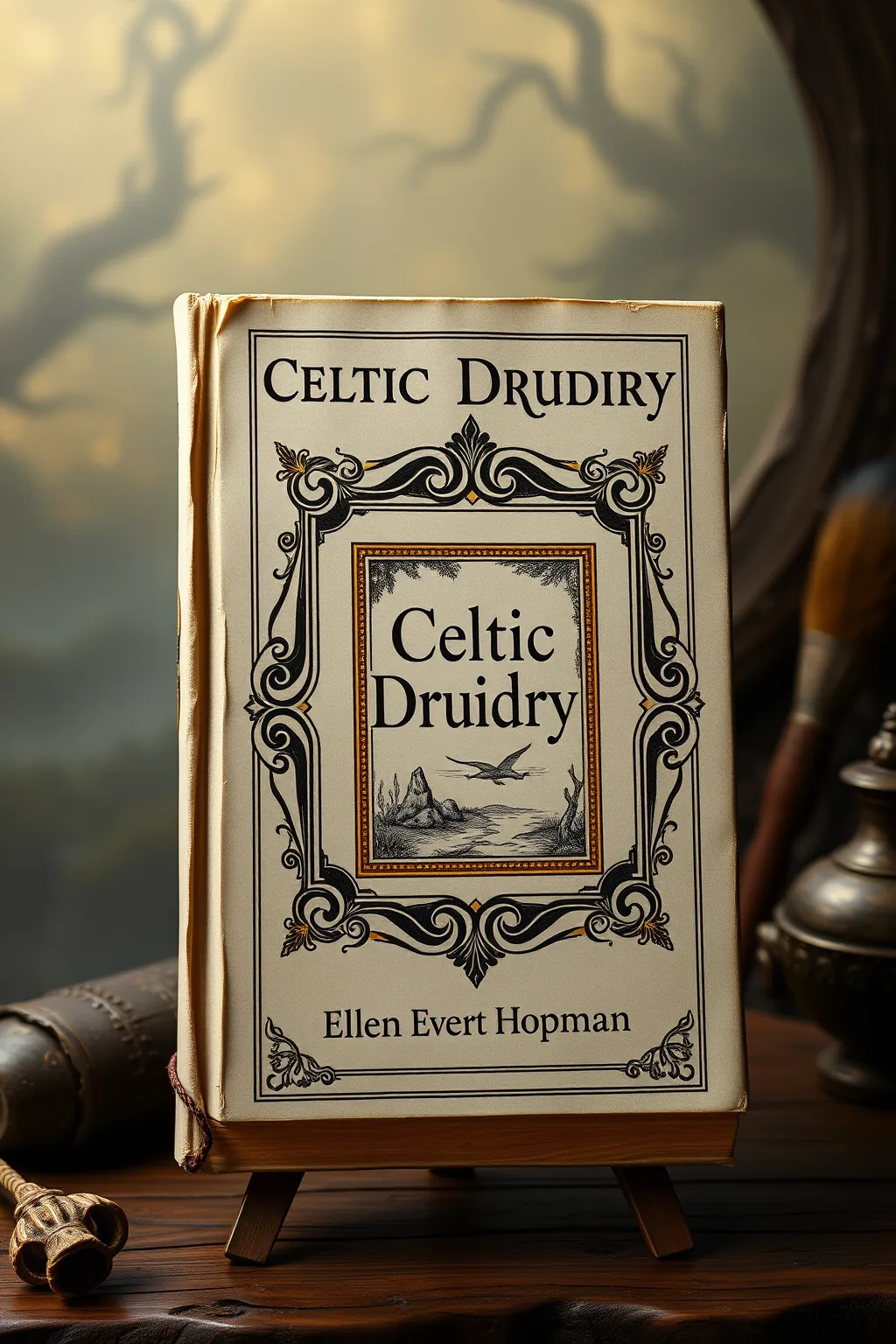
Ellen Evert Hopman's 'Celtic Druidry' stands as a cornerstone for modern students of the ancient Celtic spiritual path. Hopman masterfully bridges the gap between historical reconstruction and practical application, offering deep esoteric insights into Druidic cosmology, ritual, and ethics. Her prose is both authoritative and accessible, guiding the reader through complex concepts with clarity. This book is an essential read for anyone serious about understanding and engaging with authentic Druidic practice, providing a rich foundation for personal spiritual growth and a deeper connection to the earth's sacred energies. Highly recommended for both neophytes and seasoned practitioners seeking to deepen their knowledge.
📝 Description
62
Ellen Evert Hopman's 'Celtic Druidry' (1994) details historical and reconstructed Druidic practices.
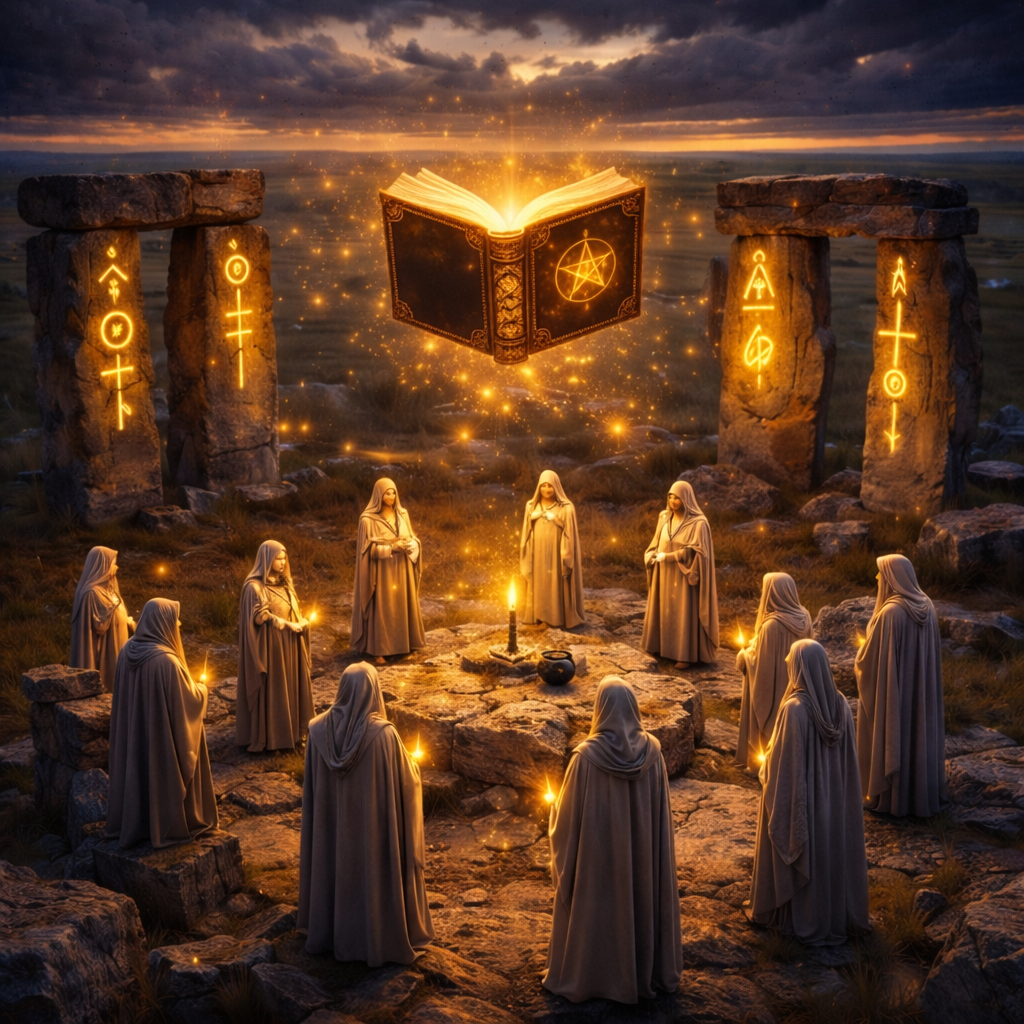
Ellen Evert Hopman's 'Celtic Druidry' describes the practices and beliefs of ancient Druids. The book draws on historical accounts and reconstructed traditions to explain Druidic rituals, symbolism, and philosophy. Hopman, who is a practicing Druid and scholar, aims to guide readers interested in earth-centered spirituality and Celtic traditions. The work focuses on nature-based magic, the meaning found in natural elements, and the connection to the Otherworld, often described as a spiritual dimension.
It presents Druidry not just as a historical subject but as a living tradition. The book encourages readers to engage with ancient ways, understand cosmic rhythms, and find inner knowledge. It is intended for students and practitioners of esoteric traditions, especially those drawn to Celtic lore and nature-based spirituality.
This book fits within the modern Druid revival, which began in the 18th century. It connects to earlier Neopagan and nature-based spiritual movements. Hopman's work specifically addresses the reconstruction of ancient Celtic practices, a common endeavor in esoteric traditions seeking to reclaim perceived lost wisdom. It emphasizes the spiritual connection to the natural world, a hallmark of many esoteric paths.
💡 Why Read This Book?
Embark on an authentic journey into the heart of Druidic wisdom. This book offers tangible rituals, profound philosophical insights, and a deep connection to nature's magic. Ideal for seekers of ancient spiritual paths, students of comparative religion, and practitioners looking to enrich their magical practice with Celtic roots.
⭐ Reader Reviews
Honest opinions from readers who have explored this book.
❓ Frequently Asked Questions
What is Celtic Druidry?
Celtic Druidry is a modern spiritual path inspired by the ancient Celtic peoples, particularly their religious and magical practices. It emphasizes a deep connection with nature, reverence for the earth, and the pursuit of wisdom through ritual and introspection.
Is this book suitable for beginners?
Yes, 'Celtic Druidry' is highly accessible for beginners. Hopman provides clear explanations of core concepts, rituals, and beliefs, making it an excellent starting point for those new to Druidic studies.
What kind of rituals are described?
The book details various rituals, including seasonal celebrations, rites of passage, and practices focused on connecting with nature spirits and the elements. These are designed to be adaptable for personal practice.
Does it cover historical aspects of Druidry?
While primarily focused on modern practice, the book draws heavily on historical scholarship to inform its teachings. It provides context and understanding of the ancient Druids' worldview and societal roles.
Can I practice Druidry without formal initiation?
Yes, the book encourages self-study and personal practice. It empowers individuals to explore and develop their own connection to Druidic principles and the natural world independently.
🔮 Key Themes & Symbolism
The Sacredness of Nature
This theme explores the Druidic worldview that sees the divine immanent in the natural world. It explores the reverence for trees, plants, animals, and the elements, highlighting how these are not merely resources but sacred entities deserving of respect and interaction. Understanding this interconnectedness is presented as fundamental to Druidic spiritual practice, fostering a sense of belonging and responsibility within the cosmic web of life.
Ritual and Ceremony
The book illuminates the power and purpose of Druidic rituals. It covers the structure and intent behind various ceremonies, from seasonal festivals honoring the turning of the year to personal rites designed for healing, divination, or connecting with spirit guides. Emphasis is placed on the symbolic language of ritual, the use of sacred spaces, and the creation of potent energetic shifts through focused intention and embodied practice.
The Otherworld and Ancestral Connection
This theme investigates the Celtic concept of the Otherworld – a field of spirits, ancestors, and fae beings. Hopman guides readers on how to respectfully engage with this dimension through meditation, visualization, and offerings. It underscores the importance of honoring one's ancestors and drawing wisdom and strength from the collective spiritual lineage, fostering a continuous dialogue between the seen and unseen realms.
💬 Memorable Quotes
Direct passages from the work, attributed to the author.
“The forest is a temple, the river a prayer.”
— This evocative phrase expresses the Druidic belief in the inherent sacredness of nature, equating natural landscapes with places of worship and natural processes with spiritual devotion.
“Wisdom is not given, but grown.”
— This highlights the Druidic emphasis on personal growth, experience, and the slow, organic development of understanding rather than passive reception of knowledge.
“Listen to the whisper of the wind; it carries ancient secrets.”
— This encourages attunement to the subtle messages of the natural world, suggesting that profound truths and hidden knowledge can be accessed by those who are present and receptive.
“The circle is unbroken, connecting earth and sky.”
— This refers to the symbolic importance of the circle in Druidic practice, representing unity, completion, and the seamless flow of energy between the terrestrial and celestial realms.
“To know the self is to know the universe.”
— This profound statement reflects the Druidic understanding of microcosm and macrocosm, suggesting that inner exploration is intrinsically linked to understanding the greater reality.
🌙 Esoteric Significance
Tradition
This work is deeply rooted in the Neo-Druidic tradition, a modern revival and reinterpretation of ancient Celtic spiritual and magical practices. It draws upon historical scholarship, folklore, and personal gnosis to create a living, evolving spiritual path that emphasizes reverence for nature, the pursuit of wisdom, and the connection to the divine through the natural world.
Symbolism
Key symbols include the oak (strength, wisdom), the rowan (protection, magic), the Ogham (the ancient Celtic alphabet as a system of divination and magical correspondence), the spiral (growth, journey), and the sacred groves themselves. These symbols are not merely decorative but are seen as conduits of power and carriers of profound meaning, vital for understanding Druidic cosmology and ritual.
Modern Relevance
In a world often disconnected from nature and its cycles, 'Celtic Druidry' offers a powerful antidote. Its emphasis on ecological awareness, sustainable living, and personal empowerment through connection to the earth resonates deeply with contemporary concerns. The book provides practical tools for navigating modern life with a sense of spiritual grounding and a reverence for the living planet.
👥 Who Should Read This Book
This book is a treasure for a diverse audience. Beginners seeking an authentic introduction to Druidic philosophy and practice will find clear guidance. Academic students and history enthusiasts will appreciate the blend of scholarship and living tradition. Spiritual seekers yearning for a nature-based path, a deeper connection to the earth, and a more meaningful engagement with the cycles of life will find profound resonance. Practitioners of other earth-centered traditions may also find valuable insights and complementary perspectives within its pages.
📜 Historical Context
Published in an era where interest in Neo-Paganism and ancient spiritual traditions was burgeoning, 'Celtic Druidry' emerged as a significant text for those seeking to reconstruct and practice the beliefs of the ancient Celts. The late 20th and early 21st centuries witnessed a resurgence of scholarship and popular interest in pre-Christian European religions, moving beyond romanticized notions to a more grounded exploration of available historical and archaeological evidence. This book contributed to that movement by synthesizing academic research with practical, lived experience, offering a viable framework for modern Druidry that was both historically informed and spiritually relevant to contemporary seekers looking for earth-centered and nature-based paths.
📔 Journal Prompts
Reflect on a tree that holds significant meaning for you. What qualities does it embody, and how can you integrate these into your life?
Describe a ritual you could create to honor the current season. What elements, symbols, and intentions would you include?
Explore your personal ancestral lineage. What qualities or lessons might your ancestors wish to impart to you?
Consider the concept of the 'sacred grove' in your own environment. Where do you find places of natural power and peace?
How can you better listen to the subtle 'whispers' of nature in your daily life? What steps can you take to increase your awareness?
🗂️ Glossary
Ogham
An ancient Celtic alphabet consisting of lines and notches, used for inscriptions and as a system for divination and magical practice, with each letter associated with a tree and specific meanings.
Bard
In ancient Celtic society, a poet, storyteller, and keeper of lore. In Neo-Druidry, it refers to a practitioner focused on creative expression, inspiration, and the transmission of wisdom through art and word.
Ovates
A class of Druidic practitioners focused on divination, healing, and visionary work. They are often seen as seers who interpret the signs of the cosmos and the earth.
Druid
The highest order of Celtic spiritual leaders, responsible for wisdom, law, and spiritual guidance. In modern contexts, it refers to practitioners of Neo-Druidry who follow a nature-based spiritual path.
Awen
A Welsh term often translated as 'inspiration' or 'poetic muse.' It signifies divine inspiration and the creative spark sought by Bards and other practitioners.
This book appears in 2 collections
🔮 Readers Also Liked
Browse all →






More by Ellen Evert Hopman
All books →





From the “Ritual Magic” Collection
View all →





More Free Magic & Ritual Books
View all →