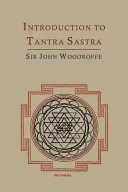
Introduction to Tantra Sastra
 75
75

Introduction to Tantra Sastra
Woodroffe's (Avalon's) Introduction to Tantra Sastra, despite its age, remains a significant if challenging, primer for understanding the philosophical architecture of Tantra. Its strength lies in its systematic, academic approach, meticulously detailing concepts like Kundalini and the role of mantra. The extensive glossary and explanations of Sanskrit terms are invaluable for serious students. However, the prose can be dense and academic, occasionally feeling distant from the lived experience of Tantric practice. A passage discussing the subtle body and the awakening of Kundalini, for instance, provides a clear theoretical map but lacks the visceral descriptions one might find in more contemporary, experiential accounts. For those seeking an authoritative, foundational understanding of Tantric theory, this work is essential, provided they can navigate its scholarly rigor.
📝 Description
75
John George Woodroffe's Introduction to Tantra Sastra was first published in 1918.
John George Woodroffe, writing as Arthur Avalon, authored this Introduction to Tantra Sastra to explain Tantric philosophy and practice to a Western audience. The book breaks down the core ideas, rituals, and cosmology of Tantra. It focuses on the theoretical structure that guides Tantric actions, acting as an entry point into the less obvious areas of Indian spiritual thought.
This work is for students of religion, Western esotericism, and Asian philosophies who want to understand Tantra's scriptural and philosophical foundations. It is also relevant for those studying how Westerners engaged with Eastern mysticism in the early 20th century, particularly within academic and occult circles.
Woodroffe, a British judge and orientalist, introduced many Indian texts to the West. His work on Tantra appeared during a time of significant Western interest in Indian spirituality. It was part of a larger effort by figures like Madame Blavatsky and other scholars to translate and interpret Eastern esoteric traditions for readers interested in Theosophy and occultism. Woodroffe's efforts were important in shaping how the West viewed Tantra.
Published in 1918, Woodroffe's work entered a Western intellectual scene increasingly curious about Eastern traditions. His efforts to systematize and explain Tantra aligned with a broader esoteric revival that sought to uncover hidden knowledge in ancient texts. Woodroffe, operating within both academic and occult spheres, contributed to framing Tantra as a complex spiritual science. This was part of a larger movement that saw figures like Helena Blavatsky and later scholars reinterpreting Indian philosophies for Western esoteric practitioners and intellectuals, establishing a specific lens through which Tantra would be understood for decades.
💡 Why Read This Book?
• You will gain a foundational understanding of core Tantric concepts like Kundalini and the Shiva-Shakti dynamic, as explained in Woodroffe's seminal 1918 work, offering a historically significant perspective on these energies. • You will learn about the philosophical underpinnings of Tantra, including its relationship with Samkhya and Vedanta, providing a structured intellectual framework for practices often approached superficially. • You will discover the scriptural basis and ritualistic significance of Tantric practices, moving beyond popular misconceptions to appreciate their intended spiritual purpose as outlined in the text.
⭐ Reader Reviews
Honest opinions from readers who have explored this book.
❓ Frequently Asked Questions
When was John George Woodroffe's Introduction to Tantra Sastra first published?
The original publication date for John George Woodroffe's "Introduction to Tantra Sastra" under the pseudonym Arthur Avalon was in 1918, though this edition reflects a later reprint.
What is the main focus of Woodroffe's Introduction to Tantra Sastra?
The book primarily focuses on demystifying the philosophical and theoretical aspects of Tantra, explaining its cosmology, key concepts like Kundalini, and ritualistic practices for a Western audience.
Who was Arthur Avalon, and why did he use a pseudonym?
Arthur Avalon was the pseudonym of John George Woodroffe, a British orientalist and judge. He used this name to separate his scholarly works on Indian traditions from his official legal career.
Does this book cover practical Tantric rituals?
While it discusses the theory and purpose behind Tantric rituals, its primary emphasis is on the philosophical and scriptural foundations rather than providing step-by-step practical guides.
What historical period influenced the writing of Introduction to Tantra Sastra?
The book was written in the early 20th century, a period of significant Western interest in Eastern spirituality and esoteric traditions, influenced by movements like Theosophy.
What are some key esoteric concepts explained in the book?
Key concepts include Kundalini, chakras, mantra, yantra, and the divine union of Shiva and Shakti, presented within the framework of Tantric philosophy and cosmology.
🔮 Key Themes & Symbolism
The Nature of Kundalini
Woodroffe's work meticulously details the concept of Kundalini, the dormant spiritual energy believed to reside at the base of the spine. He explains its ascent through the sushumna nadi (central energetic channel) and its interaction with the various chakras. The text emphasizes that Kundalini's awakening is central to Tantric realization, a process involving both physical discipline and profound spiritual understanding, moving beyond simplistic notions to reveal its complex role in consciousness expansion.
Shiva and Shakti Dynamics
A central theme is the exploration of Shiva and Shakti as the fundamental cosmic principles of consciousness and energy. Woodroffe presents their union not merely as a divine concept but as the source of all creation and the ultimate goal of Tantric practice. The book elucidates how this duality is mirrored within the human microcosm, with the awakening of Kundalini symbolizing the union of these forces within the individual practitioner.
Mantra and Yantra as Tools
The text elaborates on the significance of mantra (sacred sounds or syllables) and yantra (geometric diagrams) as integral components of Tantric sadhana (spiritual practice). It posits that these are not mere symbolic representations but possess inherent energetic and psychological potency. Woodroffe explains their use in focusing the mind, invoking specific deities or energies, and facilitating the transformation of consciousness in alignment with Tantric goals.
Tantric Cosmology and Ritual
Introduction to Tantra Sastra provides an overview of the Tantric worldview, where the universe is seen as a manifestation of divine consciousness. It discusses the role of ritual (puja, homa, etc.) not as superstition, but as a systematic means to align the practitioner with cosmic forces, purify the mind and body, and achieve spiritual liberation. The book frames these practices within a coherent philosophical and scriptural context.
💬 Memorable Quotes
Direct passages from the work, attributed to the author.
“The ultimate aim of Tantra is the attainment of liberation (moksha) or the enjoyment of the divine.”
— This statement captures the core purpose of Tantric disciplines. It emphasizes that Tantra, despite its esoteric nature and complex practices, is fundamentally oriented towards spiritual freedom and experiencing the divine, both in this life and beyond.
“Kundalini is the serpent power.”
— This interpretation refers to the common metaphor used to describe Kundalini, representing its coiled, latent energy at the base of the spine, which, when awakened, 'uncoils' and ascends, leading to spiritual transformation.
“The union of Shiva and Shakti is the basis of all existence.”
— This concept underscores the fundamental Tantric principle that the interplay between the static, conscious principle (Shiva) and the dynamic, energetic principle (Shakti) is the origin and sustainer of the entire cosmos.
💡 Key Ideas
Editorial paraphrase of the work's core concepts — not direct quotes.
The body is the temple of God.
This paraphrased concept highlights the Tantric view of the human body as a sacred vessel, not something to be transcended or rejected, but as a primary instrument for spiritual realization and experiencing the divine immanent within.
Mantra is not mere sound but divine power.
This paraphrased idea conveys that Tantric mantras are understood as having inherent spiritual potency, capable of influencing consciousness and reality, rather than being simply phonetic utterances.
🌙 Esoteric Significance
Tradition
This work is foundational to the Western academic and esoteric understanding of Tantra, particularly within the Hindu traditions it primarily addresses. It bridges the gap between traditional Indian scriptural study and the burgeoning interest in Eastern mysticism that characterized the early 20th century, influencing subsequent generations of scholars and practitioners in fields adjacent to Theosophy and general occult studies.
Symbolism
Central symbols explored include Kundalini, depicted as a coiled serpent at the base of the spine, representing latent spiritual energy. The chakras are detailed as energetic centers along the spinal column, each associated with different states of consciousness and spiritual development. Yantras, intricate geometric diagrams, are presented as visual representations of cosmic energies and deities, used for meditation and invocation.
Modern Relevance
Woodroffe's work continues to be a vital reference for scholars of religion and South Asian studies. Contemporary practitioners of yoga and meditation often engage with his explanations of Kundalini and chakras, seeking a deeper theoretical context. His systematic approach also informs modern comparative studies of esoteric traditions, helping to contextualize Tantric elements within broader global mystical movements.
👥 Who Should Read This Book
• Academic researchers of comparative religion and South Asian studies, seeking a historically significant and detailed textual analysis of Tantric philosophy and origins. • Students of Western esotericism and occultism, looking to understand the roots of early 20th-century interpretations of Eastern mystical traditions and their influence. • Serious practitioners of yoga and meditation who wish to move beyond superficial understandings and explore the scriptural and philosophical underpinnings of concepts like Kundalini and chakras.
📜 Historical Context
John George Woodroffe's "Introduction to Tantra Sastra" emerged in the early 20th century, a fertile period for the cross-pollination of Western esoteric thought and Eastern philosophies. Woodroffe, operating under the influential pseudonym Arthur Avalon, was a key figure in this exchange, particularly following his extensive legal career in India. His work sought to present Tantra, often sensationalized or misunderstood, with academic rigor and a focus on its philosophical depth. This was a time when movements like Theosophy, founded by Helena Blavatsky in the late 19th century, had already piqued Western interest in Indian mysticism. Woodroffe's scholarship provided a more detailed, scripturally grounded perspective, contrasting with more speculative or popularized accounts. While figures like Swami Vivekananda had already introduced Vedanta to the West, Woodroffe's specific focus on Tantra filled a significant gap, offering a comprehensive theoretical framework that shaped subsequent Western academic and occult engagement with the tradition.
📔 Journal Prompts
Reflect on the concept of Kundalini as described by Woodroffe and its potential role in personal transformation.
Analyze the Shiva-Shakti dynamic and consider how these principles might manifest in your own life.
Examine the function of mantra and yantra as tools for focusing consciousness, based on the book's explanations.
Consider the Tantric view of the body as a sacred vessel, as presented in the text.
Contemplate the relationship between the microcosm (individual) and macrocosm (universe) within Tantric philosophy.
🗂️ Glossary
Tantra
A complex system of spiritual traditions originating in India, encompassing rituals, meditation, yoga, and philosophy, often focused on the divine feminine and the transformation of energy.
Sastra
A Sanskrit term meaning 'science,' 'treatise,' 'doctrine,' or 'scripture,' referring to a body of authoritative texts.
Kundalini
The latent spiritual energy believed to reside at the base of the spine, often symbolized as a coiled serpent, which awakens and ascends through the chakras during spiritual practice.
Chakra
Literally 'wheel' or 'disk,' these are psycho-energetic centers within the subtle body, typically along the spine, believed to regulate spiritual and physical functions.
Shiva
In Hinduism, the Supreme Being in Shaivism and a major deity in Hinduism, often representing pure consciousness, stillness, and the masculine principle.
Shakti
The primordial cosmic energy, the dynamic force that moves through the universe, often personified as the consort of Shiva and representing the feminine principle.
Mantra
A sacred utterance, sound, syllable, word, or group of words believed to have psychological and spiritual power, used in meditation and ritual.