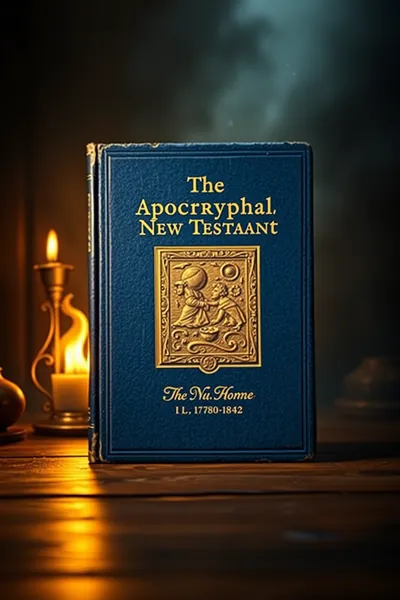
The gnostic Gospels of Jesus

 74
74

The gnostic Gospels of Jesus
Meyer’s assembling of the Gnostic Gospels of Jesus offers a vital, if sometimes stark, counterpoint to the familiar narratives. The strength lies in its direct presentation of these often-challenging texts, eschewing excessive interpretation to let the voices of the early Gnostics speak. Meyer’s introduction and notes are judicious, providing necessary historical grounding without overwhelming the reader. A limitation, however, is the inherent fragmentation of the sources themselves; understanding the full scope of Gnostic thought requires consulting multiple texts and scholarly analyses. The Gospel of Thomas, with its enigmatic sayings, particularly highlights the difficulty of pinning down a singular Gnostic message. Meyer’s careful curation, though, allows these diverse perspectives to confront the reader directly. It serves as an essential, unvarnished look at a pivotal moment in early religious thought.
📝 Description
74
Marvin W. Meyer's 1992 compilation presents early Christian texts offering a different view of Jesus' teachings.
This volume gathers texts from the Gnostic Gospels, providing an alternative perspective to the canonical scriptures. These writings, many found in the Nag Hammadi collection, focus on spiritual awakening and the divine within individuals. Meyer's work makes these often difficult texts accessible, discussing their discovery and theological significance. It serves as an introduction to writings that question standard interpretations of Jesus' message.
The book is for anyone interested in the historical Jesus outside the New Testament, especially those drawn to Gnostic thought. Scholars of early Christianity, comparative religion, and esoteric studies will find it useful. It also appeals to those seeking different spiritual paths and a better grasp of the intellectual diversity in the early centuries CE. Readers curious about the roots of mystical ideas in a Christian setting will discover much here.
These texts emerged from a time of significant theological and philosophical debate in the Greco-Roman world. The Gnostic movement, active from the 2nd to 4th centuries CE, presented complex cosmologies and paths to salvation that often differed from developing Orthodox Christianity. Meyer's collection draws heavily from discoveries like the Nag Hammadi library, unearthed in 1945, which revealed a large number of Gnostic scriptures. Understanding this context is key to grasping why these Gospels were initially suppressed and later rediscovered, offering a contrast to the emerging Christian mainstream.
💡 Why Read This Book?
• Gain direct access to the sayings and narratives found in texts like the Gospel of Thomas, offering a different perspective on Jesus' teachings than the canonical Gospels. • Understand the historical context of the 2nd and 3rd centuries CE, a period of intense religious experimentation and the formation of diverse Christian interpretations. • Explore the Gnostic concept of *gnosis*, or direct spiritual knowledge, and its implications for personal liberation and understanding the divine.
⭐ Reader Reviews
Honest opinions from readers who have explored this book.
❓ Frequently Asked Questions
What is the primary difference between the Gnostic Gospels and the canonical Gospels?
The Gnostic Gospels, such as those compiled by Meyer, emphasize *gnosis* (spiritual knowledge) and inner awakening as the path to salvation, often presenting a dualistic cosmology and a different view of Jesus's divine nature compared to the canonical Gospels.
When were the Gnostic Gospels discovered?
Many of the most significant Gnostic texts, including those featured in Meyer's work, were discovered in 1945 near Nag Hammadi in Egypt, providing scholars with original manuscripts from the early centuries CE.
Who is Marvin W. Meyer in the field of Gnostic studies?
Marvin W. Meyer was a respected scholar and editor specializing in Gnosticism and early Christian texts. His work focuses on making these complex ancient writings accessible to a wider audience.
Are the Gnostic Gospels considered scripture by mainstream Christianity?
No, the Gnostic Gospels were excluded from the canon of the New Testament by early Church fathers and are not considered authoritative scripture by most Christian denominations today.
What does the term 'Gnostic' refer to?
'Gnostic' derives from the Greek word 'gnosis,' meaning knowledge. Gnosticism refers to a diverse set of religious and philosophical movements in the early centuries CE that emphasized secret spiritual knowledge for salvation.
What is the significance of the Gospel of Thomas?
The Gospel of Thomas is a collection of sayings attributed to Jesus, with no narrative. Its significance lies in its early date and its focus on esoteric interpretations of Jesus's words, offering a unique window into early Christian thought.
🔮 Key Themes & Symbolism
The Path of Gnosis
This work foregrounds *gnosis*, the direct, intuitive apprehension of divine reality, as the central tenet of Jesus's message as presented in these non-canonical texts. Unlike faith-based salvation, Gnosticism posits that liberation comes from awakening to one's own divine origin and understanding the true nature of the cosmos. The texts explore how Jesus acts as a revealer, imparting secret knowledge that allows individuals to transcend the material world and its illusory rulers, the Archons.
Dualistic Cosmology
A prevalent theme is the Gnostic dualism, which posits a radical separation between the unknowable, supreme God and the flawed creator deity (often identified with the Old Testament God) responsible for the material world. This world is seen as a prison, created by lesser beings (Archons) who seek to keep humanity ignorant of its divine potential. The Gnostic Gospels present Jesus as an emissary from the true God, sent to liberate souls trapped in this cosmic illusion.
The Divine Feminine
Several Gnostic texts highlight the role of the divine feminine, often personified as Sophia (Wisdom). Her story, involving a fall or error that contributes to the creation of the material realm, is a significant motif. These Gospels frequently depict Jesus interacting with female disciples, such as Mary Magdalene, in ways that suggest a more egalitarian spiritual dynamic and a recognition of feminine principles as integral to the divine.
Jesus as Revealer
In contrast to the salvific sacrifice emphasized in later orthodox Christianity, the Gnostic Jesus primarily functions as a teacher and revealer of hidden truths. His teachings are less about atonement for sin and more about unlocking the innate divinity within each person. The sayings found in texts like the Gospel of Thomas, for instance, focus on understanding esoteric principles and achieving spiritual self-awareness through Jesus's esoteric interpretations.
💬 Memorable Quotes
Direct passages from the work, attributed to the author.
“Let him who seeks not cease seeking until he finds.”
— This iconic saying from the Gospel of Thomas captures the Gnostic emphasis on active spiritual seeking. It implies that the path to enlightenment is one of diligent inquiry and persistent effort, rather than passive reception of doctrine.
“Jesus said, 'Many are called, but few are chosen.'”
— This statement, found in Thomas, suggests a selective path to spiritual realization. It points towards a select group who possess the inner capacity or *gnosis* to truly understand and follow Jesus's esoteric teachings, distinguishing them from the masses.
“If you bring forth what is within you, what you bring forth will save you.”
— This teaching highlights the Gnostic belief in the inherent divinity within each individual. Salvation or liberation is not bestowed from without, but achieved by accessing and manifesting the divine potential that already resides within one's own being.
“They are blind men who mislead blind men.”
— This critique, likely aimed at conventional religious authorities, underscores the Gnostic disdain for those who lack true spiritual insight. It suggests that leaders who themselves are ignorant cannot guide others toward enlightenment, emphasizing the need for authentic inner wisdom.
“The kingdom of God is within you.”
— A core Gnostic tenet, this saying posits that the divine realm is not an external location but an internal state of being. True spirituality involves recognizing and cultivating this inner kingdom, accessible through direct experience and self-knowledge.
🌙 Esoteric Significance
Tradition
This work is central to understanding Gnostic traditions within the broader spectrum of Western Esotericism. Gnosticism, with its emphasis on hidden knowledge (*gnosis*), complex cosmologies, and the divine spark within humanity, forms a foundational pillar of esoteric thought. Meyer’s compilation makes these often-dense texts accessible, allowing modern practitioners and scholars to engage directly with a lineage that profoundly influenced later mystical and occult movements, offering a distinct path of spiritual liberation.
Symbolism
Key symbols include the 'Light-Being,' representing the divine essence within the human soul, and the 'Archons,' often depicted as controlling forces or flawed creators of the material world who seek to obscure truth. The 'Water of Life' symbolizes divine knowledge or spiritual rebirth, while the 'Tree of Knowledge' can represent the dualistic reality of the material plane, from which the Gnostic seeks to ascend through *gnosis*.
Modern Relevance
Contemporary esoteric thinkers, Jungian psychologists exploring the shadow self and archetypes, and various New Age spiritualities draw heavily on Gnostic themes. The emphasis on personal awakening, the critique of external authority, and the exploration of consciousness find resonance in modern self-help and spiritual growth movements. Authors like Elaine Pagels have also brought Gnostic studies into mainstream academic and popular discourse, highlighting its enduring impact.
👥 Who Should Read This Book
• Students of comparative religion and early Christianity will find a vital counterpoint to canonical narratives, offering insights into the diversity of 1st-4th century CE beliefs. • Seekers of esoteric knowledge and alternative spiritual paths can explore the Gnostic emphasis on inner awakening and direct experience of the divine. • Scholars and enthusiasts of Western Esotericism will gain a foundational understanding of Gnosticism, a crucial influence on later mystical and occult traditions.
📜 Historical Context
The Gnostic Gospels of Jesus emerged from a period of intense religious and philosophical ferment in the 2nd and 3rd centuries CE. This era saw the burgeoning of Christianity alongside a spectrum of Hellenistic philosophies and mystery cults, creating a fertile ground for diverse interpretations of divinity and salvation. Gnosticism itself was not a monolithic religion but a collection of movements sharing certain core ideas, such as the pursuit of *gnosis* and a dualistic worldview. These texts often stood in direct opposition to the developing proto-Orthodox Christianity, which emphasized historical events and apostolic succession. The discovery of the Nag Hammadi library in 1945 provided scholars with primary sources that had previously been known mainly through the condemnations of Church Fathers like Irenaeus. This cache of texts, including the Gospel of Thomas and the Gospel of Philip, offered direct access to Gnostic thought, challenging earlier assumptions and revealing the complexity of early Christian diversity.
📔 Journal Prompts
The concept of *gnosis* as presented in the Gospel of Thomas.
Sophia's role in the creation myths explored within these Gospels.
The symbolic meaning of light and darkness in the Gnostic worldview.
Jesus's teachings on the inner kingdom versus external religious structures.
The nature of the Archons and their influence on the material realm.
🗂️ Glossary
Gnosis
Greek for 'knowledge.' In Gnosticism, it refers to intuitive, experiential knowledge of the divine and the true nature of reality, considered essential for spiritual liberation.
Archons
In Gnostic cosmology, these are intermediary rulers or cosmic powers, often seen as flawed creators or controllers of the material universe, who seek to keep humanity ignorant of its divine origin.
Sophia
Greek for 'Wisdom.' In many Gnostic systems, Sophia is a divine female being whose descent or error leads to the creation of the material world and its imperfections.
Dualism
A philosophical or religious belief system that posits two fundamental, often opposing, principles. Gnostic dualism typically distinguishes between a transcendent, good God and an imperfect creator of the material world.
Aeons
In Gnostic cosmology, these are divine emanations or spiritual beings that exist in the Pleroma (fullness) of the supreme God.
Pleroma
The spiritual realm or fullness of the supreme, transcendent God in Gnostic cosmology, from which Aeons emanate.
Demiurge
Often identified with the creator of the material world in Gnosticism, seen as an inferior or ignorant deity distinct from the true, supreme God.
🔮 Readers Also Liked
Browse all →







More by Marvin W Meyer
All books →
More Free Sacred Texts & Gnosticism Books
View all →