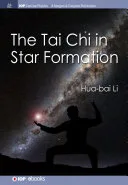
The Tai Chi in Star Formation
 71
71

The Tai Chi in Star Formation
Hua-bai Li's "The Tai Chi in Star Formation" offers a compelling, if unconventional, lens through which to view the cosmos. The author's assertion that the principles of Tai Chi, specifically "to conquer the unyielding with the yielding," find echoes in the observed mechanics of star formation is both audacious and, in its way, illuminating. The strength of the book lies in its ability to draw tangible parallels between the martial art's philosophy and astrophysical processes. For example, the description of self-gravity's role in the isotropic collapse of molecular clouds, leading to magnetic field compression, serves as a potent illustration of the book's central thesis. However, the work occasionally struggles to maintain this delicate balance. At times, the interpretations feel more like poetic analogies than rigorous scientific comparisons, leaving the reader to bridge significant conceptual gaps. The limitation here is the potential for overreach, where the metaphorical framework might overshadow the scientific substance. A particularly striking passage discusses how the density of collapsing clouds is a result of this dynamic interplay, a concept Li frames as yielding to natural forces to achieve greater form. Ultimately, Li provides a unique perspective that encourages a re-evaluation of cosmic processes through a philosophical, rather than purely empirical, viewpoint.
📝 Description
71
Hua-bai Li's 2017 book connects Tai Chi principles to the science of star formation.
Published in 2017, "The Tai Chi in Star Formation" by Hua-bai Li draws a direct parallel between the ancient Chinese martial art of Tai Chi and the scientific study of how stars form. The book argues that the fundamental ideas guiding the creation of celestial bodies share common ground with the philosophical concept of using yielding to overcome hardness. Li suggests that the complex forces at play in stellar nurseries, such as gravity, turbulence, and magnetic fields, are not just physical events but are governed by natural laws that Tai Chi has long sought to embody.
Li examines specific astronomical processes, like how a molecular cloud's self-gravity causes it to collapse uniformly, compressing magnetic fields and shaping subsequent density patterns. He likens this dynamic to the yielding strategy used in martial arts. This work is aimed at readers with diverse interests, including Tai Chi practitioners interested in a cosmic view of their discipline, and physicists or astronomers looking for new ways to conceptualize complex natural systems. It will also interest those who study comparative philosophy, the links between science and spirituality, or the idea that universal principles apply across different scales of existence.
This book fits within a tradition that seeks universal principles across diverse fields. It bridges traditional Chinese philosophy, specifically the concepts of Yin and Yang as embodied in Tai Chi, with modern scientific cosmology. This approach echoes a broader interest in finding unifying patterns in nature, applying ancient wisdom to contemporary scientific understanding. It aligns with esoteric thought that posits interconnectedness between the macrocosm and microcosm, suggesting that the same fundamental laws might govern both human practice and cosmic events.
💡 Why Read This Book?
• Gain a novel interpretive framework for astrophysical phenomena, understanding star formation not just through physics but through the philosophical principle of "conquering the unyielding with the yielding," as detailed in the initial chapters. • Explore the physical dynamics of molecular cloud collapse, specifically how self-gravity, turbulence, and magnetic fields interact, by referencing the examples Hua-bai Li uses to illustrate Tai Chi's core tenets. • Cultivate a more holistic view of universal laws, bridging the perceived gap between ancient Eastern philosophy and modern Western scientific observation, inspired by Li's comparative approach.
⭐ Reader Reviews
Honest opinions from readers who have explored this book.
❓ Frequently Asked Questions
What is the core analogy presented in 'The Tai Chi in Star Formation'?
The book's central analogy compares the principles of Tai Chi, particularly the concept of 'to conquer the unyielding with the yielding,' to the observed interactions of gravity, turbulence, and magnetic fields during star formation.
When was 'The Tai Chi in Star Formation' first published?
The book was first published on November 1, 2017.
Who is the author of 'The Tai Chi in Star Formation'?
The author is Hua-bai Li.
What scientific processes are discussed in relation to Tai Chi?
The book discusses star formation, specifically the isotropic collapse of molecular clouds due to self-gravity, and the compression of magnetic field lines.
What is the primary philosophical concept from Tai Chi that the book explores?
The primary concept is 'to conquer the unyielding with the yielding,' which is examined as a guiding principle in both the martial art and natural cosmic phenomena.
What is the book's perspective on the nature of universal laws?
It suggests that universal principles, as exemplified by Tai Chi's philosophy, govern both human practices and fundamental physical processes in the universe, such as star formation.
🔮 Key Themes & Symbolism
Cosmic Dynamics as Tai Chi
The work posits that the intricate dance of forces governing star formation—gravity, magnetic fields, and turbulence—mirrors the philosophical principles of Tai Chi. Hua-bai Li argues that the natural tendency towards equilibrium and the responsive interaction of these cosmic elements align with Tai Chi's emphasis on yielding to overcome. This perspective reframes celestial events not as brute force collisions, but as elegantly balanced processes, much like the movements within a Tai Chi form. The initial collapse of molecular clouds, for example, is presented as a manifestation of yielding to the dominant force of self-gravity, which then sets the stage for further development and density increases.
Yielding to Conquer
This theme is central, exploring how the principle of 'to conquer the unyielding with the yielding' applies to astrophysical phenomena. The book examines how the compression of magnetic field lines during the isotropic collapse of a molecular cloud, driven by self-gravity, can be seen as a cosmic example of this principle. Instead of resisting the collapse, the magnetic fields are compressed, influencing the subsequent density distribution. This suggests that in both martial arts and the universe, power is not always derived from direct opposition but from skillful adaptation and responsiveness to inherent forces, leading to the formation of new structures like stars.
Interplay of Fundamental Forces
The book examines the complex interaction between gravity, turbulence, and magnetic fields in the context of star formation. It highlights how these forces do not act in isolation but engage in a dynamic interplay that dictates the evolution of molecular clouds. The concept of density increase within these clouds is presented as a direct consequence of this interaction. By likening this process to Tai Chi, Hua-bai Li suggests that understanding these fundamental forces requires appreciating their relational dynamics rather than viewing them as independent agents, promoting a more holistic comprehension of cosmic creation.
Natural Laws and Philosophy
A core tenet explored is the idea that ancient philosophical systems, like Tai Chi, often encapsulate observations of natural laws that modern science is only now articulating. The work suggests that the laws inspiring Tai Chi are the same laws that govern the universe. This perspective challenges a strict dichotomy between the spiritual or philosophical and the scientific, proposing that both can arrive at similar understandings of reality. The book implies that by studying the natural world through the lens of ancient wisdom, we can gain deeper insights into its workings and our place within it.
💬 Memorable Quotes
Direct passages from the work, attributed to the author.
“The observation of star formation shows that stars result from the interaction between gravity, turbulence and magnetic fields.”
— This statement frames the scientific basis for the book's argument, highlighting the complex interplay of forces that Hua-bai Li then relates to Tai Chi principles. It sets the stage for understanding cosmic processes through a lens of dynamic interaction.
“Tai Chi ... emphasises how 'to conquer the unyielding with the yielding.'”
— This is the central philosophical tenet from Tai Chi that the author applies to astrophysical phenomena. It suggests that power and progress in nature, as in martial arts, often come from adaptation rather than brute force.
“The density of [molecular clouds] ...”
— This fragmented quote, likely from a longer passage, points to the author's examination of how density changes in cosmic clouds are a direct result of the interacting forces like gravity and magnetic fields, mirroring Tai Chi's focus on dynamic equilibrium.
“The interaction again follows the natural rules that inspired Tai Chi.”
— This assertion directly links the scientific observations of star formation to the ancient philosophical system of Tai Chi, proposing a universal set of natural laws that underpin both.
💡 Key Ideas
Editorial paraphrase of the work's core concepts — not direct quotes.
if self-gravity is the force that dominates, the molecular cloud will collapse isotropically, which compresses magnetic field lines.
This passage offers a concrete example of the book's thesis. The isotropic collapse is a natural process, and the subsequent compression of magnetic fields is interpreted as a physical manifestation of 'yielding' to the dominant force of gravity.
🌙 Esoteric Significance
Tradition
While not explicitly tied to a single lineage like Kabbalah or Hermeticism, the work draws heavily from Taoist philosophy, particularly the principles embodied in Tai Chi. It aligns with esoteric traditions that seek universal correspondences between the microcosm (human body, martial arts) and the macrocosm (the universe). The book fits within a modern esoteric current that seeks to clarify ancient practices and find their roots in natural law, suggesting that practices like Tai Chi are not mere exercises but profound observations of cosmic order.
Symbolism
The primary symbolic system is Tai Chi itself, with its Yin-Yang duality representing the balance of opposing yet complementary forces. The 'yielding' is a key symbolic action, representing adaptability and receptivity, crucial for both martial arts defense and the formation of stars from diffuse cosmic gas. The isotropic collapse of molecular clouds symbolizes a primal state of potential, where initial yielding to gravity allows for the subsequent organization and densification that leads to stellar birth.
Modern Relevance
Contemporary thinkers and practitioners interested in embodied cognition, the philosophy of science, and comparative cosmology may find this work relevant. It speaks to a modern search for integrated worldviews that bridge science and spirituality. Schools of thought focusing on systems thinking, ecological consciousness, and the application of Eastern philosophies to modern challenges can draw inspiration from Li's approach, seeing cosmic phenomena through a lens of dynamic balance and interconnectedness.
👥 Who Should Read This Book
• Students of comparative philosophy and cosmology interested in cross-cultural interpretations of universal laws, particularly those exploring Taoist principles in scientific contexts. • Practitioners of Tai Chi seeking a deeper, cosmological understanding of their art, connecting physical movements to the grand scale of the universe. • Scientists and enthusiasts of astrophysics curious about novel metaphorical frameworks for understanding complex phenomena like star formation, moving beyond purely quantitative analysis.
📜 Historical Context
Published in 2017, "The Tai Chi in Star Formation" emerged during a period of increasing interest in interdisciplinary studies and the popularization of scientific concepts. The late 2010s saw a growing appreciation for ancient wisdom traditions and their potential relevance to modern challenges and understanding. While the scientific exploration of star formation has a long history, dating back to early 20th-century astrophysics and theories developed by figures like Subrahmanyan Chandrasekhar, Hua-bai Li's work revisits these observations through a distinct philosophical framework. The book does not directly engage with specific contemporary scientific debates from the 2000s or 2010s concerning molecular cloud physics or computational astrophysics models. Instead, it implicitly participates in a broader cultural conversation that seeks to find unifying principles across diverse fields of knowledge, a trend that contrasts with the more siloed scientific research prevalent in earlier decades. The reception of such cross-disciplinary works often varies, with some appreciating the novel perspectives and others finding the analogies strained.
📔 Journal Prompts
The principle of 'conquering the unyielding with the yielding' in relation to self-gravity's role in molecular cloud collapse.
How does the compression of magnetic field lines during stellar formation mirror the concept of yielding?
Reflect on the interplay between gravity, turbulence, and magnetic fields as a universal dynamic.
Consider the natural rules that inspired Tai Chi and their manifestation in cosmic events.
Evaluate the density increase in molecular clouds as a consequence of balanced forces.
🗂️ Glossary
Tai Chi
An ancient Chinese martial art and practice that emphasizes slow, flowing movements, balance, and the philosophical principles of Taoism, particularly the interplay of Yin and Yang.
Isotropic Collapse
A type of collapse where a spherical object or region contracts uniformly in all directions, maintaining its spherical symmetry.
Molecular Cloud
Vast, cold, dense regions in interstellar space composed primarily of molecular hydrogen, serving as the birthplaces of stars.
Self-Gravity
The gravitational attraction exerted by an object's own mass upon itself, a primary force driving the collapse of molecular clouds.
Magnetic Field Lines
Conceptual lines representing the direction and strength of a magnetic field; in astrophysics, they play an important role in the dynamics of interstellar gas and star formation.
Density
In physics, the mass of a substance per unit volume; in astrophysics, the concentration of matter within a region of space.
Turbulence
Irregular, chaotic motion within a fluid (like interstellar gas) characterized by eddies and vortices, which can affect the rate and nature of star formation.