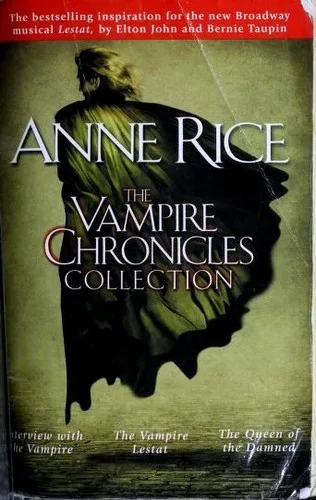
Vampire Chronicles (Interview with the Vampire / Queen of the Damned / Vampire Lestat)
 76
76

Vampire Chronicles (Interview with the Vampire / Queen of the Damned / Vampire Lestat)
Anne Rice's "Vampire Chronicles" trilogy, particularly as presented in its collected form, offers a singular vision of vampirism not as a curse but as a complex existential state. The sheer force of Lestat's personality, especially in "The Vampire Lestat," is undeniable; he is a rock star of the undead, a charismatic figure whose self-discovery drives the narrative with an almost operatic intensity. However, the series falters when it attempts to expand its mythos too broadly, as seen in "The Queen of the Damned." While ambitious in its scope, the theological and mythological elements can feel convoluted, diluting the sharp psychological focus that made "Interview with the Vampire" so compelling. The strength lies in Rice's masterful prose and her ability to make ancient, monstrous beings relatable through their very human (or post-human) struggles with loneliness and purpose. Ultimately, this collection remains a foundational text for modern dark fantasy, despite its occasional narrative overreach.
📝 Description
76
Anne Rice's Vampire Chronicles, starting with 'Interview with the Vampire' in 1976, redefined gothic horror.
Anne Rice's "Vampire Chronicles" collection, first published as an omnibus in 1989, presents a saga of immortal beings. These novels move beyond simple horror tropes to examine the philosophical weight of eternal life, the nature of identity, and profound existential questions. The series follows the lineage and development of vampires, from their origins to their ultimate fate. Readers will find these narratives engage with the darker aspects of existence, questioning consciousness, the burdens of unending life, and the construction of self outside traditional frameworks. The books address morality, the impact of power, and weave together elements of art, philosophy, and religion.
The vampires, especially Lestat de Lioncourt, serve as characters through whom complex debates unfold. They challenge established religious beliefs and consider their own potential for damnation and redemption. The concept of the "Blood God" and the exploration of forbidden knowledge are central to their immortal existence. These stories offer a unique perspective on good and evil and the pursuit of meaning in what can seem like a meaningless world.
The "Vampire Chronicles" draws on Gnostic themes of dualism and the search for forbidden knowledge. Rice's vampires grapple with a soulless existence, mirroring Gnostic ideas of a flawed creation and the potential for an inner awakening or gnosis. Their questioning of religious dogma and their own damnation speaks to a search for meaning outside established divine order. The concept of the 'Blood God' can be seen as an esoteric deity figure, central to the vampires' understanding of their own nature and their place in the cosmos.
💡 Why Read This Book?
• Understand the philosophical underpinnings of modern vampire lore by examining Lestat's journey from "Interview with the Vampire" (1976) through "The Vampire Lestat" (1985), learning how Rice transformed a monstrous archetype into an existential figure. • Explore the Gnostic concept of the "Blood God" and its manifestation in "The Queen of the Damned" (1988), analyzing how Rice uses ancient religious ideas to frame supernatural conflicts and the nature of divinity. • Feel the weight of eternal existence and the search for meaning through the eyes of Louis de Pointe du Lac, whose introspective torment in "Interview with the Vampire" provides a stark counterpoint to Lestat's flamboyant immortality.
⭐ Reader Reviews
Honest opinions from readers who have explored this book.
❓ Frequently Asked Questions
When were the books in the Vampire Chronicles originally published?
While the omnibus "Vampire Chronicles" might be dated later, the individual novels were published earlier: "Interview with the Vampire" in 1976, "The Vampire Lestat" in 1985, and "The Queen of the Damned" in 1988.
What is the central philosophical theme in Anne Rice's Vampire Chronicles?
A core theme is existentialism and the search for meaning in eternal life. The vampires grapple with identity, morality, loneliness, and the nature of good and evil across centuries.
How does "The Queen of the Damned" differ from "Interview with the Vampire"?
"Interview with the Vampire" focuses on the personal, introspective torment of Louis. "The Queen of the Damned" shifts to a more epic, mythic scale, exploring ancient vampire history and a "Blood God" entity.
What is the significance of Lestat de Lioncourt in the series?
Lestat is the charismatic, often egocentric protagonist of "The Vampire Lestat." He serves as a rock star of the undead, driving many of the series' philosophical debates and transformations.
Did Anne Rice draw from any specific esoteric traditions?
Rice's work often touches upon Gnostic themes, particularly the concept of fallen divinity and the search for hidden knowledge. The vampires' eternal struggle can be seen as a metaphor for the soul's journey.
Is the "Vampire Chronicles" collection the first appearance of these books?
No, this collection compiles novels that were first published individually. "Interview with the Vampire" was first published in 1976, predating the collection's apparent 1989 omnibus publication date.
🔮 Key Themes & Symbolism
The Burden of Immortality
The "Vampire Chronicles" presents eternal life not as a gift but as a profound existential weight. Characters like Louis de Pointe du Lac, created in 1791, grapple with centuries of isolation, moral decay, and the loss of human connection. This theme forces a re-evaluation of life's value when time becomes infinite, pushing vampires to seek purpose and meaning in a world they have long outlived, often through art, philosophy, or hedonism.
Gnostic Dualism and Fallen Divinity
Rice frequently employs Gnostic concepts, particularly in "The Queen of the Damned." The figure of Akasha, the "Blood God," can be interpreted as a representation of a flawed creator or a primal force whose control over the world is challenged. The vampires' struggle often mirrors the Gnostic idea of the soul trapped in a material world, seeking liberation or understanding from a corrupt cosmic order. This adds a layer of theological drama to their eternal existence.
Identity and Self-Creation
For beings who have shed their mortal lives, identity becomes a fluid, constructed entity. Lestat de Lioncourt, in particular, actively shapes his persona, becoming a rock star, a philosopher, and a cultural icon. The series explores how external experiences and internal reflection forge the self when memory spans centuries. This theme questions whether true identity is inherent or an ongoing performance, especially for those removed from conventional human society.
The Nature of Evil and Morality
Rice's vampires are rarely presented as purely monstrous. They are complex beings capable of great love, profound despair, and horrific acts. The narrative forces readers to confront the ambiguity of good and evil, particularly when driven by instinct, hunger, and eternal loneliness. The vampires' moral quandaries, such as Louis's struggle with his vampiric nature, challenge simplistic definitions of sin and redemption.
💬 Memorable Quotes
Direct passages from the work, attributed to the author.
“Here I am, the ancient demon, the ancient god, the ancient devil. I am Lestat.”
— This declaration from Lestat in "The Vampire Lestat" signifies his embrace of his immortal nature and his self-made identity. It reflects a Gnostic-like assertion of self against perceived external judgment or cosmic hierarchy.
“We are the beautiful creatures of the night.”
— A recurring sentiment, this phrase captures the romanticized yet dangerous allure of the vampire. It speaks to their otherness, their aesthetic, and their predatory existence outside mortal bounds.
“I am the Queen of the Damned.”
— Akasha's proclamation in "The Queen of the Damned" asserts her primal power and her dominion over the vampire race. It signifies a claim to ultimate authority within their supernatural hierarchy.
“It is the history of my heart.”
— This phrase, often associated with Lestat's retrospective narration, emphasizes the personal, emotional core of his long existence. It suggests that even for an immortal, lived experience and feeling define their being.
💡 Key Ideas
Editorial paraphrase of the work's core concepts — not direct quotes.
Death alone can be my salvation.
Spoken by Louis in "Interview with the Vampire," this line expresses the profound weariness and existential despair that immortality can bring. It highlights the paradoxical desire for an end to endless existence.
🌙 Esoteric Significance
Tradition
Rice's work draws implicitly from Gnostic traditions, particularly concerning the nature of divinity and the soul's struggle within a flawed creation. The concept of Akasha as a "Blood God" in "The Queen of the Damned" echoes Gnostic cosmology, featuring a primal entity whose existence and actions are central to the fate of other beings. The vampires' search for knowledge and meaning in their eternal damnation also aligns with the Gnostic quest for gnosis (knowledge) as a path to liberation from a materialist or corrupted existence.
Symbolism
The act of vampirism itself symbolizes a corrupted form of spiritual sustenance or a perversion of divine communion, turning life-giving blood into a tool of predation and eternal suffering. The "Blood God" represents a primal, perhaps flawed, creator or a cosmic imbalance that the vampires must confront. Immortality, in Rice's hands, symbolizes not transcendence but an inescapable existential prison, forcing a re-evaluation of life's value and the nature of consciousness detached from mortality.
Modern Relevance
Contemporary paranormal romance and urban fantasy genres owe a significant debt to Rice's characterizations. Modern thinkers exploring the psychology of immortality, the ethics of artificial intelligence (as a form of manufactured consciousness), and the philosophical implications of extended lifespans might find her explorations of eternal ennui and identity construction relevant. Her work continues to inform discussions on the dark romantic and existentialist elements within supernatural fiction.
👥 Who Should Read This Book
• Students of comparative mythology and religion: To analyze how Rice reinterprets ancient concepts like divinity and damnation through the lens of modern existential thought and supernatural fiction. • Aspiring writers of dark fantasy and gothic literature: To study Rice's techniques in creating complex, introspective monstrous characters and building immersive, lore-rich worlds. • Readers interested in philosophical fiction: To engage with narratives that explore profound questions about morality, identity, the meaning of life, and the consequences of eternal existence.
📜 Historical Context
Published as a collection in 1989, the novels within Anne Rice's "Vampire Chronicles" emerged during a period of significant cultural introspection and a resurgence of interest in gothic and occult themes. "Interview with the Vampire" (1976) arrived amidst the post-Vietnam era's questioning of authority and reality, a time when authors like Stephen King were also redefining horror. Rice’s work, however, distinguished itself by focusing on the internal lives and philosophical dilemmas of her undead protagonists, moving beyond the simple monster narrative. This introspective approach resonated with the existentialist undercurrents in post-war literature, echoing thinkers like Albert Camus. While not directly engaging with a specific esoteric lineage like Theosophy, which was popular in earlier decades, Rice tapped into a broader cultural fascination with the forbidden and the supernatural. The reception was largely positive, with "Interview with the Vampire" becoming a bestseller and praised for its literary quality, a stark contrast to the often pulp-driven vampire fiction that preceded it.
📔 Journal Prompts
Lestat's self-fashioning as a rock star and his subsequent philosophical shifts.
Louis's profound weariness with immortality and his moral quandaries.
The concept of the "Blood God" and its implications for divine authority.
The existential loneliness inherent in the vampires' eternal existence.
The interplay between beauty, art, and the predatory nature of the vampires.
🗂️ Glossary
The Blood God
A primordial, powerful vampire, Akasha, who is the first of her kind. She represents a central figure of worship and fear within vampire society, embodying ancient power and potentially a flawed divine principle.
The Great Family
Refers to the collective lineage and society of vampires. It implies a shared history, kinship, and often, a complex internal politics and hierarchy among these immortal beings.
The Dark Gift
A euphemism for the state of vampirism itself. It signifies the transformation into an undead creature, bestowing immortality and supernatural abilities but also imposing a curse and specific needs, like blood.
Talamasca
A secret society of scholars dedicated to studying and documenting the supernatural, including vampires. They act as researchers and observers, often providing historical context or acting as antagonists.
Marius the Epicurean
An ancient and sophisticated vampire, known for his appreciation of art, philosophy, and beauty. He serves as a mentor figure and represents a more refined, contemplative aspect of vampiric existence.
The Devil's Tongue
A term used to describe the seductive and often deceptive nature of vampiric persuasion or existence. It highlights the alluring yet dangerous aspect of their power and immortality.
The Flesh
Refers to the mortal, physical body and its limitations, desires, and eventual decay. For vampires, the concept of 'the flesh' is often contrasted with their immortal, spiritual, or predatory state.
🔮 Readers Also Liked
Browse all →









More by Anne Rice
All books →





More Free Occult Philosophy Books
View all →