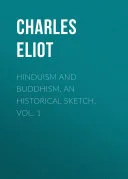
Hinduism and Buddhism, An Historical Sketch, Vol. 1
 72
72

Hinduism and Buddhism, An Historical Sketch, Vol. 1
Charles Eliot’s "Hinduism and Buddhism, An Historical Sketch, Vol. 1" operates as a dense, academic cornerstone for understanding the subcontinent's spiritual landscape. Its primary strength lies in its rigorous historical methodology, presenting a clear lineage of thought and practice without resorting to devotional fervor or esoteric conjecture. Eliot meticulously details the evolution of concepts from the Vedic period through to the flourishing of various Buddhist schools. A notable limitation, however, is its inherent academic dryness; it is a scholar’s tool, not a devotional text. The section detailing the philosophical distinctions between the early Buddhist Sangha and the later developments of Mahayana Buddhism, for instance, is exhaustive but demands sustained attention. Ultimately, this volume is an indispensable reference for serious academic study, offering a lucid, if somewhat austere, historical framework.
📝 Description
72
Charles Eliot's 1923 study provides a historical sketch of Hinduism and Buddhism.
First published in 1923, this volume offers a historical survey of Hinduism and Buddhism. Eliot traces the origins and development of these two major traditions across centuries of Indian history, noting their connections. His work appeared during a time of significant Western academic interest in Eastern religions, providing a scholarly perspective that contrasted with more romanticized views.
The book details concepts like Brahman, Atman, karma, and dharma. It also covers the Buddha's life and teachings, the evolution of different Buddhist schools such as Mahayana and Theravada, and the emergence of devotional practices in Hinduism. Eliot clarifies how these ideas developed and their impact on society. This work is useful for students of comparative religion and Asian studies, as well as practitioners seeking historical context for traditions like Yoga, Vedanta, or Buddhist meditation.
Eliot's work was published in an era when Western interest in Eastern religions was growing, partly fueled by groups like the Theosophical Society. While Eliot aimed for academic rigor, his study engaged with traditions that many in the West were beginning to explore for spiritual or philosophical insights. It presented a structured historical account of beliefs and practices that resonated with those interested in comparative religion and the philosophical underpinnings of practices like Yoga and meditation.
💡 Why Read This Book?
• Gain a nuanced understanding of the historical development of Brahmanical Hinduism and early Buddhism, tracing key philosophical shifts from the Vedic era to the emergence of distinct schools. • Appreciate the intricate connections and divergences between Hinduism and Buddhism, recognizing how concepts like karma and dharma evolved and were reinterpreted across traditions. • Understand the socio-historical forces that shaped these religions, as Eliot contextualizes doctrinal changes within broader Indian societal and political developments up to the 12th century.
⭐ Reader Reviews
Honest opinions from readers who have explored this book.
❓ Frequently Asked Questions
When was Charles Eliot's 'Hinduism and Buddhism' originally published?
The first edition of Charles Eliot's 'Hinduism and Buddhism, An Historical Sketch, Vol. 1' was published in 1923, making it a significant early academic treatment of these subjects.
What is the primary focus of Volume 1?
Volume 1 of Eliot's work concentrates on the historical development and foundational concepts of Hinduism and Buddhism up to approximately the 12th century CE.
Does this book discuss the caste system?
Yes, Eliot's survey addresses the historical role and evolution of the caste system within the context of Hindu society and its interactions with Buddhist thought.
Is this book suitable for beginners in comparative religion?
While comprehensive, Eliot's writing style is academic. It is best suited for those with some foundational knowledge or a serious intent to study the historical underpinnings of these traditions.
What are some key Hindu concepts explored in Volume 1?
Volume 1 delves into core Hindu concepts such as Brahman, Atman, the Upanishadic thought, and the development of devotional practices (Bhakti).
How does Eliot differentiate between early Buddhism and later Mahayana?
Eliot meticulously outlines the philosophical and doctrinal differences, tracing the evolution from the early Buddhist Sangha's teachings to the more complex cosmology and bodhisattva ideals of Mahayana Buddhism.
🔮 Key Themes & Symbolism
Vedic Roots and Upanishadic Thought
This volume meticulously examines the transition from the ritualistic focus of the Vedas to the philosophical inquiries of the Upanishads. Eliot charts the emergence of core concepts like Brahman (the ultimate reality) and Atman (the self), laying the groundwork for subsequent Hindu philosophical schools. The exploration highlights how these early texts began to grapple with questions of existence, consciousness, and the nature of the divine, influencing millennia of spiritual discourse.
The Buddha and Early Buddhist Doctrine
Eliot provides a critical historical account of Siddhartha Gautama's life and the initial formation of the Sangha. He elucidates the Four Noble Truths, the Eightfold Path, and the doctrine of Anatta (no-self), emphasizing their radical departure from existing Brahmanical frameworks. The text clarifies the early emphasis on monastic discipline and the pursuit of Nirvana as central tenets.
Development of Mahayana Buddhism
The work traces the significant evolution from early Buddhism to the expansive Mahayana tradition. Eliot discusses the introduction of the Bodhisattva ideal, the concept of Shunyata (emptiness), and the proliferation of scriptures and cosmology. This section highlights the adaptation of Buddhist principles to diverse cultural contexts and the development of new philosophical interpretations.
Syncretism and Divergence
A recurring theme is the complex interplay between Hinduism and Buddhism. Eliot analyzes periods of mutual influence, absorption, and distinct development. He explores how certain Hindu deities were incorporated into Buddhist pantheons and vice-versa, while fundamental philosophical differences, such as the nature of the soul and the path to liberation, remained points of divergence.
💬 Memorable Quotes
Direct passages from the work, attributed to the author.
“The history of religions is the history of human thought.”
— This statement frames Eliot's approach as fundamentally intellectual and historical, viewing religious development as a product of evolving human consciousness and philosophical exploration rather than divine revelation.
“Buddhism was a reform of Hinduism, or at least a revolt against certain aspects of it.”
— This highlights Eliot's perspective on the origins of Buddhism as a reaction against specific practices and doctrines within the Brahmanical tradition of his time, emphasizing its reformist impulse.
“The doctrine of Karma... is a statement that every action has consequences.”
— This interpretation simplifies the complex doctrine of karma, presenting it as a universal principle of cause and effect that governs both individual lives and the broader cosmic order within Indian thought.
“The Upanishads represent a quest for the ultimate reality.”
— This captures the philosophical essence of the Upanishads, portraying them as foundational texts in Hinduism focused on profound metaphysical speculation and the search for fundamental truths about existence.
“The Sangha was an organized society of monks and nuns.”
— This defines the early Buddhist monastic community, emphasizing its structured nature and the communal aspect of religious life dedicated to the pursuit of enlightenment.
🌙 Esoteric Significance
Tradition
While Eliot's work is primarily academic and historical, it serves as a crucial reference point for esoteric traditions that draw upon Hinduism and Buddhism. It provides the historical and doctrinal context for Western Hermeticism, Theosophy, and various New Age movements seeking to understand the roots of concepts like karma, reincarnation, and meditation. Its scholarly detachment allows practitioners to engage with source material critically.
Symbolism
The book details symbols like the Om (ॐ), representing the ultimate reality and the sound of the universe in Hinduism, and the Dharma wheel (Dharmachakra), symbolizing the Buddha's teachings and the path to enlightenment in Buddhism. Eliot explains their historical development and significance within their respective traditions, offering insights into their philosophical underpinnings.
Modern Relevance
Contemporary scholars and practitioners of Yoga, mindfulness, and various Buddhist meditation techniques rely on Eliot's foundational research. Thinkers exploring comparative mysticism and the philosophical underpinnings of Eastern psychologies frequently cite his work as a baseline for understanding the historical evolution of these traditions.
👥 Who Should Read This Book
• Academic researchers in religious studies, Asian history, and philosophy seeking a comprehensive historical overview of Hinduism and Buddhism. • Students of Yoga and Buddhist meditation desiring to understand the historical context and doctrinal evolution of their chosen practices. • Individuals interested in the intellectual history of comparative religion and the Western academic engagement with Eastern spiritual traditions.
📜 Historical Context
Charles Eliot's "Hinduism and Buddhism, An Historical Sketch" emerged in 1923, a period when Western scholarship on Asian religions was rapidly maturing. Intellectual currents included the comparative mythology studies of Sir James Frazer and the burgeoning interest in Indian philosophy, partly fueled by figures like Swami Vivekananda who had introduced Vedanta to the West earlier. Eliot's work provided a much-needed, systematic academic counterpoint to the more esoteric or romanticized interpretations often found in Theosophy circles. Its reception was largely academic, appreciated for its comprehensive scope and scholarly rigor, though it lacked the popular appeal of contemporary spiritual movements. Eliot engaged with the existing scholarship, critically assessing earlier theories while establishing his own factual framework, distinguishing his approach from contemporaries like Hermann Oldenberg or Rhys Davids who focused on specific aspects of Buddhism.
📔 Journal Prompts
The Upanishadic concept of Brahman and Atman: how does this relate to your understanding of self?
Analyze the Four Noble Truths as a framework for understanding suffering and its cessation.
Reflect on the historical development of the Bodhisattva ideal within Mahayana Buddhism.
Consider the concept of Karma and its implications for ethical action.
Compare the early Sangha's monastic structure with later Buddhist institutional developments.
🗂️ Glossary
Brahman
In Hinduism, the ultimate, unchanging reality or cosmic spirit that underlies all existence. It is considered the source and sustainer of the universe.
Atman
In Hinduism, the individual soul or self, often considered to be identical with Brahman. The Upanishads explore the nature of Atman and its relationship to the ultimate reality.
Karma
A Sanskrit term referring to the principle of cause and effect, where actions (karma) influence future consequences in this life or subsequent rebirths.
Dharma
A complex term with multiple meanings, including duty, righteousness, cosmic law, and the teachings of the Buddha. Its interpretation varies significantly between Hindu and Buddhist traditions.
Nirvana
The ultimate goal in Buddhism, signifying the cessation of suffering, the extinguishing of desire, and liberation from the cycle of rebirth (samsara).
Sangha
Originally referring to the monastic community of monks and nuns in Buddhism. It can also broadly refer to the wider Buddhist community of lay followers.
Shunyata
A central concept in Mahayana Buddhism, often translated as 'emptiness' or 'voidness,' referring to the lack of inherent existence or independent self-nature in all phenomena.