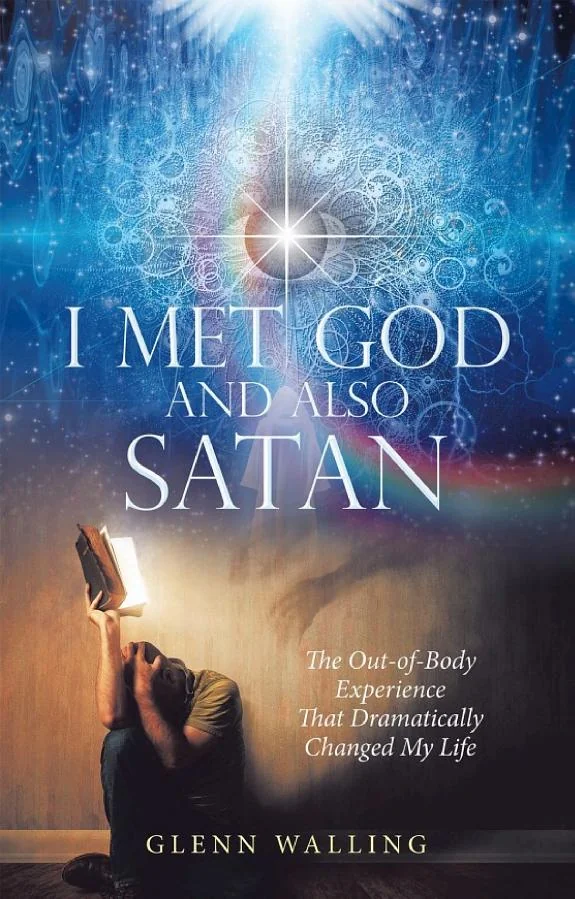
I Met God and Also Satan
 72
72

I Met God and Also Satan
Glenn Walling’s account of meeting divine and infernal personifications is starkly direct, eschewing elaborate metaphor for a raw recounting of an experience initiated by a Descartes-inspired thought experiment. The narrative’s strength lies in its unvarnished presentation; Walling doesn’t present himself as a guru but as an accidental witness to cosmic forces. The section detailing the initial encounter, framed by the roommate's scientific approach, offers a compelling juxtaposition of the empirical and the ineffable. However, the book occasionally falters in providing deeper analytical context for the profound nature of what is described. While Walling recounts the event with impressive clarity, the reader is left yearning for more philosophical or theological extrapolation on the nature of the entities encountered, particularly the specific attributes attributed to Satan. Despite this, "I Met God and Also Satan" offers a unique, personal testimony on the potential for consciousness to transcend physical limitations, presenting a challenging, albeit brief, glimpse beyond the veil.
📝 Description
72
Glenn Walling's 2020 account details a philosophical experiment that led to an encounter with divine and infernal forces.
Glenn Walling's "I Met God and Also Satan" documents a personal experience that began as a philosophical experiment in college. Walling and his roommate attempted to empirically test René Descartes' assertion "I think, therefore I am." This academic exercise unexpectedly led to an encounter beyond the physical universe, a direct confrontation with fundamental forces often personified as God and Satan.
This work is for readers interested in firsthand accounts of altered states of consciousness, personal encounters with the numinous, and the intersection of philosophy and metaphysics. It appeals to those who question the boundaries of reality and seek narratives that explore the potential for direct experience of transcendent or immanent spiritual principles. Individuals drawn to autobiographical explorations of consciousness expansion and the nature of existence will find resonance here.
Published in 2020, "I Met God and Also Satan" follows a Western esoteric tradition that emphasizes direct encounter with transcendent realities. It shares lineage with figures like Emanuel Swedenborg, whose celestial visions offered experiential counterpoints to rationalistic thought. The book implicitly engages with Cartesian dualism, proposing that ultimate realities can be known through profound personal encounters rather than solely through intellect.
💡 Why Read This Book?
• Gain insight into the experiential testing of Descartes' "Cogito, ergo sum," a concept explored in Chapter 1, offering a unique blend of philosophical inquiry and direct metaphysical encounter. • Understand Walling's perspective on the duality of existence, personified as God and Satan, as presented through his personal narrative, providing a unique interpretation of spiritual forces. • Explore the potential for consciousness to breach physical boundaries, as Walling describes his venture outside the physical universe, offering a testament to subjective reality's vast scope.
⭐ Reader Reviews
Honest opinions from readers who have explored this book.
❓ Frequently Asked Questions
What philosophical concept did Glenn Walling test that led to his experience?
Glenn Walling, along with his college roommate, attempted to empirically test René Descartes' famous philosophical assertion, "Cogito, ergo sum," or "I think, therefore I am," as detailed in the book's opening.
When was 'I Met God and Also Satan' first published?
The book "I Met God and Also Satan" by Glenn Walling was first published on October 29, 2020.
What is the primary category for this book?
The book "I Met God and Also Satan" is categorized under Esoteric literature, focusing on metaphysical and otherworldly experiences.
Does the book provide scientific explanations for the encountered phenomena?
While the experience was initiated by a method inspired by the scientific approach, the book primarily documents a metaphysical and subjective encounter, rather than offering scientific explanations for the phenomena.
Who is the author of 'I Met God and Also Satan'?
The author of "I Met God and Also Satan" is Glenn Walling.
What kind of experience does the book describe?
The book describes an otherworldly experience where the author encountered entities representing God and Satan, venturing beyond the boundaries of the physical universe.
🔮 Key Themes & Symbolism
The Cogito Experiment
The book's genesis lies in the author's attempt to empirically validate Descartes' "Cogito, ergo sum." This philosophical exercise, undertaken with a roommate, serves as the catalyst for an unexpected journey beyond material reality. It highlights how rigorous intellectual inquiry, when pushed to its limits, can paradoxically open pathways to experiences that defy conventional understanding, suggesting that the act of thinking itself might possess properties that extend into non-physical dimensions.
Dualistic Encounter
Walling recounts meeting figures embodying the archetypes of God and Satan. This is not presented as a theological treatise but as a direct, personal encounter with potent, seemingly opposing forces. The narrative explores the nature of these entities not through dogma, but through the author's immediate perception, raising questions about the fundamental duality of existence and the possibility of experiencing these forces firsthand.
Consciousness Beyond the Physical
A central theme is the author's venture outside the boundaries of the physical universe. This implies a state of consciousness detached from the body, capable of perceiving realities inaccessible through ordinary senses. The book suggests that human consciousness has a latent potential to transcend its corporeal limitations, offering a personal proof of subjective experiences that challenge materialistic worldviews and point towards a broader understanding of existence.
Experiential Epistemology
The work champions experiential knowledge over purely intellectual or sensory input. Walling's encounter suggests that direct, profound personal experiences can be a valid and powerful means of apprehending ultimate truths. This contrasts with purely rationalistic or empirical approaches, proposing that certain realities, particularly those concerning the divine or the nature of being, can only be truly understood through direct engagement and subjective revelation.
💬 Memorable Quotes
Direct passages from the work, attributed to the author.
“An unexpected venture outside the boundaries of the physical universe.”
— This phrase captures the core of Walling's narrative: a journey into non-physical realms. It implies a separation from the material world and an exploration of dimensions or states of being not typically accessible, underscoring the book's esoteric and consciousness-expanding themes.
“Encountering the most powerful entities.”
— This statement emphasizes the immense scale and significance of the beings Walling met. By referring to them as 'the most powerful,' the author conveys the wide impact and overwhelming nature of the encounter, suggesting interactions with fundamental forces of existence.
“Utilizing the scientific method to test Descartes.”
— This highlights the unique approach taken by the author and his roommate. It signifies an attempt to bridge the gap between rigorous, empirical investigation and profound philosophical questions, setting the stage for an experience that defied conventional scientific explanation.
“The result of this logic test was beyond what either could have imagined.”
— This interpretation underscores the sheer astonishment and the unforeseen nature of the event. It suggests that the consequences of their philosophical experiment were so extraordinary they exceeded the wildest speculations of the individuals involved.
💡 Key Ideas
Editorial paraphrase of the work's core concepts — not direct quotes.
The logic test resulted in something beyond imagination.
This paraphrased concept highlights the unexpected and profound nature of the experience. It suggests that the outcome of applying Descartes' philosophical principle was not a mere intellectual confirmation but an actual, extraordinary event that transcended ordinary human comprehension.
🌙 Esoteric Significance
Tradition
This work aligns with the broader Western Esoteric tradition, particularly its mystical and visionary branches, which emphasize direct, personal experience of the divine or ultimate reality. It shares lineage with accounts from figures like Emanuel Swedenborg and later Theosophists who documented journeys into non-physical realms. Walling's narrative departs from more structured magical systems by emphasizing an accidental, philosophical catalyst rather than dedicated ritual or training, focusing on the inherent potential within consciousness itself.
Symbolism
The primary symbols are 'God' and 'Satan,' presented not merely as theological concepts but as encountered entities. In an esoteric context, these can represent fundamental dualities of existence: creation and destruction, light and shadow, spirit and matter. The 'physical universe' itself acts as a symbol for limited, material perception, which the author transcends, suggesting a layered reality where consciousness can navigate between different planes of being.
Modern Relevance
In contemporary thought, "I Met God and Also Satan" speaks to discussions in consciousness studies, near-death experiences (NDEs), and psychedelic research, which explore subjective realities beyond the physical. It speaks to modern seekers interested in direct gnosis and experiential spirituality, offering a personal narrative that complements theoretical explorations of altered states and the nature of consciousness undertaken by figures like Stanislav Grof or researchers in transpersonal psychology.
👥 Who Should Read This Book
• Individuals interested in firsthand accounts of altered states of consciousness and direct encounters with spiritual or numinous phenomena. • Students of comparative religion and philosophy seeking personal testimonies that explore the nature of God and Satan beyond dogma. • Readers exploring the potential of human consciousness to transcend physical limitations and perceive non-material realities.
📜 Historical Context
Glenn Walling's "I Met God and Also Satan," published in 2020, arrived during a period of renewed public interest in consciousness studies and personal spiritual experiences, often facilitated by accessible digital platforms. The book implicitly engages with the Western esoteric tradition, which has a long history of individuals reporting direct encounters with divine or otherworldly beings. Thinkers like Carl Jung, with his exploration of archetypes and the collective unconscious, provided a psychological framework that made such subjective accounts more palatable to a modern audience. While not directly engaging with academic philosophy of mind in a scholarly manner, Walling’s work serves as a counterpoint to purely materialist explanations of consciousness, echoing earlier traditions like Swedenborgianism in its focus on visionary experience. The book’s autobiographical nature aligns with a trend in contemporary non-fiction that values personal testimony as a form of knowledge, standing apart from the more structured, ritualistic approaches found in established magical orders.
📔 Journal Prompts
The Descartes experiment's outcome and its implications for reality.
Your own understanding of 'God' and 'Satan' before and after reading.
Experiences of consciousness transcending physical limitations.
The relationship between logic, philosophy, and direct spiritual encounter.
The nature of powerful entities encountered in non-physical realms.
🗂️ Glossary
Cogito, ergo sum
Latin for 'I think, therefore I am.' A foundational statement in Western philosophy by René Descartes, asserting the certainty of one's own existence through the act of thinking.
Physical Universe
Refers to the totality of space, time, matter, and energy as understood by conventional science; the realm accessible through ordinary sensory perception and empirical measurement.
Otherworldly Experience
An event or encounter perceived as taking place outside the normal conditions of earthly existence, often involving supernatural or transcendent elements.
Esoteric
Relating to or accessible only by a small number of people with specialized knowledge or interest; pertaining to inner, spiritual, or hidden teachings.
Dualism
In philosophy and theology, the view that reality or existence is composed of two fundamental, often opposing, principles or substances (e.g., mind and matter, good and evil).
Metaphysical
Concerning the fundamental nature of reality, existence, and the relationship between mind and matter; often deals with concepts beyond the scope of empirical science.
Numinous
Describing an experience of awe, mystery, and fascination in the presence of the divine or sacred, often characterized by a feeling of being in the presence of the utterly other.
This book appears in 1 collection
🔮 Readers Also Liked
Browse all →







From the “Out-of-Body Experience” Collection
View all →







More Free Sacred Texts & Gnosticism Books
View all →