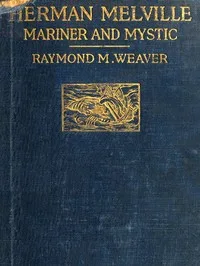
Herman Melville, Mariner and Mystic
 72
72

Herman Melville, Mariner and Mystic



Raymond M. Weaver's 'Herman Melville, Mariner and Mystic' is a fascinating exploration of one of America's greatest writers and his lesser-known mystical pursuits. Published in 1888, this biography offers a deep dive into Melville's life, revealing the esoteric and occult themes that often go unnoticed in his more famous works. For modern esoteric seekers, this book provides a unique lens through which to view Melville's writings, uncovering layers of symbolism and spiritual inquiry that enrich the reading experience. Weaver's meticulous research and insightful analysis make this text a valuable resource for anyone interested in the mystical dimensions of literature. The book's detailed examination of Melville's life and works serves as a testament to his enduring relevance in both literary and esoteric circles.
📝 Description
72
Raymond M. Weaver published 'Herman Melville, Mariner and Mystic' in 1922.
Raymond M. Weaver's 1922 study examines the esoteric elements present in Herman Melville's literary output. The book argues that Melville's writing, particularly works like 'Moby Dick,' contains a hidden symbolic language and mystical philosophy. Weaver connects Melville's themes to various spiritual and philosophical traditions, suggesting a deeper, often overlooked, dimension to his narratives.
The study looks closely at Melville's engagement with Gnosticism, Neoplatonism, and Eastern philosophies, interpreting his characters and plots through these lenses. Weaver posits that Melville was not merely a chronicler of seafaring life but a mystic grappling with fundamental questions of existence, good, and evil. The book aims to illuminate these less apparent aspects of Melville's work for a dedicated readership.
Published in the early 20th century, 'Herman Melville, Mariner and Mystic' emerged during a period of renewed interest in comparative religion and esoteric philosophies. Weaver's work aligns with a scholarly approach that sought to find mystical or occult correspondences within canonical Western literature. It reflects a broader tendency to reinterpret classical and modern texts through non-traditional spiritual frameworks, connecting them to ancient wisdom traditions.
✍️ Author
Weaver, Raymond M. (Raymond Melbourne)
Raymond Melbourne Weaver (1888 – April 4, 1948) was a professor of English and comparative literature at Columbia University in 1916–1948, and a literary scholar best known for publishing Herman Melville: Mariner and Mystic, the first full biography of American author Herman Melville (1819–1891) in 1921 and editing Melville's works. Weaver's scholarly credentials, training, and persuasiveness were important in launching the "Melville Revival" of the 1920s that brought Melville from obscurity to wide recognition.
💡 Why Read This Book?
Reading 'Herman Melville, Mariner and Mystic' today offers a fresh perspective on one of America's literary giants. It provides readers with a deeper understanding of Melville's esoteric beliefs and how they influenced his writing. This book is essential for anyone interested in the mystical and occult dimensions of classic literature. By exploring Melville's spiritual journey, readers gain insight into the timeless quest for enlightenment and the enduring power of symbolism in literature.
⭐ Reader Reviews
Honest opinions from readers who have explored this book.
❓ Frequently Asked Questions
What is the main focus of 'Herman Melville, Mariner and Mystic'?
The book focuses on Herman Melville's esoteric and mystical inclinations, exploring how these themes influenced his literary works and personal life.
Who should read this book?
This book is ideal for literature enthusiasts, esoteric seekers, and anyone interested in the intersection of mysticism and classic American literature.
What historical context does the book provide?
The book offers a rich historical context of 19th-century America, illustrating how Melville's experiences and surroundings shaped his esoteric beliefs and literary works.
🔮 Key Themes & Symbolism
The Divine and the Unknowable
Melville's works often explore the mystical encounter with the divine, represented by symbols like the white whale in 'Moby-Dick.' This theme studies the unknowable nature of the divine and the human quest for spiritual understanding.
Symbolism and Allegory
Melville's narratives are rich with symbolic and allegorical elements that reveal deeper esoteric truths. From the albatross in 'The Rime of the Ancient Mariner' to the various allegorical characters in 'Pierre,' these symbols invite readers to uncover hidden knowledge.
The Spiritual Journey
Many of Melville's protagonists start spiritual journeys that mirror the mystical quest for enlightenment. These journeys often involve trials and tribulations that test the characters' faith and resolve, leading them to deeper spiritual insights.
💬 Memorable Quotes
Direct passages from the work, attributed to the author.
“Call me Ishmael.”
— The opening line of 'Moby-Dick' signifies the narrator's journey into the unknown and the mystical.
💡 Key Ideas
Editorial paraphrase of the work's core concepts — not direct quotes.
The past is passed, the future is unknown, and the present is a mystery.
This quote from 'Moby-Dick' underscores the ephemeral nature of time and the mysteriousness of existence.
All visible objects, man, are but as pasteboard masks.
This line from 'Pierre' highlights the illusionary nature of the material world and the search for deeper truths.
Better to sleep with a sober cannoneer than a drunken commander.
This quote from 'White-Jacket' reflects the importance of vigilance and sobriety in navigating life's challenges.
We cannot live only for ourselves. A thousand fibers connect us with our fellow men.
This passage from 'Moby-Dick' emphasizes the interconnectedness of all beings and the importance of community.
🌙 Esoteric Significance
Tradition
Herman Melville's works belong to the Hermetic and Gnostic traditions, drawing from ancient mystical teachings to explore the nature of the divine and the human spirit. His narratives often feature symbols and allegories that reflect these esoteric traditions, inviting readers to examine the mysteries of existence.
Symbolism
Key symbols in Melville's works include the white whale in 'Moby-Dick,' representing the unknowable and the divine, and the albatross in 'The Rime of the Ancient Mariner,' symbolizing the burden of guilt and redemption. These symbols invite readers to uncover hidden knowledge and spiritual insights.
Modern Relevance
Melville's esoteric insights continue to resonate with modern practitioners of mystical and esoteric arts. His works are studied for their profound symbolism and philosophical depth, offering timeless lessons on the spiritual journey and the quest for enlightenment.
👥 Who Should Read This Book
Beginners interested in esoteric traditions will find 'Herman Melville, Mariner and Mystic' an accessible entry point into the mystical dimensions of literature. Scholars of Melville's works will appreciate the book's in-depth analysis and esoteric insights. Spiritual seekers will be drawn to the profound symbolism and philosophical depth of Melville's narratives, while practitioners of esoteric arts will find valuable insights into the Hermetic and Gnostic traditions.
📜 Historical Context
Written in the 19th century, 'Herman Melville, Mariner and Mystic' provides a unique perspective on one of America's most enigmatic authors. Melville's works, steeped in the mystical and esoteric traditions of the time, offer a window into the spiritual quests of his era. His writings influenced generations of readers and authors, shaping the field of American literature with their profound symbolism and philosophical depth. The book's exploration of Melville's esoteric themes continues to resonate with modern seekers and scholars, highlighting the enduring relevance of his mystical insights.
📔 Journal Prompts
How do Melville's symbols and allegories reflect your own spiritual journey?
What insights can you gain from the mystical themes in 'Moby-Dick'?
How does the quest for the divine influence your understanding of Melville's works?
What esoteric traditions do you see reflected in Melville's narratives?
How does the interconnectedness of beings, as explored in 'Moby-Dick,' resonate with your own experiences?
🗂️ Glossary
Hermeticism
An esoteric tradition based on the writings of Hermes Trismegistus, emphasizing the unity of all things and the pursuit of spiritual enlightenment.
Gnosticism
An ancient mystical tradition that teaches the acquisition of hidden knowledge as the means to spiritual liberation.
Kabbalah
A mystical tradition within Judaism that explores the hidden meanings of religious texts and symbols.
Allegory
A literary device in which characters, settings, and events represent abstract ideas or principles.
Symbolism
The use of symbols to represent ideas or qualities, often with mystical or esoteric significance.
This book appears in 1 collection
🔮 Readers Also Liked
Browse all →




From the “Christian Mysticism” Collection
View all →




More Free Mysticism & Contemplation Books
View all →