The Mysteries
 77
77

The Mysteries
The collected essays in "The Mysteries," first compiled in 1978, offer a dense, scholarly engagement with phenomena that lie at the heart of esoteric thought. The inclusion of figures like C. G. Jung and C. Kerényi lends considerable weight, grounding discussions of ritual and symbolism in psychological and anthropological frameworks. Jung's contribution, for instance, directly links the experience of mystery to the individuation process, a particularly strong connection for students of depth psychology. However, the collection's primary limitation is its uneven accessibility. While some essays are remarkably clear, others, particularly those by less widely translated scholars, can be opaque, demanding considerable background knowledge. The strength lies in its authoritative, multidisciplinary approach to what constitutes 'mystery' beyond mere secrecy. A passage discussing the Eleusinian Mysteries, for example, effectively bridges historical ritual with enduring psychological import.
This collection serves as a vital, if challenging, academic resource for understanding the historical and psychological dimensions of esoteric experience.
📝 Description
77
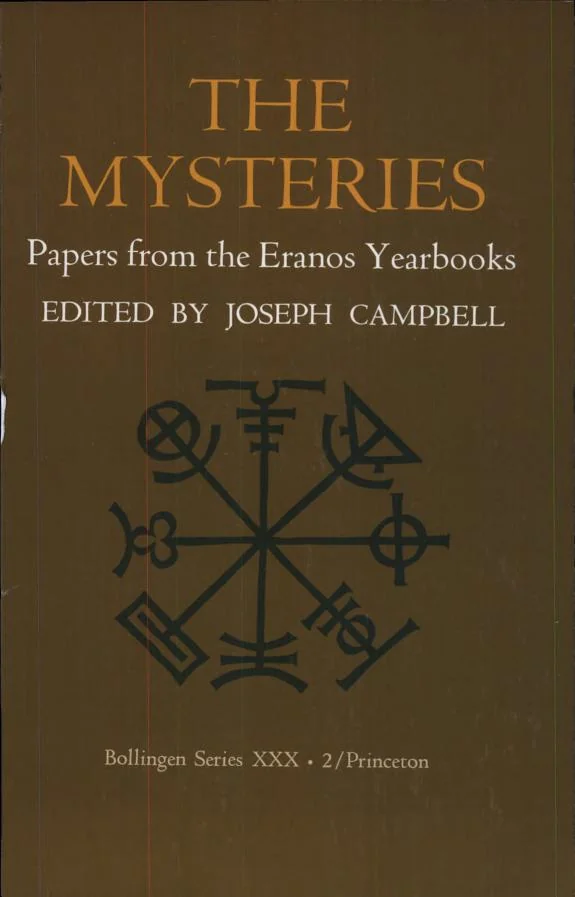
Joseph Campbell edited this 1978 collection of essays on the concept of "mysteries."
Originally published in 1978, The Mysteries presents a collection of essays by scholars examining the concept of "mysteries" across different cultures and historical periods. This is not a unified narrative, but rather a compilation of expert analyses from fields such as psychology, religious studies, and classical philology. The contributing authors, including C. G. Jung and C. Kerényi, examine ancient rituals, philosophical traditions, and psychological phenomena that exist beyond conventional rational understanding. The essays address topics like initiation rites, ecstatic experiences, and the symbolic language found in dreams and myths. The collection views these "mysteries" not as hidden doctrines, but as fundamental aspects of human experience.
This work is for serious students of comparative religion, depth psychology, and esoteric traditions. Readers interested in academic examinations of myth, ritual, and the unconscious will find value. It assumes some familiarity with Jungian psychology or classical studies. Those looking for a simple introduction to occultism might find the scholarly writing dense, but persistent readers will discover rewards.
Published in 1978, The Mysteries appeared during a time of increased academic and popular interest in Jungian psychology and comparative mythology. The intellectual atmosphere supported explorations of the unconscious, archetypes, and the symbolic dimensions of human experience. The collection reflects a mid-20th-century scholarly engagement with subjects often considered outside mainstream Western thought. It situates these explorations within a tradition that looks to myth, ritual, and psychological symbolism to understand human consciousness.
💡 Why Read This Book?
• Gain insight into the psychological underpinnings of ancient initiation rites, as explored by scholars like C. G. Jung, understanding how these rituals mirror internal transformative processes. • Grasp the multifaceted nature of "mysteries" as explored through essays from 1978, moving beyond simplistic notions of secrecy to appreciate their role in cultural and individual consciousness. • Understand the scholarly discourse surrounding the concept of the divine feminine and Gnostic traditions, as exemplified by discussions on Sophia within the collection.
⭐ Reader Reviews
Honest opinions from readers who have explored this book.
❓ Frequently Asked Questions
Who are the primary academic contributors to "The Mysteries" collection from 1978?
The book features essays by prominent scholars including C. G. Jung, C. Kerényi, Hugo Rahner, and Hans Leisegang, alongside other noted academics exploring esoteric themes.
What is the main focus of the essays in Joseph Campbell's "The Mysteries"?
The essays collectively examine the concept of "mysteries" across various cultures, focusing on initiation, ritual, symbolism, and the psychological dimensions of transcendent experiences.
Is "The Mysteries" suitable for beginners in occult studies?
While valuable, the book is primarily a collection of scholarly essays, often dense and academic. It is best suited for those with a background in psychology, comparative religion, or mythology, rather than absolute beginners in occultism.
What is the significance of the year 1978 in relation to this book?
1978 marks the original publication year of "The Mysteries," placing it within a mid-20th-century academic context of increasing interest in Jungian psychology and comparative mythology.
Does the book explain specific historical mystery cults?
Yes, the essays touch upon various historical traditions, including discussions that reference the Eleusinian Mysteries and other ancient cults, examining their symbolic and psychological dimensions.
Is Joseph Campbell the author of the essays in "The Mysteries"?
No, Joseph Campbell is credited as the editor of this collection. The essays themselves are authored by a diverse group of scholars, including C. G. Jung and C. Kerényi.
🔮 Key Themes & Symbolism
Psychology of the Sacred
The collection rigorously probes the psychological functions of religious and ritualistic practices. Contributions, particularly from C. G. Jung, explore how ancient mysteries and symbolic experiences relate to the unconscious mind and the process of individuation. It posits that these "mysteries" are not mere historical curiosities but enduring patterns of the human psyche, offering pathways to self-understanding and integration beyond purely rational frameworks.
Ritual and Initiation
A central theme is the transformative power of ritual and initiation. Essays examine how these structured experiences, from ancient mystery cults to Gnostic traditions, facilitate a shift in consciousness. They explore the symbolic death and rebirth inherent in many initiation rites, viewing them as crucial mechanisms for integrating profound psychological and spiritual insights within individuals and communities.
Mythic Symbolism
The book examines the deep symbolic language of myths and dreams, presenting them as vital expressions of the collective unconscious. It analyzes how recurring motifs and archetypes within these narratives function to convey complex truths about existence, the cosmos, and the human condition. The interpretation of symbols is shown to be key to unlocking the meaning embedded within esoteric traditions.
The Gnostic Perspective
Several essays engage with Gnostic cosmology and theology, particularly the concept of Sophia. This theme highlights a worldview where divine sparks are trapped in the material world, and liberation comes through gnosis (knowledge). The collection explores how Gnostic myths offer a unique framework for understanding alienation, redemption, and the hidden spiritual dimensions of reality.
💬 Memorable Quotes
Direct passages from the work, attributed to the author.
“Interpretation: The collection implies that the "mysteries" are not necessarily about hidden secrets, but rather about experiences that transcend ordinary rational comprehension and require symbolic understanding.”
— This concept emphasizes that what is termed 'mystery' often refers to subjective states, archetypal encounters, or numinous experiences that defy simple logical definition.
“The essays explore the psychological impact of ancient rituals designed for transformation.”
— This highlights the focus on how practices within historical mystery cults, like those discussed in the 1978 collection, aimed at altering an individual's consciousness and worldview.
“Symbolism within myths functions as a language of the unconscious.”
— This idea, central to the Jungian contributions, suggests that recurring motifs and archetypes in mythology are direct expressions of deep psychological structures and universal human experiences.
“Gnostic thought posits a duality between the material world and a higher spiritual realm.”
— This reflects a key element discussed in relation to specific traditions within the book, framing the search for salvation through knowledge (gnosis) as a central theme.
“Initiation rites symbolically represent death and rebirth.”
— This captures a common thread across various essays, indicating that the process of entering into a mystery tradition often involved a simulated death and subsequent spiritual reawakening.
🌙 Esoteric Significance
Tradition
This work significantly bridges academic religious studies and esoteric traditions, particularly drawing from Jungian psychology and comparative mythology. It doesn't adhere to a single esoteric lineage like Hermeticism or Theosophy but rather uses their phenomena (mystery cults, Gnosticism) as case studies for exploring universal psychological structures. It departs from purely dogmatic esoteric systems by grounding its interpretations in psychological theory, making it a vital text for those interested in the psychological underpinnings of esoteric experience.
Symbolism
The collection frequently engages with archetypal symbols. The serpent, for instance, appears as a symbol of transformation and the underworld, often linked to chthonic deities and the process of psychic renewal. Water is another motif, representing the unconscious, purification, and the boundary between the mundane and the sacred. The concept of light often signifies gnosis or spiritual illumination, particularly in discussions referencing Gnostic traditions.
Modern Relevance
Contemporary thinkers and practitioners in depth psychology, mythology studies, and Jungian analysis continue to draw upon this collection. Its analyses of ritual, symbolism, and the unconscious provide foundational concepts for modern therapeutic approaches that integrate mythic understanding. Schools of esoteric thought that focus on psychological transformation and archetypal exploration also find relevance in its rigorous examination of historical and psychological 'mysteries'.
👥 Who Should Read This Book
• Students of C. G. Jung and Analytical Psychology: Those seeking to understand the application of Jungian concepts to ancient myths, rituals, and religious experiences will find direct relevance. • Comparative Religion Scholars: Researchers interested in the phenomenon of "mysteries" across different cultures and historical periods will benefit from the diverse perspectives presented. • Advanced Esoteric Practitioners: Individuals engaged in deep study of symbolism, initiation, and psychological transformation within esoteric traditions will find scholarly grounding for their explorations.
📜 Historical Context
Published in 1978, "The Mysteries" emerged from a fertile intellectual landscape shaped by mid-20th-century scholarship in comparative religion, mythology, and depth psychology. The work of Mircea Eliade, with his studies on the sacred and the profane, and the enduring influence of C. G. Jung's theories on archetypes and the collective unconscious, provided a significant backdrop. This era saw a growing academic acceptance of exploring non-rational dimensions of human experience. The collection's contributors, including Jung himself and Karl Kerényi, were key figures in this interdisciplinary approach. While not a single movement, the collection reflects the broader interest in Jungian thought and its application to myth and religion, contrasting with more purely historical or anthropological analyses that might have dominated earlier academic discourse. The reception was largely within specialized academic circles, appreciated for its depth rather than broad public appeal.
📔 Journal Prompts
The concept of initiation rites as symbolic death and rebirth.
Jung's exploration of archetypes within ancient mystery traditions.
Gnostic Sophia and the search for spiritual knowledge.
The role of ritual in mediating between the conscious and unconscious.
Symbolic interpretations of water across different mythologies discussed.
🗂️ Glossary
Gnosticism
A collection of religious and philosophical systems in the ancient world that emphasized personal spiritual knowledge (gnosis) as the means of salvation, often positing a dualistic worldview with a flawed material creation.
Archetype
In Jungian psychology, a universal, archaic pattern and image that derives from the collective unconscious and is the psychic counterpart of an instinct. They manifest in myths, dreams, and symbols.
Individuation
The psychological process by which a person becomes an individual, an integrated and whole personality. It involves the conscious integration of unconscious elements.
Mystery Cults
Religious groups in the ancient Mediterranean world whose adherents shared secret rites and initiation ceremonies, promising spiritual benefits or afterlife rewards.
Numen
The divine power or spirit that inhabits a place or object; a manifestation of the divine or supernatural.
Psyche
The totality of the human mind, conscious and unconscious. In Jungian terms, it encompasses all psychic processes.
Symbolism
The use of symbols to represent ideas and qualities by giving them meanings that are different from their literal sense. Crucial in understanding myths and rituals.
This book appears in 1 collection
🔮 Readers Also Liked
Browse all →








From the “Orphic Mysteries” Collection
View all →







More Free Occult Philosophy Books
View all →